
Translated material
New Russian novels: February
“Chinesist” Chizhova, “Brezhnev City” Idiatullina, “Ivan Auslander” Sadulaev
Gorky opens a new section: now a review of the new products of modern Russian literature will be released twice a month. In the first issue - three novels for February: (without) the alternative history of the USSR, in a good way, a nostalgic novel about Soviet childhood and Hinduism for dummies, pretending to be a novel about modern Russia.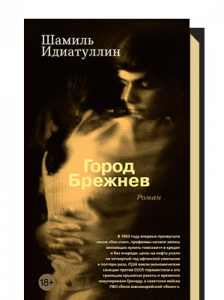
Shamil Idiatullin. The city of Brezhnev. SPb: ABC, 2017
“Behind the river” is a war in Afghanistan, which is not customary to talk about. On the street is the war of boys, which ordinary adults do not want to notice, but cops and bandits are able to use in their interests. In the novel air of the “cities of Brezhnev”, the future nineties are gathering, when the Naberezhnye Chelny, who had the name of the former Secretary General for a little more than five years, will experience the severity of the post -Soviet fate of industrial monogrand. But it will be next. In the meantime, the eighth -grader of Arthur Vafin lives in Brezhnev, in gray Soviet eighties, loves parents, masters karate on a notebook with drawings and is distinguished even by naivety even for the Soviet schoolboy. Its life is painted according to the calendar: in the summer-a camp with a disco and a “ears”, in winter-from a hill on an ice, round year-a school with nausea boring teachers and the boys, who are not, and they risk ending with a bloody tragedy.
“The city of Brezhnev” is a delicate and meticulous reconstruction of Soviet adolescence, to whom the journalist and writer, the author of the teenage thriller “Snub” Shamil Idiatullin was engaged for ten years. Scarce oranges for a ruble with adjika for 30 kopecks in a load, the “royal night” in the pioneer camp, musical collections on the TDK cassettes - the author leads the reader according to the harsh drives with such enthusiasm that he does not brush herself from the plot, as from a forced necessity.
From the genre point of view, Idiatullin also constructs the model exclusively nostalgic: the school story with a little war and a little love inhibits to give a production novel, where the founders have long discussed the features of the furnaces and problems with the supply of raw materials. Between these layers, the potential of spy adventures flickers barely perceptibly. As a result, the collection of treasures of boyish memory is overgrown with genre muscles and strives to become a “time -ended time” for the reader, even if he, in principle, can not have any memories of the eighties.
The trouble is essentially strong in the vulgarity of the book that the author took. Not wanting to miss a single cute heart, he is ready to devote ten pages with a cool and director of the pages, and a good hundred to a summer camp with a toothpaste on his faces is a good hundred. For this reason, it is clearly thought out, and in some places a cleverly twisted composition cracks from an overabundance of the texture. However, it is primarily worth reading the “Brezhnev City”. Especially - if you were born in the Soviet province in the early seventies and are ready to hold pages seven hundred in a conditional city of childhood.
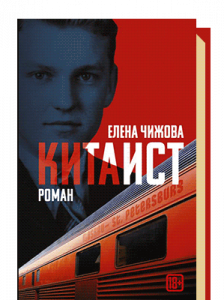
Elena Chizhova. Chinesist. M.: AST, editorial office of Elena Shubina, 2017
Elena Chizhova, known as the author of the novel “The Time of Women”, managed to form the image of the writer of female characters in the scenery of late Soviet Leningrad. All the more unexpectedly that this year Chizhova came out a novel declared as anti -utopia, or even an alternative story from the region “what would happen if Hitler ...”.
During World War II, German troops reached the Urals, where they stopped. As a result, the territory of the USSR was divided into two parts: the European was under the control of the Reich and is now called Russia, and the right half of the map remained the Soviet Union. The action of the novel unfolds in 1984. In Russia, they speak in it-Russian, obey the Fuhrer and indulge in consumerism, calculating Rusmarski. The population is divided into three categories, each of which has a passport of the corresponding color: “black” - the Germans, Volksduchi and distinguished citizens; "Blue" - the local Slavic population; “Yellow” - immigrants from the Union republics subjected to segregation. In the Soviet Union, everything is about the same, as it should be, not believing that Soviet Moscow and Leningrad are the exact copies built in Siberia. Russia and the USSR are connected by the railway along which the protagonist goes to the scientific conference - the young Soviet Chinesist Alexei Rusco with a scout ambition, brought up by a mother, sisters, a curator from the KGB and a Chinese book of change. Philip Dick grins condescendingly.
The “Chinesist” could be a paranoid pseudo -pioneer novel, which bites itself by the tail. But, alas, all the rudiments of the plot are wither in the bud, drown in the game of the German-Russian and Sov-Russian consciousness, and even Comrade Rusco is clearly quickly bored. Friendship (and even love) and the betrayal of scientists of young men from warring countries; the novel of the Soviet idealist with a girl from the "yellow"; unexpected acquisition of relatives and their skeletons in the closet in the war; The train between the warring powers as a territory of double agents and corruption ... all this will flash before the reader, like birches outside the window, and leave with nothing. The lion's share of time, the main character will be unpleasant to be surprised at Russian customs, prices and form of thoughts, constantly comparing them with good Soviet analogues and mentally bringing the ghostly curator.
The union speaks in literary Russian, and in Russia - on a rude street dialect, sprinkled with tracing paper from German. The union thinks about the homeland, and in Russia - about how to buy a fur coat and a German passport. Finally, in the Union they are called the fascists of Russians, and in Russia “scoops”. Both sides regret and hate each other. The authorities of both act with the same methods: television propaganda, false demonstrations, historical frauds. As a result, instead of alternative history, the reader proposes an Aesopov comparison of real Soviet and modern Russia or a treatise on non -alternativeness: the railway lineup goes along the route “Both worse”, the book of changes is addressed with a mocking game of words. The idea is no worse than others, but the plot is still a pity.
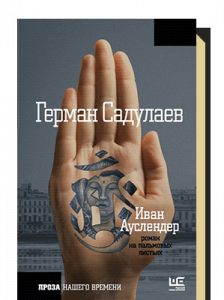
German Sadulaev. Ivan Auslander. M.: AST, editorial office of Elena Shubina, 2017
The opinion that Russian writers prefer to play with the past, and not to describe the present, it seems to have become a common place. Therefore, when the main character of the novel is already going to speak at the rally for honest elections in the first pages, you involuntarily revive. Hermann Sadulaev’s new novel really addresses literally yesterday. But only then, to say that yesterday does not matter to him at all.
Ivan Auslander is a university teacher of Sanskrit and a lover of social philosophy. He is clearly not enough charisma, students are not interested in them, so he considers the invitation to speak at a rally for fair elections in St. Petersburg, although he knows that his name is only to replace a brighter colleague who refused. In the wake of the protest fashion, Auslander becomes a local celebrity, but when it comes to meeting with the “astronauts”, the Sanskritologist throws a revolution. Then he ceases to be a teacher. He becomes an entrepreneur, but also quickly ends his career. Then he goes on a trip. And then he will have a risky medical operation, and she is about to begin, but before that, a vaguely familiar former student comes to Ausleder. She says that Ausleder is a guru, he has students, they gathered his articles and speeches in the book “Sri Auslander. Vedanta ”, and they also wrote their articles and speeches, and now it doesn’t matter whether Ausleder is in the world or it will not be. And the rest of the romance flows through the waves of Hinduism in the field of pure abstraction, where there is no place for the plot, the hero and the reader ...
If Herman Sadulaev had no such noticeable name, it could be assumed that this is not one writer, but two. The first is the author of the books “I am a Chechen!”, “Shali raid” and essays on the political history of Chechnya; The second is “social science fiction”, stuffed in the novels “ad” and “pill” of office workers with mythology and an intricate philosophy after Viktor Pelevin. “Ivan Ausleder” is a third type of Sadulaev’s novel. It has small autobiographical clues and not covered by anything, not even post-modern, but, it seems, direct intention to explain something to people about the structure of life. You can react to it differently, and, perhaps, it is not worth sorting out possible reactions here. But in a sense, this is the answer to the question why Russian writers today are poorly given modern reality. Too many temptations for direct utterance. Even if wrapped in palm leaves of Hinduism.