
Translated material
"I had a palette left from Repin"
Natella Toidze about innovation, plots and sculpture of color
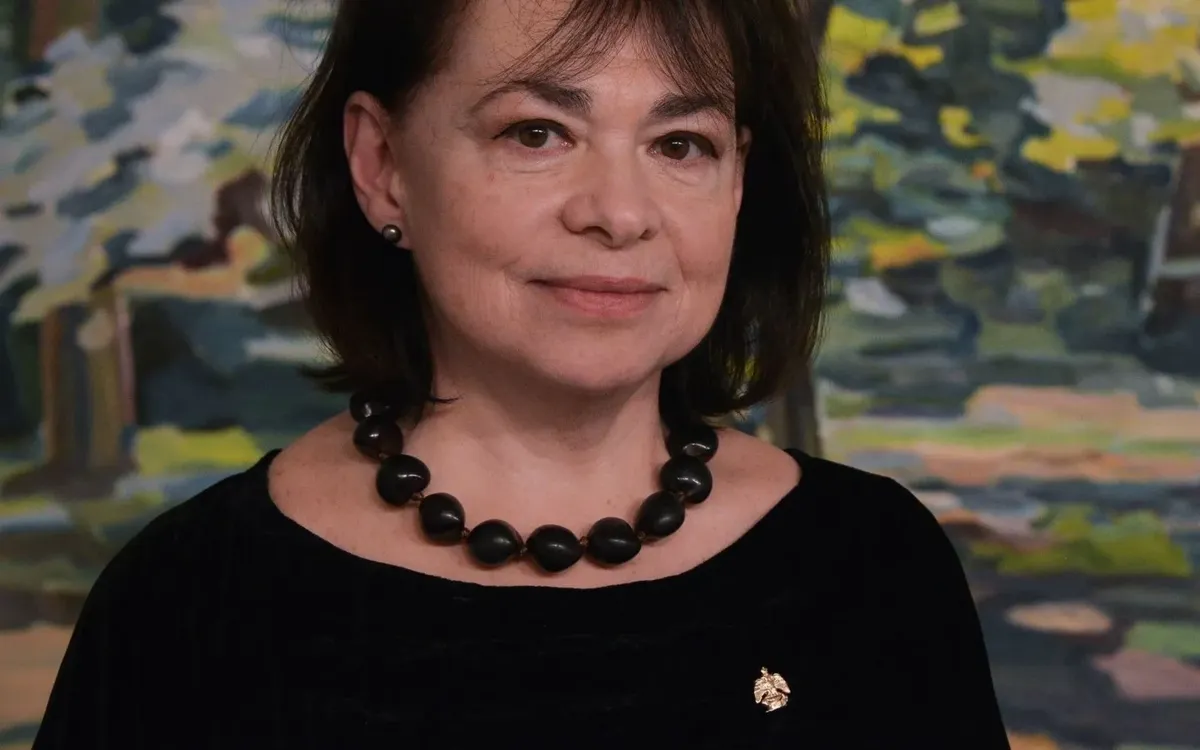
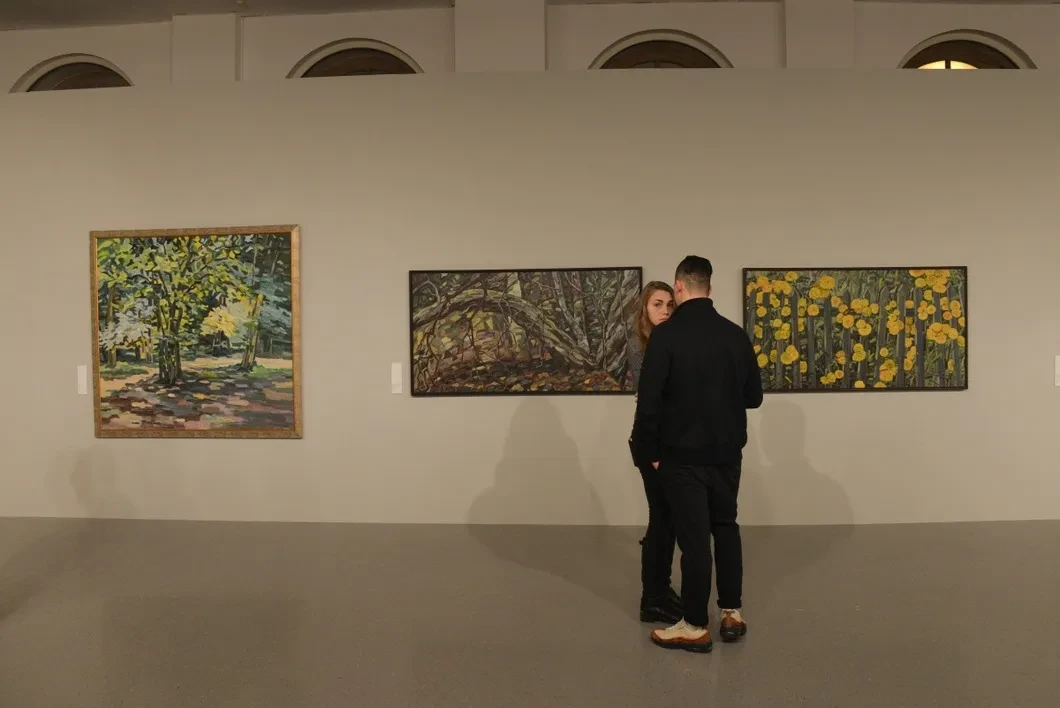
In the new arena, the exhibition of Natella Toyidze “The Sculpture of Color” is held, and even in the midst of the working week in the halls of unusually many visitors - arguing near the paintings and silently considering huge landscapes, alive and really seemed to be blocked. The exhibition was extended another half a month - until April 16.
- Nella Georgievna, is it true that you always write landscapes only in nature? The exhibition has many photos where you work in kind: in the forest, in the village, in the field.
- Yes, I work on nature at any time of the year.
It is important for me to see, hear, feel everything around the canvas: the rustle of foliage, the game of light and shadows, the twittering of birds, the movement of air. I hope this is also included in the content of the picture and determines its atmosphere. And this is the main thing for me.
- Yes, you have practically no plot ...
- The plot is easy to come up with, but I do not think that this applies to picturesque solutions. Real music worries without words, not like in the song. We often hear a song where there are practically no music, and the words should excite the listener. It is interesting for me to convey the state of the world around me with purely picturesque means - a combination of color spots, their location, rhythm, composition ... And the nature just gives a wealth of states.
- There are many winter landscapes in the exposition.
- I write often in winter until the colors freeze. I like to write snow, it is always different, and each time for me it sets a new picturesque task.
- Art historians write about the inner drama of your paintings.
- I think this is due to the inconsistency of the task - to convey the movement of life, the dynamics of matter in the statics of image. And it’s very interesting to me, I am trying to convey again with purely picturesque means a certain process, some kind of movement in nature, a change in its state. Probably, the works are therefore called that: “Before the snow”, “thaw”, “after the rain”, “summer ended”.
- And in the workshop, do you complete the work?
- No, never. All work should be completed in kind. The workshop has a different light, another environment, which means another state. And, as in music, one fake note can ruin the entire musical work, in painting one wrong smear will destroy the entire picturesque state of the picture. Therefore, on the contrary, if I find some inaccuracy, I return the canvas to nature. Sometimes because of one smear, one color stroke.
- Is the artist born with this inner tuning fork or study this?
-Everyone, probably, in different ways. Since childhood, I lived among books on art. She still could not read, but endlessly leafed through them, examined. My father, George Toidze, was a wonderful sculptor and schedule, he erected many monuments, including in Moscow. We lived on Povarskaya 30, in the mansion of Count Shuvalov, in the part where the house church was previously. There was a dad’s workshop, which was separated by a large glass door from the residential part. I rode on a three -wheeled bicycle around huge sculptures, among clay, plasticine, bags with gypsum, among model and model. And then she began to sculpt something of her own. My father made me a small machine, and I all the time began to spend in the workshop near my father.
- Have you encouraged you in these classes?
-I am from a family of hereditary artists, my grandfather-Mosa Toidze, the famous Georgian artist, a student of Repin, graduated from the Imperial Academy of Arts in St. Petersburg, and there he met his grandmother, Alexandra Susutin, the novice of the monastery, who studied at the icon painting courses. Uncle-Irakli Toyidze, the famous poster, the author of the wonderful poster "Mother Mother's Mother!" But no one forced their children to be artists. They understood, they knew that those who give themselves to art - they themselves should really want it. My grandfather had six grandchildren and granddaughters, and I am the only artist.
My father, of course, explained to me what volume, depth, plastic, and it was interesting to me. And at some point I felt that I needed a color.
- That's where the sculpture of color comes from!
- Yes, probably. It is amazing that this is how Paola Volkova wrote about my painting as a sculptural. Paints appeared - watercolor, then oil. But the formats were already large then.
- How old are you?
-8-9. My father never told me: “Work”, although they themselves were great workers - and dad, grandfather, and uncle. They spent their whole lives in the workshop. I remember this well.
- Do you manage to work like that?
- Not always. Still, the current life around requires a woman more return-family, parents, children, grandchildren. But I work a lot and with pleasure.
By the way, the only thing I have from Repin - I learned about it much later - this is the Repin palette, no matter how funny it sounds. When I asked for oil paints, dad bought them and showed how to squeeze the tubes on the palette in what color sequence. I began to work. But then at an art school, teachers said that the colors lie incorrectly, in the wrong order. But I was already used to it and did not change the palette. And once later she asked dad why he opened me a palette. And he replied that his father taught him so, and that teacher, Repin.
-And some kind of receptions were not taught to some receptions? For all the clarity and brightness of your handwriting, the exhibition shows the absence of just what can be called a technique.
- I just think that the technique found, which is then replicated by the artist, means a dead end. And, unfortunately, such examples are always visible. Repeat the found, quote yourself, copy the early - the end of creativity. Sometimes you can see how the artist sometimes emphasizes his technique, aggresses him, if I may say so, because there is no other road.
I never worked as a “technique”, setting a new task for myself each time. But this is just the most interesting!
- When they write about your innovation, how do you understand this?
- Probably, it means that it is occupied exclusively by painting as such, that is, without the help of plots, symbols and signs, the opportunity to convey the state of the world around only with color. Now few people work like that. Although I never thought and do not think about innovation, about traditions, about modernity or not.
- Tell me, Natella Georgievna, but how do you find an object for work, how do you choose it from many similar ones?
-I work quickly enough, it’s impossible in a different way: the sun leaves, light changes, clouds float, rain or snow gather. But I choose an object for a long time and carefully. And most importantly in this - it should be interesting to me myself. The picturesque task should worry me.
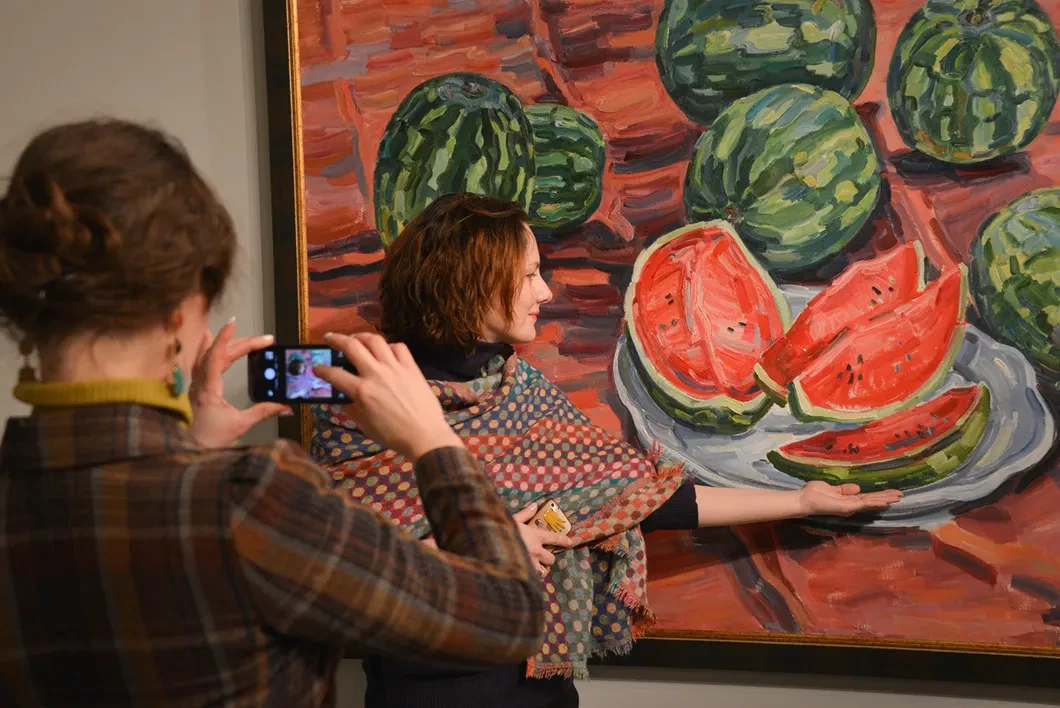
- What gives you a large format? After all, this is very time -consuming! ..
- Very, especially in winter, but I am interested - I need a large space. I can hardly meet small sizes.
- And how do you do the size of? After all, this is decided in advance, you need to prepare a subframe, canvas?
- At the time of the maturation of the task. When I find an object, I feel its condition, I begin to see both the format and the size of the future picture. That is, too, in the same place - in kind.
- And how are your decorative, symbolic things that are done in the workshop born?
- Yes, in general, the same. And in decorative things, I solve the picturesque tasks for myself first of all. And it should also worry and captivate me. And the main thing here is to worry. Because, I hope, when this excitement is in the artist, his picture will excite the viewer.