
Translated material
Someone in the air

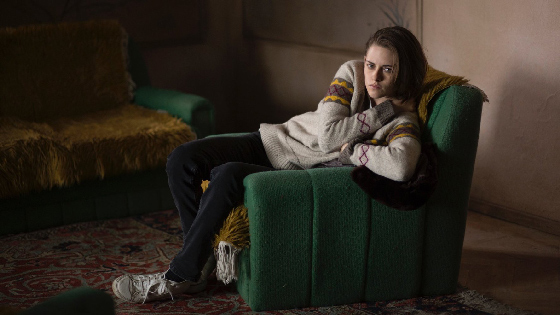
The last film Olivier Assayasa, Zils-Maria, was, by his own admission, Jules Binosh with a portrait. The “personal buyer” is kept on the portrait of Kristen Stewart, girls from Twilight, who unexpectedly turned out to be an actress of great realistic potential and partly stolen the role of Binosh (this castling, however, was provided for by the Zils Maria script). In the “Buyer”, Stuart still plays a servant: her heroine Maurin, dressed in a modest casual, works as a shopping assistant for a certain Kira, celebrities without certain classes. In her free time from visiting boutiques, she is engaged in spiritualism. Maurin is a medium, and in the first scene of the film, she inspects the old mansion for the presence of a ghost in it: eccentric buyers, married couple, they certainly want to buy a ghost house.
The choice of such a strange hobby in its case does not seem surprising - Morin herself leads an almost ghostly existence. The shadow of her employer, the pop stars of Kira, she is constantly on the way, constantly between cities, countries, time zones, between life and death (a rare pathology of myocardium threatens the heroine with death at any second). However, perhaps the ghost here is Kira: we hardly see her in the film, as, indeed, the rest of the people surrounding Morin. The presence of others is determined for the most part by a fuzzy picture in Skype, or even indices, with prints-in a voice from behind the frame, a note on the table, SMS (being in public places, Morin does not raise his head from an iPhone at all). Ectoplasm creatures knocking on ceilings in an old house, and even more real than these people. In this context, the phrase thrown by Kira’s lover, a rational employee of the German Vogue : “We don’t have love, it is purely physical.” The physical just seems to be an unacceptable luxury - even a crime - in the world of Bullshit Jobs , operating systems and instant messengers, only spectral entities from the past, spoiling furniture and water supply in old mansions are capable of a real direct action. Longing for a stable, tangible reality is generally a through motive for the film: the late twin, which Maorin misses so, worked as a carpenter, made cabinets. After his death, Maorin seems to lose the latest connections with matter, he herself turns into a material, according to which, as Marlene Dietrich sings in the only song of the Soundtrack of the “Buyer”, there is a lobby of life itself, sparing neither the poor nor, as we will soon become convinced, rich.
 © CG CINéma
This intentional drawback of a dense texture in a “personal buyer” may seem like a disadvantage of the film itself. But the cinema of Assayasas was always distinguished by a well -known anti -tactracy, elusiveness, lack of core - both the plot and the message. Stories in his films seem to not move anywhere, or rather, their movement is not progressive, the plot arches teleport the heroes to different points of the plane. This dynamics, in which there is no accurate ending - and therefore the future - is the effect of postmodern temporality with its eternal, inexhaustible past and rapidly narrowing, ephemeral, elusive present. The genre chosen by Assayas - more precisely, the format - the story of ghosts perfectly corresponds to such a historical consciousness: together with the Tsitgayst, the possibility of constructing subjectivity disappears (after all, it takes time to get involved in the role of himself), the individual turns from a particle into a wave, he is alienated from the profession, place and even gender. The Androgine appearance of Stuart, for example, resonates with two plot motifs: on the one hand, her heroine always tries to establish contact with her masculinity - spirit The deceased twin brother, on the other hand, acquires femininity, more precisely, steals her from his enslaver, deciding to finally try on her lakesher-house (the only sexually painted scene of the film-dressed in a transparent dress and a rubber of Kira, Morin masturbates in her empty apartment).
 © CG CINéma
The absence of an Assayas of a poster political message (even both of his films about the era of the street policy of the line of the 60-70s, “Cold Water” and the recent “something in the air”, look at the world of class clashes and utopianism by the naive eyes of a teenage hero) is often accepted for apopoliticism. But here, as in the case of the cinema of the Berlin School, it is worth talking about the latest biopolitics than about the old policy of passionate social gestures. In this sense, Assayasa’s cinema - and “Personal Buyer” in particular - is extremely politicized. The cold of the alienation of the new proletariat of the era of the economy of services and content hits from the screen in each scene, the expression of depressive fatigue on the face of Stuart, if it changes, is only a grimace of fear. Morin's correspondence episodes in Imessage look especially creepy - a routine digital communication appears as a real horror, worse than the scenes with roaring and vying ghosts. In a sense, “Buyer” is not even a bastard horror film, but a real cyberpunk, a film about a post-industrial present, trying to hide his presence, pass himself for a nearby, but future. Even unexpectedly, a rude ending in which the heroine is relieved to find that there is no one on the other side (death, screen, doors), except herself, should not read in the naive psychological spirit-they say, the girl finally found herself. No, optimism here can only inspire the sobriety of Assayas awareness of the whole desperate of the state of things: the pre -coat of the 21st century has nothing to lose, except for itself.