
Translated material
Power engineers and protesters met at conferences in Novosibirsk
In Novosibirsk, the scientific and practical conference "Housing and communal services, the energy system and the competitiveness of the regions" was held. Behind the boring name hid a unique event for modern Russia - the conference was held jointly by the Siberian Energy Company (SIBECO JSC) and representatives of the initiative group organizing rallies against raising tariffs.
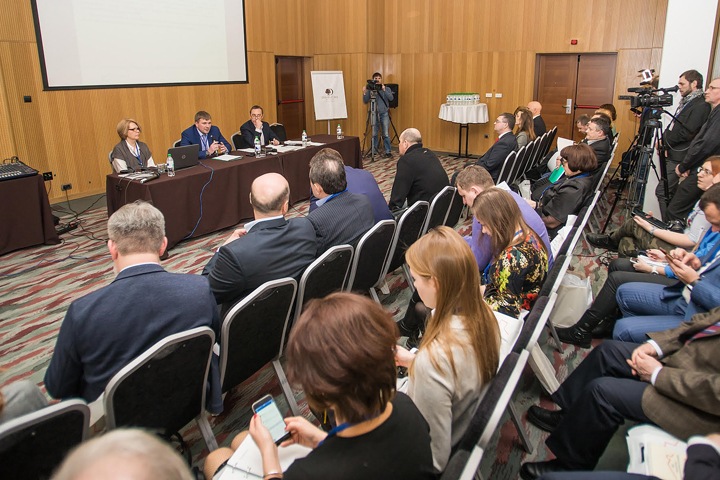
Representatives of the regional government, deputies of the city council and invited experts also took part in the discussion. There was no one from the MUP "Gorvodokanal", despite the invitation. Taiga.info publishes a report on the event.
A round table was led by a doctor of sociological sciences Konstantin Antonov, who emphasized the extraordinary of the event and indicated that it indicates a high level of development of civil society in the region.
The General Director Ruslan Vlasov made a thorough report on the work of SIBECO JSC and the state of the Novosibirsk energy system. The company occupies the fourth place in the production of electricity in the Siberian Federal District and the 19th in the Russian Federation. 70% of the territory of Novosibirsk is supplied with heat from thermal power plants and boiler houses belonging to the energy company. Throughout the city area there is a reserve of available thermal capacity.
In the report of Ruslan Vlasov there were many special terms, for example, kium, cogeneration, ugly. In simple language - on average, the equipment of SibECO JSC is loaded by 54% of the power for electricity production and 22% for heat production. In terms of electricity, this is the average indicator in Russia, and for heat - one of the best. It must be understood that the energy system is designed for peak consumption indicators, so it is necessary to maintain the thermal power of heat supply sources at the calculated temperature (for Novosibirsk --37 ° C), and not for average indicators. In summer, the release of thermal energy is insignificant, it is produced only for hot water supply.
For other indicators of work, including cogeneration (joint production of heat and electricity), the cost of electricity, specific fuel costs per unit of energy, SIBECO JSC has one of the best indicators in Russia. The Novosibirsk Region takes the second place in Russia for the availability of electricity for the population (due to the low amount of tariffs) and competes in this indicator with Irkutsk (where there is a large number of hydroelectric power stations, and electricity was the cheapest not only in Russia, but also in the world), the general director said.
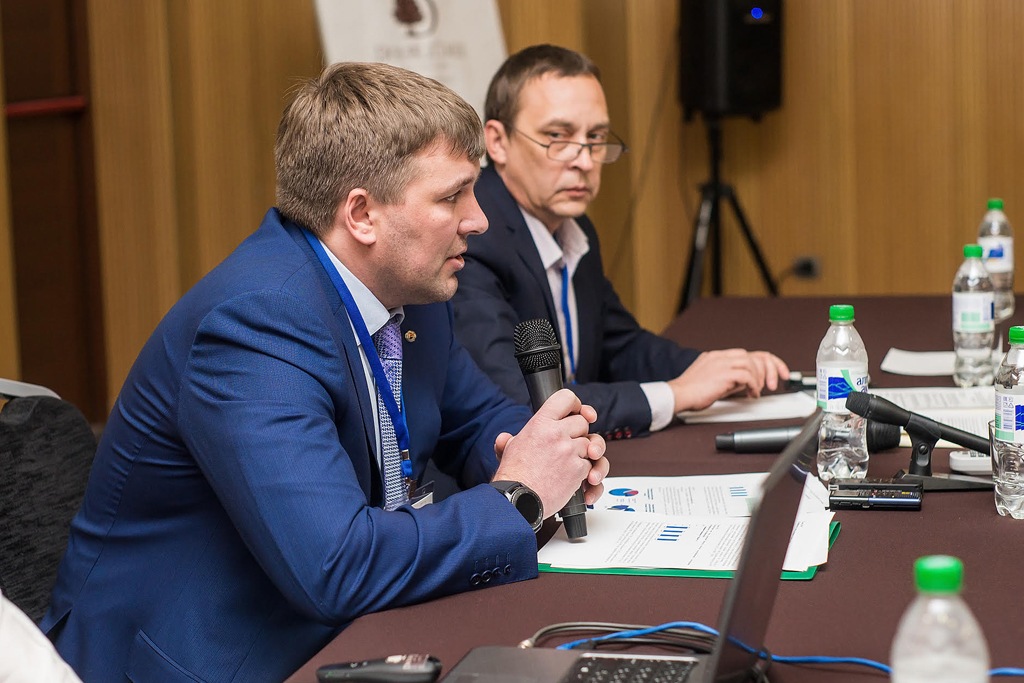
The loss of thermal energy in the SIBECO networks is 19.4% and are one of the lowest. On average in Russia - 30%. The heat energy tariff is at the minimum level relative to other large cities. At the minimum level, there are also accidents indicators - both generating capacities and heating networks.
In the conclusion, Ruslan Vlasov noted that the energy company demonstrates stably high reliability and efficiency of equipment. According to a number of complex indicators - the comfort of electric power industry for the population and a number of other consumers - the Siberian Energy Company is a leader in the Russian Federation, and the energy company systematically improves its ratings among competitors.
The next was the former vice-governor and doctor of historical sciences Viktor Kozoda, who honestly admitted that he was not versed in numbers, but will only talk about the social component. He emphasized that he has no complaints about the monopolist at all: the task of a commercial organization is to make a profit. But in the way of these interests, regulatory authorities should stand, to which Kozodoy had claims. He noted that in a crisis, a request for justice is increasing, and never anyone in history has never been able to convince the population of the fairness of a decision, based only on compliance with regulatory acts.
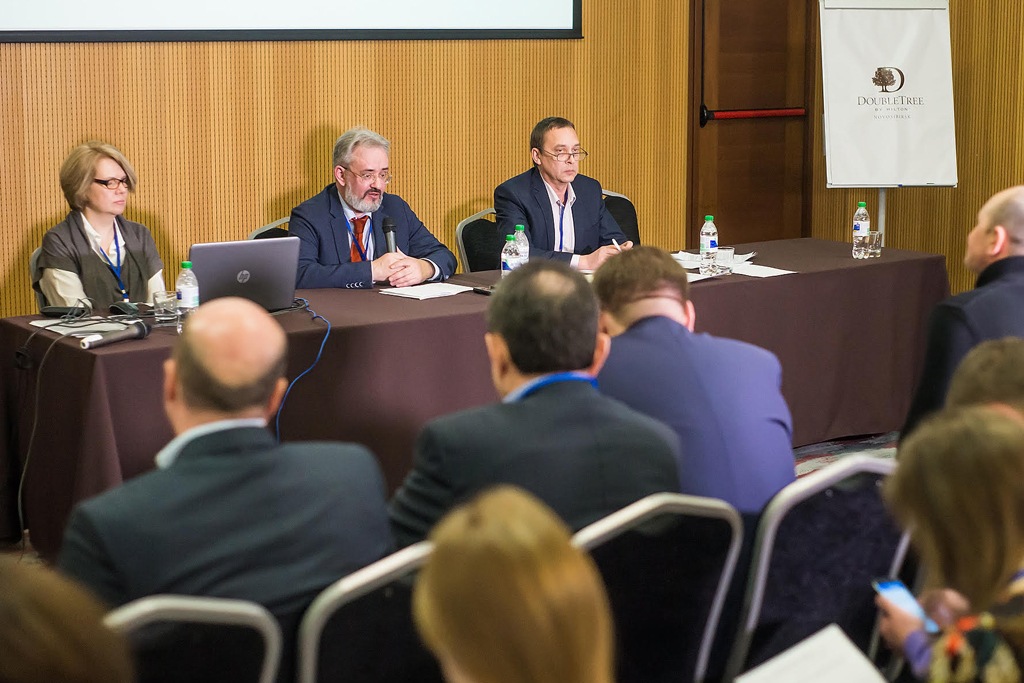
An expert in the field of energy, Sergei Ladutko, spoke about the specifics of tariff legislation. It turns out that centralized heat supply in Russia is experiencing a crisis - a high wear of networks, a drop in consumption. And therefore, in order to attract investments to the industry, it is planned to transition to tariff formation according to the alternative boiler room. That is, all these complex calculations are discarded - cost, losses, investments in fixed assets, dividing the costs of thermal and electrical generations. Instead, a certain “virtual boiler room” is taken, and then the cost of the heat that it produces is calculated. This cost will become a tariff. But not immediately, but after a few years.
So, for Novosibirsk, the cost of heat on an “alternative boiler room” (according to the government of the Russian Federation, if the speaker set it out correctly) will be 1.5 times higher than the current tariff. And in other cities - in two or more.
DSO Consulting managing partner Sergei Dyachkov told the audience about the impact of raising tariffs on small businesses. With examples, he showed that some of the goods and services will become unprofitable, and some entrepreneurs will have to either leave the market or sacrifice products.
At the end of the discussion, the head of the Department of Tariffs of the Novosibirsk Region Garey Asmodarov received the floor. When asked by the presenter, whether the interests of not only a monopolist, but also consumers are taken into account, ”he briefly replied:“ Yes ”. But then he still deciphered: “We can make the tariff for heat and electricity zero. And the small business will work great. But how will the generating company work? "
Asmodyarov also explained that his words about the relationship of raising tariffs with a decrease in consumption were incorrectly understood. This is not about saving by citizens who have set the meters and the system of regulation of heat consumption, but about discrepancies with planned indicators for which the work of the energy system was designed. According to Asmodyarov, he warned in the spring of 2016 that the planned scheduled indicators would lead to an increase in tariffs. Only this discrepancy between the plan and the actual vacation led to an increase in the tariff by 11%.
“In 2016, we had an updating of the heat supply scheme. The actualized heat supply scheme was approved by order of the Ministry of Energy. And, accordingly, the parameters of the scheme regarding the forecast of the production and supply of energy resources, in particular thermal energy, these balance indicators were approved by the Federal Antimonopoly Service, the head of the department said. - The denominator is formed at the level of federal authorities and draws up those indicators that were taken into account in the tariff. Accordingly, in relation to the 2016 plan, a decrease in useful leave was 5.7% - what was approved in the heat supply scheme. ”
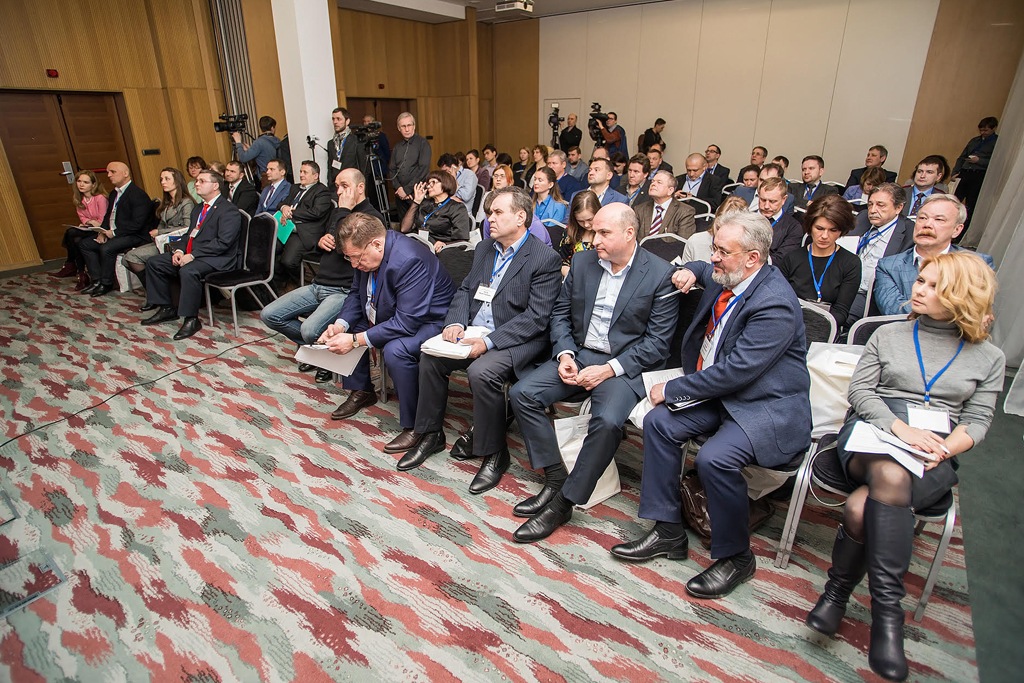
Ruslan Vlasov added: “When new tariffs for 2017 were accepted, many discussed the information that the consumer began to save, put counters, and this led to a decrease in the profit of power engineers. But, of course, this is a delusion. When the heat supply scheme was originally developed, they took into account the tremendous growth in construction in Novosibirsk and, accordingly, significant growths of the thermal energy. During the next updating of the heat supply scheme in 2014, the planned growth gains of thermal energy were not confirmed, but the adjustments taking into account the decline in construction and consumption were not fully passed. When they did a second update in 2016, and qualified specialists of the All-Russian Heating Institute were engaged in the development, they collected information from all participants-consumers, generators, builders. And taking into account all the necessary parameters, it was adjusted for useful heat leave in accordance with the actual developmental pace, the general plan and the application applications, as well as forecasts of promising development and thermal load. So, in accordance with the updating of the heat supply scheme for 2017, the useful release of thermal energy was adjusted to 800 thousand Gcal. Thus, a real forecast of thermal consumption is recorded. For example: in 2014, the volume of useful thermal energy leave was approved in the amount of 14.8 million Gcal, since the entry of housing was predicted in much larger volume, and in fact the release of heat energy was 13.6 million Gcal. And so the subsequent years continued. Today, the data adopted in the scheme corresponds to the actual position in the city heat supply industry. One of the important components of the results of the developed (actualized) heat supply scheme is a promising heat balance, a predicted scheme project. Based on the government’s decree, data from the scheme are accepted for calculation by a tariff regulator to determine the tariffs of future periods. ”
During the discussion, the parties remained with their opinion. However, Viktor Kozoda noted that the organizers set themselves to be achieved: "To begin the constructive dialogue of all interested parties, to indicate the positions of the parties, to express in the eyes, everything we think, to express our proposals."
Photos of Sergei Mordvinov