
Translated material
"The history of the movie consists of the dead"
Director Olivier Assayas - about "Personal Buyer" with Christin Stuart and Ghosts
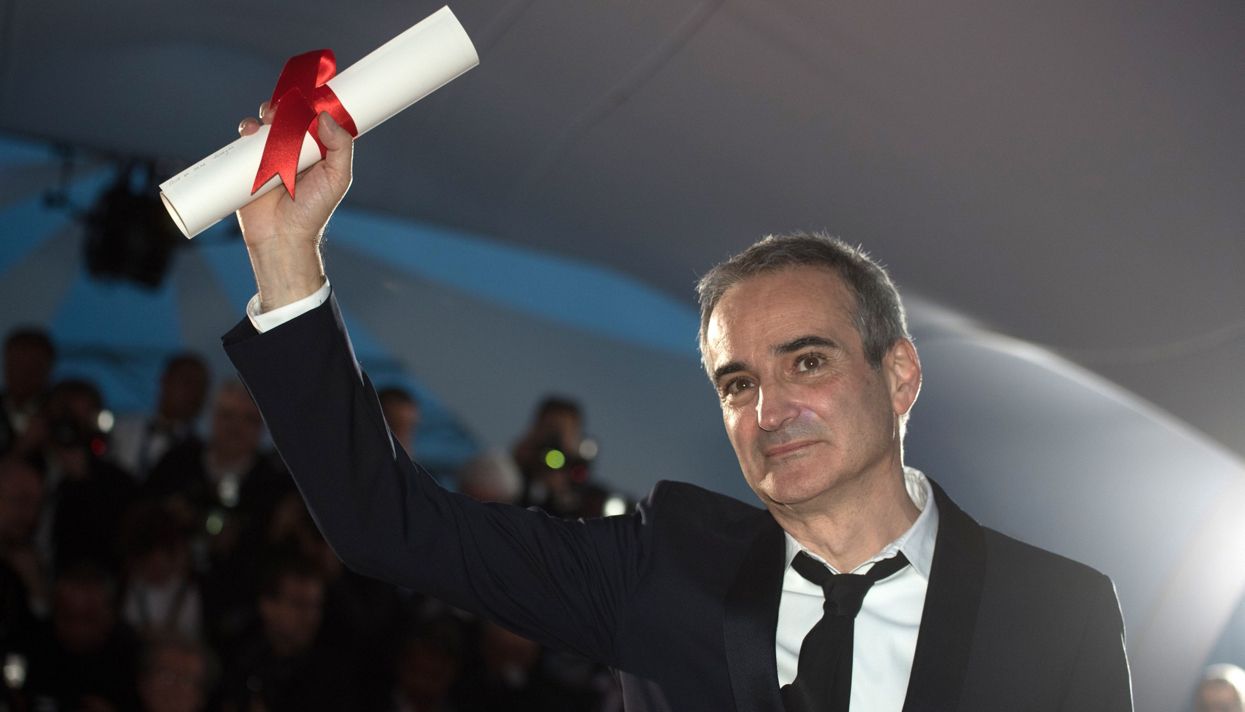
A painting by Olivier Assayasa “Personal Buyer” with Christine Stewart was released in Russian rental. In 2016, this film brought Assayasa a prize for the best directing at the Cannes Film Festival. According to the plot, the heroine Stuart is an assistant to the star who needs to choose a wardrobe. And also - she dreams of establishing a connection with the other world and does it with a mobile phone. Kinocritic Anton Dolin spoke with Olivier Assayas about his new film, the existence of ghosts and the best role, Christine Stuart.
- In Cannes, your “personal buyer” received a prize for directing, but there was an obstacle to a noticeable part of the public. Did it upset you?
- I shoot for everyone, but I still can’t foresee how they react. I'm trying my best to make the best movie and then I can only shrug. One way or another, when you are dealing with invisible and irrational, you step on fragile ice: with these questions, everyone has their own intimate relationships. Either the audience will accept your statement, or reject.
- Do you think the audience accustomed to your work will recognize you in a “personal buyer”?
- Yes, this is indisputably the film Olivier Assayasa, because this is a picture of the subconscious. I often flirt with genre cinema and in almost every film I try to explore the invisible: “Personal Buyer” is no exception. I risk, try - will it work or not? A step forward, another step ...
It is clear that one could do without experiments, making the same film each time. But how boring it is! And I need it to be interesting. I mix the elements like a chemist, and watch the resulting. Sometimes it turns out, sometimes not. It seems to me that in general any cinema is so arranged. This is a collage, the interaction of different levels of the plot and the figurative series.
- How did this film start?
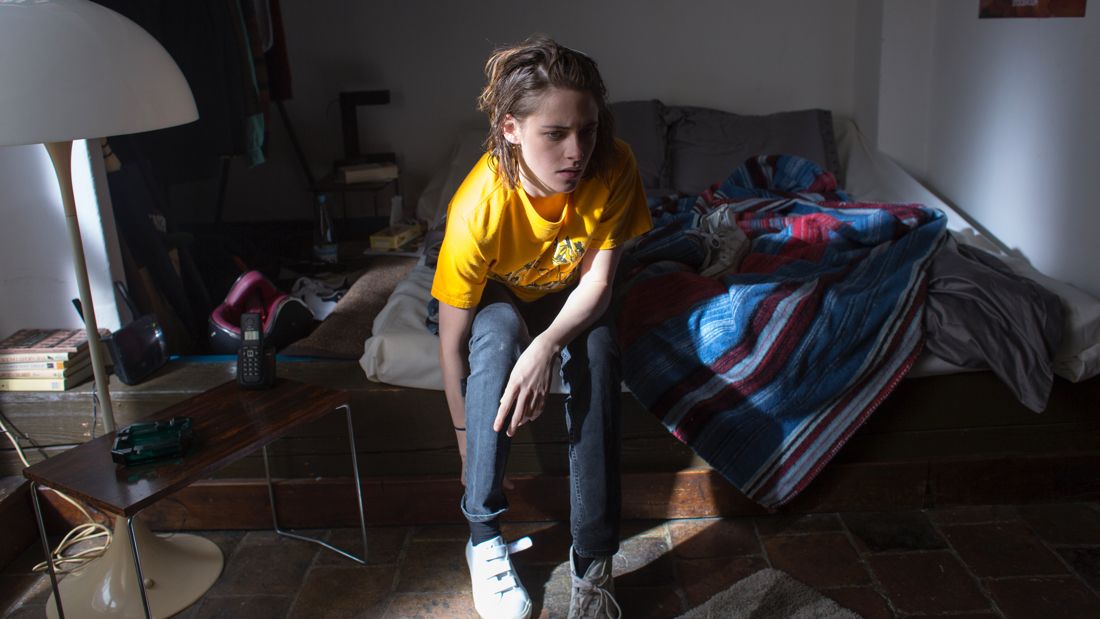
- I wanted to tell the story of the heroine, which is breaking between her materialistic, mundane work and the craving for abstract, ideal. Pour a modern world where there are no other values, except wealth and well -being, with questions of inner life, striving for the impossible. This vague plan grew into a plot about the ghost - a kind of connected heroine with the spiritual world.
- Where did you get this love for films about ghosts?
-Any genre picture on this subject, bad or good, is dealing with something real. After all, each of us has an inner life and some fears. This comes from the subconscious that we control, remaining for us the mysterious area. All our lives we have been trying to figure it out - and rarely succeed. For me, each such film is completely realistic, whether it is a trivial b-movie or a picture of John Carpenter. Or even David Kronenberg. Phantoms are closely related to reality, they are part of our life. And I do not recognize the boundaries between fantasy and reality. We all live in a fictional world.
“Did you think about how to show the ghosts on the screen?”
- I had a simple choice: show them or not to show. The second option, of course, is easier and more pragmatic, but it was still important for me to somehow see the ghosts. They are similar to reflections in the mirror that we can always ask about: they are ominous or friendly, can they harm us or help us?
In Protestant America, there is a simple Manichaean model: everything you see is beautiful, and hidden from the eyes is bad. In Europe, classical literature taught us to expect anything from behind the ziperkalya - perhaps good. This ambivalence attracts me. And my heroine too: she is not sure that this is the same contact with the irrational. And I wanted to combine seductive and frightening.
- What inspired you to these thoughts?
- Spiritism of the XIX century - including descriptions and even photographs in newspapers of that time.
- Why did you decide to take Kristen Stuart for the central role?
- She is so real, her physical presence is so noticeable ... She has strong soil under her feet. And that is why it helps to believe in the impossible. The emotions experienced and transferred to her are true, in her faith you will not doubt the incredible. This allows you to believe the viewer. I understood this when she played in my Zils Maria. Then I decided to specifically write a script for her “Personal Buyer”. This is a truly risky project, and you must take a hundred percent in the artist’s ability to embody your plan on the screen.
- And how did you even understand that she is an amazing actress? It seems to me that at the stage of Twilight it was obvious not to everyone.
- I saw Twilight, a couple of episodes. However, she shocked me in the film by Sean Penn “In the Wild” : she had only a few scenes, but what! Who is this girl, wow - so natural, so expressive? Then she starred in the picture of Walter Sallesh “On the Road”, and her producer is my close comrade, and they became friends. He buzzed all my ears about her, then introduced us. In general, I reacted languidly - at that time Kristen was already a star, and it did not seem to me that my film would interest her. But she turned out to be an amazing person and instantly agreed to my proposal.
Kristen gives a lot to the film in which he is shot, and much is able to take from him. She is deeper than many people think, I understood it right away. He also felt that she had never played a heroine like her in her life. So I decided to give her such a role in Zils-Maria. It looks like it worked.
- When did you realize that the smartphone can be a door to the subconscious and to the other world?
- This is not an idea. This is a fact. A smartphone is an important measurement of our daily life. I am indifferent to smartphones and SMS as such, but I am interested in how they transformed our perception of the universe, how they literally changed humanity. Through the phone we are connected with the Internet - that is, in fact, with all the knowledge accumulated by civilization, genuine and invented. Our connection with the social network becomes a specific brain expansion.
- Your heroine does not part with the mobile - and at the same time lonely. In your opinion, gadgets and social networks have the opposite effect, isolating a person from society?
- Yes, and no. Loneliness is a topic that is also very interested in. My heroine lives in a foreign city, her boyfriend is in the distance, the plans are foggy, the future is unclear. She has a job, she constantly meets people - but she is alone. Modern loneliness is just this: it does not prevent a person from being surrounded by all the time and included in various forms of communication. If the action was unfolding in an era to the Internet, then the heroine would have plunged into books or painting, and today her companion is a smartphone screen.
By the way, it seems to me that I have never made such a “lonely” film. All my previous paintings were about the relationship between characters with each other. And here about the relationship with the phone, which can also create a unique stress.
- Why does she have such an unusual job?
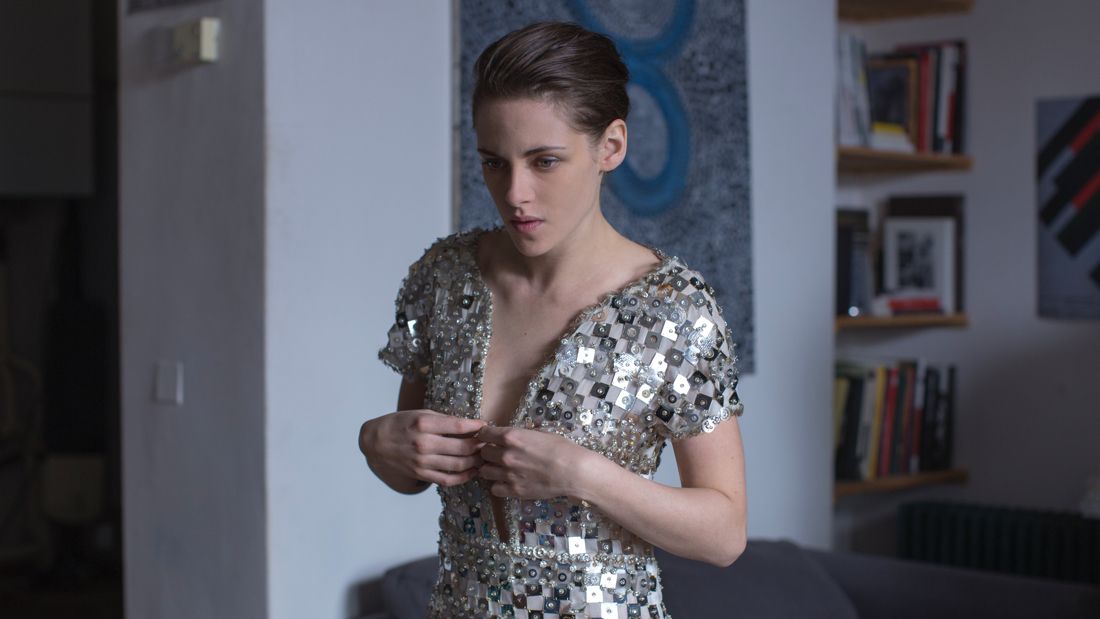
“I was attracted by the idea of researching the“ Fest industry proletariat ”. These people are dealing with the most superficial that exists in the world. Nevertheless, in this universe there are talents and artists - with all its materialistic landing. Both beauty and sexuality are there too. My heroine hates her work, considering her boring and meaningless, but, as if against her will, feels her attractiveness and cannot resist this attraction.
- It would be stupid not to ask - you yourself believe in ghosts?
- Well, of course! I live with ghosts, I do not part with them. It all depends on how you interpret the word "ghost". Suppose you at night in an empty house somewhere in the wilderness, and then traffic jams fly out, darkness comes. In the dark at that moment, everyone believes in ghosts. Something impossible could happen at this moment, we all know this. This knowledge is part of our DNA.
Of course, what we are afraid of is not outside, but inside us, but what we call ghosts are projections. But do we not talk to them constantly? With friends and relatives who have passed away? With fictional literary characters? Our personality consists of these conversations. These creatures are physically not near them, but we are talking with them. What is it, if not communication with ghosts?
“But the movie is filled with ghosts.”
- Films of ghosts consist, of which more. Creativity, the creation of something new-the process initially ghostly; You can never say that you are fully controlled. The history of the movie consists of the dead. That is, ghosts. Dumb cinema - why not a purgatory?
Anton Dolin