
Translated material
Edrian Sherwood: "I am an analog person"
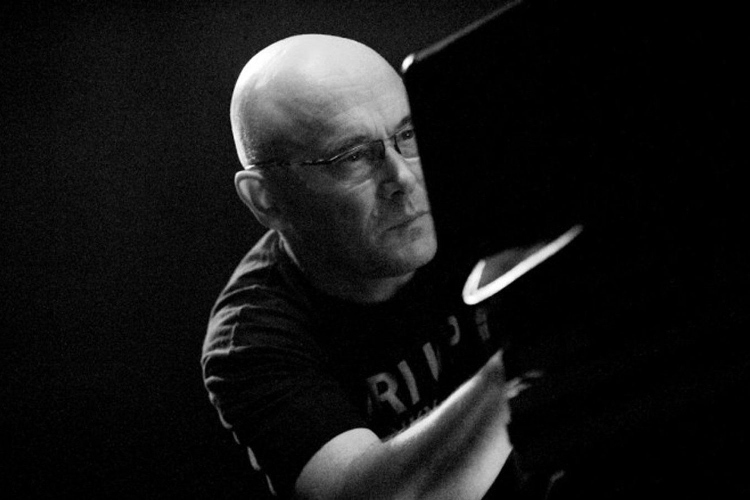
59-year-old Briton Edrian Sherwood is a man who stood behind the scenes of several sound revolutions of the 20th century. Thanks to his influence as a producer and sound engineer, the British post-pack group-from The Slits and The Fall to the Public Image Limited-discovered the Yamaisky reggae and technique of Daba. He put the sound of the pioneers of industrial and worked with Depeche Mode, Einstürzende Neubauten, Ministry and Nine Inch Nails. Without Edian Sherwood, there would be no later replicas of dance music based on slaughter bass, such as Dzhanl and Dabstep. No wonder his latest album "Man vs. Sofa ”, released a week ago, is recorded with the young electronic producer Pinch. Edrian Sherwood has just visited the Moscow Festival of Experimental Electronics and Sound Art of the Geometry of the present, where Denis Boyarinov managed to meet with him.
- How did you love the reggae?
- When I was a child, I liked another music - t.rex , plates of Tamla Motown , Soul and any English pop. When I went to school, children from Pakistan, India, Ireland, Poland, from the Caribbean, Jamaica studied with me. There was even one Russian guy. His last name was Smith, but his family came from Russia, which they left after the revolution of 1917. In a word, in my school there were children of different blood, different skin color and different background. Therefore, we listened to different music. My friends loved Pink Floyd and Mungo Jerry . And I discovered Caribbean music - Calipso and SKA.
Then reggae appeared-I was about 14 about 14. I had a friend-Gilbert Barker, his family came to England from Western India. The first time I heard reggae in his sister's bedroom. She made herself a hairstyle for reggae plate, who played on her small player. The quality and insanity of Jamaica music impressed me incredibly. I instantly hooked on her. Over time, my love for reggae turned into mania. I also like other music-I recorded Fank with the Tackhead group, produced industrial musicians, worked with Nine Inch Nails and Depeche Mode . But in every genre I used techniques that I had gleaned from reggae and dabe.
- How did you become a sound engineer?
- I was 19 when I began to work with the Jamaican singer and DJ Prince Far I. He had a tour in England, and I was with him like Road Crew - dragged gravity, there was a master with all his hands. In those days, sound engineers in the clubs simply stood behind the remote control and watched that anything would not turn off. And I was a persistent and annoying guy, all the time I molested them: “More bass! More tall! More vocals! More reverb! ” One of them boiled, said: he yourself, they say, do everything, since you are so smart. The first time I was scared, but after three shows I already figured out everything. At that time, few did this. Dennis Bovell (guitarist and producer who worked with Slits , Orange Juice . - Ed. ) Was one of the first. After the concerts, people came up to me and said: "The sound was fantastic!" This nourished my self -confidence. Having worked somewhere around 20 concerts as a sound engineer, I made my first recording session. Fun for the sake. So it got involved (laughs) .
- More bass! More tall! More vocals! More reverb!
-You produced the records of many British postpank groups. Did they look for you or did you find them? Why did the British punks have such an interest in reggae and daba?
- At that time, the Rock Against Racism movement was very popular. There were concerts, festivals, public organizations - Jamaican music was a symbol of anti -racist music. Perhaps the popularity of reggae is explained by the fact that it was promoted by the right people. For example, Johnny Rotten from Sex Pistols , who was a big star at that time, loved reggae very much. He began his first radio show with the song Dr. Alimentado "Born for a Purpose" is a great song. The lyrics of the songs of angry young British were consonant with the texts of the Jamaican artists. The rockers and Pankov had a similar philosophy - do not trust people, especially the Hanjam and Svyatos. In the mid-1970s, groups appeared in Britain that began to play reggae- The Ruts , Misty in Roots , in America- Bad Brainz , however, it was a little later. The hobby of Johnny Rotten Regga was manifested in the fact that his next group Public Image Limited was in essence Dub: remember the slow bass parties Joe Ubbla. Then The Clash joined this wave. In a logical way, the matured punk-test switched to reggae. I was lucky because I happened to work with many interesting groups. Each time it was the interchange of knowledge and experience-I studied something myself and taught them something. When some group offered me to work, I asked myself: can I add anything to their music? And agreed only if I felt that I could
The Slits - "Man Next Door"
- What group or musician has become the most memorable for you?
- With Mark Stuart, with whom we made the Mark Stewart & The Maffia project. He had a very much influenced my life. I took his attitude to life and his philosophy. In addition, I consider it an unsurpassed author of acute social and political texts.
Mark Stewart & The Maffia - "Learning to sope with Cowardice"
- And what is he doing now?
- I saw him last week, he is my close friend. Now he is concerts with Pop Group in England. They recently released the Honeymoon on Mars album, which was produced by the already mentioned by Dennis Bovell.
- How will you perform today?
- I gathered on the stage I kiss the sound recording studio. I have a bass barrel, Snape, hi-het, a guitar, vocals, two CD players, a noise machine, two reverbers and three dealers. Enough for a living dub show. We will make a journey from the root reggae and Daba to Dabstep and Jangla and vice versa. To each track that will sound today, I have a relationship as a producer or co -producer. Today I will play music that no one but me can play - unique and special versions of the tracks I have made. In fact, it will be a disco in the style of the first Jamaican sound systems.
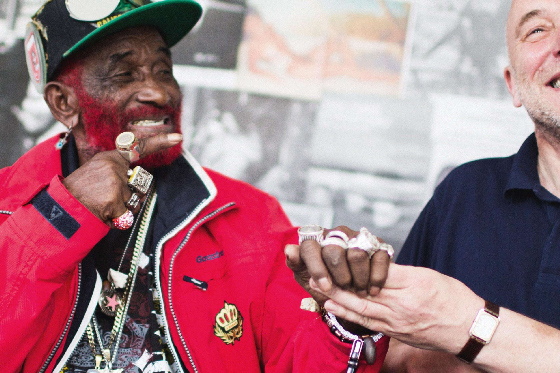 © Red Bull Music Academy Lee Scratch Perry and Edrian Sherwood
“After you, a person will perform, without whom these sound systems would not have been-whether the“ scratch ”Perry.
- Today I will not be his sound engineer! I would love to stand behind the remote control - usually I do so when I perform together. But there is a digital remote control in the hall, but I do not work for such. I am an analog person. We are friends with Lee. I will go to his dressing room after the concert.
- And how did you meet Lee Skratch Perry?
-It was in 1985 or in 1986. During the recording of our first album , Time Boom X de Devil Dead .
Lee "Scratch" Perry & Dubsyndicate - "Music + Science Lovers"
- He was already a legend then. Was it difficult to work with him?
- He is a mystical person. Have you met him before?
“I don’t even fully believe that it exists,” he is a legend.
- He should be 81 years old soon. On March 20, he has a birthday. Lee is a very difficult person. It comes from an ancient African family, from which he adopted a system of perception of reality through streams of energy, spirits and magic. That real voodoo. He understands this and is very serious about this.
Lee Skratech Perry is a mystical person.
- Was it difficult for you to find a common language during work?
- Not at all. Lee has a great sense of humor. It’s easy for me to communicate with him. He knows that when we work together, the result will be excellent, since I am very attentive to details. We recorded the album " Time Boom X De Devil Dead" in 10 months. Some musicians make records in a few days, and I spend a lot of time on my albums.
-You have just released a new album with a young Dabstep-producer Pinch .
- Just the day before yesterday! Have you already listened to him? I am very proud to them, and by the way, it has a wonderful track with Lee Scratcha Perse “Lies” . Today I will play his new version.
-What do you feel when young musicians call you a guru, a patriarch and a sound-inventor of the sound that influenced them?
- Honestly? This is a great honor and the best reward. For me, when people say that you made them happy with your music or influenced their development, it is much cooler than being rich. This is the largest compliment in the world.
Tackhead - "Mind at the end of the tether"
-For more than 30 years, you have been holding your own label on-u Sound ( on-ut.com) , release vinyl records. How do you live in this business now?
- It is very difficult. There are less and less shops selling plates. In the 1980s and 1990s there were much more. Even 15 years ago there was nothing. And now it is a completely different world. Thank God, I and my label have devoted fans from around the world who continue to order vinyl, because I release it. Now, when I come to the studio to sign up with steep musicians, I get up to the problem every time - then I can then sell this record and pay for its seal. If I think not, then I leave an unrelated entry in my archive and play during the performances. Such as today.
-Do you advise something to young Russian musicians as a patriarch and guru?
- My advice is simple: play the instruments more. Look for cool musicians and vocalists - invite them to the studio, write them down. Many young people work with computer programs and sound libraries. But these are all standard sets. You need a sound that will make you unlike others, add the colors and wyba to your music. Highlight you from the total mass. It can only be found while playing in the studio.
- What about the right heavy bass?
- BAS is important only in very niche music - like a dubstep or other directions of dance electronics. Such music does not live for a long time. If you want to make music for a large audience and for a long time, we must not forget that the bass is only the foundation for the melody. For example, I love good songs most of all - beautiful melodies with powerful bass.
My advice is simple: play the instruments more.
-I read somewhere that your love for bass and duba is explained by the fact that you do not distinguish tonalities. This is true?
“I'm not a musician.” I am a producer and sound engineer. My tool is a mixer remote control. If I whistle the melody for someone, then it will be in the tonality of La Major. And if I write a melody, then it also will most likely be in the tonality of La Major. It is most convenient for me. So I work only with very good musicians who understand what sound I want to achieve: that others do not have.
- Where do you live now?
- In the city of Ramsgit. He is on the seashore, not far from Duvra-somewhere in a half an hour by car. It is impossible to live in London - there is nothing to breathe and very expensive. Since I settled in Ramsgit, a lot of musicians have moved there. We have four recording studios and one very good club here. It's great there.
“Have you ever thought to move to Jamaica?”
- No. Life there is difficult and dangerous. Poverty, violence, crime. One of my good friends, an amazing drummer who recorded Time Boom X De Devil Dead , was killed two years ago in Yamaika. During the robbery. Every day people are killed in Jamaica. This is very sad. The places there are incredibly beautiful - nothing threatens tourists. I love Jamaica, but I would not want to live there.