
Translated material
Under the dome
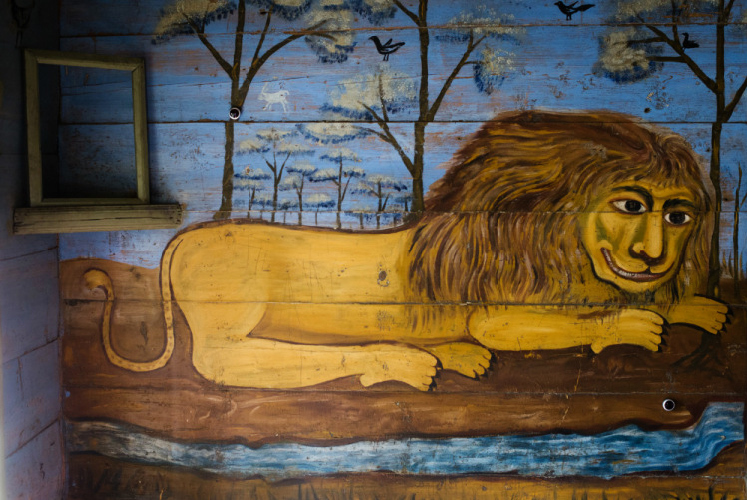
You will be met by a fiery lion there
I.
So I imagined Raskolnikov: a pale, dark -haired, very thin young man with thin features. Nikolai was also a birth from St. Petersburg. However, it quickly became clear that the young man with the appearance of a nervous student had not been like that for a long time, moreover - he taught at the university for several years, was engaged in international educational programs and, by his thirty years, seemed to have managed to trace the whole world. He knew several languages, played musical instruments, read poetry as a sake of memory, understood architecture and versed in wines. I brought me graceful shoes from Paris, who sat on the leg surprisingly well.
We began to communicate, probably, a year ago. I was then interested in studying abroad and wrote off with him about some kind of program. A dry correspondence ensued between us. We saw each other a few months later - I got sick, and Nikolai brought my house and sweets home. During this visit, he behaved so restrained and polite that the girlfriend who was present at this meeting later noticed:
- That's right away - an old man from St. Petersburg. Now there are almost no such ones.
After all our meetings took place with huge breaks - each of us worked a lot, and Nikolai was also constantly on the trip. At meetings, we walked around the city, drank wine or coffee. He knew Moscow well, which after ten years I could not boast of in the capital. He talked a lot about France, where he often visited. I even heard a couple of times how friends called him Nicolas. His living curiosity, restlessness, the desire to know everything and everywhere were surprisingly combined with a calm character, in a quiet voice and not at all tense, bright face. And, perhaps, this was the first person next to whom I felt that I had absolutely nothing to tell me - yes, probably, it was not necessary.
I knew that Nikolai is a believer and goes to church. But we hardly touched this topic in our conversations until my text about fortunetellers came out. Nikolai timidly noticed that the desire to find out his future is a sin.
“Probably,” I agreed. - But only I wrote my text out of interest in people and places that are “behind the line” - that is, beyond our everyday world. And not at all because I really wanted to know the future.
“Well, this is probably what I can understand,” said Nikolai.
And a few days later he invited me to go to the Rogozhskaya Sloboda - the center of the Moscow Old Believers.
“I have things to do there, I need to convey something,” he explained. - And maybe you will be interested to see another place “behind the line”.
I agreed.
I vaguely remembered only some facts about the Old Believers from school: the cause of the split became church reform in the second half of the 17th century, which Patriarch Nikon spent under Tsar Alexei Mikhailovich; Like any serious reform, these changes had cultural and historical reasons; The Old Believers were persecuted. Yes, even thanks to the picture of Surikov, I remembered that they are baptized with two fingers.
In the article on Wikipedia, I read that there were some priests and non-pipping people, but quickly got confused and quit sorting out. She looked at the photograph of the current head of the Russian Orthodox Old Believer Church - Metropolitan Kornil. I read that he worked for 35 years with a turner at a cotton plant that once belonged to the Old Believer industrialists Morozov. From the card, an old man with a large beard looked at me severely.
The road to Kachemak-Helo lay past the black beach. The sand is dark, volcanic origin. And nature is very Russian. It seems you see a birch, you come up - and this is a maple. Changeable and ghostly land.
Before choosing clothes appropriate for our trip, I carefully studied publications on the sites of the Old Believers. From the first text that I found, it became clear that in this environment there were its own conservatives and liberals. Thus, zealots of traditions urge the Old Believers to wear cosyams, zipuna and scum. The word "holes" puzzled me great. The search engines stubbornly corrected him to the "winter." At first, I decided that it was some kind of bast shoes, but, having worked with the search query, I still found out that it was hoarse-or, rather, “azyam”-these are long men's clothes. Such vestments are also called caftans or even chitons. In the old days, the cut of Azyam, his color and style could tell a lot about the parishioner - for example, he is married, single or widower. But now there are no single rules for the Old Believers, and much depends on the traditions adopted in a particular community. Most Old Believers wear such a costume only for worship, and in worldly life they prefer ordinary modern clothes - but discreet and inexpensive.
After making sure that the disturbing “hoarse” did not threaten me, I began to read about other elements of the Old Believer costume. It turned out that the belt was attached to the great importance - without a belt, as without a pectoral cross, one cannot pray to God. The symbolic purpose of this subject is the separation of spiritual and carnal, the top and bottom. In one of the materials I read, it was said that the expression of “racked” has the most direct attitude to this element of the old Russian costume and it is not accidental mean licentiousness and incontinence.
Finally I found material about women's clothes. There were also their nuances. Conservative forces demanded that a woman under no circumstances wear “male outfits”, in other words, pants. “... The Gangers Cathedral in the 11th rule commands to excommunicate a wife if she puts on men's clothes (even if it is done for abstinence),” one of the resources reported. I was very interested in the question of how the pants from carnal sins can save, but this was not said anywhere.
The traditional prayer costume of a woman included a lower shirt, belt, a dark sundress. Sarafans wear worship now, sometimes parishioners even leave them at the temple.
A separate moment is a scarf. It turned out that the Old Believers did not like it when it is tied with a knot, because the knot is a “symbol of Christocent”, the sign of the “Juda of the Black”. The scarf should be stuck under the chin by a pin. In the articles that I read, however, it is noted that there is no canonical substantiation of rejection of the node - this is the rooted belief.
Entire pages are dedicated to the art of tie a scarf on the forums of Old Believers. Previously, by the nature of the scarf it was possible to understand whether the parishioner is innocent: unmarried girls covered their heads so that on their backs the scarf lay with an edge (flatly covers the shoulders), and it was necessary to put the fabric “on the corner” (on their backs lies with a triangle).
“No matter how you tie a scarf, the main thing is not to look careless,” the user of one of the Agnia forums instructed. She explained that the ends of the scarf in the front should be the same length, that the smaller side of the scarf should not be on top of the fur coat, then the ends of the fabric should be pulled out and laid out on top of the fur coat, that the hair should not stick out from under the scarf, and the bangs, if any, need to be removed under the scarf with a hoop.
When it was finally clear to me that the attempt to correctly tie a scarf in front of the temple would simply drive me crazy, the Lord has mercy and sent me a link to the leadership for the “dissenters” who wanted to visit the Old Believer Church - the scarf was allowed to tie as much, but the makeup and high -heeled shoes were banned. In addition: “The bag should be removed from the shoulder, hold your hands on your chest. It is not supposed to be baptized and bowed. ”
Understanding these simple rules, I chose a long woolen skirt on the floor, a dull black sweater and closed boots. I had no scarf at my place, so I put a dark, discreet steamer in my bag.
II.
When the next day we met with Nikolai at the Taganka Theater, he approved my outfit and even said that I was more like the Old Believers than many of them. I decided to consider it a compliment.
On the way to the bus stop, I asked Nikolai how he found out about the Moscow Old Believers.
“It all started a few years ago with a trip of my colleagues to Romania,” he answered. -Upon returning, they talked about fishing villages in which people looked strange and strangely spoke Russian. Perhaps this was the first time I heard about the Old Believers. For some reason, this information really hurt me and did not go from my head for a long time. Then there was such a case. I was in my hometown, in St. Petersburg. And there was Easter. I defended the service, and then went home on foot. And suddenly he remembered - for no reason - that there is a cathedral that belongs to the Old Believers near my house. I walked past him many times, but his doors were always locked, and strange rumors went about this place itself. I thought that maybe it would be open on Easter there, and decided to go in. I bought a cake on the road. And now I come with this cake, I knock. The door suddenly opens. And there is a man - in a red caftan, in high boots, with a beard. He took the cake, closed the door. I never visited inside. And from this moment I became completely interested.
- And how did you get to the Moscow Metropolitan?
- Previously, the Moscow Metropolis was a scientific conference in Alaska, after which I visited the village of Penopovtsev.
- Wait, wait ... Alaska?!
For the first time in my life I saw a person who was in Alaska. Which was in Alaska at a scientific conference. Which was in Alaska at a scientific conference and saw the Old Believers there.
In the cold, but already spring sky, the sun suddenly looked around and for a moment illuminated both the stop, and I were with Nikolai, and he suddenly seemed completely different to me in this light.
While we were waiting for a trolleybus, he said that after a conference in the city of Anchoridge he had a couple of free days. Easy to rise, sociable and curious, he met with an American Tim, a local traveler who had lived in these places for six months.
-I knew that somewhere nearby there is a bay where whales jump. But Tim suggested that I go to the southern coast of the Kenai Peninsula and look at the places where the mountains meet with the ocean.
During the trip, Tim told Nikolai that there are many Russians in these places, but they look and behave very strangely: they wear beards, they sew their clothes themselves, and you won’t stretch out the words from them. Nikolai immediately realized that we were talking about the Old Believers.
The woman took the steering wheel, said in Russian: “Rogalik”-and carried her away somewhere. Then she returned and again silently sat on the bench.
In one of the advertising prospectuses that he captured on the road, it was said that Kenai is located in the Old Believers called Nikolaevsk (a little more than 300 people live in it), as well as several separate settlements-ascension, non-packet and kachemak-selo, in each of which the number of inhabitants barely exceeds one hundred people.
- How did they end there? I asked.
Nikolai explained that after the revolution in Russia, the Old Believers, like all believers, were persecuted and repressions. Saving themselves and their faith, they fled to other countries. So there were parishes in Italy, Bulgaria, Spain, Portugal and even in Uganda. A very strong community is in Romania. Some of the Old Believers were sheltered by countries like New Zealand, Canada, and Australia, where it was easier for old-time peasants to find work on Earth. A certain number of families took Argentina and the United States. They arrived at Alaska late-supposedly one of the rich, rising migrants-old-breeders simply bought a large piece of land there and called for compatriots.
“Tim and I got into Kachemak-set-the most radical settlement,” said Nikolai. “But at that time I did not know anything about it.” The road to Kachemak-Helo lay past the place that Tim called the black beach. The sand is dark, volcanic origin. And nature is very Russian - as in our middle lane. And the climate is pleasant for us. Only everything is a little not like that, and what is not like that - you won’t get it right away. For example, it seems to you that you see a birch, but you come up - and this is a maple. Changeable and as if a ghostly land.
At the entrance to the settlement of the Old Believers, Nikolai and Tim began to seem that the car was completely entering another dimension. So, a woman in a sundress suddenly flashed past a jeep, with bizarrely braided hair. Closer to the village, bearded men in caftans began to meet. The road went uphill, Tim’s car barely crawled, but the people themselves were moving very slowly, which was why even the time in this place flowed differently.
-You someday played Might And M agic ? - Suddenly Nikolai asked me.
- It seems that everyone played in childhood.
- So she created the same impression of the inhibition of space and time. Antedient graphics, the heroes move slowly, the faces are impenetrable, all phrases are pronounced for a long time. One to one kachemak-set.
According to Nikolai, the settlement was found only thanks to Google Maps . However, there is no panoramic survey of the village itself, because it is private property. Seeing the tree on the tree, Tim also refused to go further, frightened that the Old Believers would not approve the invasions of the newcomers. Nikolai went to the community alone. At the entrance to the settlement, he met a girl.
- One in one chocolate "Alenka". And he walks as they don’t go. She quickly sorted out her legs, seed,-continued Nikolai. - I tried to speak with her - both in Russian and in English, but the girl only smiled and was silent.
The settlement met him silence. The same low houses looked completely new. The windows were drawn. Nikolai drew attention to agricultural machinery - also new and modern. There were no shops or cafes in this settlement. There was no church in him. Having wandered between the houses, he stumbled upon the school building. A woman suddenly came out of him - also in a sundress and also with a complex hairstyle.
- Then I already found out that you can understand the hair whether a woman is married or not. Girls can walk with long braids, and women braid them up.
Noticing him, the woman sat on the bench and froze, cheating with one hand. Nikolai greeted her and began to explain the purpose of his visit.
- You see, we are used to the fact that people when contact immediately begin to react. You say: "Hello." And in response to you right there: "Hello." And the Old Believers are not like that. I don't even know how to explain. For them, everything is of great importance - even the number of buttons on clothes. And great importance is attached to the words. But then I did not know anything of this.
The woman looked at him and did not say a word. Nikolai began to get lost. Then it occurred to him to treat her with a steering wheel.
“I always take the bagels with me on trips,” he added, noticing my perplexed look.
The woman took the steering wheel, said in Russian: “Rogalik”-and carried her away somewhere. Then she returned and again silently sat on the bench. Nikolai asked her where the church was. She waved her hand to one of the houses.
- Then I did not know that in the Old Believers there are two main trends - priests and nonsense. Nizopovtsy believe that along with the reforms of Nikon have come last times. Therefore, they have no churches and there are no priests. People seem to live in an apocalypse. That is why there was no traditional temple in that Penopov village in Alaska. And the building that a woman indicated to me was called the House.
- Radical Old Believers believe that from the infidels - well, that is, from people like you and me - you can defile even in a conversation.
Then our trolleybus reached the Star Believers' street stop, and Nicholas and I went out next to the non -proclaimed shopping center. While we went to the crossing across the road, he continued the story. He did not achieve anything else from the silent woman, and he had to return to Tim. On the way back, they were faced with repair work. I had to stand in a kind of cork. Two Old Believers sat in one of the cars. At some point, they went out to stretch their legs. Nikolai decided to try his luck again.
-I spoke Russian with them, but at first they answered me in English. Then reluctantly switched to their native language. I, too, only then I realized why. The fact is that the radical Old Believers believe that from the infidels - well, that is, from people like you and I - you can defile even in a conversation. In English, they speak with strangers, and Russian is native, he is for their own. Taking a conversation with them in Russian is how to climb into the soul. They spoke very simple, chopped phrases. They used a lot of old words, anachronisms. Yes, and they had their faces - now you will not meet such. As from old photos or paintings. One was called Savely, the other - Ignatius. And now I stand in some American wilderness, in Alaska, and I speak with two Russian men-Ignatius and Savely. Can you imagine this? Since then, I have been everywhere the Old Believers and began to search. And in Moldova they had. And in Sydney met the community. Wherever he came, he certainly found their settlements.
-So, with the Moscow Metropolitan, how did you make friends?
- And I went to New Zealand. There is also a community, but it is very difficult to find it. Here, in the Rogozh Sloboda, I came to find out the exact address. Metropolitan Cornelius did not know anything about that community, but he handed the hotels for New Zealand colleagues - newspapers and calendars. I still found the community, and in response I brought the New Zealand caftan, which was given to the Museum of the Rogozh Sloboda. С тех пор я так и выступаю в роли посланника — привожу в Москву старообрядческие сувениры из других городов и стран. Вот сегодня мы с тобой, например, везем владыке Корнилию календарь.
Тут он остановился и действительно вытащил из рюкзака большой календарь. Он был выполнен на хорошей плотной бумаге, а каждую страницу украшали яркие изображения птиц и животных.
— Эти рисунки — роспись крестьянского старообрядческого дома 1910-х годов, — сказал Николай. — Дом нашли в селе Поповка в Саратовской области. Группа энтузиастов решила его сохранить и даже выкупила на свои средства.
Пока он листал календарь, рисунки старообрядцев ненавязчиво складывались в песню о золотом городе: с одной из страниц на нас глядел желтый лев, с другой — голубой вол, выкативший печальные глаза, дальше — взмывающий в небо орел. Я запомнила еще Георгия Победоносца на белом летящем коне. У всех животных, включая этого коня, был очень глуповато-дружелюбный вид, а лев так и вовсе улыбался всей пастью.
Рассмотрев календарь, мы убрали его в рюкзак, потом наконец перешли дорогу, миновали несколько дворов панельных домов и вдруг вышли к территории, огороженной темной решеткой. За оградой виднелись колокольня и купола храмов. Мы двинулись вдоль ограды в поисках входа. Николай рассказал, что слобода появилась вокруг Рогожского кладбища при Екатерине II.
На территории слободы огромная площадь, по кругу которой выстроились здания, казалась куском ледяной планеты — голой, холодной, почти безжизненной.
— Сейчас кажется, что мы совсем недалеко уехали от центра Москвы, а в каком-нибудь XVIII веке это была даже не окраина, а просто у черта на куличках, — заметил он. — После революции на территории поселка построили завод, институт, другие предприятия. Храм Рождества использовали то под столовую для рабочих, то для фабрики. В 90-х московские власти вернули эти земли старообрядцам, и началось длительное восстановление архитектурного ансамбля.
День, когда мы приехали в слободу, был ветреный, но уже совсем весенний. Снег сильно подтаял, а затем замерз, образовав на асфальте толстые корки. На территории слободы не было ни песка, ни реагентов, и огромная площадь, по кругу которой выстроились здания, со стороны казалась куском ледяной планеты — голой, холодной, почти безжизненной.
Николай посоветовал взять его под руку, что я и сделала. Очень медленно мы прошли в открытую калитку и двинулись по льду.
Колокольня, которую я заметила еще за оградой, вблизи оказалась очень красивой — белая, строгая, увенчанная темными куполами. Николай сказал, что она была построена в начале XX века. Ее возвели в честь «распечатания алтарей церквей Рогожского кладбища».
— А что такое «распечатание алтарей»?
— Алтари были опечатаны в XIX веке, при императоре Александре II, по настоянию московского патриарха Филарета. Сами храмы не были закрыты — в них староверам было разрешено молиться молча. Так продолжалось до 1905 года, пока Николай II не издал указ о свободе вероисповедания. Тогда алтари старообрядцев и распечатали. С тех пор этот день они ежегодно отмечают как большой праздник.
— Признайся, ты это всю ночь учил.
Николай пожал плечами, и мы чуть не рухнули на лед.
Наконец нам удалось дойти до невысокого здания, выкрашенного желтой краской, которое находилось за еще одной оградой, — это была резиденция владыки Корнилия. Прежде чем мы позвонили в дверь, Николай предупредил меня:
— Вместо «здравствуйте» лучше говорить «доброго здоровья». И ни за что не говори «спасибо»! Они это «спасибо» почему-то ужасно не любят. У них принято говорить «спаси Христос», а инаковерующим можно произносить «благодарю».
Я благоразумно решила никого ни за что не благодарить и вообще молчать, потому что, когда тебе велят чего-то не говорить, велика вероятность, что именно это ты первым делом и скажешь.
Распахнулась деревянная дверь, из нее выглянул пожилой человек в черном подряснике, подпоясанный шнурком. У него была длинная, клочковатая, кучерявая борода с проседью. Он глянул на меня, на Николая, потом сказал:
— Доброго здоровья. Вы кто будете?
— Доброго здоровья. Я Никола, — сказал вдруг Николай, — у меня подарок владыке.
— А предупреждали?
— Предупреждали. Владыка знает и ждет.
— От организации, что ли, какой?
— Нет, сами по себе.
— Владыка сейчас по делам уехал, возвращайтесь к службе, к трем часам.
- Fine. Save Christ! — ответил Николай.
— Спасиб… — начала было я, но бородатый человек, к счастью, уже захлопнул дверь.
— Никола? Seriously?
— Ну да, — Николай чуть смутился. — Так тут принято.
— Ладно, Никола, куда мы дальше идем?
— Думаю, стоит зайти в храм.
Я достала из сумки платок.
III.
На территории слободы два главных храма: во имя Покрова Пресвятой Богородицы и во имя Рождества Христова. Кроме того, здесь расположена единоверческая церковь святого Николая, в которой священники, официально признанные церковью, служат по старым книгам и обрядам (в таких церквях могут молиться и православные, и единоверцы, и старообрядцы).
Открыт был Покровский собор — желтое здание в классическом стиле, купол которого венчал красивую ротонду. Поднявшись по ступеням и миновав белые ажурные двери, мы оказались в предбаннике. Здесь можно было взять бумажную брошюрку для «инаковерующих» и надеть платок. Я покрыла голову палантином, сняла с плеча сумку и взяла ее в руки. Но двери в храм были заперты. Николай постучал. Вышла недовольная бабушка в платке.
— Доброго здоровья, — сказала она, впрочем, совсем не добро, — вам чего?
— Мы бы хотели посмотреть храм, если можно, — Николай кротко взглянул на бабушку, но быстро сообразил, что не на ту напал, и добавил: — У нас визит к владыке.
Бабушка нахмурилась, но тут же посторонилась.
Мы вошли внутрь.
В храме шла уборка. Красные ковровые дорожки были свернуты. Я заметила, что полы здесь были выложены деревянными досками.
— Во время богослужения староверы в некоторые моменты становятся на колени и прикладываются лбом. Смотри, вон там на лавке лежат тоненькие подушки для головы и рук. Это называется «подручник», — зашептал Николай.
Мы стояли у самого входа, не решаясь пройти дальше. Николай рассказал, что до восстановления храма Христа Спасителя Покровский собор был самым большим в Москве. Внутреннее убранство впечатляло: колонны, портики, большие прямоугольные окна и, конечно, иконы и фрески, которыми были украшены все стены и своды собора. Изображения были выполнены в так называемом каноническом — древнерусском — стиле. Лики святых казались суровыми, изможденными, но не безжизненными. Я ожидала увидеть мрачный храм, но краски были скорее теплыми.
Обвинение в «отступничестве» вызвало во мне сильное чувство — я вдруг поняла, что впервые оказалась в положении человека, обруганного за веру.
— Простите, а можно мы встанем под куполом, чтобы взглянуть на роспись? — обратился Николай к давешней бабушке, которая прибиралась в храме вместе с еще одной старушкой в платке.
Что тут началось!
— Под куполом постоять?! Под куполом постоять?! — завопили они.
— Да мы только росписи посмотреть… — бормотал Николай.
— Вы что, в театр пришли?! В музей?! ЭТО ВАМ НЕ КАКОЙ-НИБУДЬ ИСААКИЕВСКИЙ СОБОР! Это храм, тут люди молятся, обращаются к Богу! Под куполом постоять! Да под куполом этим митрополит во время службы стоит, а вы поглазеть хотите!
Николай пытался утихомирить разъяренных бабушек, но те вознамерились выгнать нас. В ход пошли слова «отступники», «неверующие» и даже «еретики».
Не могу сказать, что их поведение меня возмутило. В словах этих женщин была своя правда. Однако обвинение в «отступничестве» вызвало во мне сильное чувство — я вдруг поняла, что впервые оказалась в положении человека, обруганного за веру.
Когда мы покинули храм, до встречи с митрополитом оставалось более часа. Николай предложил пообедать в трапезной.
— А нас туда пустят? — забеспокоилась я.
- Certainly. Трапезная у них — это что-то вроде столовой или православного кафе для всех. Сюда ходят обедать и местные, и верующие, и неверующие, а также сотрудники ДПС и байкеры.
Чтобы попасть в трапезную, нам пришлось снова проделать долгий путь по ледяной дороге к выходу из слободы. Столовая находилась в низеньком вытянутом неприметном здании. Внутри были две комнаты с деревянными столами и лавками, под потолком стояли иконы, горели свечи. За прилавком был молодой статный мужчина в голубом кафтане и женщина в опрятном переднике и белом платке. Мы взяли подносы.
— А салат из редиски с майонезом или со сметаной? — спросила я.
— Салат с домашней сметаной, — степенно ответил мне мужчина в кафтане и подкрутил ус.
— Спас… благодарю.
Я взяла салат, тушеную капусту с рыбными тефтелями и травяной чай. Николай выбрал гороховый суп, блин с какой-то начинкой и буханку черного хлеба.
— Хлеб тут обязательно надо попробовать, — сказал он.
Усевшись за лавки, мы отпилили столовым ножом горбушку, и я тут же с удовольствием ее съела.
— Смотри, какие лица у этих людей, — Николай кивнул на вошедшего в трапезную деда в кафтане. — Они как будто совсем из другой эпохи. Но здесь это еще не так заметно, как за границей. За границей смотришь на этих людей и понимаешь, что это наше потерянное крестьянство, которое раскулачивали, гнали в колхозы и города, отрывали от земли. Здесь староверы еще более-менее современные, а в тех деревнях на Аляске они, например, до сих пор используют коромысла, строят русские печи, варят бражку. Они так пытаются себя сохранить. Ведь что такое сакральное? Для них сакральное — постоянное.
К нам бежал румяный мальчик к кафтане и ватнике. Ноги в валенках лихо скользили по коркам льда. В этот момент время словно пронзило меня насквозь: как будто мальчик этот бежал ко мне, перепрыгивая временные толщи.
— Кажется, они тебе очень нравятся.
— Я просто люблю русскую историю и культуру.
Закончив с едой, мы снова отправились к резиденции митрополита Корнилия, медленно переставляя ноги по льду. Весь день вдруг показался мне ужасно длинным. Как будто время в этом месте и впрямь текло по-другому.
Дверь нам открыл довольно молодой русоволосый мужчина с редкой бородой, одетый в высокие сапоги и черный азям. Нас пустили внутрь и предложили подождать владыку. В холле, где мы заняли диван, вдоль стен стояли аскетичные стулья с высокими спинками. На стенах висели иконы. Компьютер на столе секретаря смотрелся несколько дико. Откуда-то из-за приоткрытой двери доносились голоса. Туда-сюда сновали мужчины в черных одеждах. Вдруг в комнату стремительно вошел высокий человек в темном развевающемся облачении, с высоким деревянным посохом в руках. Мы поднялись и поздоровались. Вернее, поздоровался Николай, а я пробормотала что-то невнятное, опустив глаза в пол. В присутствии владыки Корнилия почему-то очень захотелось стать меньше и снова надеть платок. Когда Николай разложил перед митрополитом календарь на столе и вокруг столпилась свита, я даже не решилась подойти к этому кругу, а стояла в стороне, украдкой разглядывая главу старообрядческой церкви. Это был красивый, смуглый, очень худой человек, как будто бы сам сошедший с иконы. Отдельное впечатление производила его длинная седая борода — как у волшебника.
Коротко переговорив с Николаем, он кивнул, и стало понятно, что нам пора уходить. Мы вышли наружу. Но не прошли и нескольких метров, как Николай тронул меня за локоть.
- Wait.
Мы обернулись.
К нам бежал румяный мальчик к кафтане и ватнике. Ноги в валенках лихо скользили по коркам льда. Он чем-то размахивал и кричал:
— Подарок от владыки! Подарок от владыки!
В этот момент время словно пронзило меня насквозь: как будто мальчик этот бежал ко мне, перепрыгивая временные толщи, да и я — может быть, и не я, а раба божья Ольга — стою тут с Николой, а дома семеро по лавкам, и все некормлены.
Вневременной мальчик настиг нас и вручил газетку, названия которой я не запомнила.
В это время из приемной вышел владыка, мальчик бросился к нему, согнулся в поклоне, коснувшись рукой ледяной земли, после чего получил благословение — старец с силой перекрестил его, ощутимо ткнув длинными пальцами в лоб и плечи.
В сопровождении свиты, опираясь на посох, он медленно двинулся к церкви пол колокольный звон. Мы — также медленно — двинулись к троллейбусной остановке.
Уже в троллейбусе Николай принялся рассказывать мне о каком-то исследовании, посвященном пассажирам наземного общественного транспорта. О том, что им пользуются по большей части коренные жители городов.
— Посмотри вокруг, — говорил он. — Ведь это же очень московские лица, это все коренные москвичи, в метро будет совсем другая картина, обрати внимание.
А я вдруг подумала о том, сколько еще мест «за линией» существует так близко. И о том, что хотелось бы там найти.
«Вот Николай все ищет настоящего русского человека, — думала я. — А между тем это он и есть. Верующий, образованный, талантливый человек, который знает свою историю и культуру, который любит Россию и в то же время легко может быть и Николой, и Николя».
Потом мы пили глинтвейн в ресторане, где прямо в зале стояла ледяная витрина с устрицами, и Николай уговаривал меня сходить на Прощеное воскресенье в церковь. Он рассказал, что не только еженедельно ходит в храм, но и прислуживает в алтаре, и в ответ на мое удивление вдруг добавил:
— У нас в семье до революции было несколько поколений священников.
Тут Николай как будто снова немного переменился в моих глазах — я по-другому отметила его черты лица, и бледность, и голос.
Спустя пару дней Николай скажет, что поедет преподавать за границу. И я пожелаю ему удачи.
Читайте предыдущие истории Ольги Бешлей:
«Ведьмы, которых я знаю»
«Мой друг из 1932 года»
«Fish and Chicks (Три разговора о любви)»
«Ангелы, демоны, отец Александр и еще я»
«Последний дом»
«Возвращение Сатурна»
"Birthday"
"Master"
"Latvian"