
Translated material
Lyrical hero of the court and investigation
The rural poet from the Oryol region for “extremist poems” threatens up to 5 years. Already the second generation of security forces is growing in his work
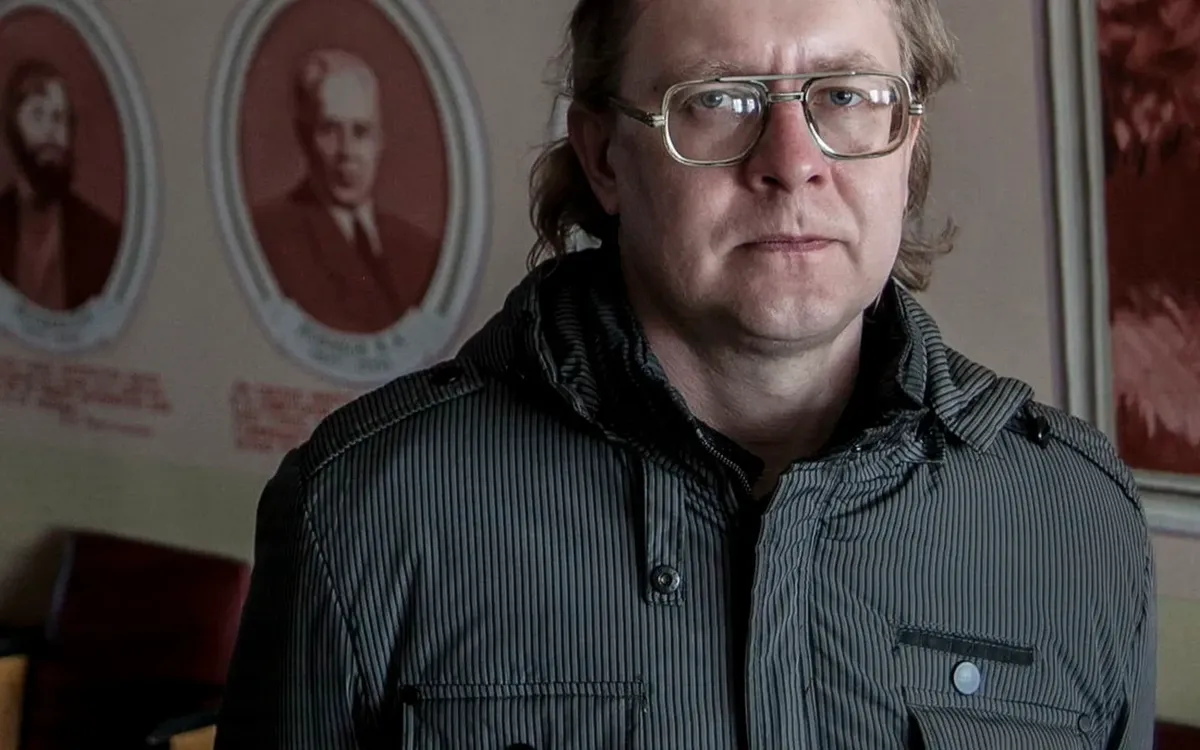
The German language teacher from the village of Kromia, the Oryol region, Alexander Fereshev, convicted in 2015 for the publication of two “anti -Russian poems”, became a defendant in a new criminal case. Local investigators, together with the regional center for counteracting extremism (CPE), began an investigation on the fact of publishing another poem of 42-year-old formerly, which is called “for Independence of Ukraine”. The rural teacher has so far has the status of a witness, and the investigators have not formally found the author of the work. The case file about him is said as “an unidentified person under the nickname Alexander Fizhev”, which “in order to arouse enmity posted a poem on a page on the VKontakte social network for universal public familiarization.” In the text,
As the investigators are sure, there are “statements of a derogatory nature in relation to a group of persons -“ Russians ”.
The security forces discovered the same “derogatory character” two years ago in the poem of the formerly “Ukrainian patriots”, where the author called not to give “neither the heel of the Crimea to the Putin Chekists”. Then, recall, the poem was recognized as extremist. Teachers were sentenced to correctional work (under part 1 of article 282 of the Criminal Code of the Russian Federation), banning 2 years to work in the education system. The former was attributed to the housing office - sweep the streets and take out the garbage. So the rural poet overnight turned into the number one of the middle strip of Russia into dissident. Among other things, he was included in the list of extremists and terrorists of Rosfinmonitoring - which obliges banks to refuse a person in customer financial services. A criminal case, because of a new poem (all according to the same article), can turn out to be from 2 to 5 years for a recidivist poet.
The chief of the Oryol CPE Sergey Stebllets, as Heroshev tells me, advised him to leave Russia and not wait for him to change the status from a witness to the accused. “He said that the presidential election throughout the country will go about extremism. And I better leave the whole family in a good way. So he said. "
Poems with St. George tape
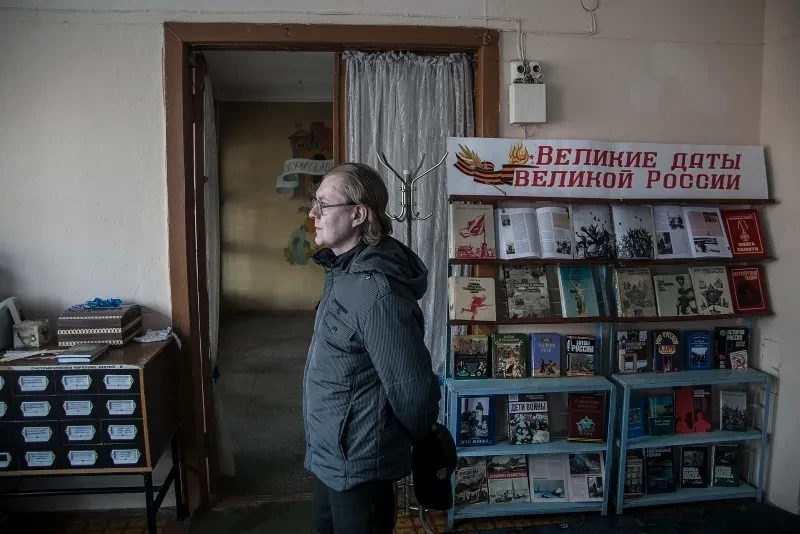
Alexander Fereshev meets me on the sidelines of the Moscow -Kharkov highway, which cuts his village. On wet land, we go to his house.
“So maybe you really leave?” I ask him.
- Well, how will I leave? Is this, throw a house, family? And why should I leave?! - Feathev is indignant. - I have lived here all my life.
The family family is lying parents: a mother who is blinded a few years ago, and a deaf father. All together live in the same apartment, on the ground floor of an ugly bulk two -story house. Several years ago, the village authorities, in order not to spend money on repairing heating, cut off the house from the heating center, so that residents had to spend individual heating systems into apartments. None of the inhabitants of the house began to protest and resent. So Trasoshev says: “We also figured it out: the overhaul of the authorities will not do it anyway, but we must somehow live. Well, we also put a gas boiler, like everyone else. ”
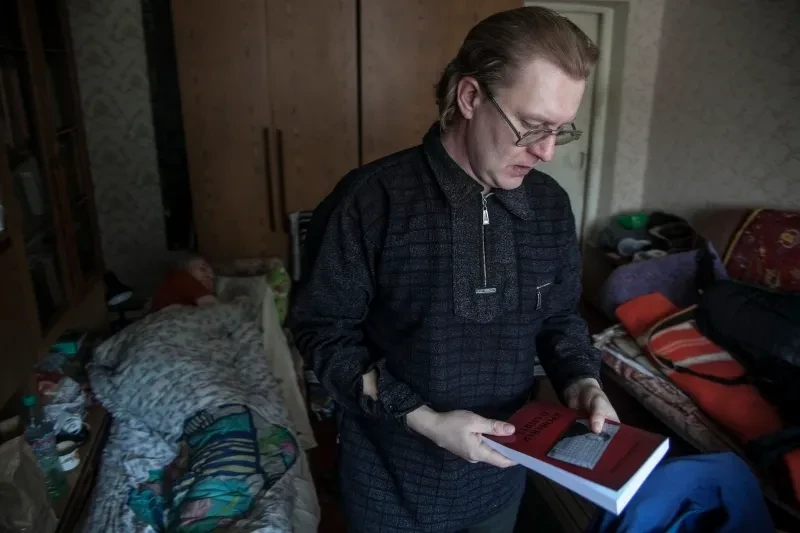
Fe. invites you, we go into the room with a heavy smell. He asks not to take off. In the living room in the Krovat chair lies his mother. In the middle of the room, a desktop with manuscripts and a lot of pencils. Books of Chaadaev, Trotsky and Suvorov-Rezun. On the floor, boxes with things, packages, linen is dried everywhere ... I suggest that I still go down the street.
For porridge from snow and dirt that spilled along the sidewalk, we go to the center of the village. Rare passers -by, falling towards, look under their feet, choosing where the dish. From afar, Fe., a person in an open quilted jacket waves: “Mikhalych! You hold on! Again on the Internet they write about you. I'm with you, Mikhalych! " “Yes, this is our city crazy one,” says Formoshev, noticeably embarrassed. “Who else would be so happy for me.”
After dismissal from school, he could not find a job in the village. And although the “ban on the profession” formally expires this year, in the local department of education he was made to understand that the school would be closed forever for him.
- How quickly we returned to suffocating Soviet times. And after all, nothing new, and Pasternak was persecuted, and Solzhenitsyn and Brodsky, - Terroshev listes in an even voice.
Fe. retires his parents - "forty thousand with increases goes to three." In the old jacket and rubber boots, he leads me in the village. “Since 2014, I am like an outcast. The enemy of the people. Everyone turned away, ”says. Its long greasy hair stick out from under the hat. Ito is not at all the same one who was known in Kroma before.
A strict teacher's jacket, a neat short haircut, a shining face in the photographs of the regional lithobobean - this is formerly until 2014
That Fizhev is a favorite of the local public, a winner of all -Russian poetic competitions, a protege of Oryol functionaries from culture. Published in Youth, in the St. Petersburg magazine Ladoga, in the Moscow Pioneer Pravda, in Literary Bashkortostan. He took the third place in the prestigious All -Russian contest "Silver Rodnik". In 2007, Formoshev released a collection of children's poems “Sunny Bunny”, which had popularity in the book retail. And in 2013, with the support of local authorities, his collection with a St. George ribbon on the cover was printed. It included 200 formations of formerly about the Great Patriotic War.
He ridiculed opponents of the war in Afghanistan, described the persecution of the Baltic governments to the local Russian world. “He walked in the leg with a five -year period, there was such a period,” says Fe.. The poet was also in the Oryol Literary Association, was about to join the Union of Writers, but could not find a common language with local functionaries.
“Although I walked in my leg, the conflicting feelings accumulated,” he says. - I did not restrain myself. In the 98th year, the Yeltsin crisis went on, then on Putin, so that I was willing to take the leftist magazines, and they took Zhirinovsky’s media, and in our Oryol Communist press they printed with pleasure. Trotskyists also printed ...
After the discord with the Oryol colleagues, the attitude towards the teacher-poet began to deteriorate everywhere. Herzhev recalls that period reluctantly, but says that he soon loomed the Maidan on the horizon and he "finally went into an opposition state."
"We felt the power of Putin's hands"
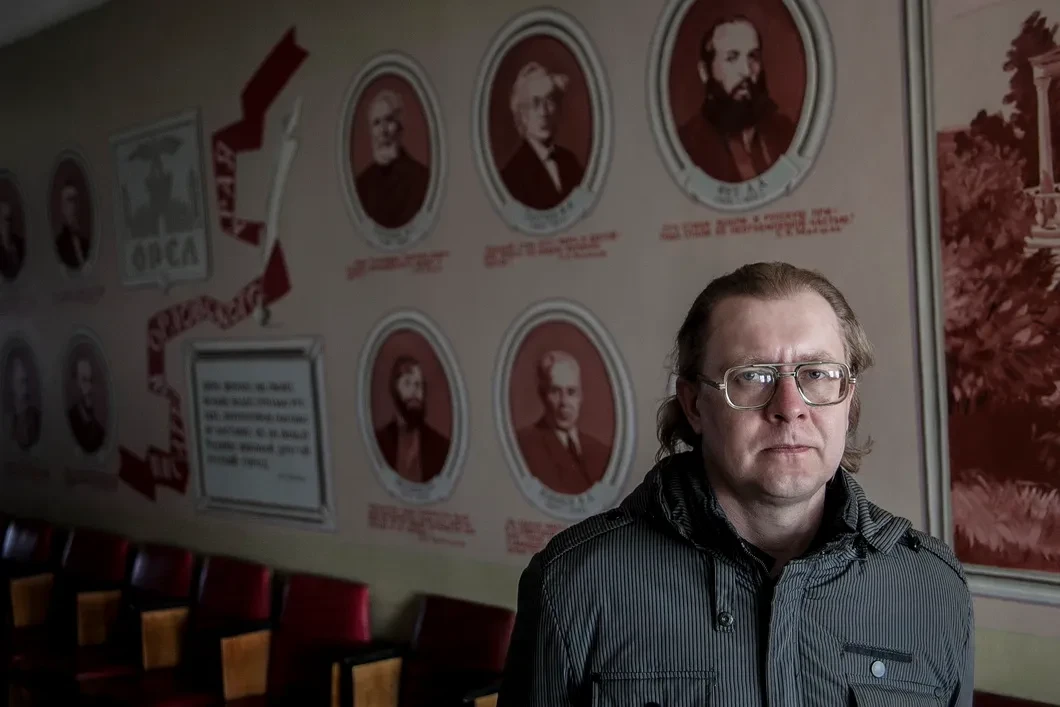
The poem “Ukrainian Patriots”, which Thamshev sent out on March 1, 2014 to the Ukrainian and Russian media, caused an immediate response. Poems quoted large electronic publications. And in the village newspaper "Banner" an article was published dedicated to the personality of the author himself, with the heading "There is no place in Russia to such poets!" “The most active and politically competent part of the youth of our city is the alarm,” the publication reported. “In the troubled time, when the external enemies bared their teeth and hid in deadly jump, there are people who undermine Russia from the inside, acting like a fifth column.” In the afterword, the editorial office reported that she turned to the prosecutor’s office with the chrome for clarifications and received such an answer: the work of the formerly was taken into control, the excitement of hatred or enmity will be punishable in accordance with the Criminal Code of the Russian Federation, up to 2 years in prison.
And soon a criminal case has appeared.
The trial of the former began in March 2015-in Debaltsevo, the meat grinder just subsided, and television still excited the patriotic feelings of the Russians with stories about the tapering ring of enemies. Investigator Dmitry Zubov, who was conducting the case, rested on the hateful in relation to the Russians the nature of the verses of the formerly. The hatred of their teeth considered them in the phrases “Putin's Chekists”, “Moskal Gang”, etc. However, the linguistic examination ordered by the court from Moscow philologists from the Gladys Center almost collapsed the accusation-the Muscovites did not reveal the hatred of the Russian. Then, “in order to properly resolve the case,” as frankly said in the materials, the court appointed a new examination - this time to the employees of the criminal center of the Ministry of Internal Affairs in the Oryol region. On 11 pages, police experts confirmed the version of the investigator.
The main exposure of formerly in the process was his colleagues from the Crimanisian secondary school. The director Lyudmila Agoshkova and English teacher Vyacheslav Kostyakov sounded brighter than others.
“You see, for us Putin-especially after the return of Crimea, is someone who made the Russians believe in themselves,” Agoshkov testified. - We felt the strength of the hand and the firmness of intentions. And when Crimea returned - we all welcomed: "Our Crimea!" And he was always ours. And only Trasoshev wrote: “The invaders” ... What happened to him - I do not know. Previously, he wrote other verses - about the war with the Nazis, about the lyrics, about children ...
- Formerly frankly supports the gap of our people! He supports the right of Ukrainians to independence and European choice, ”the English teacher Kostyakov accused his colleague. - With the help of his patrons, Fizhev calls on to the murders of the Russians.
Among the patrons, the English teacher called the Russian Pen-Center, the Rain TV channel and Western writers.
Other teachers who acted on the process joined the condemnation of Russophobic verses, although they could not recall their content.
Judge Margarita Gridin, satisfied with the testimony of colleagues and a police examination, sentenced formerly by 300 hours of correctional labor.
"Your crests won at Eurovision, and again tried to humiliate us!"
Many noticeable figures of the village made criticism of formerly. The former comrades could not forgive him for the "change of principles." Those who were not familiar with the teacher also decided not to stay away.
“I myself helped him publish poetry. There were good verses, and then that he began to write nasty things about our homeland? He is a smart person, why did he start it all? " - said the head of Chrm Andrei Usikov.
After the trial, the apartment where Thamshev lives with his parents, attacked twice - unknown people broke the window with a brick. In addition, the neighbors complained to the district authorities that the Ukrainian flag was hanging on the window of the former teacher. Fe. recalls the message that he received after the Eurovision Song Contest-16: “Your crests won, and again tried to humiliate us. You, of course, are glad that Ukraine won. I suppose I composed a poem about it? This is a global conspiracy against Russia. We have declared war, and you are on the side of our enemies in it. With people like you, you must act according to the laws of wartime, as with traitors and spies. ”
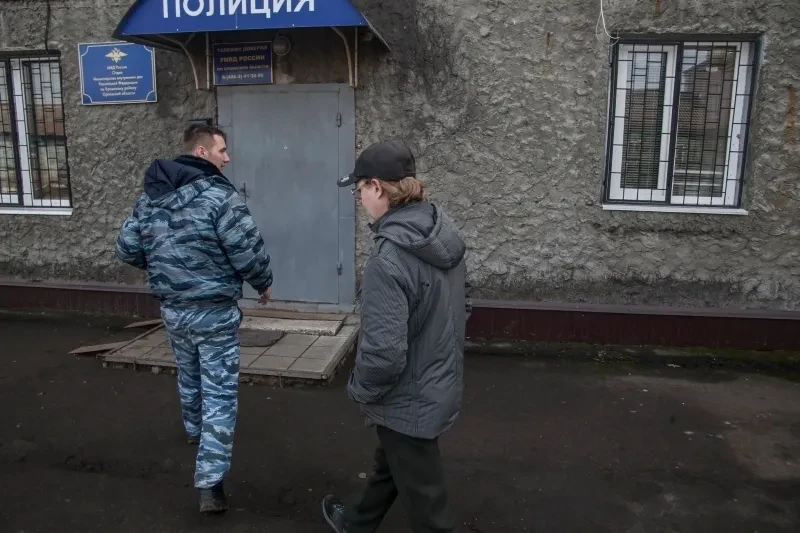
At seven in the morning, on August 28, 2015, the extension woke a knock on the door. Trashev could not see those who came - there was no eye in the door. On the landing, as it turned out after a minute, the employees of the EE center crowded.
"Who is there?" -asked from the door of Feathe. “From Novaya Gazeta,” the CPE officers answered and a second later marched into the apartment with a decision on the search. The police explained that the day before, someone was trying to set fire to the building of the Krom Prosecutor's Office: “You will now have the number one suspect in all such cases.”
Tzvoshev tells how a year ago he was called to the police for a conversation. Police were interested in the book by Felix Lurie “Nechaev ordered by him on the Internet. Creator of destruction. " Feathev still does not know how employees have become aware of this online purchase.
“They asked if I liked the book that there was interesting in it. Then they asked to bring the check. I don’t know what was so alarmed. Probably the name ".
"
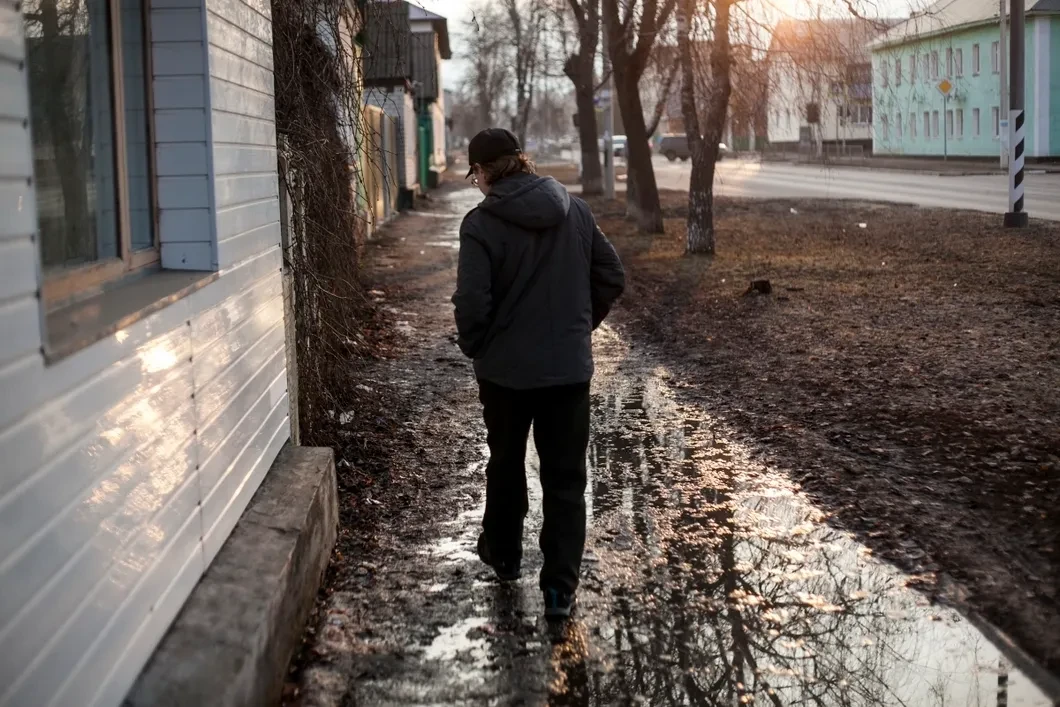
Kroma are 40 kilometers south of the eagle along the Kharkov highway. “Urban type village, an industrial unit of the district with a population of 7 thousand” - as it is said about it in the official documents of the Oryol region. It should be noted that in the village of Kroma it turned only in Soviet times, and before that it was a city with an exciting history. The first mention of the chrome dates on a par with Moscow - 1147. In the 15th century, there was a prince with a powerful fortress, who did not obey Moscow and was friends with Lithuania, the rival of Muscovy in the struggle for Russian lands. In the Time of Troubles, in Kromas he took refuge for two years and kept the defense of False Dmitry I, who managed to charm local residents. Then, the success of the predecessor repeated False Dmitry II, collecting an army from the restless shirts for a campaign to the capital. In the Civil War, Kroma again became a bridgehead for the attack on Moscow - now the White Guards. But this story ended in failure. The chrome chronicle is generally saturated with events that could change the history of the country. The inhabitants of the city, one might say, were always in the forefront and flame fiery to each adventure - at least it was before the civil war. Then the Soviet government was established in Kromas, the population was halved, and the Bolsheviks deprived this troubled place of urban status, turning it into a village. Since then, up to the general persecution and trial of the school teacher, the former in 2015, the chronicle of the chrome has not had particularly bright episodes.
An an economic crisis could become a bright episode in life if this phenomenon were exclusively local.
In 2015, unemployment began to grow in the village. The local budget revenues (already very modest) amounted to 14.8 million rubles in 2015. In 2017, judging by the official forecast of the Krom Administration, the income will fall to 11.2 million. Small business, on which the economy of the village held, fell into decline. Production created in Soviet times stopped in Kromas back in the 90s.
We can say that now only local security forces who became the beneficiaries of the persecution of the teacher in 2014-2015 feel good. Against the backdrop of a universal patriotic Ugar, an increase in service touched almost all participants in the case against the poet-extremist. For example, the main investigator in the case of formerly Dmitry Zubov became the deputy head of the inter -district drying. The prosecutor of the Kromsky district, Maxim Grishin, who gave the start of the investigation in March 2014, soon went to the eagle - to the post of head of the Office for Supervision of the implementation of the federal legislation of the regional prosecutor's office. And the senior assistant to the prosecutor Lilia Lavrova, who was once a student of formerly, initiated the inclusion of his poems in the register of extremist literature-and also received advance in Orel. “Still, I am a bad teacher,” Thalusa remarks sadly. - She was with my best student, he put only five, and so betrayed in his career ... I could not believe it for a long time, but then they told me what salaries were there. And more people do not need anything else. ”
From the patriotic glee of 2014-2015, there is almost no trace today. But the temptation of rapid career growth does not give rest to the new generation of security forces.
The new case on the verses of the formerly is already leading other people. Of the previous ones, the investigator remained. Dmitry Zubov, a young low man of about 30, sits in a separate office of the local TFR. He is dressed like an entertainer - in a front black suit with a black tie and a white shirt. Looking into his office, Trashev asks when the computer seized for examination is returned for examination: “And what about this case? I live in the unknown. " “Do not worry, we will call you, everything is your time, but for now relax,” says Zubov. "And the computer?" "Your computer has not yet been studied, but where are you rushing like that!" - the investigator smiles, who seems to be in a good mood. True, when I enter the office, the conversation is no longer glued.
- How is a new business progressing? - I ask.
“I have no time,” Gerges darkens.
- Now you are in a hurry?
“Today the prosecutor is waiting for me,” Zubov begins to restlessly sort out the papers. - And I am not authorized to communicate with the press.
The new prosecutor of the district, Alexei Yelinzin, holds the form of ex control, but to talk with me, too, "has no authority." The jelly has a soft voice and an expensive watch. “You need to talk with the eagle,” he says, and gives the phone number of the official representative of the department, the senior assistant to the regional prosecutor Elena Semina. But the one, as it turned out, "has the authority to speak only with the regional media, and the Prosecutor General’s Office should speak with the federal."
The former owner of the Kroma Room-School on the street of the 25th anniversary of October Samvel Chaloyan never saw the convicted person for the poems of the teacher. But he says that two years ago he condemned him with the whole city.
“To write such verses about Russia and the president is a betrayal,” says Samvel Chalian. - He is a Russian man! How could he write like that?
- Do you remember what he wrote?
- Dirty poured home! Something there about Crimea-ours, not ours. He spoke out against our actions in Ukraine. I myself did not read, of course, but then people then came to my store, told - horror is simple, a nightmare! We all condemned him.
- Do you not condemn now? - I ask.
- And he writes again now? I have not heard, I don't know. Yes, and I had to close the store, the crisis began-that's just it was judged.
-Now he has a new criminal case because of the verses.
- Don't know. Not to poems, listen! - says Samvel. -I need to eat something, spin like a squirrel, as I am. I drive like you like you all day, I like to earn food.
The former entrepreneur is lucky in the burgundy "Lada" from the prosecutor's office to the station. “The prosecutor's office is a dream! Crisis, not a crisis, you sit in warmth - good. The police too - good! Все отсюда уезжают или в Белгород, или в Москву, а если ты у государства кушаешь — не надо никуда ехать. Россия, брат, так и живем». «Так, а про Бывшева что вы теперь думаете?» - I ask. «Про поэта того? — оборачивается Самвел. — Не надо было ему так грязь лить на отечество. For what? Был парень нормальный, как все — наш парень! И вдруг — такое. А главное, на хрена? Пытаюсь я его понять и не могу».
«Мы поддерживали вас на кухне!»
В офисном здании в центре поселка совсем тихо и пусто, свет горит только в помещении редакции газеты «Заря».
В кабинете за внушительным столом вычитывает полосы редактор газеты Светлана Нашиванко. В углу комнаты — выключенный компьютер со старым большим монитором. Узнав во мне коллегу, Нашиванко неожиданно выскакивает из-за внушительного стола и кричит: «Пресса с Москвы? Я ничего больше не скажу!»
— Ни мне, ни нашим читателем Бывшев не интересен, — говорит она, не давая вставить слово. — Я его плохо знала, практически никак. А потом приезжали эти ваши коллеги с Москвы и такое про нас написали! Хотя я им ничего и не говорила, потому что ну чего о нем было говорить!
— Но зачем тогда вы опубликовали обличительную статью?
— Я опубликовала?
— Ну в вашей ведь газете.
— Газета не моя, — заявила Нашиванко. — И лично мне вообще нет до него дела. Why do I need it? У меня свои дела есть, своя семья, свои близкие.
— Но человека могут лишить свободы, а вы к этому приложили руку.
— Я приложила? Да мне все равно на него, я же вам сказала! Я делаю газету, вы мне мешаете!
Об Александре Бывшеве не хотят теперь говорить даже те, кто давал против него показания в суде два года назад. Директор школы Людмила Агошкова отказалась разговаривать со мной. Другие учителя быстро разошлись по домам. Оставшаяся в здании завуч Ольга Смолякова сказала, что уже не припомнит русофобских стихов Бывшева. «А вот детские стихи у него были очень хорошие», — сообщила молодая женщина.
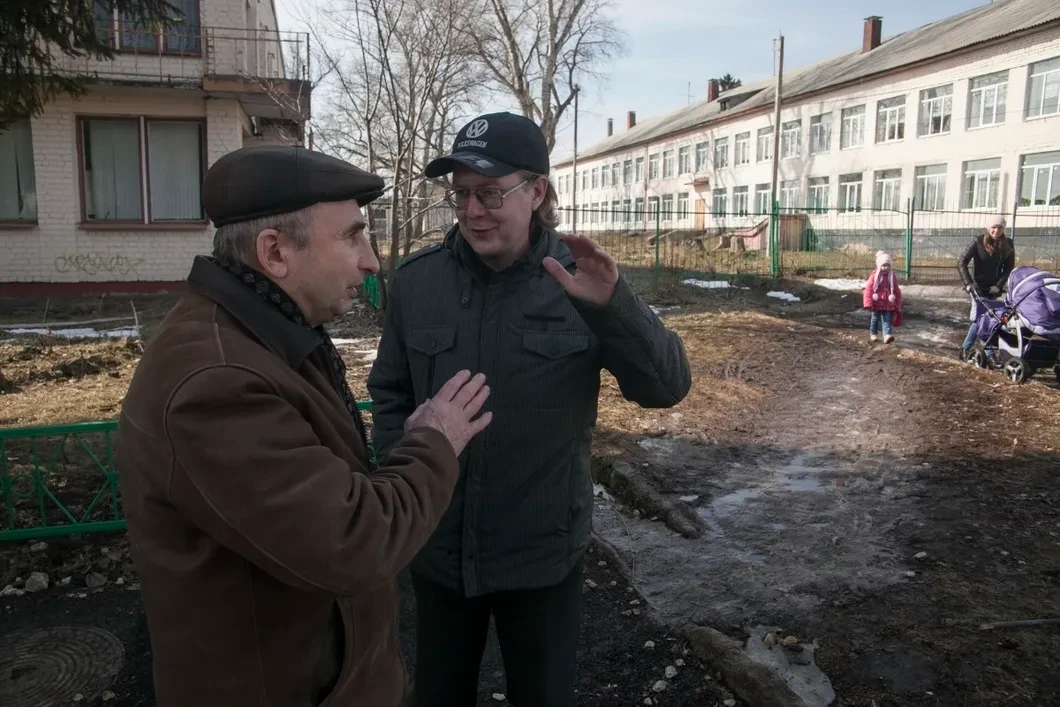
Мужа директора школы Василия Агошкова, еще одного местного поэта, мы с Бывшевым встречаем в центре поселка. «Все к вам журналисты ездят, Александр Михайлович, — говорит он. — Я двадцать томов стихов написал и никого не заинтересовал, а вы поскандалили — и вон что». Агошков замечает, что жена его была бы рада взять Бывшева назад, но «директор школы — человек подневольный, наверху могут не понять».
— Захотел славы Александр Михайлович, вот и пошел на рожон, не сиделось ему спокойно, — продолжает поэт Василий Агошков. — Вам бы, Александр Михайлович, девчонку за сиську потрогать, совсем другой бы был человек, а вы прославиться хотели.
— Каждый поэт хочет быть услышанным, — отбивается Бывшев. — Пастернак называл стремление к славе естественным. Вы-то сами не ради себя 20 томов написали?
— Сам я страну свою грязью не поливал, моя лира созидает. А вы все на Пастернака равняетесь, — говорит Агошков. — Вы раньше тоже писали, кстати, неплохие стихи, потом вас потянуло на политику. What is to be surprised then? Взяли бы вас тогда в Союз писателей под крыло, и не было бы теперь этой глупой истории. Жалко мне, конечно, вас.
— Почему тогда не пожалели на суде, раз вам жалко? Ни слова поддержки не сказали, говорили только мерзости. Колеблетесь вместе с линией партии?
— Мы вас поддерживали дома на кухне! Мы до сих пор поддерживаем, но ситуация вы же видите какая вокруг, Александр Михайлович, поэтому не надо обижаться. Вы же интеллигентный умный человек!
«Нет, я ни о чем не жалею, — сказал Бывшев, когда мы прощались. — Если вернуть все назад, я ничего бы не изменил. Только родителей жалко».
Кромы — Орел
PS
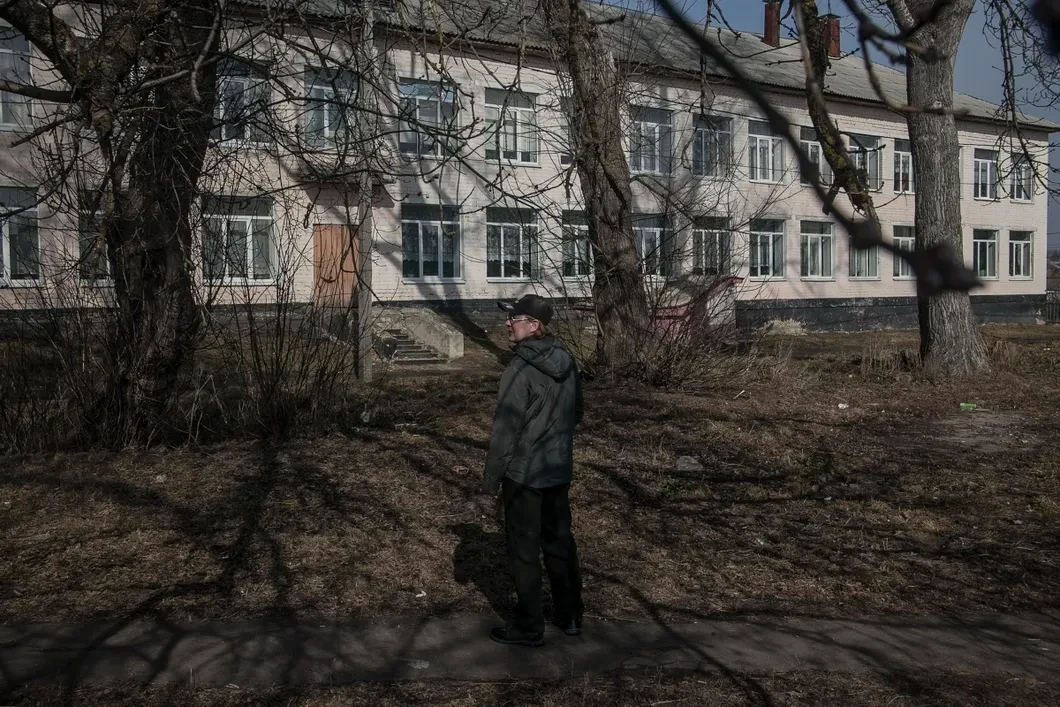
Сотрудники кромской полиции задержали фотокорреспондента «Новой» Влада Докшина во время его встречи с Александром Бывшевым. Днем 7 марта наш фотокор приехал на съемку к герою предстоящей публикации. Вместе они отправились на прежнее место работы Бывшева — в поселковую школу, но попасть внутрь не смогли — двери были заперты. Как выяснилось позже, директор школы Агошкова, увидев их в окне, приказала закрыть школу, а сама вызвала полицию. Влад Докшин и Александр Бывшев были задержаны через полчаса в центре поселка. Полицейские доставили их в отделение и потребовали написать объяснительные — с какой целью они ходили к школе.