
Translated material
The pen was equated with a bayonet
The Norwegian journalist was called the "threat of national security" of Russia. He is forbidden to enter our country
The International Journalists Federation (IFJ) appealed to the European Council in connection with the sudden announcement of the editor of the independent Norwegian website of The Independent Barents Observer Thomas Nielsen Persona Non in the Russian Federation. The Union of Journalists of Norway accused Russia of violating the European Convention on the Protection of Human Rights in terms of articles on freedom of the press. The corresponding letter was sent to the Russian Assistance in Norway Teimuraz Ramishvili. “A serious problem is when the authorities decide who to allow reporting from the country, and to whom to ban,” the document compiled on behalf of 10,000 members of the Union says. It also expresses a demand to explain how Thomas “threatens the national security of the Russian Federation”.
Nielsen himself is difficult to answer this question. “Apparently, I'm on the sanctions list,” says Thomas Nielsen, editor of the Norwegian information and analytical resource of The Independent Barents Observer after familiarizing themselves with the press release on the Russian diplomatic mission in Oslo. It has a full reasoning that Norway was in vain to join the anti -Russian EU sanctions - and not a half -word about Thomas, mentioned only in the title of the document. Yes, and this press release appeared only two days after a journalist having a five-year multivisa and accreditation under the Ministry of Foreign Affairs of the Russian Federation was not allowed to Russia. The Russian consul in Kirkenes could not answer more specific questions of Nielsen.
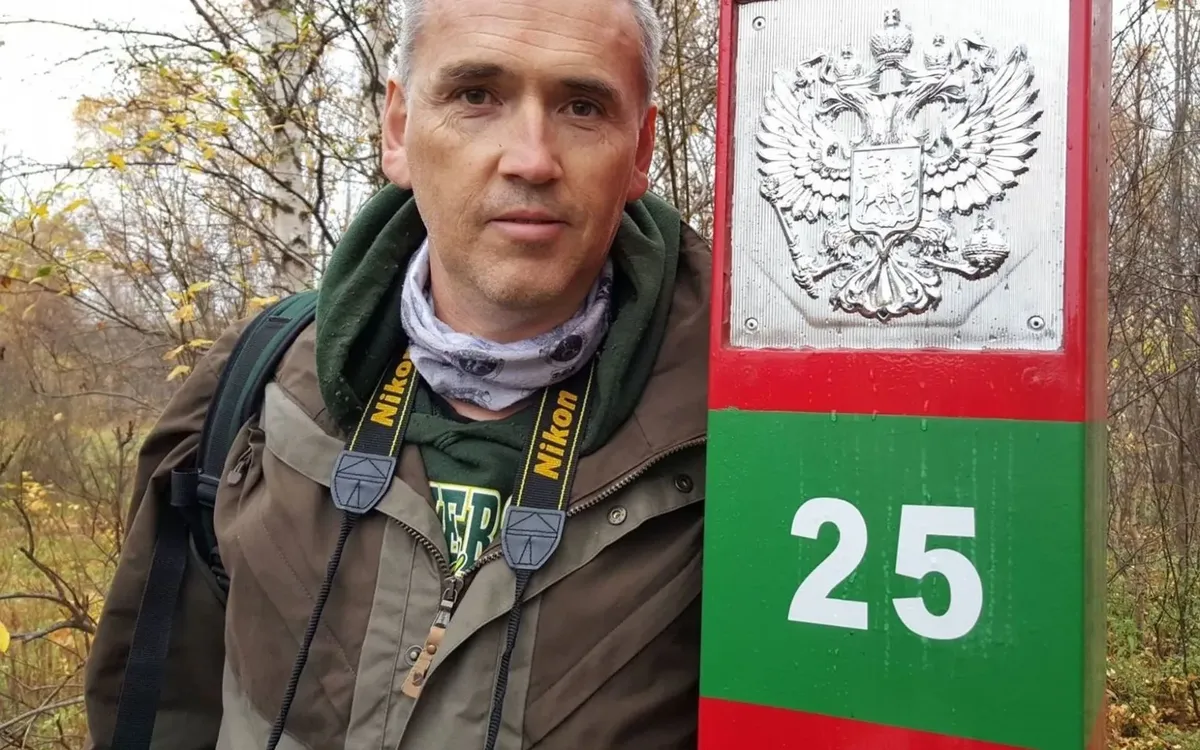
Thomas Nielsen became the first journalist of the Northern Kingdom, who was banned from entering the territory of the Russian Federation. The incident occurred on March 8 at the Borisoglebsk checkpoint, through which the road from Kirkenes to Murmansk passes. Nielsen went to Russia to see friends. An officer of the Russian border service told the Norwegian that he was prohibited from entering the country "for reasons of national security."
Nilsen was awarded a notification on the ban on the intersection of the Russian border for a period of 5 years on the basis of Art. 27 of Federal Law No. 114, which regulates the procedure for entry and exit from the Russian Federation. Since Nielsen does not have any criminal records or decisions from Russia, he has documents in order, only the first point of this article remains, according to which such a ban is possible “in order to ensure the defense or security of the state”.
This wide and foggy formulation allows you to refuse to enter almost any non -enjoyable foreigner. A couple of months ago she was applied against two deputies of Storting. Members of the Committee on International Affairs and Defense-the leader of the Venus Social Liberal Party, Trina Grande and Bord, Vagar Sulkhel from the Socialist Left Party could not receive Russian visas, although the head of the Council of Council of Council Konstantin Kosachev was officially invited to Moscow.
And most importantly, with the formulation of the “threat of national security” you can not explain anything - the secret of secrecy stores the secret.
“I asked the employees of the border post exactly how my visit to Russia threatens national security,” says Thomas. - They said that they did not have any detailed information, and recommended to ask about it in the Russian consulate. I did the next day. But the consul did not answer any question. He answered everything that he did not know. But I know that my journalistic work has been complicated.
The complications began surprisingly “on time”: Thomas Nielsen leads the most famous cross-border Internet publication of the Arctic zone. The Russian theme occupies a significant share of content. This year, the resource became bilingual, the Russian version of the texts appeared. The Independent Barents Observer recently entered the partnership of the Arctic Arctica Arctic Media, and literally the other day launched the Baynz View project, which accumulates the most acute topics of the Barents Region bloggers. At the same time, the staff and budget of the Norwegian “Okhozerver” are tiny, each employee must be mobile, and lose the possibility of journalistic work in Russia for Thomas, a significant blow.
Nielsen shrugs his shoulders in response to the question of which of the Russian officials he was so bouncing that radical measures were needed:
- I have not received any negative reviews on our texts from officials for a long time. I had no conflicts with the FSB ...
Here, however, Thomas “forgets” how two years ago he almost lost the publication: earlier it belonged to the Barents Secretariat, that is, the authorities of the northern regions of Norway, and after the critical statements of Nielsen on the accession of Crimea, which caused the sharp commentary of the then Genconsul of the Russian Federation in Kirkenes, he was fired. The local media actively discussed the version that
This was done at the persistent request of representatives of Russian special services. Say, he interfered with the establishment of Russian-Norwegian friendship.
Thomas was restored at work, and then made the resource completely independent, having left the guardianship of officials. Now no one can indicate him. But they can, as it turned out, simply do not let them go on a visit.
In the field of view of the FSB, Thomas Nielsen fell earlier. In the 90s, he, an engineer by education, was a co-author of the Bellona sensational reports about the Northern Fleet as a source of radioactive pollution in the Murmansk and Arkhangelsk regions. After these publications, another co -author - the Russian naval officer Alexander Nikitin was on trial in the case of state reception and espionage, but was fully justified after 4 years. Thomas actively participated in his defense. By the way, then, in 1996, he was already canceled the Russian visa - but then they opened it again.
It is not known whether the old things were remembered now, whether they were offended by new ones or simply decided to petition finely. “What happened corresponds to the current Russian trend in restricting access to information,” the Bellona website quotes the statement of the general director of the organization Niels Bueer. The latter also participated with Thomas in the investigation of barbaric treatment of radioactive waste in the Russian Navy.
The statement of the Border Guardian Journalists Association of Barents Press Internet says about the successes of cross-border journalistic cooperation, which were proud not only by colleagues themselves, but also by the first persons of the northern countries. What happened to Nilsen, one of the most famous journalists of the region, is jealous of further prospects for professional interaction. Moreover, the release of the Russian embassy contains a hint: Thomas is the first, but not the last. “It all depends on our Norwegian partners, their understanding that this situation obviously harms the development of dialogue, and their readiness to discuss the mutual cancellation of such restrictions,” the embassy document says. I will add, to find out who is included in such a stoplist, no Scandinav can: Russia does not announce lists of all-in-law, referring to the law on the protection of personal data.
However, there is still something curious in this release: it is said that "comprehensive information about Norwegian citizens included in the Russian stop lists was brought to the Norway Foreign Ministry through diplomatic channels on November 29, 2016." Say, this is the fault of Norwegian officials that people are not informed. But here is the inconsistent. Nielsen came to Russia on December 5 - after compiling a “exhaustive” list. And this means that someone’s personal discontent is now covered with a mythical stop list by an independent journalist and his Russian contacts. “An explicit attack by the FSB on Nielsen is in line with the growing tendency to force the Norwegians to feel undesirable in Russia and further attempts to strangle the freedom of foreign press,” Bellona said in connection with this.
In the air, it really smelled with a thunderstorm. On January 30, Military Intelligence of Norway presented a report in which she warned of possible threats to the security of the kingdom emanating from Russia. Two weeks later, the Russian embassy released a press release, which DagbBladet National newspaper called the "diplomatic announcement of the war." In this document, the Russian side admits that bilateral relations are in a “problematic” state, and accuses exclusively the Norwegians of this. And then in the press release it is reported that two stop lists with the lists of all-round Norwegians were drawn up on September 1, 2016 in response to the rules for deportation and expulsion from the Svalpbergen archipelago “unwanted persons” adopted in the kingdom ... in 1995. According to the Russian Foreign Ministry, they violate an agreement on free access to the Norwegian archipelago of citizens' participants.
To come to this conclusion, the Foreign Ministry needed 21 years? And what kind of discrimination was discovered by our department in relation to the Russians in the Arctic? But if you delve into the news archives, it turns out that only one of our fellow countrymen was “discriminated”, but which-Deputy Prime Minister Dmitry Rogozin.
In the spring of 2015, he published a selfie on the Instagram from the archipelago. While in the sanctions list of the EU and Norway. From the ambassador of the Russian Federation to Oslo, the Norwegian side demanded an explanation. The political scandal erupted, which now makes itself felt.
... And he all began with the same Thomas Nielsen and his “Oakser”, who was the first to publish photos and Twitta Rogozin.