
Translated material
Plagiarism or betrayal?
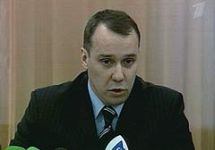
The leader of the Party of Progress Aleksey Navalny asks the FSB to check the dissertation of the assistant secretary of the Security Council Nail Mukhitov for violation of the Criminal Code of the Criminal Code to disclose state secrets. It is reported by "New Gazeta".
The Dissernet community found Mukhitov’s doctoral dissertation “Harmonization of the development policy of state corporations, taking into account their economic security,” 145 pages of three other people's work: Dissertations of Vladimir Skachkov (78 pages) and Sergey Kvasov (44 pages), as well as from the “Gaidari Collection” (23 pages).
The dissertation council at the Institute of RAS Market Problems, which considered Dissernet's complaint explained the coincidences with the works of Kvasov and Skachkov by the fact that Mukhitov wrote joint monographs with them. The disable refused to present these monographs, citing their secrecy. The same position was supported by the expert council of the Higher Attestation Commission.
In this regard, Navalny asks the FSB to find out whether these works have a restriction on access, special nature and special storage conditions. " In the case of a positive response, the politician asks the FSB to decide the issue of the presence of grounds for initiating a criminal case under Article 283 of the Criminal Code (disclosure of state secrets).
On April 2, 2016, Mukhitov was appointed to the post of assistant secretary of the Security Council Nikolai Patrushev. From 2012 to 2015, he headed the Rosneft security service, and before that he served as deputy head of the FSB Office.
The network community "Dissernet" unites scientists and journalists identifying plagiarism in the scientific work of famous people. Studies of Dissernet began in January 2013. Since then, the community activists have already exposed dozens of cases of plagiarism in the dissertations of politicians, public figures and representatives of the leadership of universities.
So in November 2015 it turned out that among the proven dissertations of the current rectors of the Russian universities, 21 percent of the work turned out to be false. "Dissernet" checked the work of 311 rectors who have been defended over the past 15 years. In 66 dissertations, extensive borrowings were found. According to Rostovtsev, this indicates a negative selection for the position of rector.