
Translated material
Interrupted arrival
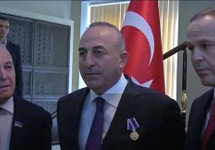
The Government of the Netherlands withdrew permission to land the aircraft of the Foreign Minister of Turkey Mevlyut Cavushoglu in connection with the "public danger", which is the visit of Chavushoglu in the Rotterdam. It is reported by the BBC.
Turkish officials, including federal ministers, planned to hold a series of rallies to convince compatriots living in Europe to support changes to the country's constitution in a referendum, which will be held on April 16. However, the mayor of Rotterdam banned the rally in connection with the difficulty of ensuring security and said that the country's authorities would not allow the head of the Turkish Foreign Ministry to participate in it.
After that, Chavushoglu threatened the Netherlands with the introduction of strict sanctions in case of ban on entry into the country. In response, the Dutch government noted that in such a situation, "achieving a reasonable solution is impossible."
Turkish President Recep Tayyip Erdogan said that the Netherlands authorities were “as cowardly”, calling the refusal to let the chavushu let in the “remnants of Nazism and fascism”.
"You may not let our foreign minister as much as you want. Let's see how your planes will now fly to Turkey," Erdogan said. - Of course, I mean the diplomatic sphere, not trips of ordinary citizens. This is a separate issue requiring consideration. "
The attorney in the affairs of the Netherlands in Ankara was called to the Turkish Foreign Ministry in connection with the incident.
Later on Saturday, the police stopped in Rotterdam a car with the Turkish Minister for Family and Social Policy Fatma Bethul Sajan Kaya. She came from Germany and intended to get to the Turkish consulate, near which she was expected by several dozen Dutch Turks.
On December 10, the Party of Justice and Development ruling in Turkey introduced the draft amendments to the current constitution of the country, which will expand the powers of the president . Erdogan announced the need for such a reform two years ago, shortly after his election by the president. Supporters of changes in the constitution say that this will simplify the system of government. Turkish Prime Minister Binali Yyldyrym said that amendments to the Constitution would save the country from attempts by a coup.
The amendments abolish the post of head of government and expands the legislative and executive powers of the president. The head of state will receive the opportunity to appoint and remove the ministers from the posts, as well as deprive the posts of members of the Supreme Court. In addition, the requirement is removed about the impossibility of simultaneous stay in the post of president and chairmanship in the political party. However, the parliament retains the right to initiate litigation against the president. The corresponding request will have to receive support for more than half of the deputies.
On January 21, the Turkish parliament adopted amendments to the Constitution on the introduction of a presidential form of government in the country. However, the resulting level of support of the bill was not enough for the amendments to enter into force, bypassing the procedure of popular voting. The referendum is scheduled for April 16.