
Translated material
Three good (and light) translated novels
“Everything that I did not say”, “The orchid ate all of them”, “Book of mirrors”
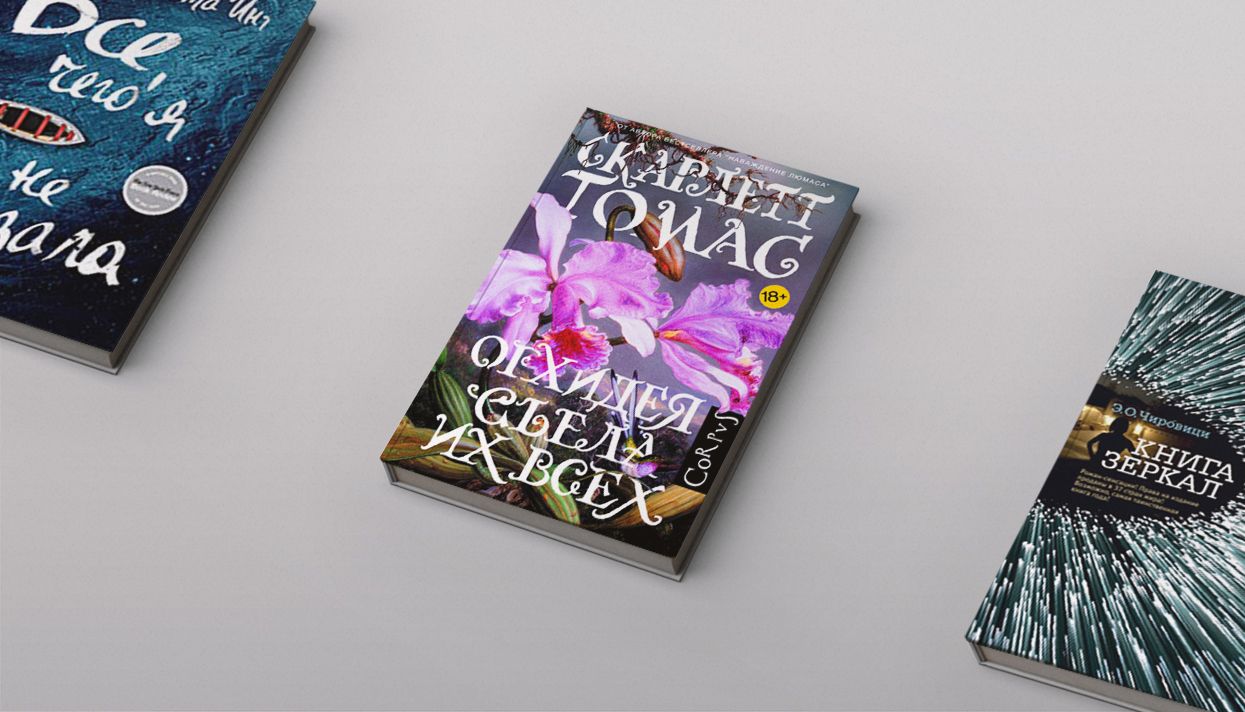
The Literary critic of “Medusa” Galina Yuzefovich tells about three good and easy translated novels for unrelealing reading: “All that I did not say” Celesta Ing, “The Orchid ate them all” Scarlett Thomas and the “Book of Mirrors” by E. O. Chirovichi.
Celeste Ing. All that I did not say. M.: Fantom Press, 2017. Translation by A. Gryzunova
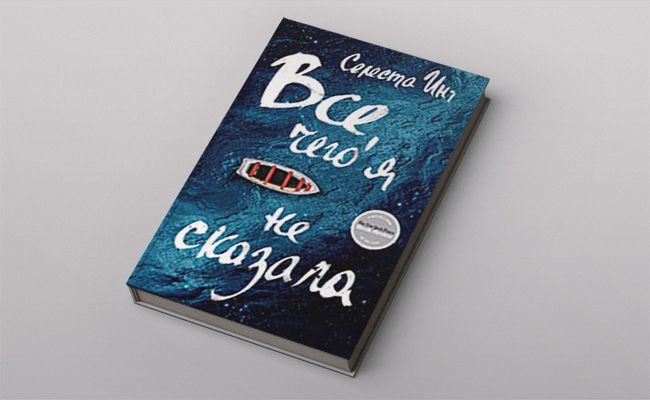
On the morning of May, on the third morning of 1977, James Lee, a Chinese origin professor, goes to work in the car and twists the radio handle, trying to tune in to the news wave. His wife, a charming housewife Marilyn, has just covered on the table for breakfast. Children are the eldest, 18-year-old Net, the other day entering Harvard and already anticipating a quick departure from the parental house, and the youngest, 10-year-old Tikhona Hannah, puff up sleepily in bowls with flakes. In this idyllic picture, only the16-year-old Lydia is not enough-the second and most beloved child in the family Lee, contrary to all the laws of genetics inherited maternal blue eyes. Lydia is one of the most popular girls at school. Lydia is an eternal excellent student, easily jumping over classes. Lydia is a future doctor and an object of inexhaustible parental pride. But Lydia is not here and never will be, because the girl’s body lies at the bottom of the neighboring lake, and it is eaten by fish ...
At this point, the debut (and, as often happens, autobiographical) novel by American Celesta Ing lays an elegant loop, returning to the past - to the origins of the tragedy. Ten years before the described events, Marilyn, a young mother and a loving wife, disappeared, and for two and a half months James, Nat and Lydia had no news from her. Ten more years earlier, in the era, when interracial marriages were banned in a good half of the states, the blond beautiful Marilyn, a rebel and the only girl on the course, dared to kiss her teacher - a thin and awkward young Chinese. And twenty years before, James Lee by the will of chance fell into a prestigious school, where they were completely white, stubbornly refused to notice their dark -skinned fellow practitioner ...
Instead of the welcome career of the physician, instead of freedom and independence, Marilyn receives a cozy house, a loving family and a thick cook book in a red cover. Instead of becoming his own blond -haired giants in the world, James turns out to be a stranger doubly - having married an American, he loses his connection with the roots, but he is not an equal white. Two wounded, injured and disappointed adults become parents and begin to cripple their own children, unconsciously imposing their own - so different and so inconsistent - dreams and paintings of the future.
For all its rootedness in American realities, the novel by Celesta Ing is a universal story about trauma broadcasting through generations, and for the Russian reader it will be no less relevant than for any other. Moreover - and this is important - it can be read, as they say, from both ends: from the position of the parent (and think about why it is so important for you that the child shines in chemistry lessons) and from the position of the child (and try to understand, finally, what is yours in you and what is the marshmallowed by parents).
The only thing that can be reproached for the book “Everything I did not say” is the grief one -dimensionality of the heroes. As long as they remain within the framework of the role they allotted (“The daughter exhausted by parental expectations”, “Asian in Xenophobic society”, “Lonely homosexual teenager”), they look absolutely convincing and alive. However, the slightest attempt to look after their romance function, the facade reveals an annoying absence of volume in the characters. Did Marilyn love medicine so much, or did she just liked it, as Stethoscope shines in the sun? James is the American historian, but what does he find in this discipline and why did he choose her? And Lydia - what does she really want, what she loves and in general - what is she? .. When viewed, the main characters and their children are most like bas -reliefs - convex in front, perfectly flat and even in the back. However, if you choose the right angle and not twist the head of the excess (and also not to try to find depth where it is not provided for by the author’s intention), then the Selesteta’s novel is able not only to touch the soul, but also to arouse thoughts of things truly important.
Scarlett Thomas. The orchid ate them all. M.: AST: Corpus, 2017. Translation by I. Filippova
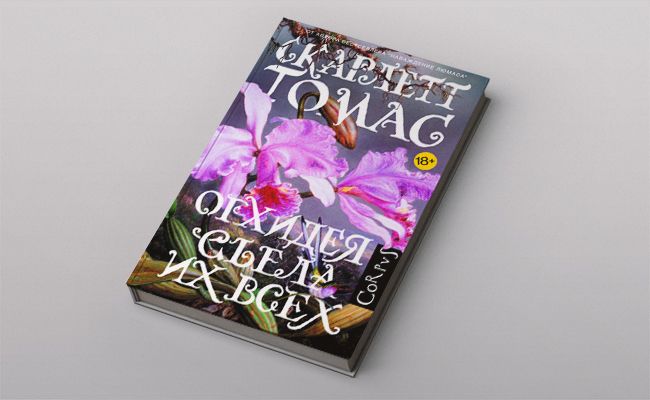
A long time ago, nearly thirty years ago, the three best girlfriends, beauty Grace, a fearless flame and an indomitable Rose (Sim took her husband with her) went to the lost island in search of a mysterious plant, not known to science - none of the four ever returned home. After their disappearance, a fair amount of inconsolable relatives remained: the daughter of Rose named Fleur, the daughter of Plam Brionia, the children of Grace - Charlie and Clematis, her husband (part -time brother SPAM) - Augustus, and the unmarried Aunt of Augustus Oleandra and mother Beatrix ... All these numerous offspring of a respectable family of the warden, glorious of their long -grade. With interest in botany and addiction to the "plant" names, passionately want to find out what happened to their relatives ...
At first, the book by Scarlett Thomas (the writer is known for the Russian reader, first of all, with the phantasmagoric novels “Our Tragic Universe” and “Lumas's Power”) seems like an exemplary “Roman with a Secret” - the reader expects that all plotly scattered plot threads will interpreted into a thick rope, which will sooner or later pull out the diligence The disappearance of Grace, Play and Rose. However, it turns out that it is much more interesting to understand the intricacies of these same threads than to wait for the denouement (which, however, will also be presented to the reader as properly and in proper quality).
Brionia marries James’s good -man, they have children - a girl Holly and a boy Ash, but Brionia is not happy in this cozy and deceptively “normal” marriage: she is fat, drinks too much, and in love falls in love - well, who would have thought! - In Luser Olli, the unheard of her cousin of his cousin Clematis. Clematis (or what she is called in the Clem family) is absorbed in her work-she is a documentary director, shoots films about amazing plants, and she also experiences her husband’s infertility-they have no children with Ollie ... The exquisite beauty Fleur, a Bezrodnye primaryage in the Gardener family, suddenly becomes the heiress of a huge house for Meditations of “Personnel” The New Age Sanatorium, created by the mysterious aunt Oleandra, and together with the house, it seems, inherits all family secrets. Cecilia, the second wife of Augustus, which he married after the disappearance of the first, suffers from a nervous disorder, and the 90-year-old Beatrix masturbates, looking at the laptop screen, and invests money in a fashionable business ...
Dangerous sex, incest, fatal love, compulsive shopping, university intrigues, drugs, skeletons in the closet and even a paleodite, which is obsessed with one of the younger warders of Charlie (he even tries to adapt his sexual preferences to traditions of the Stone Age) - Scarlett Thomas plays with the reader: then scares the manner of Horaio Walpol, then It mixes like Woodhaus, then touches and puys, like Charlotte Bronte, it makes you tremble in anticipation of detective catharsis, like Conan Doyle. In a word, it offers all types of entertainment available within the framework of the British literary canon - and in an extremely original and artistic arrangement.
However, there is another topic in the Orchid, perhaps, which has never before been in artistic prose with such flowering splendor - and this, of course, is the theme of botany. All Gardners are not just obsessed with plants - they literally live a plant life, and you should not think that this life is so boring, monotonous and innocent. Oh, no - the world of flowers, trees and herbs at Thomas acquires the features of threatening, exciting and alluring, her plants imperiously invade the life of people, and the novel itself is most like a huge bush of flowering orchids - the devil knows, poisonous or not. It is no coincidence that even the genealogical tree of the Gardner family, which opens the novel, to the last page (where it is again reproduced) is miraculously modified, distinguished by new roots, branches and shoots.
E. O. Chirovichi. Book of mirrors. SPb: ABC, ABC-Atticus, 2017. Translation A. Pither
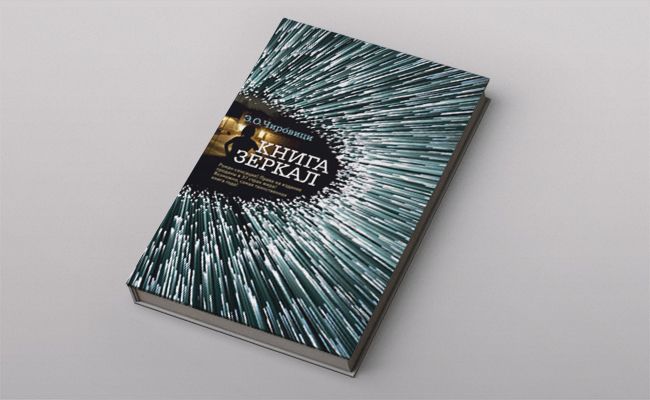
The story of Romanian E. O. Chirovitsi and his first novel “Book of Mirrors” written in English is, of course, the story of another literary Cinderella. A dozen agents rejected the book without explanation, however, the eleventh was suddenly interested in - and now Chirovicia signed an agreement with a six -digit amount in the column “advance”, the novel is translated into eleven languages at once, and even in Russia the starting circulation of the “Book of Mirrors” is ten thousand copies (for no one well -known author the number of truly astronomical), and the date of the official release coincides with the date of the official release. global.
The enthusiasm of publishers around the world, in general, can be understood: the novel of Chirovichi is a truly reference model of a detective written in accordance with the highest genre standards and the principles of modern storytelling. A strong plot, competent dosage of information, two (no, even three) false finals-all in abundance of guns hung along the walls at Chirovici shoot with some inhuman clarity, the heroes walk along carefully marked paths not on the pointer, and each casually mentioned Lyko is certainly woven into the corresponding line.
In the first part of the novel, the literary agent Peter Katz receives a fragment of a novel from a certain Richard Flynn, allegedly based on real events and shed light on a loud crime of 25 years ago-a famous psychologist, professor Joseph Videra was scored in his mansion, but the killers were not found then. The intrigued Katz is trying to contact the author to get the novel entirely, but it turns out that he suddenly died. In the second part, a friend of Katz, journalist John Keller, whom Katz hires in order to conduct an investigation and still find the finale of a book that promises a long -awaited solution. Keller gains a portion of facts regarding the death of a video from the darkness of oblivion, the strange experiments that he was engaged in and his connection with Richard Flynn. And to complete the case in the third part, the black retired investigator Roy Freeman, who was unable to disclose the case of the murder of the professor twenty -five years ago and striving to catch up, has not managed to reveal.
To read the “Book of Mirrors”, frankly, it is very pleasant - the author puts the brushes in a bonfire of reader curiosity in a timely manner, does not abuse details, but he doesn’t skimp on them beyond measure, and in general he doesn’t look into the eyes of the reader - is it good for you, my friend? Did not get bored? Do not catch a light? Do not open the window? Maybe a pillow under the back? And although the text, obtained from E. O. Chirovitsi as a result of all these dances, gives some mechanism, such a concern for the reader and his comfort still cannot but bribe. It is not a large literature, of course, and, most likely, not even the best detective of the year (as journalists dubbed the “Book of Mirrors” even before the exit), but very, very pleasant, irrelevant and, so to speak, friendly reading.
Galina Yuzefovich