
Translated material
"To be the first honor, but also very responsible"
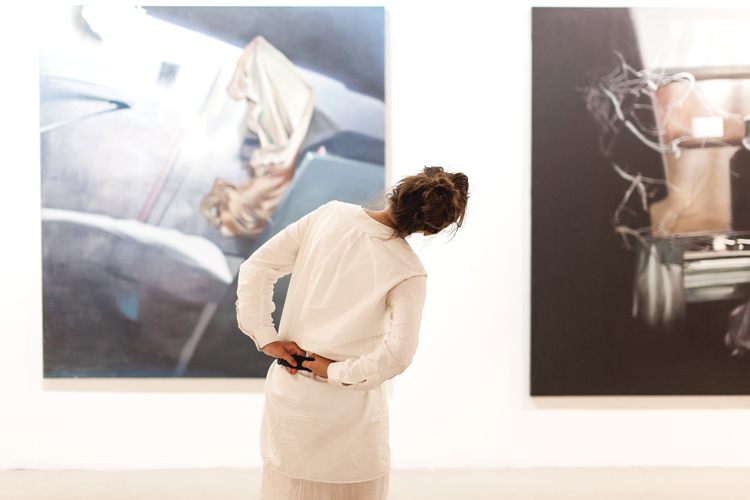
The Moscow Center for Contemporary Art “Winzavod” this year marks 10 years. What can the story of the first domestic art-klaster about the state of the contemporary art industry in Russia? With a subjective attempt to analyze success, mistakes and capabilities - Olga Danilkina.
Officially, Vinzavod opened in 2007, two years later than the Moscow Biennale. Then Joseph Bakstein determined the legitimation of Russian contemporary art in several stages: in 1988-the auction "Sotbis"-the ideological stage, and with the advent of Moscow Biennale-economic. Vinzavod in this logic is one of the episodes of the transition of contemporary art in Russia from marginal to “Part of the establishment and mainstream” . “Fat zero” - this can be called the era in which the Winery was born.
By that time - 2007-2008 - Moscow is quite overgrown with the infrastructure of contemporary art. There are a number of galleries recognized by the community - from long -livers like XL , Gelman Gallery, Aidan and Ridzhins, who at that moment move to the Plawshel colleagues - Pop / Off / Art , PaperWorks , Triumph and others. For more than 10 years, the GTCS has been working, six years - the department of the latest TGG trends, eight years - mommy , periodically enters this territory of MDF (today Mamm). In Moscow, Sotbis opens its representative office. Two years, as the State Prize "Innovation" is awarded, and Shalva Breus founds the first private prize of Kandinsky. The Catherine Culture Foundation acquires its site, Igor Markin opens the Art 4 Museum. RU , work Stella Art Foundation and Ruarts , and Daria Zhukova brings one of the first exhibitions. The most experimental projects of the local scene are quieter, but no less spectacular - flows to the "factory".
 © TsSI "Vincuvod" Sofya Trotsenko, Ilya and Emilia Kabakova. 2008
Experts call the Russian market of contemporary art “one of the most promising and fast -growing in the world”, Moscow is prescribed by the diagnosis of “gallery and auction fever”, galleryist Sergei Popov declares the payback and profit “even the most non -ambitious galleries” . II Moscow Biennale is metaphorically justified at the “construction sites”-still unfinished “Vincavod”, in Moscow City and on the top floor of the Tsuma. This causes opposite reviews: claims that the organizers do not respect the audience and artists , and enthusiasm in the spirit of "better tit in their hands." These opposite points of view will set the coordinate system for the development of the drama of the institutionalization of contemporary art in Russia. In 2009, despite the consequences of the crisis, the Ministry of Culture promises the GTSIA a new building for a full -fledged museum . It seemed a little more-and we will heal like in foreigners.
Legitimation and institutionalization
Vinzavod grew out of the hobby of a new, economically successful generation by contemporary art and trips abroad. It became the first private space, which was created in the mode of the individual “project”, and did not grow from the collective elements (unlike, for example, from the “artillery” or the CSI ). The center was conceived by an economically independent player and embodied the obsessive idea of that time-“art-klaster”, next to which the epithets “Russian Soho” and “Moscow Chelsea” flashed.
Vinzavod became the banner of the legitimation of contemporary art as part of social life, which they sincerely wanted: on the one hand, the attention of a wide audience, on the other - the status of a full segment of the economy. The art market and the economic "mainstream" have high hopes. Vinzavod has become a meeting place for the exhausted underground life of art and a new wealthy class. For example, the critic Irina Kulik then described him as “a very secular, beautiful, establishment place where exhibitions look completely different in a good way pathetic than they looked at the old galleries”, and art became part of the “glamor”. Joseph Bakstein saw in him a coincidence “with the logic of consumption of the domestic wealthy class”, the first art director of the site Nikolai Palazhchenko-“intermediate stage”, which leads to the Federal Museum of Contemporary Art-another intrusive idea of that time.
 © CSI "Vincuvod" Retrospective Alexander Vinogradov and Vladimir Dubosarsky. 2012
When asked about who the expensive store of conceptual brands of clothing Cara & Co , director of the center Sofya Trotsenko, was opened at the “Vinzavod”: “I think that the art test will partially get rich and will buy everything.” According to the reviews of those years, it seems that the main thing was a correctly organized place, which will become the point of attraction of the correct culture, and it will change all her life, including the size of the wallets.
Legitimation went hand in hand with institutionalization - it was also violently desired. Trends replaced each other: young artists, education and comfort for a wide audience - Vinzavod perceived them one of the first. Already in 2008, the Start site was launched, a little later-the Vinzavod-Prosvet and Territory of Design programs, cooperation with the film club, the school of visual arts, the school of collectors and experts and RMA . The hospitable gloss is leaded by Elena Panteleeva, who comes to the Winery after working at Arthronika, L ' Officiel and the base of the Blacksquare magazine. In 2009, she opens a corporate publication - free newspaper Winzavod Art Review . Subsequently, this newspaper will become an interesting hybrid of formats, where, on the one hand, all active critics and other writing actors of the process will celebrate, on the other hand, crosswords, copyright columns and photography works on workshops will be added to the familiar for publications about art. In 2013, Panteleeva replaces Sofya Trotsenko for the year as a director, including decides to strengthen the PR component, makes an easy rebranding of the center, introduces a navigation system on the territory and free Wi - FI .
Culture as a subject
Vera, due to the infrastructure, was so strong that the “art strategy” among the “Winzavod” was not supposed to be fundamentally, as Nikolai Palazhchenko said then. He thought of him as a platform that would create conditions for modern culture, and that - whatever it may be - will come and take it. Sofya Trotsenko described her task simply - "to collect all the relevant, modern and significant." Now Palazhchenko explains this: “We did not bother at all with the summing up of a“ theoretical base ”under the project. All these concepts, calculations, descriptions and theories appeared much later. Now no one has been doing it for a long time, but then it was impossible differently. ”
And the culture came - the first years, the Winzavod fell to the point of time needs. They really believed in culture as an agent of change: for example, Marat Gelman expressed the opinion that this place is “more important than the Duma”, because “alternatives are born, they are born here” . The artist, curator and theoretician Stanislav Shurip now describes the “Winzavod” of that time: “During this period, some unusual balance between the individual and mass was felt-the ideal environment for the artistic process. Gallery just started working. Except for the days of discoveries, there were few the public. It seemed that all this was a magical temple of art in the center of seething Moscow. ”
 © TsSI “Vincuvod” Exhibition “Stage of the Puppet Theater” Tatyana Akhmetgalieva at the site “Start”. 2009
Vinzavod has become a phenomenal assembly point for Russian art - nowhere else and until today there have not been so many galleries per square meter. From the very beginning, the old -timers of XL , “Rigina” (the remaining so far), the Galman Gallery, “Aidan” and only the opened “Prun” and “Atelier No. 2” settled here. “It was a time when it was not so simple to become part of the“ Winzavod ”, which thought of a cluster of top galleries. It was also necessary to prove that he needed us, ”says Larisa Greenberg, founder of the Gallery PhotoGrapher . ru and grinberg . - Nevertheless, we opened our space in 2007. It was a time of great hopes, the joy of gaining partners, the approval of exhibition plans, the formation of a team and so on and so on - it was a time of startup, when all processes brought satisfaction and joy. The Winzavod itself, it seems to me, was experiencing about the same feelings. ” In addition to Greenberg galleries in subsequent years, Diehl occupied + Gallery One , PaperWorks , Art + Art , “Berlog”, photo galleries “Victory”, “Meglinskaya”, “Froloft” and Frolov Gallery . And Pop / Off / Art , Pechersky , 11.12, TrianGle , Osnova , Gallery 21, Vladey Space , Totibadze and the Gallery of the "Eye" are on Vinches today.
The lion's share of the Vinzavodsky cultural program was created precisely by galleries. With their support - and sometimes completely at their expense - large projects were opened in the center’s own halls: in different years, for example, the Blue Noses exhibitions were supported with the support of the Gelman Gallery, Viktor Alimpiev with the support of Ridzhina, the Kurator exhibition of the Sakin Gosakaz Roman in cooperation with Pechersky Gallery . Work with external partners brought the same fruits: they took Moscow Biennale - senior and youth , photo -to -photobiennale and festival “Fashion and Style in Photography”, “Innovation” and the Kandinsky Prize, the exhibitions were made by the Triumph Gallery, the Mediaartlab Center and others. And not only in terms of fine art: the theater festival NET , Design was visiting here ACT , "Commission", Post It Awards , exhibitions and workshops of the World Press Photo . In 2011, Kirill Serebrennikov arrived for three years with an experimental “platform”. In parallel with this, lectures were held: Norman Foster, Vito Akkonchi came, Waelbek talked with Beznbeder, Vick Munis, Acts Sudzhich, Klaus Bizenbach, Catherine Mille and others.
 © TsSI "Vincuvod" Exhibition "Apples fall simultaneously in different gardens." 2008
From the first years, the Winery has quite become a point of intersection of the cultural routes of Moscow. While their own projects were caused and continued to evoke mixed feelings. On the one hand, the fruitful “start” (albeit not without doubtful stories ) and the “philosophical club”, the powerful and belonging to their time, “believe”, brilliant exhibitions of the “apples fall simultaneously in different gardens” or “one place next to another” and others. On the other hand, a kind of creative naphthalene is not a tribute to the Soviet tradition of celebrating anniversaries or drawing out contour maps of national land, or signs of the loyalty of actual power: the odious Best of Russia , competitions of young talents, projects with the speaking names “People of the Metro” or “Forgotten War” and the Beating of the Absurda School of Street Culture.
 © TsSI "Vincuvod" Exhibition "Believe". 2007
From subject to management
Approximately 2010, culture is noticed at the level of the city and federal administration. Yuri Luzhkov resigns, Sergey Sobyanin comes in his place, in 2011 Sergey Kapkov was appointed head of the Moscow Culture Department. The hipster movement of small affairs and ennoble the territory receives legitimation in the phrase “Effective Management of Culture”. For a year and a half, Marina Loshak reforms the Manezh exhibition association for the needs of progressive inhabitants of large cities, then takes the place of the director of the Plains. A.S. Pushkin. Alexander Mamut is invested in the Institute of Media, Architecture and Design "Strelka". The archive of contemporary art under the leadership of Alexandra Obukhova acquires a “garage”, which after this changes the status: from the center of culture it becomes a museum. With the scandal, the Arthronika magazine closes , but its owner Shalva Breus declares plans to create a museum in the building of the former cinema "Drummer". Kirill Serebrennikov, at a meeting of representatives of culture with President Medvedev, says that the “future of our society” depends on the public of the Winzavod.
Culture and art gain a new scale, along with it are growing territories, the interests and ambitions of the involved. It turns out that culture can be not only self -sufficient good, but also an instrument - influence, power, image, education. The plan of the new building of the Museum for the GTSIA falls under the redistribution : the project is actively criticized, the construction is transferred to another place and postponed. The feelings of believers cause special concern of judicial and other bodies: in 2010, Yuri Samodurov and Andrei Erofeev were convicted in the case of the exhibition “Forbidden Art-2006” , in 2012 PUSSY fell on bars Riot for a punk-grain, and the “Vinzavod” begin to visit the Cossacks, mainly in connection with the activities of Marat Helman. It is interesting that the “Winzavod” remains maximally restrained and loyal to the authorities: Best of Russia visits Medvedev, is canceled - far from the most elegant way - the exhibition of Rob Hornstra and Arnold Van Bruggen about Sochi under construction , and Sofya Trotsenko in 2012 completely leaves the post of head of the Winzavod to deal with the issues of children's and school education in the capital's city hall - only for a year (replaces it during this period Elena Panteleeva).
 © TsSI "Vincuvod" Dmitry Medvedev and Sofya Trotsenko at the exhibition "Best of Russia". 2013
The most important thing does not happen: the state recognized the art, but the legitimation in the private sector disappeared. The proper market capable of supporting previous plans-that the “Winzavod”, that its galleries of the arbitrators and other interested persons, did not appear. In 2012, the oldest galleries "Aidan", XL and Gelman Gallery declare a change in format. XL adds to the gallery non -profit direction XL Projects , and the rest completely turn into non -profit status. The question of state support hinders in the air, although the relations of the state and culture are already recognized as rather contradictory .
Following the cluster kingdom, unrest comes: the film club, the Gallery "Meglinskaya" and PaperWorks are leaving , the center "Kommissia" leaves with the scandal, which has been visiting several years. They explain this inappropriate pricing policy , the low quality of Vincuver projects and the lack of competent artistic leadership, the wrong marketing strategy of the Center’s administration , bureaucracy and boorish attitude . TsSI replies to them that marketing galleries is a matter of galleries themselves .
Even now, having made simple comparisons, you can come to a fairly simple conclusion: the Vincavod’s audience could really go wrong with the Vincavod audience-facts are talking about this. Firstly, slurred exhibition policy described above; Secondly, competitors appeared in Vinzavod, he ceased to be the first and only scale of urban art. “Garage” and “Strelka” - structures sitting on an impressive oligarchic budget and overseas specialists - more precisely, coincided with the spirit of the times: careful work with the audience and image, a beautiful view, a thoughtful exhibition program and high ambitions.
In the race of individual achievements and competitive relations, the Winzavod began to significantly lose because he put the Galerists and the “empty uniform” on the “market” of entrepreneurs, and defeated the philanthropic and hardware “resource” of the oligarchs, multiplied by the exact marketing and cultural policy. And not to say that the Winery did not come to what he was going to: the culture filled it as it is, but it turned out to be not for all attractive - or not for those who were needed for its survival.
In 2014, Vinzavod announces new plans - and they are diametrically opposite to where it all began. Now this is no longer infrastructure, not an “empty form”, which is spontaneously filled with an environment, but an organization with investments in the maintenance: by the Board of Trustees, its own exhibition and educational programs and cooperation with the district administration. Over the past three years, a dubious naphthalene has not become less. The desire for political loyalty and conflict nature naturally led to a break in relations with Marat Helman and his scandalous care . A well-thought-out art policy is still not visible, and the Winzavod newspaper Art Review sank into oblivion along with Panteleeva's departure in 2013. But the philosophical club has appeared and remains to this day - perhaps the most convincing initiative of the center for today, and Anatoly Osmolovsky has added to the tenants.
 © TsSI “Vincuvod” “Philosophical Club”: Andrey Avostsaturov and Alexander Pogrebnyak. 2014
Cooperation as an opportunity
Anastasia Shavlokhova, the organizer of the philosophical club and the first curator of the “start”, considers his democracy. “All galleries do not charge entrance fees, the same thing with the Start project or a philosophical club where anyone can come,” explains Shavlokhov. - I believe that it is this democracy, the openness of the audience is very important in the current situation in Russia. In times of heavy obscurantism, it is very important to maintain places of the forces of contemporary art, especially those that have already become history. I can say that it is at the parties of the vernisages here that I meet the largest number of Russian contemporary artists and curators. “Vinzavod” was the first art cluster of modern Russia-to be the first honorable, but also very responsible. Probably, he was expected to create a new situation in Russian contemporary art, but for this there should be at least two or three such sites in Moscow. ”
«“Винзавод” в первые годы своего существования, безусловно, был культовой площадкой для десятков тысяч человек. Это стало для нас приятной неожиданностью, — вспоминает Николай Палажченко. — Безусловно, он в той или иной степени был одной из отправных точек, ориентиром для создателей десятков частных и даже государственных проектов — от “Флакона” и Artplay до Музея Москвы и ИРРИ. И это мы говорим только про Москву, а ведь есть еще Питер и регионы. Я предполагал, что через 10 лет в дополнение к галереям современного искусства появится больше проектов lifestyle — дизайнерских, модных, музыкальных. В масштабе города это произошло, что касается “Винзавода” — люди по-прежнему идут на него больше за современным искусством, чем за образом жизни».
Коллекционер Игорь Маркин подмечает удачную географическую конфигурацию места. «Идея объединить несколько выставочных пространств в одном месте была давно реализована во многих странах мира, даже в Латинской Америке. Для Москвы на тот момент это было особенно актуально, потому что у нас страшные пробки и ехать полтора часа, чтобы посмотреть одну небольшую выставку в частной галерее, далеко не всегда имело смысл. “Винзавод” решил эту проблему с блеском, — считает Маркин. — Он вполне оправдал ожидания, но если учесть, что галерейный бизнес у нас в большинстве своем убыточен, то какое-то масштабное развитие я представляю с трудом. И то, что он до сих пор существует, — это чудо, которое Соня Троценко держит на своих хрупких плечах».
 © ЦСИ «Винзавод» Выставка «И подо льдом течет вода. Искусство Северной Кореи». 2010
«В принципе, многое получилось из того, что задумывалось, — рассказывает Лариса Гринберг. — Это было ключевое место на культурной карте столицы. Об этом я слышала не только от коллег, но и от иностранных зрителей, которые частенько навещали нашу фотогалерею. Прошло время, и “Винзавод”, как любой живой организм, стал терять силы, веру, заваливать горизонт. Это место немного выдохлось. Тем не менее на этой площадке по-прежнему работают уже легендарные галереи XL и “Риджина”, боевые ребята из галереи 11.12 — они и есть главное украшение этого места».
Елена Пантелеева отмечает, что в 2007 году «Винзавод» стал прорывом в развитии креативных площадок Москвы, но и сейчас не сдает позиций. «Это самовозрождающаяся система, которая черпает силы в энергии легендарных галеристов и новом поколении тех, кто верит, что современное искусство меняет мир к лучшему, — объясняет Пантелеева. — Я вижу, что сейчас Софья Троценко развивает образовательное направление — в этом есть перспектива. Мне очень жаль, что газета Winzavod Art Review прекратила свое существование. Не только потому, что команда, создававшая этот продукт, вложила в него много уникальных идей, но также потому, что по-прежнему в Москве не хватает городской газеты об искусстве».
История первого в России арт-кластера провоцирует вопрос: могла ли сумма ресурсов «Винзавода» и его арендаторов позволить центру справиться с появившейся конкуренцией? Как для этого должны были выстраиваться отношения внутри? Возможно ли это сейчас? Это вопросы не только к администрации центра, но и ко всем участникам или даже шире — всему сообществу: ведь очевидно, что координация действий, понимание общих целей и задач — пока далеко не наш конек. Вспомнить только «вечера вернисажей» — когда галереи делают открытия в один вечер, а не в разные — и то, как не сразу удалось их организовать (иногда не удается и сейчас). На эту тему есть искрометная заметка Екатерины Дёготь о первых вернисажах еще в 2008 году, где сотрудники галерей переживают, как бы клиенты — давние враги не столкнулись в один вечер.
 © ЦСИ «Винзавод» Выставка «Ура! Sculpture!". 2015
Фантазмы глобального рынка с ценностью индивидуального усилия и конкуренции натыкаются на постсоветские реалии, которые требуют продуманного сотрудничества и кооперации. Сегодня «Винзаводу» уже 10 лет, и за это время на сцену вышло новое поколение. Оно выросло на построенной системе и не испытывает по отношению к ней иллюзий; впрочем, и предыдущее однозначных оснований для этого уже не имеет. Сложно отрицать, что искусство все больше становится чувствительным к собственному контексту и «синица в руке» уже не работает.
Водораздел этики теперь проходит по вопросу сотрудничества с институциями: на одном берегу — фобия в виде крайнего эскапизма или самоорганизованного активизма, на другом — фрилансер как политическая позиция, между — множество оттенков и конфигураций в поиске компромисса. Чего ждать от государства или большого капитала как структуры — понятно. Остаются частные и уникальные человеческие отношения и договоренности. И здесь маститым институциям есть чему поучиться у так называемых самоорганизаций, а именно — постановке коммуникации в центр своих задач, способности говорить, слушать и договариваться как главной ценности и вызову.
«Винзавод» сейчас по-прежнему уникален, и в первую очередь тем, что представляет собой сочетание частной инфраструктуры и конгломерата таких же частных инициатив, которые в эту инфраструктуру вписаны. По сути, «Винзавод» — это возможность пробовать разные модели кооперации и сотрудничества внутри сообщества, которое — сегодня в это хочется наивно верить — имеет внутри себя гораздо больше потенциала живого развития и страховки от ошибок, нежели монолитная единогласная вертикаль.