
Translated material
The post -order in the heads
Why is the successes of the right populism prematurely consider the failure of liberal democracy
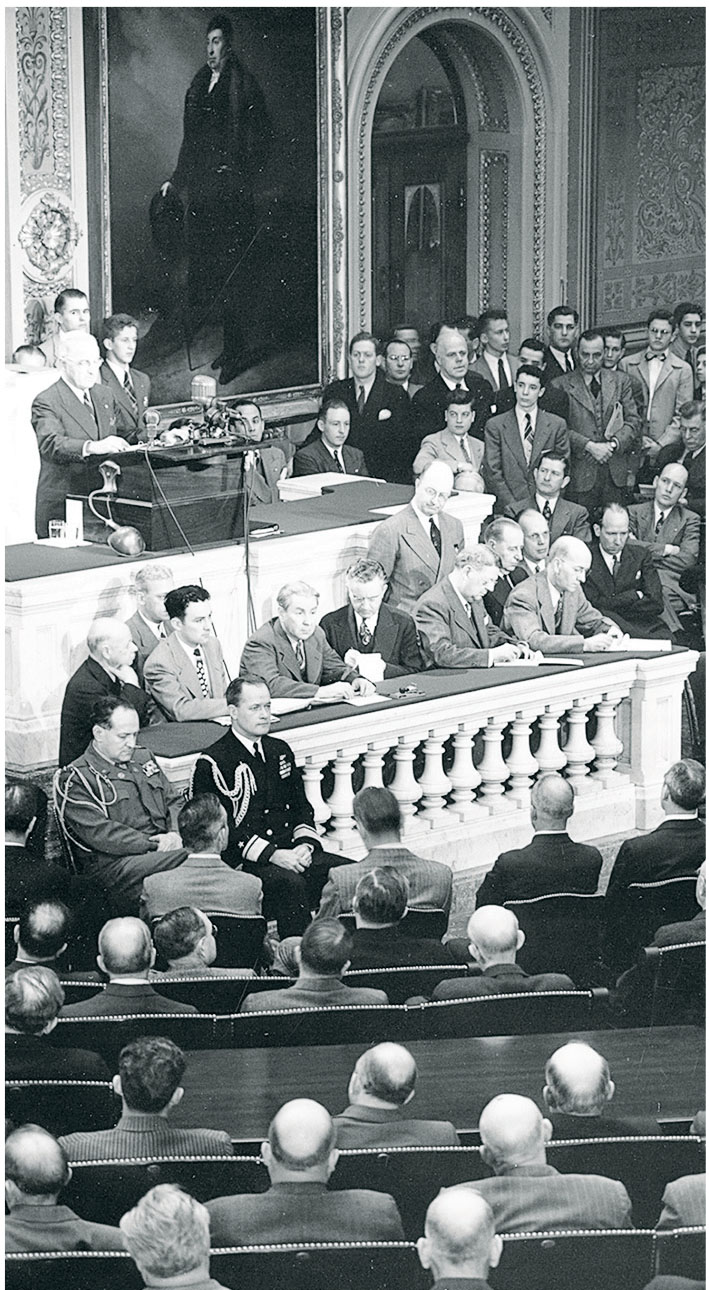
Exactly 70 years ago, on March 12, 1947, US President Harry Truman performed in Congress with a speech that marked the birth of the Doctrine Truman. Over the final version of the performance of his cartridge, the US President’s speakers-Clark Clifford, who pulled the head of state into regular parties in poker, and George Elsi-both previously held the positions of naval advisers and became speaker, became more likely due to the personnel failure of the administration. The deputy secretary Dean Achecon returned the “blank” of speech to them - it was necessary to find a beautiful justification for the massive assistance of Greece and Turkey so that it did not look like a cynical clash with the Stalinist USSR for the zone of influence. Elsi lit up - he found a good rhythmic basis with a frequent repetition “I believe ...”: “I believe that the policy of the United States should be the support of free people ... I believe that we must help free people choose our fate as they want. I believe that our help should be primarily economic and financial ... "
It was from the speech of Truman in March 1947, and by no means from Winston Churchill’s speech in Fulton (Missouri), uttered a year before, March 5, 1946, that American economist William Isterley in his book “Tyrania of Experts” proposed to count out the beginning of the Cold War.
In the 2007 Munich speech, Putin not only outlined the return to thinking with “zones of influence”, but also discovered the readiness to “restrain it” - just like the Soviet Union during the Cold War. The “Putin doctrine” of 2007 seemed to have rifted with the “Doctrine Truman” of 1947 ...
The division of the world into the spheres of influence and “deterrence” of the USSR according to the covenants of the “long telegram”, which on February 22, 1946 sent an outstanding American diplomat George Kennan from Moscow, will turn out to be the basis of the world order until the collapse of communism and the triumph of liberal democracy. In 1989, the philosopher and political scientist Francis Fukuyama publishes in The National Interest for his famous article “The End of History?” However, the new life of history began almost immediately after its “death” declared fukuyama. Only eight years have passed, and in 1997, Political analyst Farid Zakaria publishes a text entitled “The ascent of Non-Belly Democracy” in the Foreign Affair magazine, where it is in general terms that is now and that the “post-river” is already called: “Constitutional liberalism led to democracy, but democracy, apparently, does not lead to it. Constitutional liberalism. " And he finished the article as follows: “80 years ago, Woodrow Wilson (28th US President, the 1919 Nobel Prize Laureate.-NT) set a goal for America: to make the world safe for democracy. In the XXI century, our task is to make democracy safe for the world. ”
In fact, Zakaria in his own way predicted a triumphal procession along the planet of the right populism, whose apogee was the victory in the US elections Donald Trump. And he also explained this completely legitimate victory in his own way, even before Trump-Populist was in Zenit in 2015, the Dutch specialist in the right populism of KAS Madde-in an article for the British newspaper The Guardian, he wrote: populism offers “Non-Bural democratic response ... to non-combination liberalism”.
But is it so new and unprecedented? Is it really fascinating successes of the right populism to be considered the failure of the West and its democracy?
Populism is not democracy
Donald Trump in his election campaign (and after the victory too) appealed to those whom he calls "forgotten people." And then it is just right to remind you: after all, there was an Italian fascism with a populist response to liberalism - a populist response to liberalism - a populist response to liberalism. Does this mean that we have the right, as it happens today, to put an equal sign between populism and democracy? No, this is not the same thing. And for a reason, the real ideologists of fascism have never allowed themselves to confuse and mix these two concepts. One of the key fascist thinkers Enrico Corradini wrote in the 1920s: “Both the theory and in practice, Italian nationalism has always been anti-liberal, anti-democratic, anti-parliamentary and anti-Masonic.”
Authoritarian and totalitarian regimes were populist. Moreover, their leaders - from Stalin to Franco - have long remained popular among the people. But where does democracy?
For someone, the alleged era of “postpartum” is equivalent to the era of “post-truths” when the bet is made on sophisticated technologies of manipulation and deception, unlike the era of truth-in the late USSR, early new Russia, in classical liberal democracies with a free press. But here the question is: when is it populist leaders did not lie to the citizens of their countries? At the heart of the stability of populist regimes, misinformation and not aware of the shame of propaganda in combination with repression were always lying. It is unlikely that in the "post-truth" as an instrument of political struggle and public administration there is really something new.
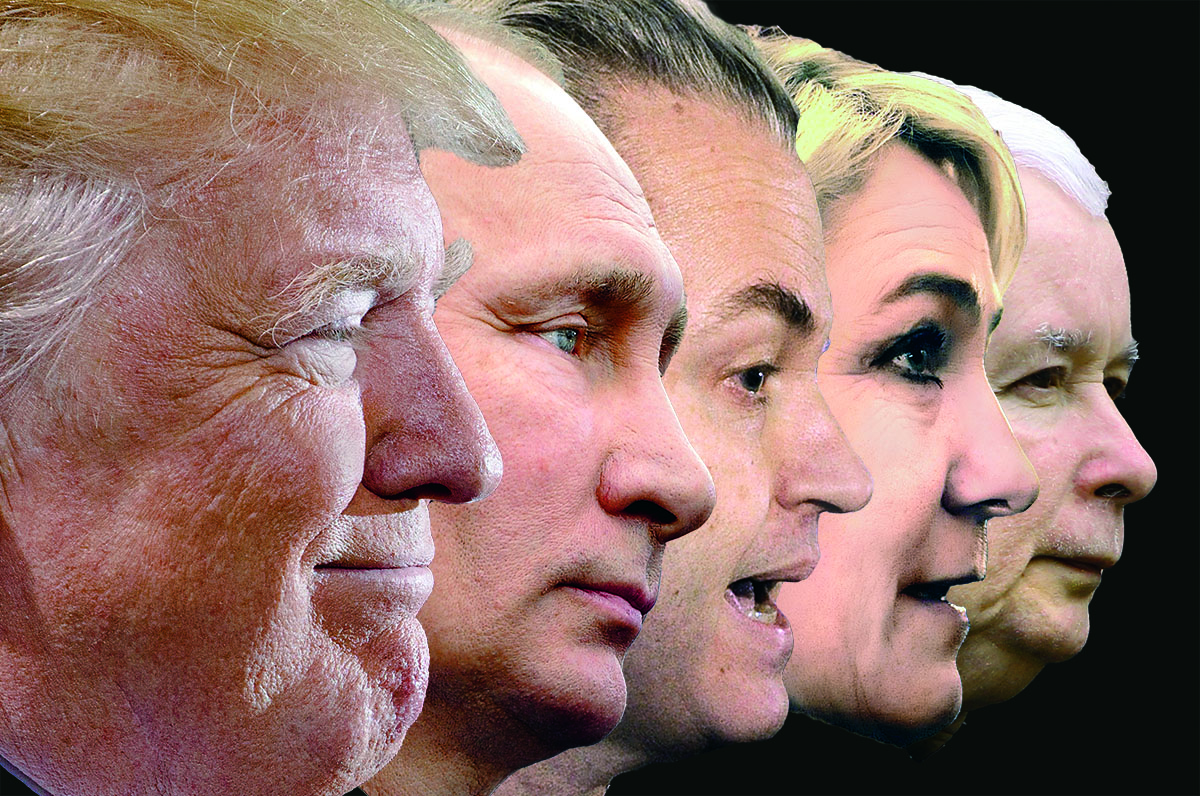
“Post -Racial” and “postra” - is it not phantoms? Did Western democracies scare themselves to them? In the end, if Donald Trump and his key adviser Stephen Bannon are talking about the arrival of the new world order, this does not mean that he has already come or will certainly come.
On the other hand, now is the time to recall the old man Truman: the “post -order” greatly resembles a world order model after the Second World War. Vladimir Putin responded to the first new old trend: in the 2007 Munich speech, he not only outlined the return to thinking with “zones of influence”, but also discovered his readiness to “restrain it” - just like the Soviet Union during the Cold War. The “Putin doctrine” of 2007 seemed to have rifted with the “Doctrine Truman” of 1947 ...
Politicians and analysts tend to extrapolate phenomena and trends of today to the future. The sunset of the West is predicted for years and decades. The fall of the dollar was predicted not only by economists-diggers. But both the West and the dollar are in general in general, they feel good. On the other hand, until recently, a vertical take -off was predicted to the countries of Brix. But it did not take place, and even China, the unconditional leader and competitor of the historical West, was very slow.
Some six years ago it was believed that the waves of democratization in authoritarian and traditionalist societies would join at least several significant Arab countries at once to the civilized peoples community, and Facebook revolutions will become a widespread tool for solving the problems of the new actor-“people of the area”. Everything turned out to be delicately speaking, more difficult: instead of the Facebook-revolution of the “people of the square”, Trump's twitter revolution occurred.
Trends - good, bad, promising or frightening - may be continued, but may not have. But there are not so many trends capable of burning the idea of the world order. Yes, the populist wave has already turned from a small rowan of discontent with Islamization of Europe, migration streams and inequality into a light storm with Brexit and Trump’s victory, but this does not mean that it will grow to the size of the tsunami.
On March 15, in the Netherlands - parliamentary elections, and the Freedom Party of Hertha Wilders will receive many places in parliament. But it will not become the ruling, and Nexit, the exit of the Netherlands from the European Union will hardly take place. And even if in the spring elections in France the leader of the National Front Marin Le Pen will win, the process of erosion of the order, which is considered the world (and in fact institutionally attached to the so -called historical West), in extreme cases will slow down.
Western democracy is primarily institutions, drawings and counterweights. Putin does not believe in this, and Trump did not suspect about this. The institutional safety grid of American democracy worked with lightning speed as soon as the new American president decided to implement the most odious of his decrees - anti -immigration (in his first edition. - NT). An independent court with real power, Trump stopped. Or at least suspended. This is democracy in action.
Democracy is populus
Democracy is not only institutions, but also people, people, in Latin - Populus, from which the concept of "populism" came from.
Not only European institutions, but also the Polish people are restrained in ultra-conservative undertakings in Poland in Poland. From time to time, the Poles are united by the hottest reasons in different cities of the country under the supra -Partican banner of the “Committee for Protecting Democracy” - democracy was given to the Poles expensive price, and they are not ready to give it to those who came to power through popular will, but ignore the opinion of another, who did not support them half of the population, and undermines the foundations of the democratic structure.
In Romania, citizens opposed the adoption of a law on the abolition of criminal liability for officials who came across a bribe less than 200 thousand lei, or $ 46.4 thousand. No one in this country, which drew a chauscu dictatorship in 1989, was canceled-it was an ethical protest, not political. And the authorities listened - the parliament voted for the abolition of dubious from the point of view of the fight against corruption of amendments to the Criminal Code. By the way, the irony of political destinies, the leadership of Romania, started amendments because the prisons have already been crowded with corrupt officials, and one of the European institutions - the Venetian Commission (advisory law on the Constitutional Law under the Council of Europe. - NT) recommended to mitigate the punishment for them. But the people are people. He is a source of power. And even if he does not express his will with the help of procedures and institutions, they listen to him in democracies. In the same, due to ethical circumstances, the situation in Russia of 2011-2012 did not go to dialogue with the people. Because she did not consider that part of the citizens who went to the square - the people.
The institutional safety grid of American democracy worked with lightning speed as soon as the new American president decided to implement the most odious of his decrees - anti -immigration
And now what is characteristic: the leader of the ruling party of the Socialist Party now accused the protesters of that they took to the streets with George Soros's money. Supporters of the Party of Post Firing do not have enough fantasy - populists in Hungary, Poland, Macedonia, Serbia, Slovakia and Bulgaria are fighting for “desorosization”. Is it necessary to remind of the country that was the first to “defeat” the outstanding philanthropist, Russia?
As is known from classical Marxism, if the idea masters the masses, it becomes material force. And the truth is - the “post -order” is first born in the heads.
"World Incorporation Order"
If we imagine the usual world order as the company “World Incorted Order”, writes in the newly published book “Peace in the Surgic. The story of the present tense ”Richard Haas, who once headed the US State Department’s political planning department, she would step on the territory of the“ bear market ”and lost ten percent of her value. We agree that it may lose more. But this world order has many beneficiaries and stakeholders. They, if you continue to reason in the terms of the market, is not profitable at all.
Nevertheless, what is happening is a really serious test for liberal democracy. That's just “non -Bell democracy” we should honestly call the “populist autocracy”. Then the picture will become sharper and, perhaps, more understandable.