
Translated material
What does the king need?
The discussion was attended by Professor of the Higher School of Economics, political analyst Nikolai Petrov, television journalist Vladimir Pozner and editor of the journal policy Ivan Davydov. The discussion was conducted by the editor -in -chief of NT Evgeny Albats
So what is the warning of Shakespeare to the kings?
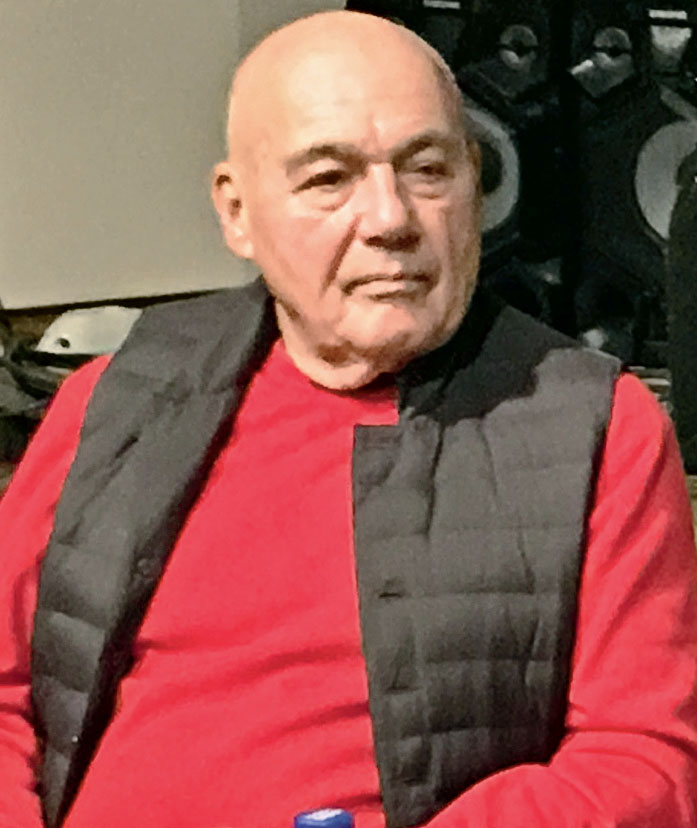
Vladimir Pozner: What they can and most likely lose their heads. In the literal or figurative sense. Because the power is disgusting - Shakespeare in it does not see anything good. Although he understands why the authorities are attracted, he warns: you will find a scaffold, severe death, execution. Either this execution will be physical, or this execution will be in the human memory of you, says Shakespeare, you, the ruler, somehow do not finish well.
But this is not true - historically not true. The twentieth century, in the number of ruined human lives, surpassed everyone else. But Stalin died in his bed, Mao Zedong, too, and Paul sweat, and all the North Korean leaders, and Fidel Castro, who made a prison from his “island of Freedom”. This is not a call for justice regarding tyrants and murderers, this is a statement of fact.
Posner: I do not agree. I read a lot about Stalin: how he was dying, I think I would not want so. And I have reason to believe that he lived in hell in his last years, not to mention the fact that maybe he was killed. Have you seen Castro's face shortly before death? This is a person’s face completely tortured and exhausted. Shakespeare, because he is not a straightforward person ... I used to use the word a warning, not a warning: of course, Shakespeare did not mean that everyone would hang up or cut off his heads, he had in mind what is happening with the soul of a person when he is left alone with himself, when he is already old when he looks back ...
Vladimir Posner: “The power is disgusting, and Shakespeare warns: you will find a scaffold, severe death, execution. Either this execution will be physical, or this execution will be in the human memory of you "
Do you really think that tyrants are tormented by the deeds?
Posner: I think these are unhappy people.
The poet and the king
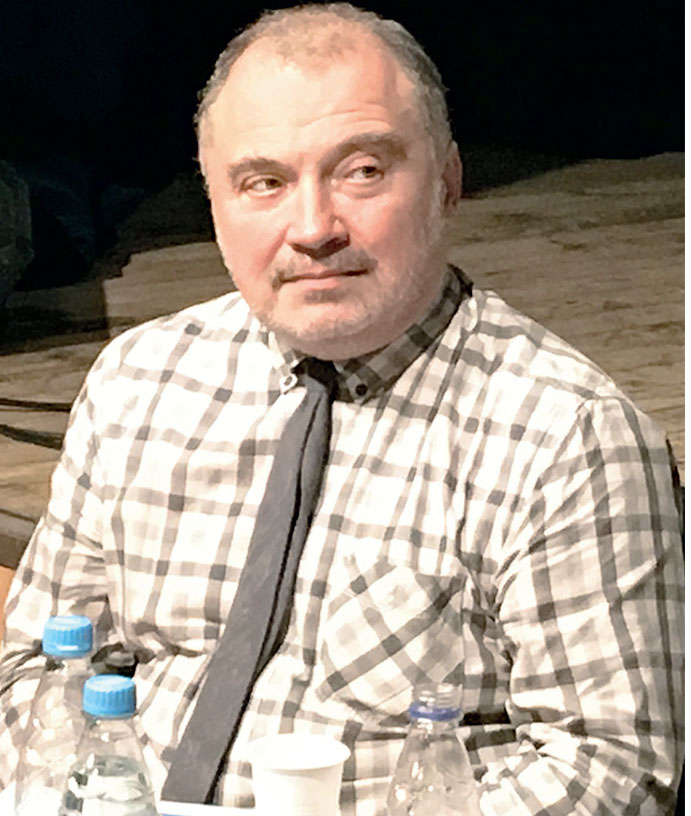
Nikolai Petrov: I would look at the problem a little differently, starting from the film, for which I am very grateful to Vladimir Vladimirovich. I would look at the king - since we are in Russia - and at the poet, as people, in a similar degree possessing power. In one case, it is power by birth or well -being, in another case, by right of talent. Both that and the other is power. The person who has power does not matter why he got it, he holds in his hands a very dangerous treasure. And everyone pays for the possession of this treasure. Shakespeare, let's say no. But remember Moliere, Pushkin - those people who possessed real power and who could be dangerous to the kings, they also went along the razor blade.
Ivan Davydov: One of the leitmotifs of the film: Shakespeare spoke of the present through the past, spoke not from himself, spoke on behalf of the jesters or dead kings.
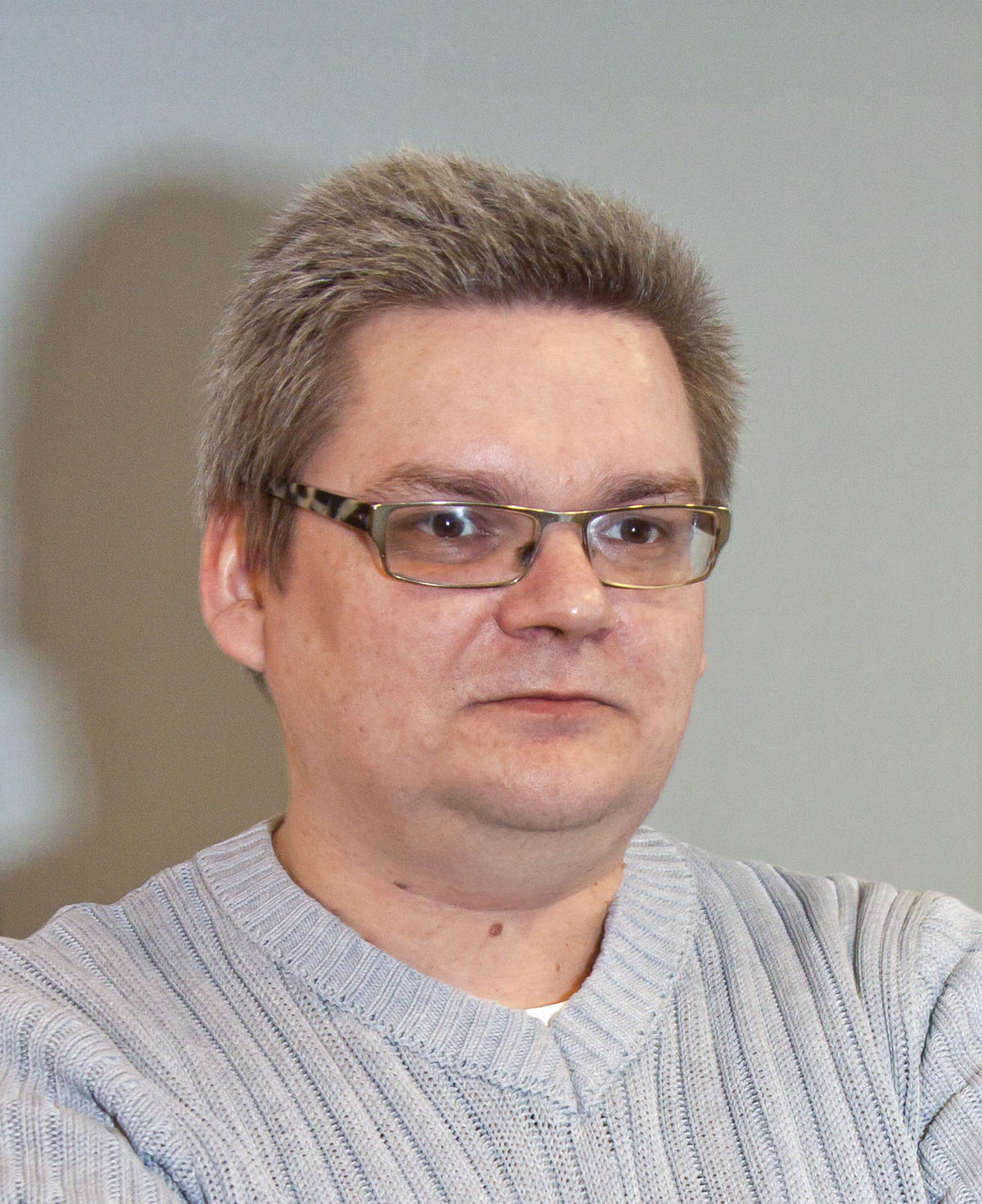
The same method was used in Soviet times by writers such as, for example, Yuri Tynyanov, for whom historical material was a way of talking about today. It did not save anyone ...
Posner: saved. Here is an example of a wonderful Soviet playwright, who was not persecuted or arrested, whose plays - “Naked King”, “Dragon” were put - Evgeny Schwartz. When I first read the Dragon - a short -haired Dragon, an old man of a dragon ... How? And nothing. No, this, of course, was saved. Or Cervantes: last year it was 400 years old from the death of both Shakespeare and Cervantes. “Don Quixote” ... I ask people: have you read? Certainly! I say, you remember the scene where Don Quixote climbs into the chicken coop? Certainly! I say there is no such scene. Because very few read these 900 pages of the harmonious text, of course, the most brilliant text. How does it start? Cervantes talks about the fact that he bought something in the bazaar and suddenly saw some sheets of old, written in Arabic. He bought these sheets and began to translate. And it turned out that this is a story about some kind of Idalgo, which, it turns out, is crazy. From the very beginning, he says: he is a madman, because he has gone crazy about novels about wandering knights. Therefore, all that he says, this Idalgo, do not pay attention, he is a “doll”. And this saved him, because what Don Quixote says, for this, Cervantes in his Spain of the 16th - XVII centuries would hang many times. And returning in our time - the Brothers Strugatsky? In their books, in general, everything (about Soviet power) was written. And nothing.
Ivan Davydov: “A game of power is such a game in which the most interpreted dictator with a very high degree of probability will sooner or later be a cannibal”
The nature of power
Why do people obey kings and presidents, although they know that the power is corrupt? Political science gives, for example, such an answer: sovereign always appeals to the source of power - either his power from God, as in the monarchies, or from the people. Tirans, as it are not difficult to notice, always swear in love for the people, rule on behalf of the people who are tormented and killed in camps or in senseless wars. But people endure. Why?
Petrov: I would appeal to Weber more with his three options for legitimacy. Tradition is, please, the power of the monarch is to you. And, by the way, the UK here is a great example of how poets - such as Shakespeare - provided feedback. Much depends, of course, on the quality of the people to which the poet addresses - the degree of influence on the king also depends on this.
In this sense, Great Britain is an excellent example of the fact that criticism, including a sharp criticism of power, is able to make power much more long -term. And in England, we still have a monarchy, albeit not the same as in the time of Shakespeare. And where is this monarchy in France, where is this monarchy in Russia? Here is the role of tradition.
The second source of legitimacy is the sovereign, according to Weber, is a procedure, elections that make the power legitimate in the eyes of people. Therefore, the election today is held by any authoritarian leader. In some form, he needs this procedure. And the third option - the charisma of such leaders as, for example, Mussolini and Hitler - people who can speak directly, without intermediaries with the crowd who sees the leaders in them, this is the basis for their power.
Nikolai Petrov: “We went around the desert for 20 years, but did not come to the promised land - we returned to Egypt, and now we will have to walk for another 40 years so that the post -Soviet generation will come”
What is happening in our last years is precisely, it seems to me, a very important transition from the power of the same type, from power in the procedure, in elections, to power of a different type, to the authority of the leader. But how long such power can remain is a question. If, in the case of the monarchy, subject to the rules, including the throne of successors, this power can be maintained and transferred to the descendants for centuries, then in the situation with the elections there is a risk.
And charisma is generally very perishable. That is, to ensure charismatic power is very, very difficult. And today we are, on the example of, say, Trump, who, being a populist, is through the heads of the elite to people, to the citizens, we see how quickly the power flows, which until recently, it seemed, raised him to the very most important top.
People as a myth
Davydov: I would like to return to the thesis that dictators are appealing to the people. Very often, in dictatorial regimes, the people turn into a myth, that is, occupies the place of God, who smeared the fierce of ancient kings. At the same time, the real people are eliminated somewhere, and the dictator very easily believes in their mission, the elections turn into some kind of analogue of the oath. Well, of course, we have seen this many times, and this is just stagnant, imitatively. This is a power that seems to come from the people, but in fact it is the same sacred power as the power of the very kings that Shakespeare wrote about. The British have aphorism: everyone learned to read in order to read Shakespeare, just not everyone even manages to understand this until the end of their life.
But we are with you in order to understand this, to see how the idea of our own mission, God-chosen and absolutely not critical attitude to our own actions is formed in the heads of people, even Shakespeare should not read-it’s enough to watch (the program “News of the Week” on the channel “Russia”) Kiselev.
Posner: Listen, kings - Louis, Karls - these were generations of kings. And what about Hitler? 12 years, 1933-1945. Even the Soviet government is 70 years with a little. Is it a lot from the point of view of historical time? This is a lot for those who live at this time, but this is not a lot at all. And every time you talk about totalitarian power and give surnames, whether Castro, Lenin Tire Stalin, whether Hitler, are people who have come to power in a popular wave. The people wanted them, the people adored them. He did not obey, but adored, believed. I saw what was happening with people at Stalin's funeral - this is a combination of complete confusion, the deepest and absolutely genuine grief.
And what about Hitler? This is not submission, this is adoration. And Mao Zedong is adoration. Moreover, it would seem, okay, China, Asia, other views, and here - Germans, Europeans, a nation of great philosophers and composers, Bach, Beethoven, Brahms ... Subordination is understandable, this is fear, and here people said: do what you want, I am yours. This is an amazing thing for me, amazing. Polls of the Levada Center show that Stalin’s popularity is growing, and Brezhnev, about which there was nothing other than jokes during life-in second place in popularity. And now it suddenly turns out that Brezhnev is nothing, much better than Yeltsin, not to mention Gorbachev ... What is happening in the heads, and why is this happening?
Petrov: I remember well November 1982, the death of Brezhnev: I just litted the abstract of the dissertation from the censors, and suddenly-continuous mourning melodies. My whole conscious life had passed by that time with Brezhnev, and immediately the thought: how will life be arranged now?
And it seems to me that today, when we analyze the results of the surveys, we must understand that they are a little crafty. The evil ones in the sense that these figures are completely different and for various reasons they pop up. I think Leonid Ilyich can only float as such a quiet, calm background, when, it would seem, everything was fine, everything was arranged, everything went on and in such a planned manner that, against the backdrop of the next leaders, it looked almost a golden age.
Stalin - when people say that he is good, these are not the people who found him. These are people for whom he is a symbol. And if the symbols of our state, its greatness are a victory in the war, is a nuclear bomb and a space project, then, of course, the person who personified the state at that time, he looks like a wonderful monarch. It is striking: those leaders who were closer to the people, and behaved more directly, and did not play greatness - Khrushchev, Gorbachev - they are perceived so little positively, including because the fellow citizens do not see some distant deity. And vice versa, people who, like Stalin, rarely when they appeared in public, and even if they appeared, it was so that the distance was absolutely felt, they remained in memory as people are much more great.
In this sense, Vladimir Putin, who gained 83%in this survey, is an interesting phenomenon, a mixture of much. But again, it must be understood that in authoritarian states there is no normal sociology. It is ridiculous to talk about the popularity of the leader where a person is simply afraid to incorrectly answer: a person called home - this is enough for him to think a hundred times before saying that he does not like the national leader.
Walking in a circle
Although, it would seem, a quarter of a century has passed since the end of Soviet power ...
Posner: What is 25 years ... And you did not notice that all our leaders are all Soviet? None of them were born after this system left, they are all from there. We went to Soviet school, were pioneers, Komsomol members, many were party. What do you want to be who are? This is the main problem of the country - that it is controlled by Soviet people. Not bad. Soviet. They try to control with those brains a completely different society. And only when it gradually passes, you can seriously hope for something. You know, I somehow spoke to young people, 12-16 years old, and after the performance-questions, a guy of about fifteen pulls his hand: “And tell me, what is the“ Little Train? ” Here! He cannot even imagine what it is. That's when he, his generation will come to power, then something will change, because he has different brains.
Davydov: You, Vladimir Vladimirovich, asked: explain to me, where does the growing popularity of Stalin come from? You know, there are very simple, even banal explanations. There are studies that show a direct correlation between the attitude to Stalin and how it is shown on TV. The peak of hatred for Stalin did not even fall into Russia of the 1990s, but to the Soviet Union of the late 1980s, when exposure publications went in packs when this was worried, and people realized that a terrible cannibal ruled for some time. Further, the number of people who did not belong to Stalin grew - neither positively nor negatively. It is clear that they had to survive in a breakdown and newly built country, and in general, Stalin was on the periphery of consciousness. And then “getting up from the knees” went, an attempt to debug the story so that black spots from it would not stick out. Then, in fact, the creation of a quasi -religious cult of victory went, in which Stalin plays a fairly noticeable role, and this caused an increase in his popularity.
According to Brezhnev, I did not see such research, but I think that his appearance in television series, including on Channel One, as such a wise leader who devoted his life to ensuring a calm life for a country, in which people did not see a calm and well -fed life. But I'm sure that our fellow citizens do not give a damn about Brezhnev. But when they are occasionally, not as often as Stalin, but they begin to show that it was actually a good person who did not make so many mistakes ... Today, I, for example, read on the Twitter of the deputy Zheleznyak: but in vain we left Afghanistan in due time, the other world would have been if we had not left. By the way, you won’t argue, there would be another world. And it is clear that at the myth of the greatest geopolitical disaster of the 20th century and then the bloody dashing nineties, the leaders of these times fall down. We measure ourselves by power, so the main character is always the main character - this is, in fact, the ruler.
Petrov: I can say an unpleasant thing, and Shakespeare has this. It consists in the fact that if you and I talked five years ago, it would seem to me that all this is very logical: we are waiting for the post -Soviet generation, completely different people, without a “scoop” in my head. But today, in 2017, we are already at a different point: we went through the desert for 20 years, but did not come to the promised land-we returned to Egypt, and now we will have to walk for another 40 years to make post-
Soviet generation.
The conference of the already mentioned “Levada Center” said that in many respects our society today is similar to the late Soviet. And if we expect that young people, it is fundamentally different, then there was a very interesting study of students: three elite Moscow universities - Moscow State University, MGIMO, HSE - and Princeton University of the United States. It turned out that our students of elite universities in views are even more conservative than the average Russian, and Princeton students - they are really very different from the middle American.
In this sense, history, it is not linear. And the fact that after the collapse of the Soviet Union we lived for so many years, absolutely does not mean that we have moved away from the Soviet Union to the same distance. In paternalism, in relation to citizens to power, today we are probably much closer to what was, say, in the 1980s than what we had five years ago.
Davydov: I get a lot of press releases by the nature of my classes, and sometimes they amaze me. Moreover, they can talk about anything - for example, about a new form of pans that entered the market. And suddenly I read the text that begins with the words: “At this difficult time, when the enemies from all sides took our country into the ring, but by the efforts of the party and government ...” Yes, it is necessary to buy a Russian cast -iron frying pan. These press releases are written by boys and girls who are now twenty years old, but this language is reproduced in an amazing, mystical way, these turns, this rhetoric.
Tyran vs crowd
In the film "Shakespeare. Caution of the kings ”is a dilemma: what is worse - a tyrant or a crowd? Another classic issue of political philosophy, which is constantly wake up and with us: “if not Putin, then”, terrible red, or brown, or seroburomalene will come to power. How would you answer?
Posner: I don’t like a lot of what is happening with us, but I can’t say that Putin is to blame. My grandson of the stake, he is German, so he is not Kolya, but the stake, born in Germany, lives in Berlin. I somehow asked him-he was twelve years old: what about Hitler tell you at school? They tell us, the grandson answered that not one Hitler is to blame and not only the Nazi party. We are told that the German people are to blame. Here! This must actually have some courage to teach at school that the German people are to blame. This is the result of a certain development. We did not survive that we were ready to say that the Russian people are to blame - because the people are not ready for this. Yes, not ready, it will take time.
If you return to the question of the authorities: after all, who strives for power, what are the motives of these people? For some, the authorities are tremendous satisfaction, stronger than sexual. And for others - messianism: I know how you should live ... I remember, we were in the same program on Rain with Alexei Navalny, and I told him that he belongs to the second, to those who know how we all need to live. “I don’t want to,” I tell him, “so that you decide how I should live.” To which he said: "No, you will like it."
(General laughter).
It seems to me that the discussions about the bad people are such an indulgence for the Russian elite. We are in the case, the people are dark and bad, then what - we will move it to the moon? Still, the responsibility is always on the educated class, on the elite.
Posner: I do not agree.
Petrov: The elite is part of this very people. And in this sense, it cannot be fundamentally better than the people. But I am just an optimist in this matter. Look at our people who leave to live in other countries and who become not only law -abiding, but also excellent, respectable citizens who share democratic values in those countries where they live. Look at our streets. Ten years ago, driving a car in Moscow was a big adventure, and now drivers are slowing down before the transition ...
Posner: The most striking example.
Petrov: And how quickly it all changed. And it seems to me that it is very important to understand, and Shakespeare just gives examples that the point is not that there are wonderful leaders somewhere in power-the fact is that democracy is a tough framework. This is a system that even a bad person who is in a high place makes us do what the majority needs, and somehow combine his personal motivation-why he went into power-with public motivation. There is no other way, except for building institutions. Look at our own experience. I saw many of my friends who came to power, and it seemed to me that now the power would be better, the smartest, intelligent people came. The 1994 war began in Chechnya, and my friends, colleagues, and intelligent people began to play according to the laws of a wolf pack. That is, they did not ennoble power, but they instantly turned their power into members of the pack. And who was not ready, could not, that she, the authorities, threw it away.
My conclusion is this: there is no need to put a cross on yourself, you do not need to hope that, once by putting an effort, we will get a good king who will make us all well. Actually, Shakespeare in many plays shows this: the hope that there is a good king and he will do everything perfectly, it is absolutely empty. Because the king is a position that turns the best person into a tyrant, unless Shakespeare is near, unless a society is near, there is no parliament that limits him and pushes him somewhere.
Democracy in this sense is not the choice of a good ruler, but this is constant, everyday control for anyone, who is the ruler today and whom we put in such frames that he works not only for ourselves, but also for us.
Davydov: A game of power is such a game in which the most interpreted dictator with a very high degree of probability will sooner or later be a cannibal. But I think that even I will still see free democratic Russia. True, it may turn out that when I see her, I may not like it at all.
Photo: The New Times, Maria Oledskaya