
Translated material
To collect everything and burn
On March 10, the new novel by Vladimir Sorokin “Manaraga” was released - an unexpected look at paper books in the digital era
There is nothing wider than gastronomic images in relation to literature - from the newspaper stamp “tasty is written” to “spiritual food”. But Vladimir Sorokin is an incomparable master of renewal of erased metaphors: any stamp is embodied literally, discovering an unexpected depth and comic effect. 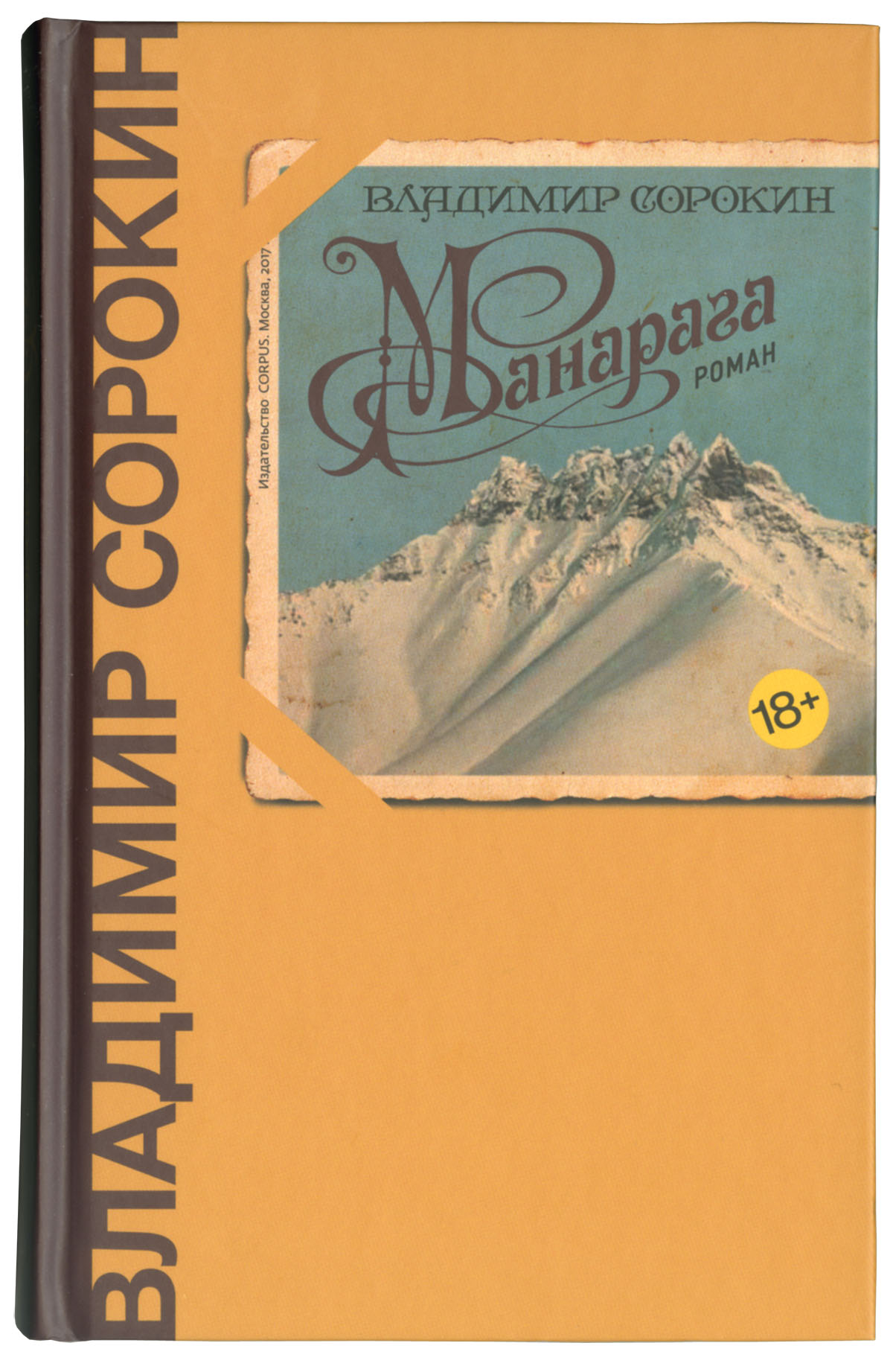
Marina Tsvetaeva defined the main books in her life as "those with whom they burn." In the art world of Sorokin, only those books that should be burned are generally taken into account. On the professional jargon of the protagonist “Manaragi” the chef named Geza-“Flows”. No, this is not about Nazi fires with ideologically harmful literature, although in a sense this can be considered a criterion for literary quality. On the contrary-books are very appreciated. They cook food for them.
Book hunger
Sorokin’s new book unfolds in the same fantastic reality, which is already familiar to us on the “Oprichnik Day”, “Sugar Kremlin” and “Bridle”. This chthonic kingdom of digital technologies has been developed no less than the Tolkien Mediterranean or the Harry Potter universe, and inhabited by giants, zoomorphs and people who change faces and internal organs, as spare parts, and completely helpless without their “fleas” - chips built directly into the brain and largely replacing it. Only this time, we are not talking about totalitarian-praise Russia, but about Europe, fragmented into gang feudal principalities.
“The first steak was fired twelve years ago in London on the flame of the first edition of the“ Finding Make on Finnegan ”, stolen from the British Museum”
The main character is a gastrour cook, serving the fashionable, decadent and illegal hobby of nouveau riche: “Since humanity has ceased to print books and has forever made the best of them museum exhibits, Book'n'Grill was born. <...> The first steak was fried twelve years ago in London on the flame of the first edition of the “Fools in Finnegan”, stolen from the British Museum. ” In the post -Gutenberg era, when a digital cloud becomes the only information bearer, paper books are worth its weight in gold. Sturgeon kebab, fried in the first edition of Dostoevsky’s “Idiot”, costs “5000 pounds + possible five -year conclusion.” The idea that a person appreciates what he pays expensive for, and in the sea of too accessible information the human memory is somewhat atrophy, in principle, is unpretentious. But the postmodern Sorokino casket has not two or three bottoms: the “manaraga” reads as easily and exciting as the previous novels about the new guide, but the more sophisticated the reader, the more pleasure will deliver to him the multiplying literary associations.
You can guess which menu the next log is prolonged: a 700-gram steak on “noise and rage”. Swan breast on the Dr. Zhivago. Tunets steak on Mobile Dick. Portable Suddle and a still still life on Master and Margarita (this book, however, burns poorly). Stuffed chicken neck on the Odessa Stories of Babel. Carrot cutlets on a half-story half-chip, in which Sorokin literally interprets the image of Leo Tolstoy as “blocks, a warden humanity”.
Devil's cuisine
On this occasion, another htonic Russian anti -utopia about books is recalled: “Kys” by Tatyana Tolstoy, published in 2000. In Kyshi, the volatile detachments of the “orderlies” with double -edged hooks seize books from the population - as a great value and at the same time the source of mysterious infection. True, units “from the former” can really be able to read, and to understand what they read is less. A paper book is an object of sentimental attachment and a symbol of a whole cultural civilization, according to many, which goes under water.
"Manaraga" brings this symbol to the grotesque, twisting it as a kind, like a flaming book on a frill. But not only: the new Roman Sorokin is a funny description of the modern Russian literary process and the market with its laws and hierarchies. In a cave on an ominous Ural Mountain Manarag on a molecular conveyor, millions of book circulations are produced, devaluing the “bright, glowing and striking” written word. “Kitchen” - an underground corporation Book'n'Grill - is an expert community that protects the literary canon from the encroachments of the graphomaniacs. The newly -minted Floobers, Dostoevsky and Kafki are trying to order a fashion grill on their own works, but meet the refusal: “This is not canonical firewood, but a new fuel gear, grown in their garden. They need a kitchen for legitimation in their own eyes and among the madmen surrounding them. ” How to not think about the urgent, reading how the workshop criticizes one of the cooks for children's matinees with Book'n'Grill, threatening the consumer infantilization: stuck on children's books and cheap children's food, a person can “demand them in adulthood without feeling the taste of serious literature.”
It is difficult to say who is ridiculed more here: graphomaniacs, eager for formal workshop recognition, or literary institutions with their canons-from a sad Russian Pen center to literary prizes like a “big book”. True, the hero of Sorokin marches the novel of the generalized post -Soviet Prilepin entitled “I came from my homeland” (a detailed, poisonous and accurate parody follows). The Big Book is less pushing.