
Translated material
For re -election re -election?
An attempt to overcome the parliamentary crisis in Macedonia turned into new troubles
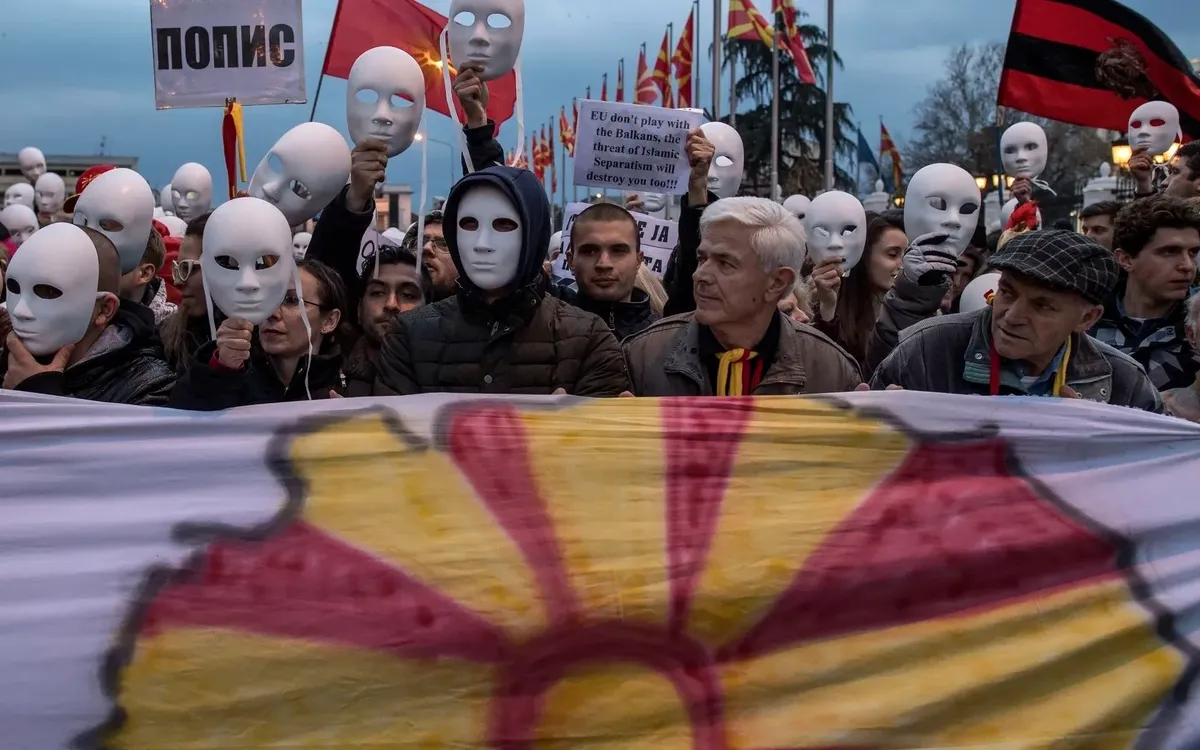
In Macedonia, for the second week is restless. Every evening, thousands of people throughout the country go out on the streets and squares with national flags and under the slogan “Painting a single Macedonia!”. Improvalized rallies sound passionate speeches, calling for preventing the ethnic split of the states. But who and why threatens the safety of the Macedonians?
In December last year, in Macedonia, on the third attempt, it was possible to hold early parliamentary elections. They were tied with great hopes for overcoming the political crisis that had protracted from 2014, the essence of which was in the confrontation of the ruling national-conservative alliance of the VMR-DPMNE (internal Macedonian revolutionary organization-the Democratic Party for the Macedonian national unity) and the opposition Social Democratic Union of Macedonia (SDSM).
The December elections with a minimum advantage won the BMRO-DPMNE. However, corruption scandals, accusations of falsifications and mass wiretapping of fellow citizens inflicted significant damage - conservatives, having lost 10 deputy mandates, lost the majority in parliament.
Social Democrats, having received an increase in 12% of the vote thanks to a protest wave, were able to come close to the BMRO-DPMNE in the number of deputies.
The ratio of deputy places arising between leading political forces 49:51 created a pattern situation. The formal right to form the government belonged to the conservative alliance, for which it was necessary to join the coalition with the parties of the Albanian minority. Due to the general negative rating of the VMR-DPMN, the negotiation process with the Albanians was not successful.
Then President George Ivanov, according to the Constitution, filed a proposal to the second largest parliamentary faction: if the Social Democrats collect signatures of 61 deputies (qualified majority), he will entrust them with the formation of the Cabinet of Ministers.
At the end of February, the SDSM reported that he collected 67 signatures in his support. It seemed that the way out of the impasse was found. But it wasn’t there.
The press that controlled by the conservatives was information that the Social Democrats, having entered into a conspiracy with the pro-albanian deputies, allegedly promised to make Albanian the second official language of Macedonia in exchange for their support. The news immediately overgrown with the details: it will, they say, will adopt the law that obliges all the Macedonians to force the Albanian language, inscriptions in two languages will appear on the money signs, and in the future, the regions where most Albanians live will receive such autonomy that will allow them to leave the country's composition with the Great Albania with the capital in Tyran.
The president of the neighboring Republic of Kosovo Hashim Tachi made his contribution to the escape of the situation, saying that without recognizing the national rights of the Albanians the existence of Macedonia as an independent state does not make sense. It is time for the Macedonian Albanians, according to Tachi, "to take the fate of their rights in their own hands."
Against this background and not without the efforts of Vrom-DPMNU in Macedonia, patriotic rallies and demonstrations began. They already brought a real bonus to the conservatives-the president refused to give the Mandate to the Social Democrats to the formation of the government. Federica Mogerini, who specially visited Skopier, who specially visited Skop.
The Macedonian crisis did not leave Moscow without its attention. The Russian Foreign Ministry, in its special statement, almost literally repeating the argumentation of Vrmo-DPMNU on the separatism of the Albanians and “Great Albania”, warned the external forces in the EU and NATO person in the internal affairs of sovereign Macedonia.
Now the leader of the conservatives Nikola Gruevsky, who served as the prime minister from 2006 to January 2016, does not hide that he hopes to return to power in the national-patriotic rise. Why he proposes to hold new early elections.