
Translated material
New Russian novels: March
Figl-Migl “This Country”, “Patriot” Rubanova and “Suddenly the Hunter runs out” Yakovleva
Twice a month, Gorky publishes a review of the new products of modern Russian literature. In the fresh issue-three novels for the first half of March: polyphonic phantasmagoria about the fate of Russia, the story of a businessman going to leave for the Donbass, and a retro-detective about the USSR of the 1930s.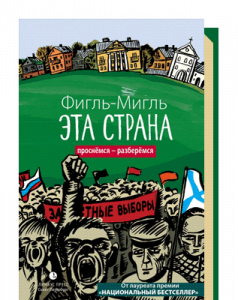
Figl-Migl. This country. SPb: Limbus Press, 2017
Figl-Migl writes the wax novels: compact, inhabited by fussing characters and buzzing with endless conversations. Actually, the conversations are the main fabric of any text of the writer. The action, whether it is dangerous adventures in the post-apocalyptic-medieval St. Petersburg or a detective story with the participation of film critics and a speaking dog, is easy to move for the culisons. But endless discussions, verbal skirmishes and optional chatter, which the characters are busy with most of the time, is impossible. Therefore, if you have not yet encountered Figlmiglevsky prose, think: do you like concentrated polyphony, wherever what is the character, then a clearly and detailed articulated position, and a fight or love scene through three lines comes down to the fact that the participants lit up and out loud, sprouts with aphorisms and speaking pauses, comprehended what happened. In order not to scare anyone beyond measure, you should make a reservation: these endless dialogs, internal monologues and solo performances of the narrator are written in general brilliantly - smart about and witty. But sometimes, nevertheless, I unbearably, I want to cry out in a lawful way, "Let's listen to the silence!" And even clap a fist on the table.
“This country” is also a novel as a whole, but with an inventive plot tie and criminal filling. In the not too remote future, the President of the Russian Federation approves of the national project, inspired by the “philosophy of the common cause” of Nikolai Fedorov. Scientists resurrect the gene pool, repressed over the years of Soviet power: executed, who died in prison and committed suicide. Stalin, Trotsky and other “passionate leaders” are included in the list of unsuitable resurrection. Resurrected issues special documents, eliminate dangerous diseases, pay benefits and allowed to settle outside the capitals. The streets of small cities are flooded by the Bolsheviks, Socialist -Revolutionaries, anarchists and participants of other numerous parties and associations who are immediately accepted to find out political relations, campaigning among the population and are not too eager to integrate in the 21st century. The local population, however, the walking dead is also avoided.
The connection of generations comes with a typical Figlmiglevsky hero - the reflective intelligent Sasha Engelhardt, who comes to the provincial city of Filkin at the Interdisciplinary Conference “Death of common sense”. At the same time, Colonel FSB Tatev arrives in Filkin. They and several dozens of characters are drawn into history with the loss of mafia money, which is suspected of both the "new" and "old" population of the town. However, with such a rich texture, the detective line primarily performs the function of the fishing line, which is stringing the fate, conflicts and excursions into the political history of Russia.
As it is easy to guess, the adventures of the resurrected are becoming a material for thinking about the structure of the “this country” about any century. Versions and private stories to the reader will be enough for the eyes. Associate Professor Engelhardt rushes with the idea of repentance before the victims of repression for the fact that the descendants, excuse me, were licked a country that the executed builders of communism did not see. Meanwhile, the revolutionaries again plan a revolution, provocateurs provoke, peasants want land, priests - God, officials are surprised why the people are dissatisfied, and the people are dissatisfied and regularly recalls that Comrade Stalin was able to restore order. “The layouts are changing, the game is the same,” explains the wise bandit by the name of the reprisal. And the author, who was obviously entering after the “span” and “wolves and bears” in the taste of novels with a continuation, briefly reports: the end of the first volume. Continuation, therefore, follows.
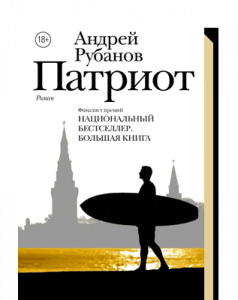
Andrey Rubanov. Patriot. M.: Editorial Elena Shubina, 2017
Sergei Knesyev, a reflective man of middle-aged and cast principles (for example, in restaurants to order only fish; every seven years to start life again), problems: a store with a provocative concept in which he invested all the money, rolls to bankruptcy due to enterprising-competing networks; All property is laid down due to debts-and still there is not enough money to pay; Health is naughty; The family crumbled - besides, the previously unknown second son, almost an adult, from where. Knowing, out of habit, he griply tries to resolve life: he eats pills, teaches children to the mind, rushes somewhere on a motorcycle, fights, drives devils (literally)-and as if he himself does not notice that he was already doomed. Meanwhile, the TV that itches backdrop tells about the blood of Donbass - and calls, calls, calls to shed his own.
The last time with Known-a hero, in the same body and character embodied everything that Rubanov declared himself in the literature-the reader saw as well as in 2008 in the novel “Get ready for war”: then he just came up with the store of the same name, which in the new book endures the inevitable collapse. Since then, Rubanov managed to turn out to be the most multifunctional and productive writer in his generation, to visit a science fiction writer, journalist, screenwriter and short -form virtuoso - and shut up for five years to return with the material and hero, which so impeccably correspond to his original patent, which is even surprising. Simple proposals in which ascetic life wisdoms are laid, usually supplied with the epithet "male"; whipped and accurate dialogs; reflection on a motorcycle rushing through the streets clogged with more overall transport; Flashbacks from the 90s-all this is Rubanovtm, Rubanov-brand. In fairness, the writer himself understands this - and the hero seems to ultimately destroy in vain attempts to coincide with the current time, the stubborn inability to abandon himself. However, the smoked Energy charge, which was twisted by all the previous “knowledge” things of Rubanov, are simply not enough for five hundred pages of the “patriot” - and that one of the most decisive and charismatic heroes of modern Russian literature ends his life in the literature to refuse to make a decision, you feel not so much symptoms of the era as the material fatigue. On the other hand, a patriot here is a man who goes to the beach, instead of going to war - at the present time and this is already a lot. ( Text: Alexander Gorbachev, Medusa * Media, recognized in Russia by a foreign agent and unwanted organization )
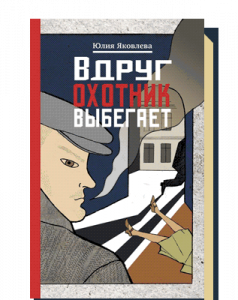
Julia Yakovleva. Suddenly the hunter runs out. M.: Publishing house "E", 2017
A retrodec is a genre not only noble, but also a compromise: its reader gets the opportunity to follow a criminal plot in an inconspicuous, even as an intellectual form, and the author to plunge into a sweet heart and share with the public appropriate knowledge, not forgetting to push the corpus delicti according to obvious plot rails. In special cases, a combination of convincing historical surroundings, a well -constructed plot and, what the hell is not joking, the dramatic line expands the framework of genre literature to “large”. And although the question of whether the loyal reader needs this expansion, discussion, some writers are quite convincingly attempts to jump above the genre bar. Roman Yulia Yakovleva, who was still known primarily as the author of the “children of the crow” (books about the Stalin era for the audience 10+), just from such successful attempts.
The action of the novel takes place in Leningrad of the thirties. Investigator Zaitsev and his team serve on a criminal investigation department, which is about to merge with the OGPU and become part of a large terror of terror. In the meantime, the investigation team gets an unusual, but still purely criminal case: a series of murders, wherever that the place of the crime, then the outlandish sight-the victims are dressed up in ridiculous costumes and roam in bizarre poses. With evidence, trouble, any version is at a dead end, but the case attracts the attention of Comrade Kirov himself. And then some kind of devilry begins to happen in the Hermitage. If a “suddenly hunter runs out” by an ordinary detective, two problems of the Leningrad detectives would be enough. But in the course of the investigation, the history of complex relations between colleagues in the conditions of universal suspicion also unfolds, a love line with inter -class complications stretches, and the Early Union people picturesquely crowded in the communal services, doomed in lines, green from poor food and carefully avoids inexplicable arrests with the help of ideologically verified formulations.
This completeness of the novel is a plus and minus of the book. On the one hand, it is obvious that Yakovleva is well aware of the life and morals of the era of interest to her (unlike the life of the threat, which the writer was recognized in an interview). She writes not only with knowledge, but just good. On the other hand, this awareness and interest at times pushes into the background the detective actually: behind the anxieties and sorrows of the characters, reader attention risks dispersing and missing the thread of the unwinding ball, and the details that need to be kept in mind and the reader have enough reader. However, you still can’t call the genre wave of the “hunter” a serious drawback. The author of the author, manifested in Leningrad fairy tales (a cycle of novels for teenagers, which includes the “children of the crow”), now serves as adults, who will not hurt the excursion into the thirties either. And if the adventures of Zaitsev turn into a series, it is quite possible that fans of Boris Akunin will have another beloved hero. There, you look, and a stone's throw to the television series.