
Translated material
America accused the FSB officers of conspiracy with hackers, hacks of journalists and earnings on potency funds. In Russia, they are accused of state
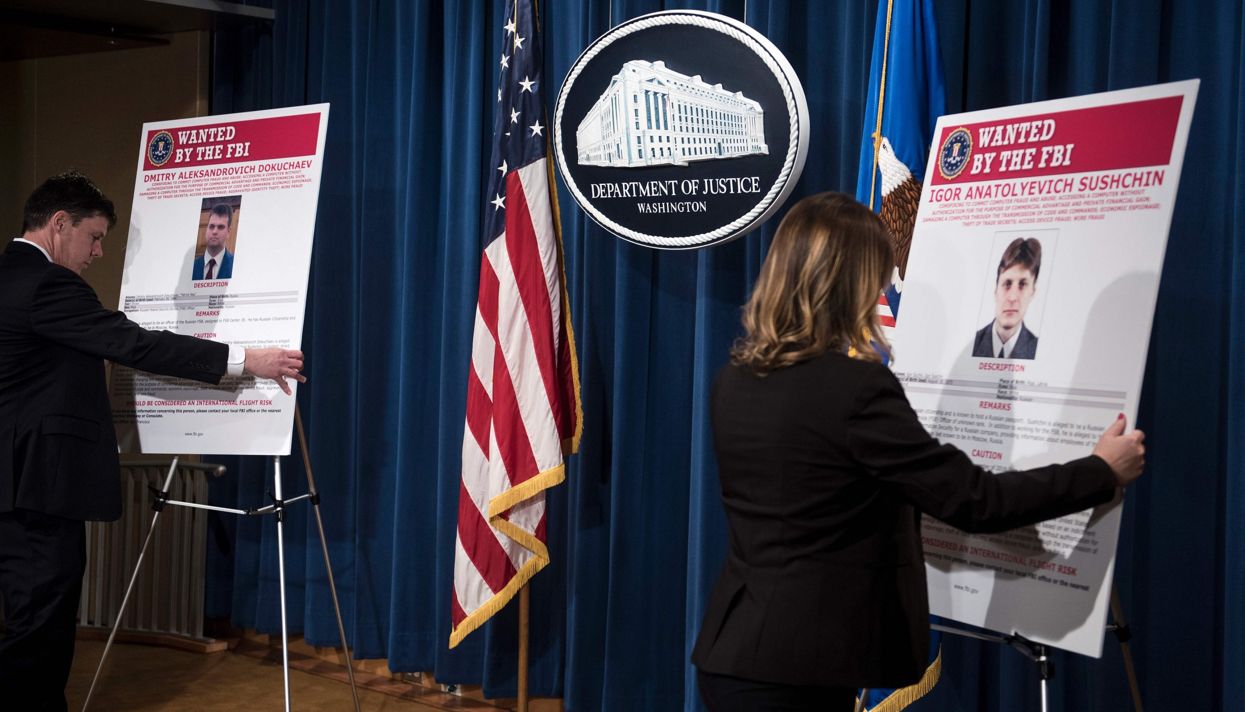
On March 15, the US Department of Justice officially accused two FSB officers and two hackers of Russian descent of breaking the Yahoo and gained access to several million mailboxes. Among them are accounts of Russian journalists, American and Russian officials, Russian investment bankers, employees of the American airline and many others. One of the accused employees of the FSB, Dmitry Dokuchaev, was detained in Russia in December 2016 on suspicion of Stateismman; At the same time, the hacker Alexei Belan has been on the wanted list of the FBI since 2013. Medusa tells the main thing that is known about this story.
Who and what they blame
On March 15, the US Department of Justice charged Yahoo and theft of millions of postal accounts. The accused is a group of four. It included two FSB officers, at the end of 2016, accused in Russia in Gosizmen, as well as two hackers, whose services were supposedly used by the FSB officers.
According to the prosecution (the full text is posted on the website of the US Ministry of Justice), criminal activity has been carried out from at least 2014 until the end of 2016. RF citizens, FSB officers Dmitry Dokuchaev and Igor Suschin, "entered into conspiracy to collect information on computer networks in the United States and beyond." They acted together with two hackers - Alexei Belan (citizen of the Russian Federation) and Karim Baratov (citizen of Canada and Kazakhstan), and also paid them for work. The text of the prosecution says that there could be more conspirators, but their names are unknown to the investigation and the “large jury” - the jury collegium, which determined the validity of the indictment.
The prosecution was announced by the US Prosecutor General Jeff Sessnes, the director of the FBI James Coumi, as well as representatives of several other law enforcement agencies and the federal prosecutor in the ninth district, which is being considered the case.
At least one of the goals of the FSB officers, according to investigators, was to obtain information about persons interested in Russian security agencies: journalists, employees of Russian and American departments, services and companies related to Internet security. Also, the group members gained access to commercial structures in Russia, the USA and France, and also hacked an electronic wallet with bitcoins in Switzerland. Alexei Belan, according to investigators, not only transmitted the information received to his curators from the FSB, but also used it for personal enrichment.
The text of the prosecution notes that Alexei Belan, who has been on the international wanted list since 2012, lives in Russia - that is, is in the jurisdiction of the FSB. However, instead of arresting him, the service decided to hire him to work. The acting assistant to the prosecutor general of Mary McCord, who also acted on announcing the prosecution, said: “The fact that the FSB agents with which the FBI agents cooperate to prevent cybercriminals helped the criminals.”
What exactly the crackers did
In total, 47 episodes are against the FSB officers and hackers. They are accused of conspiracy for computer fraud, economic and industrial espionage, as well as in the development and distribution of malicious programs. At different points, the defendants are facing from two to 20 years, and in the USA the deadlines for individual episodes are formed.
The Russian group also became the victims of the hacker group. For example, the materials say that they hacked the mail of a journalist-investigator from the newspaper Kommersant. They also tried to penetrate the post of “Assistant Deputy Chairman of the Russian Federation” (probably the assistant to the Deputy Prime Minister of the Government), the Officer of the K of the Ministry of Internal Affairs of Russia (engaged in the investigation of cybercriminals) and three employees of one of the major Russian companies engaged in cybersecurity, in particular, its director. The box of one of the leaders of the Russian Postal Internet Service turned out to be hacked. The names of all victims are hidden.
Among foreigners, hackers were primarily interested in citizens of the "country bordering Russia." In this unnamed country, they hacked the mail of the former head of the Ministry of Economic Development, the head of a metallurgical holding, a large banker and a “famous representative of business circles”. In addition, a significant part of the hacked accounts was used to abduct these credit cards.
For earnings, hackers also used manipulations with the Yahoo search engine. So, at a certain moment, the search engine on request for drugs to improve male potency issued a link to the online optte, but through the laying site. As a result, the resource controlled by fraudsters received commission from the pharmacy for attracted customers.
What is known about the accused
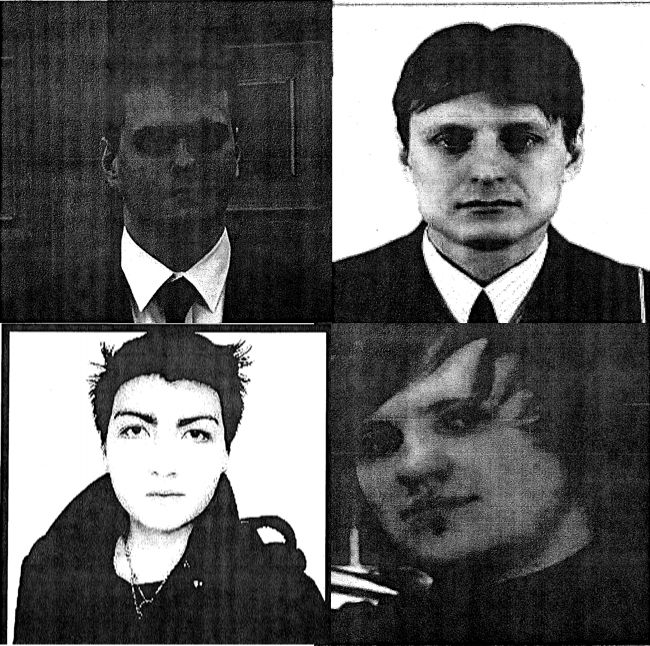
Dmitry Dokuchaev worked at the Center for Information Security of the FSB. In December 2016, he, together with the deputy head of this center, Sergei Mikhailov, was detained on suspicion of Stateizer. Both are now arrested. What exactly they are accused of official sources are unknown. According to Rosbalt, Mikhailov and Dokuchaev sold “various kinds of information” to another person involved in the case, the head of the investigation department of computer incidents “Kaspersky Laboratory” Ruslan Stoyanov. He subsequently sent it to American analytical companies working with special services.
According to unofficial data, Dmitry Dokuchaev used to be a hacker known under the Forb pseudonym, and in 2006 the FSB recruited it. In the special service, he rose to the major. Having already settled down in the FSB, Dokuchaev continued to write to the Hacker magazine.
According to Rosbalt, Dmitry Dokuchaev participated in the investigation of the activities of hackers from Shali-Boltya-and even participated in hacks. Formally, the case of the Stateizer, according to which Dokuchaev passes, and the case of the detained head of the "Shali-Boltai" Vladimir Anikeev is not connected.
Igor Suschin was not mentioned in any way in any way. According to the Unified State Register of Legal Entities, a person with a completely coinciding name, surname and patronymic from 2009 to 2011 owned shares in the private security company BAZIS. The Basis was registered at the address in Moscow, where the office of the ONEXIM group belonging to billionaire Mikhail Prokhorov is located. The indictment mentions that the Sushin, as the “Address Employee”, headed the information security department in one of the Russian investment banks.
The 29-year-old native of Riga Alexei Belan , who appeared on the Internet under the names of Fedyunya, Magg and Abyrvaig (probably rewritten "Abyrval" from Bulgakov’s novel "Dog heart"), was in the list of hackers, which the FBI is looking for first, in 2013. Then he was accused of kidnapped the databases of three American companies engaged in trading on the Internet and located in California and Nevada, and sold data to millions of users. It was reported that the hacker was seen in the Maldives, in Thailand and in Greece; For his capture, a reward of 100 thousand dollars was scheduled.
On December 29, 2016, Belan, along with the leadership of the GRU and another hacker, Evgeny Bogachev, was personally mentioned in a statement by the State Department on the introduction of sanctions against Russia in connection with cyber attacks on the US election system.
The biography of Karim Baratov is unknown. Unlike the rest of the accused, he lived in Canada, and not in Russia, and had a Canadian passport. According to the indictment, Baratov worked personally with Dokuchaev.
What's next
As a high -ranking source in Moscow told Interfax, the United States did not appeal to the Russian authorities on the issue of charges against the “four Russians” (three Russian citizens appear in the indictment). According to the source, “this fact, as well as the lack of specifics in the indicated case, suggests the next round of using the theme of“ Russian hackers ”in the domestic political struggle in the United States.”
The accused confiscate property. In particular, the indictment of the Ministry of Justice mentions the PayPal account, registered under the name Elite Space Corporation ("Elite Space Corporation"), as well as the Black Mercedes Benz C54 and the Aston Martin DBS with the MR KARIM number.
Konstantin Benyumov, Alexander Gorbachev, Ivan Golunov, Denis Dmitriev, Mikhail Zelensky, Vladimir Tsybulsky