
Translated material
Russian non -Jews
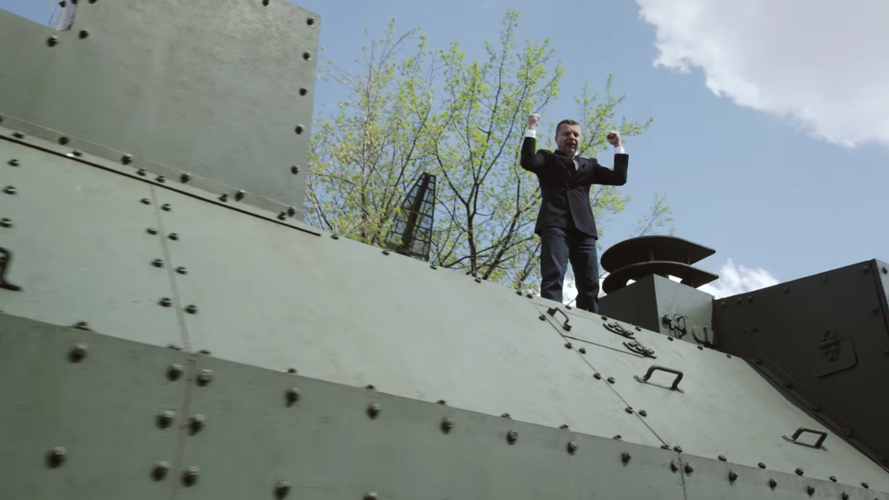
It was good for Jews in Soviet Russia until 1948, claims Parfenov, calling the thirty post -revolutionary years a period of unprecedented subcity. Does this mean, continuing the logical chain that the Jews were better then than the rest? Oh no, it was just not worse for them. This “well -being” did not last long, it ended suddenly, but the result Parfenov is not so important - he is more interested in the process.
The strange date, summing up the “good” for the Jews of the era, - 1948 - surprised a year ago, as soon as Parfenov presented his Jewish project, funded by the Genesis Foundation. He divided the history of Jews in the Fatherland for three periods: from Kievan Rus to the revolution, from 1917 to 1948 and further-state anti-Semitism, which ended with the Soviet regime in 1991. The author, he is a producer, then talked about the wide rolling future of his brainchild, and at the end of the trilogy (the last film should be released in the fall of 2017), the premiere on Channel One was expected.
Now the situation is clearly different. Confidently we can only talk about a club rental in the countries of the compact residence of Russian Jews - the USA, Germany, Israel. The first film was shown in Riga and London. But that seems to be all. To questions about the cost of the project, Partenov shakes his head - a commercial secret. The prospects of the television post speaks uncertainly, about the successes of the rental - "it is clear that it is impossible to recapture."
 © Studio "M endeons"
For two hours there is a picture - too little for the history of Jews in Russia and too much for the film, especially documentary. Although this is not a document - excessive trust in Wikipedia played a bad joke with the author - but then what? It is clear that Leonid Parfyonov does not make his films for people immersed in the topic-any, whether it is the life of the photographer of Prokudin-Gorsky or the inventor of television Zvorykin. Partenov - flesh from the flesh of television, a man of moment - unlike people of cinema, creating their films for centuries. Television is designed for random spectators who are at the right hour at the screen. Whether they want to look about the Jews, it doesn’t matter - we will show so that even the anti -Semite will look.
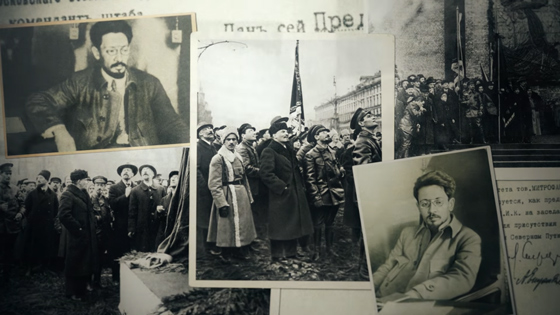
Yes, everyone will become. Because what story is not a shirt here, you live a treasure. Surely few of our viewers are aware of the existence of Naftalia Frenkel, the inventor of the savage "Gulag economy", examined in the film on the example of the Solovetsky special purpose camp and manually dug white -mining. Or about the gang of Yasha Serebryansky, who liquidated General Kutepov in Paris. About the successful performance in 1937 at the Izai competition in Brussels, five young Soviet musicians at once, directors-all, from Jigi Vertov to Romm-he runs quickly, but it is important to tell about Trotsky in detail, starting with his exploits in the Revolutionary Council and ending with the death of the NKVD agent in Mexico.
 © Studio "M endeons"
“The main phenomenon,” Parfyonov is convinced, “is that they were not Jews. The ordinary people did not perceive them with such. This is a true case when Utesov was asked who, by nationality, his daughter Edith. “Of course, she is a Jewish,” the artist answered. “Jewish,” his interlocutor said disappointedly, “why?”
Who needs stories about Jewish life - especially if the author thinks that it was not? About the institute of the Patriarchate in the USSR in 1943, the film says, but about the destroyed synagogues-no. Not a single word was mentioned by the Jewish Autonomous Region created in 1934 in the Far East. “Well, listen,” Parfyonov waves tiredly, “what an event it was, no one went there!” It is not chosen by the plots related to the topic of Russian Jews, but the curious details with which you can play. This is an infotheral - a genre in which Leonid Parfyonov has been working since the first “other day” on NTV: remember this weekly program of non -political news?
 © Studio "M endeons"
The main thing here is the ease of presentation: for example, about the attempts of Jews on Bolshevik leaders, it is told in the form of an exciting detective. Here the Cannegiser dive came to kill Uritsky on a bicycle, and the author of the film - he is the only actor - can repeat this feat, also rolling around the millionth. But the author poses to the operator on the roof of the house of Shagal in Vitebsk.
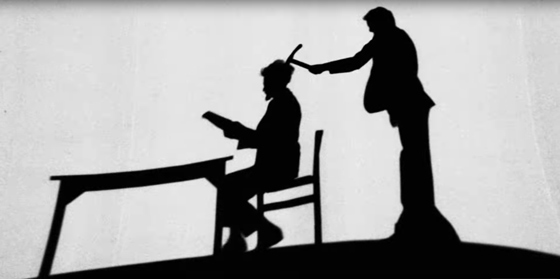
Partenov himself admits that this is a banality, but he cannot abandon these tricks - he has long been their hostage. And director Sergei Nurmamed, who has long been working with Parfyonov, does in the new film something that I have long been used to, which was already in the “color of the nation” and in “Zvorykin”: reconstructions, animated historical characters, speaking portraits and flying donkeys from the chants of chagal here in abundance.
But there is no war in the film. There is no beginning of the anti-Semitic campaign, which started long before the victory, and not in 1948, as Parfyenov says. No Holocaust. Well, almost no.
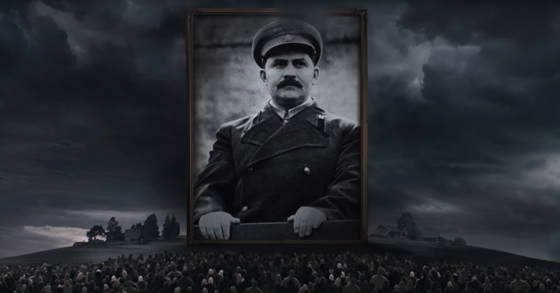 © Studio "M endeons"
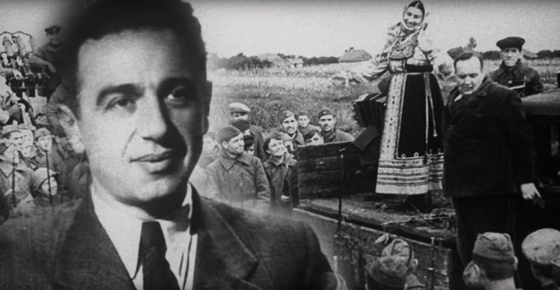
Mikhoels arises only in 1943, as the appointed head of the Jewish anti-fascist committee. Having spent the “Lullaby” in the “circus” at the Yiddish, he will go with Itsik Fefer for the ocean, collect donations for the needs of the Red Army. We even see a wonderful chronicle-Mikhoels’s performance in New York, but no one will tell us why he was chosen. And who is he is not only a well -known actor and head of the state. No one will explain that Goset was almost the most advanced, avant-garde Moscow theater in the 1930s; The famous British director and actor Gordon Craig, who visited the USSR in 1935, left comprehensive memories of this. Mikhoels was very famous - and recognizable not only in Moscow, but also in the States.
It seems that Mikhoels will be discussed in the third film - as well as about the dissident movement and the refuseniks. There, Leonid Parfyonov will be more difficult to do without synchrons: people who remember the time are alive, there is someone to tell about him.