
Translated material
You know less - you sleep stronger
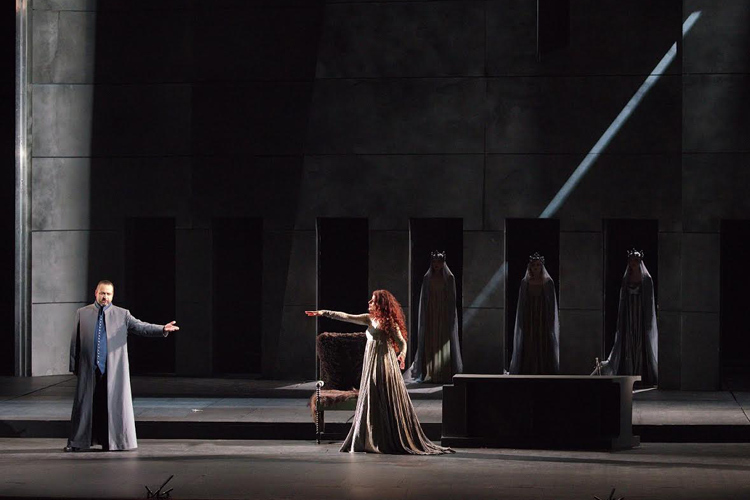
The King of Edip Stravinsky was written in 1927, the final edition of the “Duke of the Blue Beard” of Bartok is the 1917th. Nevertheless, the production of both of these one -act operas became a very noticeable repertoire event in the musical one, as well as due to the name of the director Rimas Tuminas - the theatrical life of Moscow.
The commendable filling of Breesha (these most important names were not in any of the many Moscow opera theaters) does not cancel the shortcomings of new products. They include, first of all, to the musical component of the Opera-Oratorio Stravinsky. The soloists (Oedipus - Valery Mikitsky, IoKasta - Natalya Zimina, Creon - Roman Malin) obviously suffering, the choir lacking power, and the orchestra under the control of Felix Korobov - indignability and wit. The situation is better with Bartok, where the vocal and golden -haired Klimov seducer Larisa Andreev (Judit) curls around the thorough Denis Makarov (Duke of the Blue Beard), and the orchestra is enthusiastic about what is happening on the ascetic stage. The beautifully overripe romanticism of Bartok is clearer than Stravinsky’s speculative games.
The question is why it was these two operas that were chosen for production in one evening remains unanswered. Both performances live in a more or less intelligent-sulfur interior (ADOMOMA YATACOVSKIS scenographer), a split head of a giant idol is added in Stravinsky, and in Bartake there is an old-fashioned duke and seven laconic openings on the back. But nothing else connects them more.
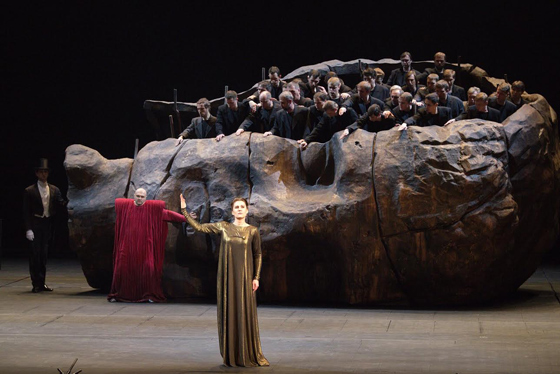 © Sergey Rodionov
Although it could. Both operas are difficult to encoded parables from the era of the heyday of psychoanalysis. The first case is an illustration to the “Oedipov complex”, the second is a journey into the dark secrets of the men's unconscious, in which the tireless Judith, the heiress of Senta, Elsa, Isolde and Melizanda, opens seven doors. In both cases, the heroes achieve answers to dangerous questions, and this does not end in any good. Oedipus, having learned that he is a killer of his father and mother’s husband, groanes his eyes. Judit, revealing all the secrets of the Duke, dutifully replenishes the collection of his prostrac wives.
Rimas Tuminas, for the second time after Katerina Izmailova in a big opera, who stepped into the dangerous world, in this case looks more confused in it. Heroes do not really know where to put themselves during these static plots, and they wind up meaningless circles on the stage (especially Judit). The proud and distant Latin, on which Stravinsky ordered his heroes to explain to his heroes, for some reason sets off the inappropriate vibrantness of the narrator (at the request of the composer, he must explain what is happening in music in the language of the audience, but the actor of the theater Vakhtangov Vitalys Semenovs looks completely from another opera). For some reason, electronic groans from horror films are simple-mindedly finishing what is hidden behind the seven doors of the Duke Blue Beard. And the Russian translation, which Bartok’s opera preferred to the Hungarian original brings her closer to the listeners, but deprives her of the distance, which is why every demand of the heroine to open the next door, flavored with assurances in love, acquires some bazaurism.