
Translated material
Unpubuse Gorenstein
I.
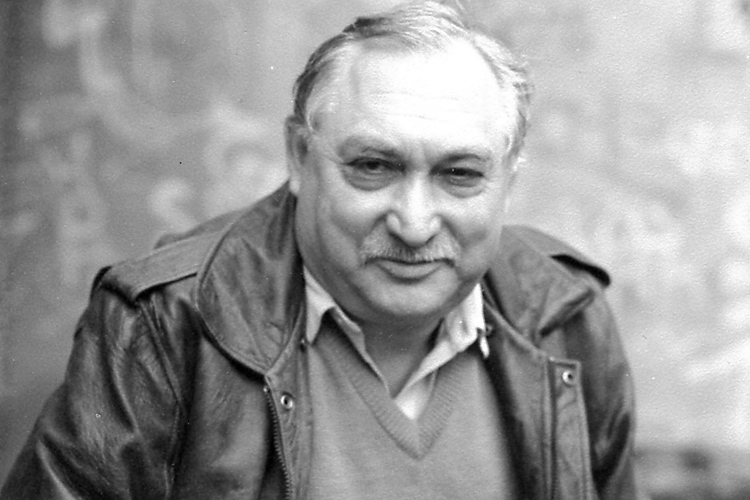
The writer, screenwriter and playwright Friedrich Naumovich Gorenstein (1932-2002) lived at least three very different lives. “At least three” - because the creators undoubtedly live many of the lives of their characters ...
Remaining an orphan at the age of 11, Gorenstein lived in Ukraine under 30, working in recent years at a construction site in Kyiv. From the age of 20 he wrote prose and offered it from the end of the 50s in magazines and at the film studio, sent, in particular, to Erenburg, as well as to the editorial office of Yunost magazine under Valentina Kataeva. But he did not break into the seal.
The second life began for Gorenstein when in 1962 he was accepted in Moscow by a freedom at the highest scenario courses of the USSR Goskino. This allowed him to leave the engineer’s work, and although Gorenstein did not have a scholarship, he quickly learned to earn a living by literary, or rather, scenario work. Over the years of his life in Moscow (from 1962 to 1980), he became known and in demand as a movie scene. Among his works in this capacity - “Solaris” by Andrei Tarkovsky, “Slave of Love” by Nikita Mikhalkov and “Seventh bullet” by Ali Khamraev.
Before the emigration in 1980, the publications of Gorenstein’s prose publications, except for the first and only in the Yunost magazine in 1964 (the story “House with the Tower”), was not in the USSR-partially because after the “New World” refusal in 1965 to publish his story “Winter of the 5th year” Gorenstein himself ceased to offer the magazines his works. He wrote to the table, creating several novels and stories in Moscow, as well as two plays. Gorenstein did not return from emigration.
II.
The most important works - “place”, “psalm”, “Berdichev” and others - Friedrich Gorenstein wrote in Moscow (1962-1980), and in Berlin (1980-2002), especially in the early years of emigration, wrote mainly to the story, although he also created two large works in dramatic form.
The “Berlin” stories are also included in 1983, the still not published story “Astrakhan is Black Caviar”.
The explanation why the writer, having finished the story, postponed it and did not offer it to the seal, should start with the fact that, living in Moscow, Kiev Gorenstein from the first trip to the Volga in 1970 fell in love with those lands and then went there every summer. The story "Astrakhan is black caviar" (1983) was born by this love of Gorenstein. And the departure to emigration in 1980 was for Gorenstein, among other things, and farewell to the Volga, which was also reflected in his Berlin story “Last Summer on the Volga” (1988). Already, being deadly ill, Gorenstein dreamed, living constantly in Berlin, to be able to live several months a year on the Volga, in some small Volga town ...
Gorenstein's plans grew up for a long time, and he usually started writing a thing only when she developed clearly in his imagination. This preparatory work sometimes took several years. As a result, Gorenstein, especially in the Moscow period of work, surprised the short terms for writing his most difficult and large -scale things - several months.
As for the preparation, it was also with the last, great, historical novel by Gorenstein (at the same time, following the example of his beloved “Don Quixote”, a parody of a historical novel), which the author called the “Rope Book”. The novel is located in the archive and remains unknown readers, since due to Gorenstein’s difficulty handwriting, the problem is the decryption of this nevertheless finished, large in volume of the manuscript. There is also a novel in this essay in the novel-the detective novel “Crime-Bruck” with a criminal story around the booty of caviar in Astrakhan. I dare to assume that, having written the story “Astrakhan-Black Caviar”, Gorenstein saw the most important possibilities in the material and soon the plan of the “rope book”, more precisely, had already dawned on its detective part of the Crim-Bruck (by the way, it was called the heading of the criminal chronicle in the Astrakhan newspaper, and this name Gorenshtein was creatively borrowed). But this explanation of the writer postponing the story, of course, is nothing more than a hypothesis. The Vermentic Book was written for relatively long, from 03/14/1999 to 07/29/2001. As, however, the last completely finished work of Gorenstein is the drama-chronicle “on the sacrifices” about Ivan the Terrible.
The researchers still have to finally find out the connections of the novel “Astrakhan - Black Caviar” with the “Rope Book”. But since the story is still interesting in itself, but the author of the author of the reluctance to publish it in his papers, a successor, literary critic by profession (though German), now sees obstacles for its publication.
Yuri Veksler, author of the project "Worlds Gorenstein"
Friedrich Gorenstein
Astrakhan - black caviar
(Traveler notes)
“The future Russian Empire should have six capitals:
S-Petersburg, Moscow, Berlin, Vienna, Constantinople, Astrakhan. "
From the project of Count Platon Aleksandrovich Zubov, the favorite of Empress Catherine II.
“I laughed from nine to two in the morning so that during these five hours my eyes came to my eyes at least ten times.”
...................................................
"Did Montesquieu say that the climate should be corrected with good laws?"
Stendhal. “Rome, Naples and Florence. Traveling in Italy. "
The evening Astrakhan sun, the red heavy sun of the desert, sinks above the Volga.
I am ashamed to admit, but I, a person of more than a middle -aged, have a plenty of, a capital intellectual with a situation in society, protected by satirical cynicism from exalted moral concepts, I am now experiencing truly childish, primitive fear. The very fear of a dark room, dreams, natural phenomena, which inspired a person with fundamental moral rules long before the appearance of consciousness, philosophy, and religious constructions. A child and a savage soothe the voice of a mother or sorcerer because his consciousness is alarmed only by external reasons, because the child and the savage themselves are part of their frightening environment, as a fish is part of the river, and the beast is part of the forest. For us, people of culture and civilization, especially in its extreme material forms, the world, in my opinion, in all its manifestations, up to cosmic, is part of our brain. Our brain is our habitat, by ourselves created. You can admire the high talents of a person, sing enthusiastic hymns to his geniuses, who, inside God's world, created their own, their firmament, their bead, their darkness, their light, but one cannot but recognize the artificiality, inorganism of this man -made world. The fish in the river and the beast in the forest lives much more comfortable than a person in his brain, where there are no soft shady jackets, nor odorous shrubs.
These are the epic thoughts inspired by me, the lonely traveler, the lonely sun of the desert. However, if I were on this Astrakhan evening and not so lonely, it’s not so childishly forgotten by everyone in this log house on the left bank of the Volga, a clay-sand, lower, whether I ame and entertained by a woman or a conversation with the metropolitan friend, then the sinking Astrakhan sun would inspire me with epic thoughts. However, this would be a controlled, opera-heroic, male epic.
Sit with a young woman at the creaky open-rama, in which this is the Sun of the deserts and this gray-black world-famous Volga water, this National Symbol of Russia, which smells of rot and oil, sit and see how, under the influence of a fast-outing day, all this resembles all this resembles a water mirage in the desert. It would be like this with a young woman and, feeling how her ice fingers tremble in my hot palm, to incite female weakness with stories about the millennium of Asia's pressure on Europe. Done through the Astrakhan gap, through the Astrakhan window from Asia to Europe.
Huns, Khazars, Mongols-horse stress of history from the 2nd to the 13th century, along the solonchak, wormwood steppe, gray-yellow, stone in drought, but swelling, viscous, firebox from rains. I would scare the young woman with the nightmare names of those who fought with Russia the struggle for the Volga, for the Volga was the power of many peoples and without this power to live and not to survive either the Rus of Svyatoslav, nor Mamaeva Rus'. I would tell her about the Turkic cavalry of the barbaric empire of the Yangicent Yabgu, about the terrible wounds caused by the stabbing and cutting anti-Human weapons of those times, about the unsuccessful Caspian campaigns of the Russians through the Volga-Don Delo and, finally, as in the Lower Volga region under Serkel, now the Russian infantry in the battles of Prince Svyatoslavov (bast shoes under the command of boots) won an ideological victory, stopping the Islamization of Rus'.
And, grateful to me for this victory, a young woman would press my face to my face, the face of the speaker, her hair smelling of strawberry soap, seeking protection and warmth from the survivor of fear and the night Volga wind.
Twilight in Central Russia is the best time for a thinker who dreams of unearthly problems. In the Nizhnevolzh Asia, a gap, reconciling light and darkness, is short. Everything visible disappears, there is no Volga that has dissolved in the night, and the Zabolzhsky lights are not visible, except with difficulty, straining vision, you can distinguish a glimpse in such a distance that it seems no closer than up to rare stars. Wide in the lower Volga, the night air is moistened, the night heaven is covered with moisture, the sand is moist, the grass is moist. Nothing warms. And many diverse night sounds, dog barking or cat meowing seem to be relatives, soothe like the voices of loved ones. The sounds of local insects and plants swinged by the wind are unpleasant. Sounds accompanying and drowning the steps of the Astrakhan criminal, walking on the shore along the sandy bogram - velvens in the roller shoes that are common here. And maybe, approaching from the other side, along the wormwood of the steppe, past semi -dry lakes. But these are not swamps, like in European Russia, cute habitats of birds and small animals, but these are “solo”, as they are called here, lifeless, filled with black -shaped smelly silt, saturated with salt. Better and you can’t imagine for hiding the corpse. And the door on the slobbed valve holds, it costs nothing to plant a window at all. Scary. But at least it is clear why. And if a tender woman smelling of strawberries, which is more likely afraid to be raped by an unknown in a dirty tarpaulin fishing clothes, unknown with big dirty hands, you can even force her to press on me with stories about the “pony freem”, consisting of runaway Russian slaves and Kalmyks, jailing in the XVII century in the steppe of the right bank. Both international thieves' gangs for a long time prevented the settlement and calmness of the Astrakhan Territory for a long time.
All this information was taken by me from the books that Anton Savelyevich Krestovnikov, the indigenous Astrakhan, a candidate of science, a former employee of the Astrakhan hydrology, now the slave of Khan Ivan Andreyevich Glazkov, chairman of the Astrakhan regional union, supplied me. Ivan Andreevich warmed Anton Savelyevich after his dismissal from the institute for some kind of offense. I am just a guest of Ivan Andreyevich, a person directly responsible for the harvesting and storage of the main state “mineral” Lower Volga-black caviar, edible gold, but not extracted in dead mineral bowels, but in a living stupefying and sustainable blood, among fish. However, it is sooner to compare the caviar not with the gold, from which, under communism, as Lenin wrote, they will make toilets, but with pearls, which has not yet been found under communism. No wonder well -prepared granular caviar, grain to a grain, reminiscent of the outer beauty of the pearls. And mined in water strata, breaks out of a living body. But about caviar, granular and steam, - later. Now about Ivan Andreevich.
If I say that Ivan Andreevich directly led the Volga’s confusion into the Caspian Sea, then you, the dear reader, consider it nothing more than a pop pen. For many of you, especially cultural people, read Chekhov and know from his story “The Teacher Teacher” that the Volga itself, without any leadership,, so to speak, spontaneously, flows into the Caspian Sea, about which the teacher of geography, Hippolytus Ippolitovich, told the world. And Ippolit Ippolitovich even spoke to the truths in delirium, such as: "Volga flows into the Caspian Sea ... Horses eat oats and hay ..."
Dear reader, but what is well -known truth? And what is the difference between the truth about the benefits of milk and the truth about the afterlife immortality? Small household details giving a glass of fresh fresh milk, alpine or Vologda, the sensations of eternal life, while from the afterlife immortality it blows by cemetery bureaucracy and accounting through tears: how much to give to the burial grounds for vodka?
If our wonderful Anton Pavlovich Chekhov repeated his civil feat and, after the island of Sakhalin, went to the lower Volga, he would certainly correct the poor Hippolytus Ippolitovich. Because in the "Island of Sakhalin" there are no well -known truths about Sakhalin hard labor, but there are small household details of the hard labor life. And there are everyday observations of the eyes of a reasonable and spiritualized. For example: one prisoner was accompanied by his five -year -old daughter, and when they climbed the ladder to the ship, the girl held on to his father's shackles. This reporting detail, in my opinion, is worthy of Dante. A five -year -old child perceives hard labor shackles as part of his father, as his arm or shoulder. Of course, everyday details are different, and poisoning the heart, and having fun heart, and simply existing, which you do not notice, they are so real and opposite to well -known truths.
Of course, I am far from claiming that Ivan Andreevich is able to deny well -known truths at the level of Chekhov, but at the horse level - quite. And in this comparison with a noble animal there is no humiliation for Ivan Andreevich, and he would not compare himself with Chekhov and himself.
Just as for a horse, oats and hay are not a well -known truth, but many details consisting of delicious field odors, a convenient warm stall and a good groom, and for Ivan Andreevich Volga, not only flows into the Caspian Sea, but flows at the village of Zhitniy, his homeland.
The village of Zhitnaya from ancient times is soldier and fishing. Here they gave the soldiers a living. And here, in a free, abundant fish, many of the soldiers settled to fish. Hence the origin of Ivan Andreevich. Here he grew up and here for fifteen years old he fell in love with his fellow villager and fellow practitioner at the rural school Marina. This long-standing, end of the thirties, Lyubov Ivan Andreevich and brought me, the capital's resident, to stay in the Astrakhan places, about which I in the past thought for a minute or two, frugally, thinly smearing a bun with oil with a precious pearl of black Astrakhan caviar.
The fact is that the fellow villager Ivan Andreevich, Marina Sergeevna Bogacheva, the dispatcher of one of the Moscow airports, is my long -term metropolitan acquaintance. I must say that without people like Marina Sergeevna, it is difficult to live in our time. Her apartment cannot be said that a luxurious one is a two -room in a slag -block house. But not on the outskirts, but not far from Taganskaya Square. True, from the Romanian headset and the Bukhara carpets. It seemed that there was nowhere to turn, and you will drop the Czech crystal. But they turned to poke a with a fork in the Finnish servel, in the Hungarian salami, to enjoy the Caucasian fruits, the Dagestan cognac "Prize" with a horse head on the label. However, the heat table from the Romanian headset by the gifts of the Nizov Volga region was especially valuable. Sturgeon beam, sterlet of the bruise, skewed stittering. All names are like an order. Well, the highest award is the groove of the stem or sturgeon, the caviar black, Astrakhan. On a fresh mitch over the oil, it can be handed for applause. Therefore, a lot was a lot to Marina Sergeyevna of the personalities of popular (I am also popular), up to the popularity of the highest, television. Popular presented to Marina Sergeevna themselves, and she was delicious to them. But at the same time, Marina Sergeevna did not have a dinked, she did not philanthropicly. In addition to the popular citizens and the necessary citizens, from the breed of Marina Sergeevna herself, albeit from other areas of service. There were also weathered faces of the Astrakhan poachers at the table, who spent the night either at Marina Sergeevna herself, or someone from her close friends. Moreover, in the cabin, many met each other and many were needed by each other, regardless of whether they were on the screen or in front of the screen.
But to be honest, I loved to drop by Marina Sergeevna in a non -so solemn setting, just like that. Glove the clock to twelve when Marina Sergeevna gets enough sleep after the night dispatch service. Sit on a cool kitchenette with air conditioning, drink on a simple kitchen table a Zhigulevsky beer with amber wobble, which is available in our time except for the vanguard of the proletariat, and even then not to everything, but as soon as its advanced sentinel. The latter circumstance, by the way, gave the already fragrant fish a special taste. Weak man, proud man. And so nice, drinking and eating, listening to the leisurely non -intellectual memories of Marina Sergeevna, a fishing daughter. Воспоминания о вялении воблы или о муже своем, Павлике. Разнообразны были темы.
— Лучшую воблу, — рассказывала Марина Сергеевна, — готовят в прохладные, сухие, безветренные дни ранней весны, когда у нас в Житном еще только-только на деревьях почки пухнут. И пока вобла еще на нерест не пошла, не отдала в нересте свой вес и жир. Да и воздух, атмосфера в это время наиболее пригодны. Если поедешь погостить, увидишь: во всех дворах вобла висит на вешалах. Главное, чтоб солнце напрямую не грело и чтоб ветерок был. Повисит полмесяца, а крупная месяц — и готово.
После этих рассказов и появились у меня кратковременные желания поехать в Астрахань, и, может быть, как раз прохладной весной, когда в Житном на деревьях почки пухнут. Но что такое мимолетное желание в современной столичной суете? За день, а иногда и за ночь таких желаний появляется великое множество, и одно затаптывает другое. Так и прошло несколько лет, пока случай не привел меня в Астрахань, да и то не ранней весной, во время вяления воблы, а поздним летом, во время соления икры.
О муже своем, Павлике, Марина Сергеевна говорила также неторопливо и неинтеллектуально.
Вышла замуж совсем молодой, по любви. Родился сын, тоже Павлик (об этом Павлике ниже). Муж, летчик, успел после училища повоевать всего несколько месяцев в сорок пятом году. Жили они с мужем в Крыму, под Севастополем, в военном городке. Павлик служил в морской авиации. Утром, чуть свет, встанет, позавтракает и уходит на работу. Возвращается к обеду. Иногда задерживается. Как-то сильно задержался. Вернулся к ужину. He sat down at the table. Марина Сергеевна встревожилась: что да как? «Ничего, — говорит, — маленькие неполадки». А сам бледный и руки дрожат. С тех пор начала Марина Сергеевна беспокоиться, когда Павлик задерживался. Однажды утром встал, сел завтракать и вдруг говорит: «Позавтракать позавтракал, а буду ли обедать?» — «Что, как?» Не отвечает. Однажды приходит: «За мной гнались, еле до аэродрома дотянул». И водки попросил. А он ведь непьющий. Так полетал с полгода. Потом не вернулся. «И тело, труп его больше не видела. Как позавтракал он в то утро, так и попрощались навек». И заплакала. А я в тот момент как раз балычок севрюжий ел. Что делать, не знаю. Отодвинул, сижу. Честно говоря, и меня разобрало. Не идет балычок со слезами. А Марина Сергеевна поплакала какие-нибудь полминуты, глаза свежим, пахнущим французскими духами платочком вытерла: «Это я так, по женской слабости. Павлик за Родину, за Россию погиб». И запела популярную песню: «Обнимая небо крепкими руками, летчик набирает высоту...» Потом помолчала. «Доедай балычок. Хорош балычок, настоящий, провисной». И доел. И на другие темы поговорили. И посмеялись даже вместе.
Откровенно говоря, любил я эти антиинтеллектуальные бани с их радостями и печалями, как с холодной и горячей водой. Смываешь с себя интеллектуальное напряжение, подобно накопившейся грязи, и есть куда опять ложиться отходам жизни сознательной. Есть возможность уходить в бесконечную глубину неба по-толстовски, а не подобно Павлику, набравшему высоту и растворившемуся после рассветного завтрака где-то в небесных, а может, и морских пучинах.
Надо при этом заметить, что при всей своей вечной любви к погибшему Павлику Марина Сергеевна оставалась женщиной с телесами, ранее упругими, теперь уж несколько провисшими. Да и скулы у Марины Сергеевны калмыцкие, и чайком она любила, кстати, угостить калмыцким. «Джамба» называется. Сама готовит. Плиточный чай положит в холодную воду, вскипятит, добавит молочка, масла, соли.
Думаю, что Марина Сергеевна ведет свою родословную как раз от той самой «понизовой вольницы», которой беглый русский холоп смешался с кочевым калмыком. (Точно такая же и ленинская смесь, типично астраханская. Но об этом ниже.) Итак, Марина Сергеевна. Крепкая женщина Марина Сергеевна. А это значит, что без мужчины она не может. Пока рос Павлик-младший, всегда в доме если не один, так другой мужчина. А Павлик-младший как цветочек, как девочка. И краснеет, и чуть что — стесняется. Но в последнее время изменился. Вырос, окреп, в институт поступил авиационный, пить начал и мать притеснять.
«Ты, — говорит, — б**дь, проститутка, спекулянтка...»
И все наотмашь, все наотмашь. Тоже калмык скуластый. Уже и милиция приходила, и соседи вмешивались. Уже семейная неблагополучность стала публичной, и от Марины Сергеевны постоянно не французскими духами, а валерьянкой пахло. И тогда решила Марина Сергеевна сына женить. Свадьба же эта и послужила толчком, поводом к моей поездке в Астрахань.
Зал для свадьбы заказали в ресторане гостиницы «Киевская». Всякий, кто приезжал в Москву с Киевского вокзала, видел эту второстепенную гостиницу, а может, и обедал в ее весьма посредственном ресторане. Но зато удалось договориться «со своей рыбкой». То есть часть продуктов, главным образом рыбных, была подана на свадебный стол не из ресторана, а от себя. Это не чтоб дешевле, администрации пришлось за такое нарушение доплачивать изрядно, а скорей намного роскошней убогого ресторанного ассортимента, жестких, обугленных отбивных и пропитанной майонезом морковки. Ну а банкетный зал весьма вместительный, не хуже залов первоклассных гостиниц «Россия» и «Националь». И официанты более покладистые, в случае чего на них прикрикнуть можно. И воруют осторожней. Без чинов, видать, без званий, просто по найму.
Конечно, лучше всего было бы устроить свадьбу в своем ресторане, аэропортовском. Но далеко, электричкой надо ехать, и не всякого гостя туда заманишь, особенно популярного. А какая же свадьба без популярных? Ассортиментом популярных Марина Сергеевна хотела престиж своей семьи поднять в глазах семьи невесты не хуже, чем ассортиментом рыбным.
Невеста была аспиранткой того же авиационного института и происходила из семьи генеральской, из высшего военного сословия. Отец хоть и отставной, да генерал-лейтенант. Старший брат — полковник. Средний — майор. Младший — курсант общевойскового училища имени Верховного Совета РСФСР. Но выше всех по званию — мать семьи, генеральша, фронтовая подруга с орденскими планками на панбархатном платье.
Надо сказать, что в этом обществе Иван Андреевич, астраханский провинциальный хан, как-то потерялся среди других «иванов андреевичей», односельчан, жителей села Житного, приглашенных на свадьбу. А ведь был он мужчина видный, с покатым лбом быка и бараньим глазом верховода. Давно выделился он из односельчан, став сперва председателем рыболовецкого колхоза села Житного, потом председателем сельсовета, председателем райсовета, а затем и секретарем райкома партии в том самом районе, где Волга впадает в Каспийское море. Ведь при ведении планового хозяйства никакой стихийности и в этом великом географическом событии не допускается. Так что руководил волжским устьем и частью Каспийского моря. С секретаря райкома стартовал Иван Андреевич на должность председателя Астраханского облпотребсоюза, организации, на складах которой военизированная охрана берегла ценности общесоюзного и международного значения: рыбные деликатесы Нижнего Поволжья, а в холодильниках спецхрана, как в банковских сейфах, — государственные запасы свежеизготовленной черной икры.
Иван Андреевич на этом посту уже много лет и далее якобы двигаться не хочет. Приработался, пригрелся. Марина Сергеевна говорила, что предлагали ему должность рангом повыше — зампредседателя Астраханского облисполкома. Refused. Образование мое, говорит, недостаточное, а учиться уже поздно. Дорогу, говорит, молодежи. К тому ж жена Ивана Андреевича в тот период как раз болела. Сколько он денег на нее затратил, московских профессоров через знакомых Марины Сергеевны выписывал, деньгами и икрой их заваливал. It did not help. Cancer. Год назад это случилось. С тех пор начала Марина Сергеевна на богатого вдовца рассчитывать, пытаясь опять пробудить первую любовь, которая меж ними была в конце тридцатых годов. Начала его чаще в гости звать, в столицу и решила устроить его дочь Светлану в престижный институт. Через меня.
Потому в самом начале свадьбы специально нас свела, познакомила, и я получил официальное приглашение от Ивана Андреевича погостить и отдохнуть у него в Астрахани. Тут же на краешке свадебного стола, уставленного предметами роскоши вплоть до белорыбицы и стерляжьей ухи по-купечески, мы с Иваном Андреевичем написали на листках из блокнота свои адреса, телефоны и обменялись ими. Телефон Ивана Андреевича был 24385, а адрес — Красная набережная, дом 56, кв. 17. Впрочем, как выяснилось впоследствии, телефон оказался служебный, в секретарскую, адрес же не Ивана Андреевича, а Антона Савельевича Крестовникова, не то секретаря, не то курьера, не то письмоводителя, лица с неопределенными обязанностями. Субординация соблюдалась. Хоть и в столице, да помнил Иван Андреевич о своем ханском положении.
Антон Савельевич и позвонил мне через некоторое время от имени Ивана Андреевича, чтоб окончательно утрясти дату моего приезда. Он и встретил меня в аэропорту.
Но скажу еще все-таки несколько слов о свадьбе и о Марине Сергеевне. Свадьба не удалась. Всего было вдоволь, и «популярные» присутствовали, хоть и не в полном составе. Но сама Марина Сергеевна как-то пересуетилась, переволновалась, перегорела и вскоре после начала свадьбы совершенно упилась.
Первый тост — за молодых, второй — за их матерей прошли успешно, но как дошли до отцов, Марина Сергеевна вдруг то ли всхлипнула, то ли взвизгнула, опрокинула в рот вместо женской стопочки мужской полновесный стакан своего соседа и развеселилась, начала плясать и приставать к мужчинам. Дело до того дошло, что самого генерала с лимонным лицом вырвала из-под опеки фронтовой подруги и потащила его плясать кадриль с подскоком. Генерал, естественно, кадриль плясать не захотел, но случай приобрел характер инцидента. После этого Марина Сергеевна напала на одного из «популярных», гитариста, певца, чечеточника, мужчину худенького и маленького по фамилии Вася Вороной. Так вот, Марина Сергеевна уселась на Вороного тяжелыми телесами, так что он оказался в глупом положении из-за чрезмерной тяжести всадника и гости над ним смеялись. Иногда и прежде над Васей потешались, хоть любили его. Я, например, шутливо пел, видя Васю: «Ох ты баты, баты, баты, Вася Вороной». Иногда это его сердило, особенно в пьяном виде. Вот и сейчас выходка Марины Сергеевны его весьма рассердила, и Вороной, вырвавшись из-под толстого зада, убежал со свадьбы. Таков второй инцидент. А во время тоста за мир во всем мире уже саму Марину Сергеевну пришлось увести в женский туалет. Генеральша же, мать невесты, смотрела Марине Сергеевне вслед суровым оком военного трибунала.
Говорят, на следующий день генеральша кричала лежащей в кровати с мокрым полотенцем на голове бедной и бледной Марине Сергеевне: «Вы в туалете рыгали! Гости видели».
Тем не менее, несмотря на такое плохое начало, молодые все-таки пожили вместе что-то около месяца. Потом разошлись, и дочь генерала легла в больницу на аборт, чтоб пресечь Марины Сергеевны потомство. Почему разошлись, по какой причине — это уже другая история, нашей не совсем соответствующая. Но как притоки большие и малые впадают в реку, делая ее полноводной, а также более неустойчивой в смысле водного режима, так и всякие побочные истории должны впадать в основную, делая ее и более широкой, и более непредвиденной.
………………….
Окончено 06.07.83.
Западный Берлин