
Translated material
"People make history themselves"
Russian historians discussed the experience of understanding the revolutionary past within the framework of the actual authoritarianism
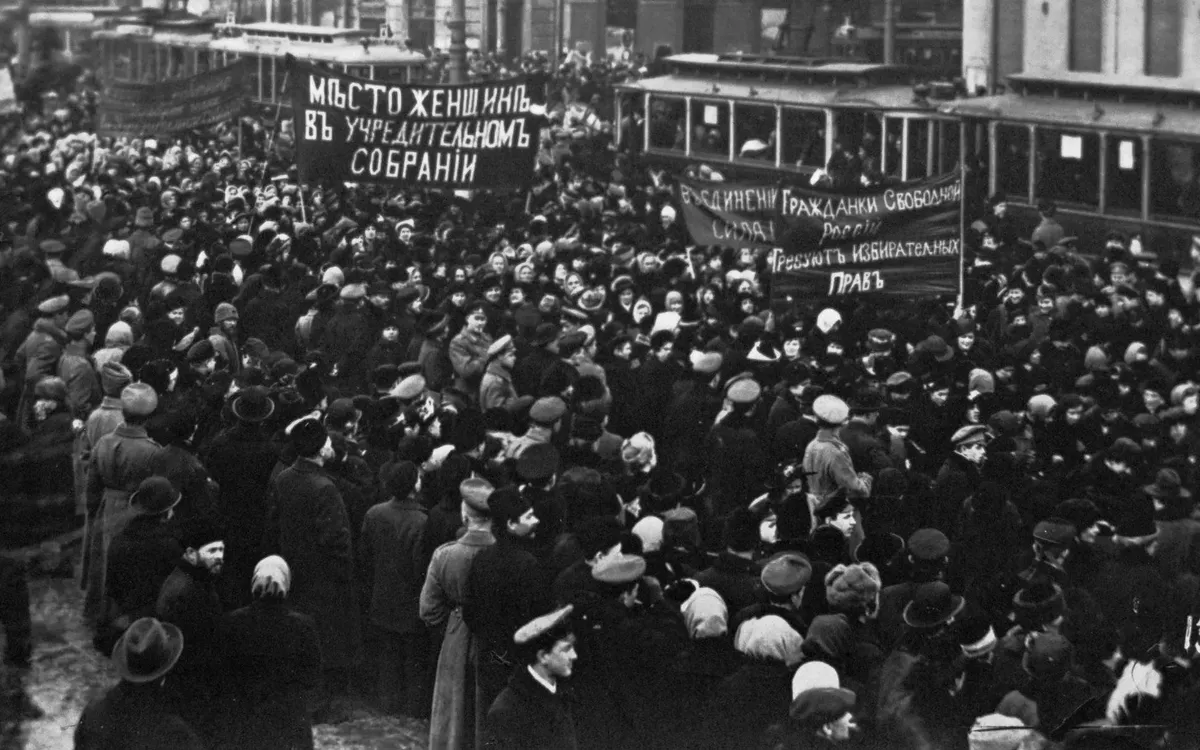
On the site of Yabloko, a discussion was held "The centenary of the February Revolution and the task of political modernization in the 21st century." The conversation was attended by several leading Russian historians, as well as representatives of the party, Emilia Slabunova and Grigory Yavlinsky.
Slabunova in her opening word said that today the theme of the February revolution is zamali and is practically not discussed at the state level: “The current political regime does not want, cannot and probably will never be able to give an honest and holistic assessment of what happened a hundred years ago, and what the consequences were ...” The reason for this reluctance, according to Slabunova, is the direct connection of the current regime from the current regime from the current regime. Bolshevik.
“Anyone who cannot learn from history must survive it again,” she said, justifying the need for such events in the “apple”.
Academician of the Russian Academy of Sciences Yuri Pivovarov, who was one of the first, spent a parallel with the thought of Jacques Shirak that modern France arose after the Great French Revolution. The scientist noted that "the current Russian state was born as a result of the 1917 revolutions." That is why, Pivovarov claimed, Russia will not be able to move on and progress until it conducts an adequate analysis of what happened over the past 100 years.
The chairman of the Council of the Free Historical Society Nikita Sokolov agreed with Pivovarov and Slabunova that the events of a century ago today do not receive an objective assessment. However, according to Sokolov, this is not a distinctive feature of the current government, but is inherent in any authoritarian regime. Sokolov also spoke of the lack of historical predetermination and that "people make history themselves."
Professor of the Higher School of Economics Olga Malinova said that it should not be endowed with the function of assessing the past only the state. The state, according to Malinova, analyzes the story, but does this in a somewhat distorted, beneficial option for the authorities: “The regime gives an assessment, but gives as it can give. The task of other political forces is to give your alternative assessment. The event in which we participate today is just part of this process. ”
Professor of RANEPAS Konstantin Morozov also performed in the same vein. “I am ready to agree that the process of understanding and extracting lessons from my past and with the fact that this is necessary for the“ growing up ”of civil society,” he said. Morozov believes that how history is now assessed by the authorities, provokes an incorrect understanding of the past in society. He suggested that now the main task of historians is to protect science from the influx of those who are trying to use it for their situation.
Grigory Yavlinsky spoke to a greater extent about the current government in Russia and its attitude to the February Revolution.
The post -Soviet modernization has failed. The marker of this failure can be called a war in Ukraine. Why did modernization fail? One of the answers is this: it was not given adequate, honest, open, legal, state assessment to the whole Soviet period. ” According to Yavlinsky, there were no answers to the questions: “What happened in February? What happened in October? Why did the civil war occur? " And because the answers to these questions were not given, so “in Bolshevik” they carried out reforms. The current government, suggested one of the founders of Yabloko, is "a modern continuation of Bolshevism, albeit herbivore."
At the end of the discussion, answering a question from the hall, Yavlinsky said: “The system that has been created in Russia today is not reformed. It is not able to change because it is balanced in its internal interests. The peculiarity of this system is that even at high prices for raw materials, it can provide a high standard of living for only 15-20 % of the population. ”
Mikhail Shevelev, especially for "New"