
Translated material
Plantings have begun
From March 3, 160 people were detained in Belarus
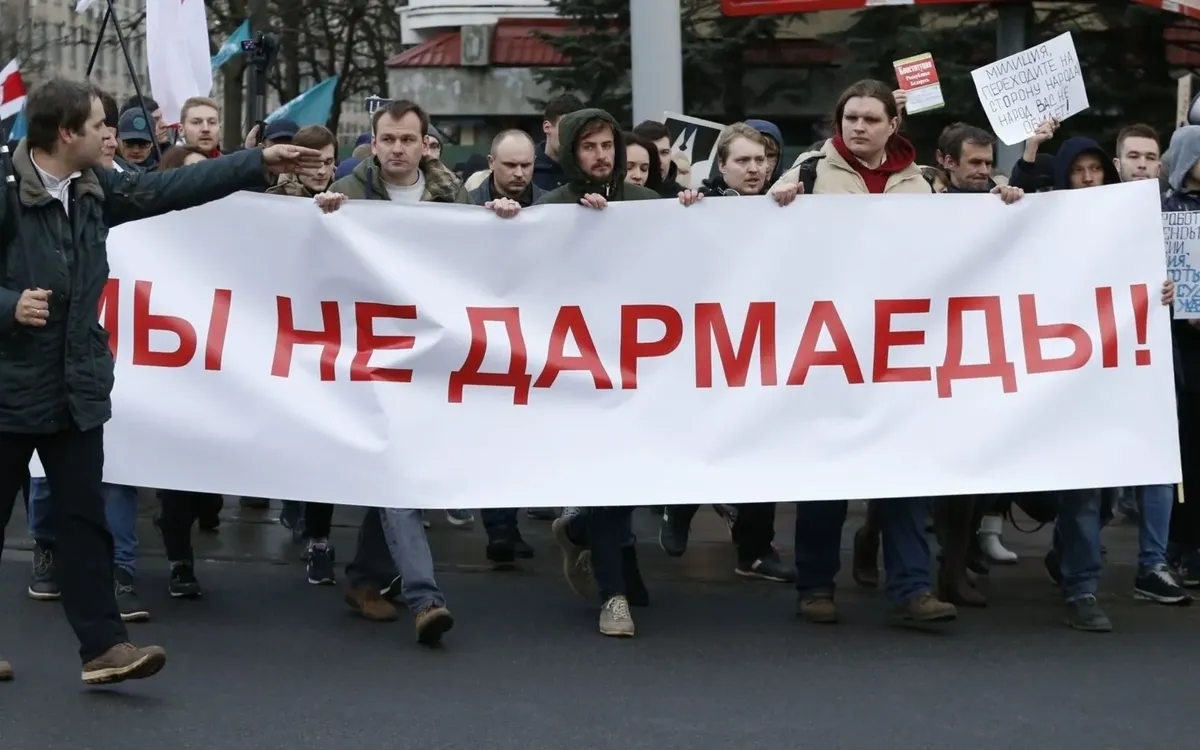
The first “march of the crushed Belarusians” in Minsk did without detention and provocations. The reports of him in the regional cities on February 18 and 19 - too. But then, when the Belarusians announced that the protests would continue, and the main goal is not at all the abolition of the “Tuneiyad decree” from which it all began, but the change of power - the irremovable Belarusian power could not withstand.
It all started with the Brest resident Natalia Papkova. After the protest in Brest, on February 26, the girl called - not even from the police, but from the psycho -dispensary - and demanded to come to the examination, because "paper from the police came to her." Natalia refused to go anywhere without an official agenda-or as it is called in the psycho-dispensaries. On March 3, at the exit from the entrance, two police officers were waiting for her, who, by force, allegedly took Natalia for examination. In the psychiatric hospital, Papkov spent almost three days, after which it was released - exactly after the next campaign on March 5 in Brest. No examinations or something similar happened-just an activist of the “Young Belarus” movement was kept in isolation for three days. But not in prison - the teams were not yet received at that time.
Then they began to detain the participants of the shares in other cities. In Gomel, Baranovichi, Grodno, Orsha, Mogilev, Minsk, again in Brest. From March 3 to 14, according to human rights activists, 101 people were detained. For them, they no longer invented stories like military fees or psychiatric examinations: the judicial conveyor earned at a speed equivalent to the protests of December 2010. Not only activists were sent to bars for 15 days, but also the organizers of the protest shares - Anatoly Lebedko, Pavel Severinets, Vitaly Rymashevsky, Yuri Gubarevich. In total, more than a hundred people went to bars.
And on March 15, after the "Marsh of Netuneyadsev" in Minsk, Belarusians were reminded of how this could happen at all. By the way, it was this action that was agreed by the local authorities and was allowed by the Minsk City Executive Committee. The route was determined - from the Academy of Sciences to Bangalor Square. The gathered - there were about three thousand of them - did not deviate from the route by a millimeter. No one wanted to go to prison for participating in an unauthorized rally and missing March 25 - the day for which the largest protest was scheduled. We walked strictly along the allotted route, crossed the road to the green light or along the underground crossings, did not go to the roadway. We walked with the slogans “Basta!”, “An official - a shovel, a worker - a salary”, “Lukashenko - the main darmoed”, “took it from the abyss and brought to the pen”. And everything, it would seem, went calmly. Participants agreed to meet March 25. But at the end of the march, the good old Belarusian “Hapun” began. The participants were grabbed at stops. They dragged from trolleybuses. The girls were beaten and dragged on the asphalt by the hair. Everything was like in the old days. 52 detainees in one evening - in the complete absence of provocations, hooligan actions, deviations from the permitted route. There was enough excerpts for a short while. The nerves were handed over.
On Thursday, March 16, the Minsk district courts worked in an aral mode: the judges had to send 52 people for 15 days. Nothing, muscle memory is a great thing. They quickly remembered how this happens when the sentences are scribbled by a rush, and things are considered in a minute. The police also remembered how to give testimonies against people whom they see for the first time in their lives, and easily move from one process to another, so that not the entire personnel of the Ministry of Internal Affairs in the courts stomped. Social networks have updated lists of products permitted to the transfer. Activists quickly made a schedule, to whom and where to take the programs. They also had muscle memory. “Cherers” almost do not pull the shoulder.
The organizers of the next march Nikolai Statkevich, Evgeny Afnagel and Vladimir Neklyaev did not take to the streets on March 15. Their task is to remain free and not sit down for 15 days until March 25. It is on this day that the largest action in Minsk is planned. And on March 26, marches should be held in Belarusian cities. And most importantly - this is no longer a promotion against the "Tuneiyad decree", which turned out to be just an occasion for a wave of protests. As the elderly passenger metro noted on March 15, when the Academy of Sciences station was closed and the police announced to megafons that the station was closed for technical reasons - "we have one technical reason for 20 years, and no one would eliminate everything."