
Translated material
"We have strategic tasks"
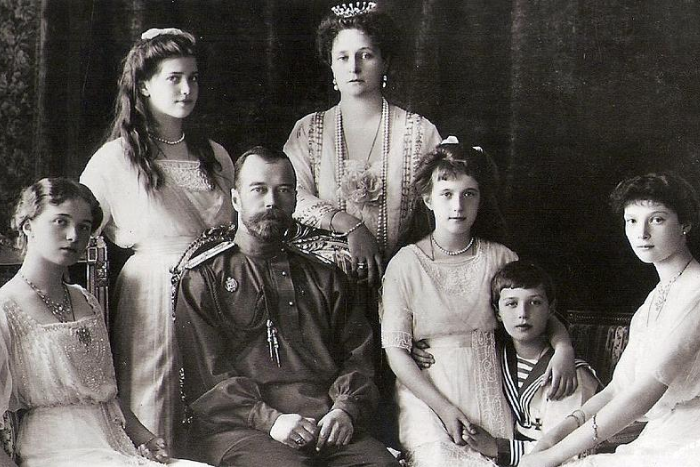
Why tell today to tell the history of the pre -revolutionary period, how monarchical organizations existed semi -legally in the Soviet Union, what are the practical advantages of compliance and who today is considered the heir to the throne in Russia?
The leaders of the monarchical organizations, as well as the newspaper editor for the monarchists, told Paper , who and how today supports the memories of royal times.
Nikolai Lukyanov
Chairman of the Board of the All -Russian Monarchist Center
I have been in the monarchical movement since 1989, when it became more or less it is possible to conduct this activity semi -legal in the Soviet Union. I then served in the Ministry of Internal Affairs, and it was quite difficult for me to combine. With colleagues, we made contact with emigrant publications in the United States and Argentina. We received materials from there, propagated them on a photocher in service time and distributed them among colleagues and relatives. These were small brochures of information content, religious literature, because in the USSR all this was banned. Everything that concerned not only imperial Russia, but the royal family was banned for 70 years.
All this ended sadly because we fell into the sphere of attention of the KGB. We were caught where we distributed this literature, it was the famous Izmailovsky Vernissage. We were convicted by a comradely court, and we were all out of the police. Then we already at a professional level continued this cultural and educational activity. And after formally communist power ceased to exist, we registered the monarchical center.
During this time, we returned back to 1989 - the time when they waged semi -legal activities using our apartments and dachas. For 20 years under Yeltsin and Putin, we functioned the museum of the imperial surname that we created together with the Russian Center for Culture. We carried out wide activities there, but then, in 2011, the room was naturally seized. But we will not stop our work.
We are not going to participate in the political processes of the Russian Federation. Our tasks are much more strategic: for the young generation of Russian citizens to know the true position of its country before it received the communist yoke. Try to return to our primordial historical Russian path, and not seek a national idea and other nonsense. We had everything, we were a large serious state for a thousand years-we were not born in 1917. You remember, there was a history textbook for the 4th grade, it was called "The History of the USSR from ancient times to 1917." How can it be?
Our tasks are much more strategic: for the young generation of Russian citizens to know the true position of its country before it received the communist yoke
The monarchical form of government is a natural form of government for states such as Russia. This is due to the mentality of the Russian people. When Russia was an empire, it was a large powerful and stable country without cataclysms.
Now we have a republic, and to what state did the country bring? It does not seem strange to you that the richest country in the world in resources and in the territory is at such a level that in this country even, excuse me, they don’t sew panties, but buy in Turkey or China? I'm not talking about any computers or complex mechanisms, medicines, but the most primitive can be established here. Countries such as Great Britain and Japan, members of the Seven are very ancient monarchical states, and no one is going to cancel the monarchy there. This does not prevent them from dominating the world, producing goods and being noticeable figures on the global chess political board.
People like peace, prosperity and stability. Only a monarchical form of government can guarantee this. Not a single monarch who inherits [the throne] with his predecessor does not douses him with dirt, shifts all ministers, as is done under the presidents. This is especially true for republican Russia - Soviet and post -Soviet. As soon as the head of state is removed, he must be to blame for everything.
Mikhail Kulybin
Editor -in -chief of the newspaper "Monarchist"
I am not a "hereditary" monarchist. I think that the main reason was my interest in history, which was formed in childhood. An important role was played by the fact that the end of the 1980s is the time of increased social activity that did not bypass me.
In 1990, the first monarchical organization appeared in St. Petersburg - the St. Petersburg Monarchist Center, which I also entered. It initially seemed to me that educational work and above all, the release of my publication was the most important thing. After all, the ideas about the monarchical form of government, and about Russian history as a whole, people had the most misunderstanding. I took this business - as a result, the first issue of the Monarchist newspaper was released in early January 1991.
Either we were young and reckless, or the general situation in the country was like that , but we were not afraid of difficulties. In the first numbers of the newspaper, which I scored on a typewriter and replicated on the “Copier”, there were very small articles regarding the most basics: that there is a Russian flag, what is the history of the Russian coat of arms, what was the historical anthem of the country, who was the head of the Romanov House, what are the foundations of monarchical ideology. Gradually, the theme, of course, became wider (since 1995, the Monarchist newspaper has become an independent publication, now it is released four to five times a year, as well as on the site-approx. "Papers" ).
I clearly imagined what works Russia gathered over the centuries, what it was worth the victims and resources. What disaster became the February Revolution, which ended not only the monarchy, but also the country itself. Then the October catastrophe, civil war and red terror, which claimed millions of lives. Other millions were forced to escape from their homeland, and these were the most fundamental, firm in the views of people who opposed the Bolsheviks with weapons in their hands. Then the new authorities turned the economy upside down, eliminated entrepreneurship, and this was done by the most violent methods.
I clearly imagined what works Russia gathered for centuries, what it was worth the victims and resources
The “shock construction sites of socialism” were held by the slavish labor of the Sideli concentration camps of the Gulag. Kulakov - strong wealthy peasants who built well -being with their labor - destroyed as a class. Cossacks were purposefully eliminated. There is no need to talk about the nobility. All these layers of society were simply declared enemies of the new government. The same concern the church.
I had a rejection of post -revolutionary political, economic and religious experiments. It gradually pushed me to the inner conviction that the country left the natural path of its development and for further progressive movement we need to return to it.
For Russia, the monarchy, in my opinion, is the optimal state system. First of all, the Russian monarchical idea is based on the teachings of the Orthodox Church about the authorities. Of course, for obvious reasons, our society is still extremely far from churching (therefore far from the monarchical worldview), nevertheless, some understanding that the Church is a historical free spine of Russian statehood. Today, the legitimate successor of the Holy Tsar-Martyr is the head of the empire dynasty Grand Duchess Maria Vladimirovna.
But the monarchy has purely practical advantages. The monarch becomes a man who is prepared for this function from childhood. He becomes the head of state not at his desire, but by the power of the law. Although the tyrants, although “democratically chosen” presidents always moves power, they are ready to rush to power “on the heads” of competitors. Hence, populism, flirting with the crowd, indulgence of her momentary desires to the detriment of national interests. The monarch, which receives power by inheritance, does not express the interests of any layer, estate, party or faction. He can defend common, not private interest.
But the monarchy has purely practical advantages. The monarch is becoming a man who has been prepared for this function since childhood
In my opinion, the wide layers of society have no adequate from the spiritual and moral point of view of the idea of the history of the pre-revolutionary period. Two interpretations of those events prevail: either in February, the country has reached the path of “development of world civilization”, but everything ruined on October; Or February is a prelude by October, which began the construction of a "new, more perfect social system." At the same time, as if by default, it is believed that the historical path along which Russia has been going on for almost a thousand years since the time of the Holy Prince Vladimir Baptist is deadly and erroneous.
The reasons for the February disaster should be sought in the field of spirit, and the main one is the spiritual crisis that struck Russian society at the beginning of the twentieth century. Performances that are usually advanced as the “reasons” of the revolution - about the economic backwardness of the country, the dominance of the bureaucracy, the absence of rights and freedoms, the beggarly position of workers and peasants, and illiteracy are nothing more than propaganda myths. In reality, there was a fantastically rapid and powerful development of Russia, but in the public consciousness the opinion was established that the empire was a backward, reactionary, mired state with an incompetent government and outdated political system.
Shortly before the Maidan, I visited Ukraine. And in communication with people, he was able to some extent to feel what was happening in Russia at the beginning of the twentieth century. The feeling that “everything disappeared”, despite the very normal situation, I met not only in ideological liberals or radical nationalists, but, which is much worse, and the inhabitants who completely ignored reality and lived in a completely illusory world. It was a "trap" from Russia on the eve of February.
Andrey Sorokin
General Secretary of the Russian Imperial Union-Harden (RIS-O)
My roots are the most proletarian. By social origin, I, as they wrote in Soviet profiles, are “from workers”. Like many, he came to the idea of the monarchy through the development of the Orthodox doctrine of the authorities and the state, which is stated in the works of Metropolitan Filaret (Drozdova), Archbishop Serafim (Sobolev), Metropolitan John (Snychev) and others.
Well, a legal education played a role. The monarchical idea, especially the Orthodox, recognizes the spiritual and moral ideal stored by the Church as a criterion of the lawfulness of the law. He is contained in the commandment, which the Savior called the new "love each other, as I loved you." With such an idea, if it is guided by the supreme power, the political regime vector can be expanded from the totalitarian state towards the legal state. Therefore, I, and not only I, of course, consider the monarchical form of state government optimal.
The Russian Imperial Union-Horden, in which I am consuming, is the oldest monarchical organization in our country. It was founded in 1929 in Paris by officers of the imperial and white armies. Since the beginning of the 1990s, it became possible to transfer the center for RIS-O work to Russia.
It is especially important, in my opinion, to restore the spiritual and moral health of society. So that the family is indeed a small church, so that moral issues are in the minds of most people in the first place. Now about 70 % of our fellow citizens declare their Orthodoxy, but, unfortunately, much less participates in the liturgical life of the church. I think it would be useful to restore the teaching of the Law of God. In any case, knowledge of the foundations of Orthodoxy is even foreign or completely unbelievers will help to learn the history, literature, and music - the culture of Russia as a whole.
By social origin, I am "from workers." Like many, he came to the idea of the monarchy through the development of the Orthodox doctrine of the authorities and the state
For some reason, the monarchy is considered to be some of the property of history. But these people, as a rule, consider faith in God. In Europe, twelve monarchies, including Belgium, Denmark, Netherlands, Norway, Sweden. Another 14 monarchical states are in Asia, three in Africa. In some countries, the monarchies replaced the republics, for example, in the UK and Spain. Many of them are absolutely modern, dynamically developing states. So the accusation of the monarchy of inconsistent with modern tasks is an ordinary propaganda stamp.
In our country, the monarchy of the Western, democratic model is possible only if there are appropriate socio-economic conditions. In order for the monarch to be an arbitrator, the entire full power of which is used only in emergency situations, the mechanism of public control over the administrative apparatus is necessary. This social layer can be called the "middle class" - from the point of view of not the level of income, but economic freedom. Unfortunately, bureaucracy does not allow the middle class in the required amount to form. But as the necessary institutions of self-government are formed in society, and political and legal culture will be rooted at the level of psychology, the form of government in the country will become the one that most identifies with the constitutional monarchy. When the monarch is not so much a “stoker on a steam locomotive” as a “fireman”.