
Translated material
Landing by allies
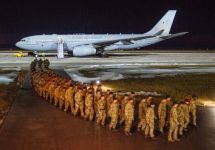
The first unit of the British Armed Forces arrived in Estonia, which is part of the NATO International Raping Response Battalion located in this country. This was reported by the press service of the defense forces of Estonia.
The plane with military personnel landed at the Emari airfield, where they were met by Estonian Minister of Defense Margus Tsakhkna. "The participation of military personnel of Great Britain, France and Denmark in the battalion is a clear sign of the unity of the Alliance," the minister said.
So far, only 130 soldiers and officers of the British 5th Rifle Battalion arrived in Estonia to create the headquarters of the command of the multinational forces of NATO in this country. In total, the combat battalion group will have about 1,200 military personnel, including 800 from the UK and 400 from France. The international battalion of Great Britain will be headed.
British Defense Minister Michael Fallon emphasized that the deployment of NATO quick response forces in the Baltic country is aimed at restraining threats from Russia.
On Monday, 50 troops from France are expected in Estonia. In April, the main part of the international battalion will arrive. The personnel will be transported by airplanes through the air base of the emari, and the equipment - by land or by sea through the port of the Paldiski. The NATO battalion will interact with the first infantry brigade of Estonian defense forces and will be located in a military town in Tapa.
On July 8, the heads of 28 states at the NATO summit in Warsaw decided to strengthen the military presence in the eastern part of the alliance in Poland, Estonia, Latvia and Lithuania on a rotational basis four multinational battalions will be placed.
Leaders also decided on the initial combat readiness (Initial Operational Capability) of the EuroPro system. In addition, cyberspace is recognized as a new operational area. NATO countries will pay more attention to computer security and protection against cyber attacks. The summit participants also confirmed the readiness to spend more funds on defense.
The head of the alliance Jens Stoltenberg emphasized that "NATO does not pose any threat to any country" and continues to look for ways of constructive dialogue with Russia.