
Translated material
Four Seasons
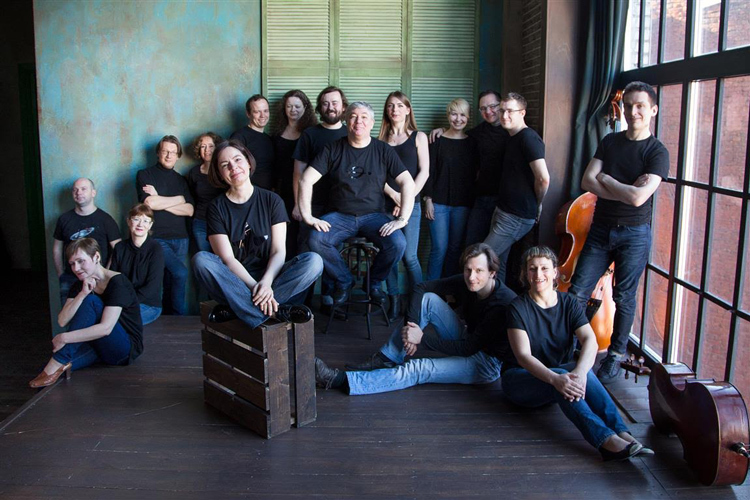
On April 1, an unusual festival will take place on the new stage of the Alexandrinsky Theater from 13:00 to 21:30. The organizers-the Chamber Orchestra "Sabotex" and the ADVITA charitable foundation, thus celebrating its 15th anniversary-called it "Seasons: 5.0. Seasons in five parts. " Five composers, five points of view on the structure of the universe and the human place in it, five ways to feel the movement of time. The works of Antonio Vivaldi, Keiko Fuji, Astora Pyazolla, Peter Tchaikovsky, Leonid Director of the Seasons, will precede the comments of the art historian Alexei Leporka, the orientalist of Marina Kozlovskaya, the historian of the music of Artem Varfatik, the anthropologist Svetlana Adonieva, and one of the programs will be represented The composer of the ten. The entire fee from the sale of tickets will be transferred to the ADVITA charity fund for the treatment of people with cancer diagnoses. Here is a detailed program and links to tickets.
In anticipation of the festival, the coordinator of the programs of the ADVITA Foundation Elena Gracheva spoke with the heads of the divertissement chamber orchestra Ilya Iofom and Lidia Kovalenko that they personally hear in different musical portraits of spring, summer, autumn and winter.
Tchaikovsky. Very vulnerable music
En The plays were ordered by Tchaikovsky Nikolai Matveevich Bernard, the publisher of the Numberlist music magazine: in 1876, he decided to attract subscribers by opening each number with a new play for the piano, which Tchaikovsky would write specially for this publication. The name of the cycle, epigraphs from Russian poets - Bernard came up with all this. It would seem that custom -made work for home music, not suffered, not the fifth symphony and not “Eugene Onegin”. But in this music there is some universal lyrical experience that makes it all the time to return to it-and play it and listen to it for a year and a half.
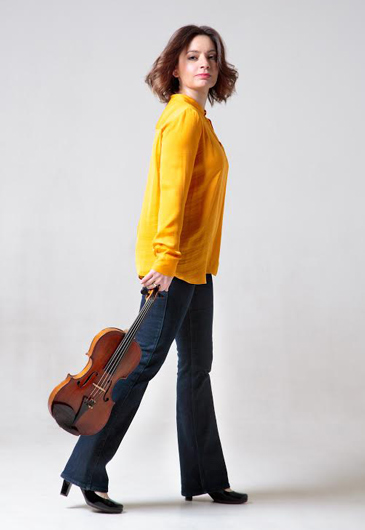 © Advita Lidia Kovalenko
Lidia Kovalenko: This is twelve months, lived by a person of a certain circle: a Petersburger, a nobleman who lives in the city in the city, and in the summer - in the estate. Therefore, in the “Seasons” of Tchaikovsky there are Shrovetide, and St. Petersburg early winter evenings, and white nights, and a village lark in a hot sky, and an autumn city garden, strewn with leaves. Tchaikovsky is very subjective, this is a feature of his talent, we always see what he says, we hear his intonation.
Ilya IOFF: Of course, these are his memories, including children's and adolescence. Kosari, harvest, Christmas time - all a little from childhood, with a taste of children's sweets, which you are very longing when you have become an adult.
Gracheva: They often write that Tchaikovsky’s “Seasons” is an attempt to create a canon of image of Russian nature, as in painting by the late Venetianov, and then the Wanderers. But it always seemed to me that he was not trying to be somehow specially folk. He is trying to be himself.
Kovalenko: This is nature seen by the eyes of a nobleman, who, when he grew up in the summer in the estate from the nobles, saw only dad and mother. And all the rest were peasants. The whole world, transmitted with the milk of the nurse, which, probably, was worn only before entering the Barsky house to feed the child. The feeling of the smell of spring earth when they plow. The lark who sings in the sky, and not in the cage, they brought it to you. Songs, fairy tales that I heard, falling asleep, Barkchuk, is a connection that cannot be broken.
IOFF: We are happy that the wonderful St. Petersburg composer Grigory Korchmar did not succumb to the universal passion and temptation to orchestrate this play for the symphonic orchestra and made it only for strings. He knows the nature of the instrument very well, our orchestra knows very well, and one of his strongest parties is incredible respect for the material with which he works. The collapse of the Korchmar is the most authentic of the famous for us, this is our opportunity to play the “seasons” on the strings and not lose meaning, intonation, mood, simplicity, nor depth. It seems that the “Seasons” is a “vanilla period”: tasty, sweet, beautiful, but in fact it is a perfect abyss.
The beech, which grew to the size of the “peak lady”, accompanied him all his life.
Gracheva: Tchaikovsky - a real "childhood disabled" of our musical education. Whether the children at the music school study and disassemble the syllables “Children's Album” and “Seasons”, whether they are forcibly to the Philharmonic to the same “children's” works - the result is one: it seems to us that we know this music, and therefore we do not hear it. But “Children's Album” and “Seasons” are not at all salon music. This is some incredible combination of asceticism, depth, beauty, tears, joy. And at every age you listen to this music in a completely different way.
IOFF: Tchaikovsky is one of the few composers who retained in their work the children's perception of the world. Children's sharpness of experience, children's impressionability, childhood joy, children's fears. When his contemporaries scare us-Brahms, Wagner-in some ways they may be worse: more solemn, more monumental, more epic, all in an adult way. But when we listen to “Manfred” or “Peak Lady” - most of all this resembles a terrible dream of a child when he wakes up in tears. Is it possible to be frivolous about the fear of a child? This fear lives much deeper than an adult.
Gracheva: “The death of a doll” is one of the most heartbreaking things in world music.
IOFF: And the middle part of the "autumn song"? Who did not cry, that dead. There is a famous story: when Tchaikovsky wrote the scene of the ghost of the countess in the “Peak Lady”, he himself was so afraid that he could not fall asleep at night. Another great Russian composer, Mussorgsky, has the vocal cycle "Children's". In his first play, the child asks the nanny to tell a fairy tale about the beech of the terrible, but this beech is scared. The beech is terrible, the beech of the children wears in the forest and gnaws on their white bones - no, nanny, no need about the Book of the terrible, God with him. Tchaikovsky, who writes music and is afraid of it himself is like a child from this play.
Kovalenko: Buka, which grew to the size of the “peak lady”, accompanied him all his life: everyone who hears this music becomes uneasy. Typically, the composer is enough for one Forte sign to designate how to play a particular fragment, sometimes he adds the second. And Tchaikovsky can put five or six! This is the same "fear of the eyes are great." This is very vulnerable music, which grew largely from the childhood of Barkchuk, who saw his mother only in the evenings to make Knixen and kiss at night. Therefore, it is so difficult to play Tchaikovsky. Play and not make it pathos, funny, sweet, sentimental ... Tchaikovsky is an adult who has not lost the ability to experience children's emotions. For an adult artist, this is difficult: fortunately or unfortunately, we firmly know that beeches do not exist. When we grow, many doors of our perception are closed with upbringing, cultural prohibitions: it is impossible, it is impossible, emotions cannot be demonstrated, it is indecent. At Tchaikovsky, these doors are open. And through these doors he leads us.
Vivaldi. Film music of the eighteenth century
Gracheva: The origin of the word “concert” is explained as follows: perhaps it came from the Latin word Concertare , which means “argue”, “fight”, and possibly from the Italian concern , which means “to come to an agreement”. The beauty of baroque music is that this contradiction is imaginary, and in the conjugation of opposites - the essence of Baroque. The famous "Seasons" are also included in the concerts cycle with the general name "Blind of harmony and invention." The art of confrontation, harmony in the dispute, the beauty of dialogue - perhaps this is what is missing in modern life.
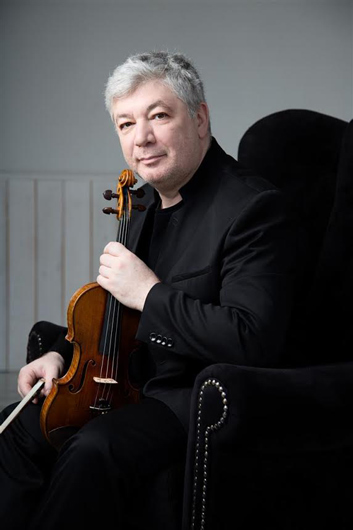 © Advita Ilya Ioff
IOFF: Yes, Baroque is not a romantic concert where everyone is doing one thing together. This is a conflict, and what else! Any dialogue is not interesting when everyone says the same thing, but when the answer does not repeat the question too much. The baroque concert is the brightest example of such a conversation, such harmony, the conjugation of many votes and events that occur at the same time. A solo violin plays some kind of sleeping shepherd, and meanwhile, a violin from the orchestra reports that a dog barks next to it. The soloist plays virtuoso passages, depicting lightning glare, and meanwhile some leaf swaying behind him ...
Kovalenko: Baroque music has passed several stages of perception to today. In the nineteenth century, they almost did not play it. Then they opened it again, carried away, it became part of the mainstream. And when the conditions for the listener began to change along with technological progress - you do not need to go to the concert hall, you do not need to get involved in what the musicians do, you can listen to, lying on the sofa or while you wash the dishes, baroque music first hit.
Why unrest and disputes, nerves and passions, if you are sitting in a soft chair and you just need a comfortable sound path for relaxation? The performing tradition was becoming more softer, less and less annoying, less conflict. The twentieth century took this tense beauty of the clash from Baroque - until the authentists appeared who picked up the notes and decided to find out what was actually written in them. In the time of Vivaldi, people spoke to each other much more than we are now. They knew how to conduct long conversations and also knew how to argue much better than us. Baroque is an art of objection when the wall on the wall is written. And the soloist here is not always right! I had to play a solo party in the “days of the year”, and to be in the orchestra, and from the point of view of the emotional and psychological side of the orchestra, it will be more interesting, obscure. The soloist is in sight, he must behave like a decent person, and the orchestra is much more allowed.
IOFF: Vivaldi's orchestra is such a village crowd. The choir is like in the Greek tragedy.
Kovalenko: And at the same time, such a choir that rarely supports the soloist: he either says something across, or in the same vein, but completely different. To argue, laugh, distract ... step, block. Shoot! Stunning drama.
IOFF: It was baroque composers that came up with what is now called soundtrack, or movie music. This genre has been oblivion for quite some time, while the romantics wrote long music, which had to be followed with all attention: you are watching the opera of Wagner, you will turn away - and it is difficult to understand what is happening. And in Baroque they will tell and show, this is a little Tom and Jerry: Jerry ran, plopped down his head against the wall, and the music immediately portrayed this. Neither Vivaldi nor Handel was shy. They were not shy about writing birds or a lightning strike - so that any listener immediately understands that this is a cuckoo, and this is a thunderstorm, and this is a person falling asleep. In the “autumn” of Vivaldi, where the peasants celebrate the crop and wrinkle grapes in barrels, for example, in one of the fragments I directly see as one peasant who drunk too much, just wives in the corner. Few people can compete with baroque composers in the visualization! This is an incredibly natural combination of the game, frivolity, wit-and something very deep and serious. They were not afraid to feel, were not afraid to argue, they were not afraid to say something wrong-no matter how important the subject of the statement. You could write about God jokingly or acutely. Bach in the cantatas has such turns, for which in some more prudish period at the stake, probably, they would have burned. But this is honest, and not indifferent, and hot. That is why it probably works.
The soloist is in sight, he must behave like a decent person, and the orchestra is much more allowed.
Kovalenko: And, of course, in these four concerts Vivaldi is not only a person. This is a person and time, man and the universe. This is a topic that cannot be outdated until this planet exists. It is unlikely that there is a Petersburger who is not affected by the arrival of spring every time! From the first days, when still snow, but something already appears in the air, some elusive movement. And no matter how many times you survive this, all the same every time it seems that this is something extraordinary. Not a single spring is the same as the previous one: a ray of sun falls a little differently, the birds flew a little earlier, everything melted at the wrong time or froze in time. It does not bother the person that every year the same thing: winter, spring, summer, autumn. So is Vivaldi's “Seasons”: this music is different all the time. And it can be played as many times as you like, and listen to as many times as you like, and get pleasure from it anyway.
IOFF: We ourselves play these concerts in different ways. The administrators of our Philharmonic Halls say: we always walk when you play the “Seasons”, so interesting that this time will be! But we have been playing them for twenty years. And never got bored. And our listeners too.
Piazzolla. Male business
IOFF: In Russian, it is customary to call these four tango "Seasons in Buenos Aires." But the real name of this work of Astor Piazzolla into Russian is indistinguishable. In Spanish it sounds like this: “Cuatro estaciones Porteñas” . Porteño -So the inhabitants of a single city in the world call themselves-Buenos Aires. And this is not just a resident of the city, this is a very specific resident of the city. A person from the middle class, not rich, but not poor. A person who goes to work every day provides himself and his family with his own work. He is familiar with the hardships of life, but he also knows how to rest. In fact, the name of tango “Primavera Porteño” should be translated something like this: “Spring seen by a resident of Buenos Aires, a man of ordinary, poor, working and knowing a lot about tango.” Please note: Piazzolla Tango has a male dance, and this is very audible. When we prepared the Tango program, I found a photo on the Internet: Buenos Aires in the 20s. Some cafes, middle-aged men are sitting, in front of each-a cup of coffee, someone with a cigar. And in the middle of the cafe there are three dancing men's couples. The photo is called "Tango". Tango for Piazzolla is a male business.
Gracheva: What happens when the music of Piazzolla needs to play an academic orchestra?
IOFF: There are things that cannot be fixed with notes, letters, all these icons on five line icons. There are two very famous examples. The first is the experience of Pablo de Sarasate. Sarasat gathered folk dances and recorded them notes to be able to play with any of the pianists. When the gramophone records of the same dances played by real Catalan and Andalusian violinist appeared, those that played them on peasant holidays, it became clear that this is something completely different! The fact that Sarasat was recorded for three quarters is not even fifteen sixteenth is eighty -eight -ninety -sixth and a half. Another thing is that it was better than Sarasate anyway. The same with jazz. The joke is known: Armstrong showed his improvisation recorded by notes, and he did not recognize her, said that he did not play and this could not be. In order for the string orchestra to play tango Piazzolla, Leonid Arkadievich Tenthnikov was forced to record something notes. But these conditional four quarters that we play are not four quarters in tango. If I had to teach students how to play, I could not explain it. I would make you listen, and then reproduce. These are microscopic air fluctuations, this is a half of the heartbeat.
Kovalenko: It is very difficult to choose the exact word in order to express what the tenkov made by translating the Argentine tango Pyazolla, growing from urban folklore, into the language of an academic string orchestra. This is not an orchestration, not an arrangement, not processing. All these words are somehow very wounded. This is a story, told by Leonid Pratnikov, the impression of a man of European culture, who heard Tango Piazzolla and tried to express what he heard. This is a dream caused by the flight of a bee ... This work is so easy to divide by two authors, not to develop.
In fact, the name of tango “Primavera Porteño” should be translated something like this: “Spring seen by a resident of Buenos Aires, a man of ordinary, poor, working and knowing a lot about tango.”
IOFF: Piazzolla wrote wonderful music, which acts very much. It would seem that his harmony is simple, even obvious - this is the same golden sequence on which Vivaldi’s music was still being built, the musicians will understand me. As Vivaldi, according to Stravinsky, wrote “Not five hundred concerts, but the same concert five hundred times”, Piazzolla wrote five hundred times the same tango. Only in Vivaldi this, like an Italian, with a basil, and at Piazzolla with a pepper. But this does not interfere every time you listen to each of these five hundred tango, to experience a very strong emotion. Когда Десятников сделал свою версию для струнного оркестра (в середине девяностых годов для оркестра «Кремерата Балтика»), этот цикл постигла та же участь, что и «Картинки с выставки» Мусоргского: кроме меломанов, никто не помнит, что они написаны для фортепиано, и почти автоматически все вспоминают симфоническую оркестровку, сделанную Равелем. Когда говорят «Времена года» Пьяццоллы — как правило, имеют в виду то, что создал Десятников. Во всяком случае, в исполнении оркестра в Европе эта музыка звучит в десятки раз чаще, чем оригинальная, написанная для бандонеона. Для Десятникова эти четыре танго Пьяццоллы стали, скорее, поводом для размышления, точкой отталкивания, переживанием того культурного материала, с которым ему пришлось иметь дело. Кто-то назвал эту работу «Четыре концерта для скрипки».
Грачева: Если для Пьяццоллы танго — это часть городской жизни, привычной повседневности, то для Десятникова танго Пьяццоллы — часть культуры.
Иофф: Все произведения Десятникова, будь то «Бедная Лиза» или «Пинежское сказание о дуэли и смерти Пушкина для небольшого камерного состава музыкантов, народных голосов и чтеца», — это переживание смыслов, существующих в культуре, контекста, в котором все мы живем. Только мы не можем это выразить, а Десятников — может.
Десятников. Все мы смертны
Коваленко: «Русские сезоны» Леонида Десятникова исполняются очень редко. В Петербурге эту сюиту исполняет только «Дивертисмент», последний раз это было четыре года назад, и невероятное счастье — вернуться к этой музыке. «Русские сезоны» написаны по народным песням Поозерья, но это совсем не фольклорная стилизация. Это впечатления, переживания, размышления современного человека по поводу того грандиозного архаичного мира, с которым он столкнулся в этом материале.
Иофф: Казалось бы, что может быть дальше от русского фольклора, чем струнный оркестр? А Десятников пишет музыку, по которой мы понимаем, что это народный мир, более того — Русский Север. Эти звуки, эти темпоритмы... Есть часть, которая исполняется только скрипкой соло — такое бормотание, когда холодно и человек не говорит много, чтобы тепла лишнего не расходовать, потому что у него сразу застывает все внутри. Бормотание с паузами, чтобы опять тепло накопить…
Коваленко: «Русские сезоны» не просто так завершают наш фестиваль. Это произведение — его квинтэссенция. В «Русских сезонах» есть барочное многоголосие, когда голосов не просто много, но все они с характером, живут своей жизнью, мы видим эту жизнь — и становимся не только слушателями, но и зрителями.
Иофф: К примеру, сцена, в которой девушка поет печальную песню и ей аккомпанирует разбитая гармошка. В какой-то момент ты понимаешь, что девушка выходит на улицу, а ей навстречу двое пьяных, обнявшись, идут и песню орут в терцию. А дальше кто-то на балалайке тренькает. А сбоку колокольчик позвякивает, видно, едет кто-то. Это фантастически написано, это просто жизнь как она есть, и это может рассказать академический струнный оркестр!
Коваленко: Есть картина почти как Масленица у Чайковского: гуляй не хочу, трынцы-брынцы, развернись, душа. А есть пауза почти как у Кейко Фуджие — когда все исчезает и ты слышишь только кукушку и чей-то одинокий человеческий голос, больше ничего.
Иофф: Человеческий голос, исполняемый на скрипке!
Грачева: В этой музыке есть стоическое принятие того, что существует. В текстах песен — все, чем так славен русский фольклор: и «за старика отдать», и «глаза наши — ямы, руки наши — грабли», и «четыре досочки» в финале. Но нет протеста, надрыва, разрыва, отчаяния — только понимание, что все мы смертны, что время течет, что оно травматично для человека, но он благодарен за то, что жизнь существует. У меня мурашки по коже, когда я это слушаю.
Иофф: Это одно из лучших произведений двадцатого века. В русской академической музыке по значимости я могу сравнить его только со Стравинским. «Весна священная», «Жар-птица», а следующие — «Русские сезоны». Это совершенная музыка. То, как композитор выбирает инструменты, та пропорция, в которой в происходящем участвуют голос певицы и струнные, то, как использованы цитаты, как сопрягается музыка и слово, как выстраивается драматургия и строится форма. Десятников — блестящий акустик: эту пьесу можно играть где угодно — в концертном зале, церкви, переходе метро, на кухне, на стадионе, и она будет звучать потрясающе. Если, конечно, хорошо сыграть... У каждого большого композитора есть несколько таких вещей, по которым его можно изучать. «Русские сезоны» — совершенно точно из их числа.
Девушка поет печальную песню, и ей аккомпанирует разбитая гармошка. В какой-то момент ты понимаешь, что девушка выходит на улицу, а ей навстречу двое пьяных, обнявшись, идут и песню орут в терцию.
Грачева: У фестиваля « Seasons : 5.0. Времена года в пяти частях» получилось несколько сквозных сюжетов. Во-первых, это смена времен года. Было очень остроумно предложить сыграть его для дня рождения, который сам по себе — часть представления о течении времени! Движение времени — тема, без которой не существует ни фольклора, ни искусства, ни цивилизации. Хотя сейчас, как кажется, мы, городские жители, эту зависимость от природы утратили — наша жизнь не меняется, если в какой-то день дождь не пошел и из-за этого урожая не будет.
Иофф: Почему же утратили? Мы же покупаем летом зимнюю шубу со скидкой, хотя это, конечно, не сев озимых. Человек не может не пристраиваться к смене времен года. Летом, когда ему тепло, он думает, как будет жить, когда будет холодно. А когда холодно, он думает, что будет делать, когда будет тепло. Это не может измениться никогда.
Коваленко: Во-вторых, в нашем фестивале мы соединили музыку, написанную в России, Европе, Японии, Латинской Америке, — а значит, разные системы координат. Европейский человек, человек христианской цивилизации, веками думает: время идет, и я, кажется, смертен. How is it? Это ведь нельзя почувствовать? А когда это произойдет, ты же не сможешь это рассказать? И рядом — восточное представление о времени как о цикличном движении: снова осень, упал лист, дерево умирает. Но когда придет весна, дерево снова родится и листок распустится.
Грачева: В-третьих, еще одну систему координат добавляют лекторы, хотя слово «лекция» не отражает того, что будет происходить перед исполнением музыкального произведения. Каждый из наших гостей — историк искусства Алексей Лепорк, востоковед Марина Козловская, музыковед Артем Варгафтик, антрополог Светлана Адоньева — не просто выдающийся профессионал, знаток и блестящий рассказчик. Это человек, способный создать контекст, в котором музыка получит новый смысл. Посмотреть на движение времени не только с точки зрения разных композиторов разных времен и народов, но и с точки зрения живописи, истории музыки, фольклора — а также композитора и исполнителя, потому что исполнение «Времен года» Чайковского будет предварять беседа Ильи Иоффа и Леонида Десятникова. Фестиваль собран из многих голосов, каждый из которых различим и интересен сам по себе, — и одновременно это коллективная рефлексия над тем, как мы себя чувствуем посреди мироздания. С одной стороны, мы очень разные — даже пьесы у авторов начинаются у кого с весны, у кого с зимы.
Иофф: А с другой — все мы одинаковые. Весна — в любой точке времени и пространства все просыпаются и на солнышко выползают. Цветы цветут. Птички поют. Любовь случается. Просто символы разные: где-то два журавлика летят, где-то сакура на фоне Фудзиямы цветет, где-то подснежник из-под сугроба вылез, где-то девушка на улицу погулять вышла. Мне нравится, что мы играем концерт 1 апреля, когда в Петербурге можно по-настоящему почувствовать весну. Услышать эту музыку в контексте этих слов и этого пространства — когда слова и музыка связаны воедино и пронизаны солнцем, когда так счастливо соединяется столько талантливых людей, — разве можно это пропустить, разве не жалко прожить этот день как-то иначе?
Грачева: Сколько бы мы с вами ни говорили о разных сочинениях, составивших фестиваль, мы начинали с картин природы, а заканчивали тем, что увидел, пережил, написал человек. Композитор, сочинивший музыку. Музыкант, сыгравший ее. Ученый, подумавший о ней. Фестиваль получился про сопряжение точек зрения, искусство разговора как способ приращения смысла. Точка зрения ли это безымянного китайского живописца, или танцовщика танго, или слушателя, который сидит в фойе Новой сцены, залитом солнцем, пьет кофе и слушает Пьяццоллу, которого до этого услышал Десятников и сделал так, чтобы эту историю смог рассказать струнный оркестр, — как говорил один из героев Андрея Платонова, «без меня народ неполный». И все это происходит ради еще одного человека — конкретного, который прямо сейчас, в эту минуту, тяжело болен, лежит в стерильном боксе и ждет нашей помощи. К несчастью, не одного: обращений в фонд AdVita — несколько тысяч в год. К счастью, чтобы ему помочь, нужно всего лишь купить билет на один или несколько концертов фестиваля « Seasons : 5.0» и прийти 1 апреля на Новую сцену Александринского театра.