
Translated material
Payment for transportation
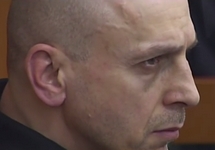
The collegium of the Moscow District Military Court, chaired by Mikhail Udashkin, sentenced the native of Chechnya Hassan Zakayev to 19 years in a strict regime in the case of complicity in the attack on the theater center on Dubrovka in October 2002. It is reported by TASS.
As specified on the website of the Prosecutor General’s Office, the 43 -year -old Zakaev was declared guilty under Part 2 of Article 210 (participation in the criminal community), part 3 of Article 205 (a terrorist attack that entailed the death of a person), part 1 of Article 30 - part 3 of Article 205 (preparation for such a crime), part 5 of Article 33 - part 3 of Article 205 (aiding in such a crime), part 5 of Article 33 - part 3 of Article 206 (complication in the capture of capture in the capture of capture and holding hostages that entailed the death of a person), paragraphs "e", "g" of part 2 of article 105 (murder committed by a generally hazardous way as part of an organized group), part 3 of article 30 - paragraphs "a", "e", "g" part 2 of Article 105 (attempted murder of two or more persons committed by a generally hazardous group), part 3 of article 222 of the Criminal Code (illegal circulation of weapons (illegal circulation of weapons as part of an organized group).
According to the "Caucasian knot", the judges also partially satisfied the civil lawsuits of the victims, collecting 37.5 million rubles from Zakayev. Each of the victims was awarded 500 thousand rubles.
The victim is not satisfied with the course of the trial, or the investigation carried out in the case, lawyer Igor Zuber told Interfax. “During the trial, the circumstances of the death of each of the hostages were not established, the actual cause of their death,” the lawyer said. “In addition, it was not established by either the investigation or the court, who led the rescue operation, what gas was applied for the gas, who gave it to the victims of medical care.”
Zakaev himself at the trial pleaded guilty only in the transportation of weapons. According to him, he did not know why this weapon was intended.
In the debate of the parties on March 9,the prosecutor demanded a 23 -year -old regime for Zakayev . He also asked to satisfy all the civil lawsuits of the victims totaling about 100 million rubles.
At the same time, the prosecutor directly stated that "if there were no special operation (assault on the theater center using unknown gas. - Ed.), Then there would be no victims by negligence ." Thus, the lawyers of the victims noted, Russia for the first time officially recognized the connection between the storm of Nord-Ost and the death of hostages.
The detention of Zakayev, who was on the wanted list for almost 12 years, became known in December 2014 . It is claimed that he was detained by the FSB in August of the same year while trying to enter the annexed Crimea from continental Ukraine on fake documents, where he lived all the years after the capture of the Nord-Ost.
According to the plot of the case, Zaev, along with accomplices, bought cars used in the commission of crimes, and also personally transported weapons, ammunition and explosives. In 2001, the Prosecutor General’s Office said, he laid a bomb in a car parked at McDonald's on Bolshaya Bronnaya Street in Moscow. However, the explosion did not happen: according to the department, in the gas tank of the car, instead of plastic, its imitator was.
In addition, it is stated that three home -made bombs were delivered to the capital, camouflaged under the cylinders of the KAMAZ brake system. One of the bombs was laid on October 19, 2002 at McDonald's on Pokryshkina Street. As a result of the attack,one person died , eight more were injured. Two other cylinders were used to mining the captured center on Dubrovka.
Earlier it was reported that in addition to the capture of the theater center on Dubrovka underground, it was supposed to blow up a bomb at the concert hall. Tchaikovsky on Sadovaya-Triumfalnaya Street. However, since the cylinder at McDonald's exploded earlier than the intended time due to the failure of the clock mechanism, the terrorists removed the bomb from the concert hall themselves, fearing that due to the increase in safety measures, the capture of the center on Dubrovka would break.
In December 2015, the case went to court . However, at preliminary hearings , the materials were returned to the prosecutor's office . The victims insisted on this, indicating that they were not appropriate for the end of the investigation.
As a result, the hearing on the merits began on November 22, 2016 . Then it was argued that the separatists initially intended to capture not the center on Dubrovka, but the Bolshoi Theater. Other possible goals were called DK Gorbunov, the hall. Tchaikovsky, where, as previously stated, one of the bombs was laid, and a certain theater complex, in which the chicago musical was staged.
On November 24, one of the victims - the father of the murdered hostage Sergei Karpov - petitioned for the introduction of an independent investigation of the attack. However, the judges refused this.
On March 1, the collegium of the Moscow District Military Courtrejected the request to return the case to the prosecutor's office filed by the side of the victims. They insisted that the investigation in the case was carried out inadequate, since the causal relationship between the use of gas security security for the theater center and the poisoning of hostages that entailed in some cases the death was not clarified. The judges also refused the victims in the interrogation of experts regarding the use of gas and in conducting a new examination.
On March 2, the victims and their representatives held a press conference in Moscow, at which they said that the state was obliged to inform the exact composition of the gas used in the assault. “Those who have buried their loved ones want to know what substance they poisoned them. But to a greater extent this fact is interested in survivors who received serious illnesses. This is the right to private life,” Coskalenko’s lawyer emphasized. “There are doubts that gas could be used on living people.”
The surviving hostages now suffer from various diseases, it was noted at a press conference, and their treatment depends on the knowledge of which gas was used. In addition, the speakers said that the specific role of Zakaev in the attack was not defined. Earlier, a number of persons were convicted or amnestied on the same accusations as he recalled Moskalenko.
On October 23, 2002, 40 representatives of the Chechen armed underground broke into the building on Dubrovka during the presentation of the musical Nord-Ost and took 914 people hostage. Three days later, on October 26, people were released as a result of the operation of special services; The terrorists were killed. During the incident, 130 people were killed, including 10 children. 125 people died during the assault, five militants killed five.
The exact cause of the death of the hostages has not been officially established, but the relatives of the victims are sure that they were poisoned by a strong aligning gas used during the assault, or died due to untimely medical care.
As the TFR reported, earlier in the case of an attack on Nord-Ost, six people were convicted. They received long terms in the colony. Another alleged accomplice of the attack - Gerikhan Dudaev - was put on the international wanted list.