
Translated material
The outlet hole
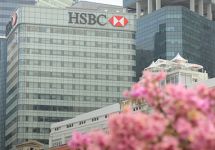
The largest banks of Great Britain were involved in the international scheme for laundering money withdrawn from Russia. It is reported by The Guardian.
Through the 17 largest British banks, including Royal Bank of Scotland, Lloyds, Barclays, Coutts, almost $ 740 million passed within this scam. More than half of this amount was on the HSBC bank.
Now investigators find out why banks have not stopped dubious payments. Representatives of all British banks mentioned in the material insist that they fully observe the law and take measures to combat money laundering.
The Guardian investigation was built on the study of banking reports, the article was noted. Documents related to the scheme were obtained in 2014 by Organized Crime and Corruption Reporting Project (OCCRP) and New Gazeta, writes The Guardian.
On the eve of the New Gazeta published the details of a major operation to launder Russian money in Eastern Europe, which was called "Landromat" (The Global Laundromat, "World Land of Laundry"). In fulfillment of the decisions of the Moldavian court from Russia, $ 22 billion was illegally withdrawn.
In Russia, one-day companies were created and put on service in one of the Russian banks. After some time, the Moldavian court recognized the Russian company as a debtor of a local company. To pay off the debt, Russian banks transferred money to the Moldovan company to the account opened in the Moldovan Conbank. From Moldova, finances were poisoned in a hundred banks of other countries: Great Britain, Hong Kong, Cyprus, Switzerland. In total, approximately 20 Russian banks were involved in this scheme, many of which have now revoked licenses for dubious banking operations.
According to Novaya Gazeta, Russian law enforcement agencies and investigating authorities first took an active part in the investigation. However, since the fall of 2014, the FSB stopped helping foreign colleagues. A note of protest, recently transferred to the Russian ambassador in Chisinau, says that Russian law enforcement agencies have repeatedly ignored requests to help in the investigation and establish the origin of money withdrawn from Russia.
In recent months, the Russian special services began to directly counteract the investigation. In particular, in Chisinau it is stated that during this time 25 Moldovan officials were subjected to pressure from the FSB. One of the employees of the Moldavian Ministry of Internal Affairs in Russia was detained and interrogated 35 times.
One of the beneficiaries of the scam "New Gazeta" called Alexei Krapivin, the son of adviser Vladimir Yakunin when he was the head of the Russian Railways. Business structures belonging to the Krapivins family are among the largest Russian Railways contractors.