
Translated material
Miracles - in the resolution
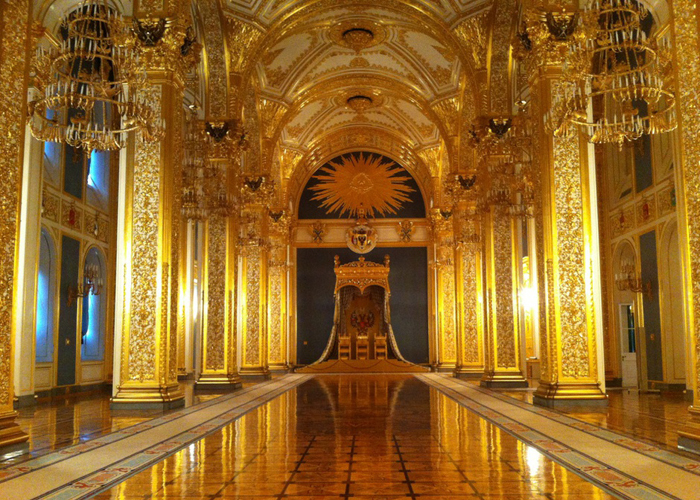
Here is the Andreevsky Hall in the Moscow Kremlin. He looks like a luxurious casket. Conservatism is such a casket, promising that it contains a treasure. Alas, the treasures may not be there. The magnificent finish, it would seem, serves as a guarantee of a miracle - but a miracle, if it is possible, is not hiding at all in a casket. This is how the conservatism of drives is arranged: they strive to find a treasure where it has already been found once (or, more precisely, where it was lost) - and thereby avoid new random meetings, trying to save wealth and not lose anything. An attempt to fix power invariably leads to regression before holding and chewing: anal and oral instead of a promised phallic. The Andreevsky Hall, where since 2000 the inauguration of the President of the Russian Federation (most often Vladimir Putin) has been undergoing, by the way, a fake: designed by Konstantin in the time of Nicholas I, he was completely rebuilt in the 1930s and was reconstructed in the 1990s .
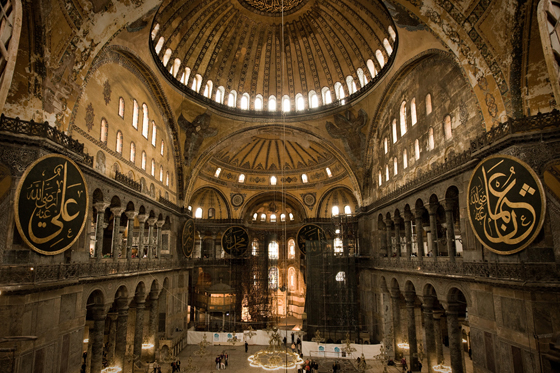
Conservatism is a containing space and shape. The Austrian art historian Hans Zedelmayer, the future member of the Nazi party, in his analysis of the lateantic and early -criminal architecture deduced the concept of “covering form”, one of the highest manifestations of which was considered by the Cathedral of St. Sophia in Constantinople: his dome seemed to go down from heaven, outlining the territory of imperial religious rituals. Coateness here is conceived as the order of the universe - hierarchical, centralized, inviolable.
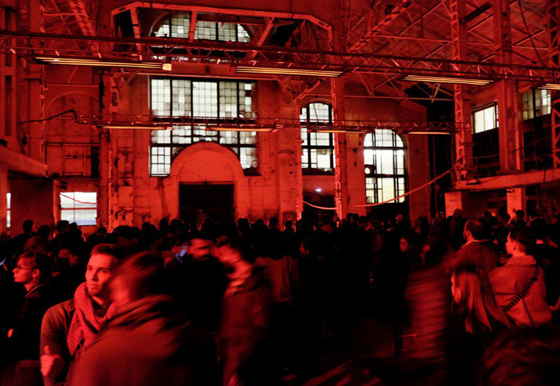
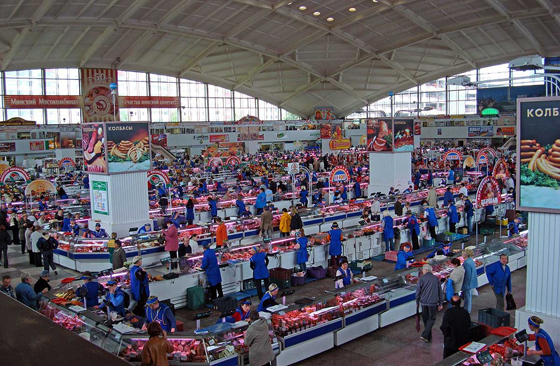
Zedelmeyer's “Covering form” resembles a standard iconography photo from the exhibition and raves at the Moscow GEC-2 project as part of the VAC geometry project: a crowd of fashionable young people in the flickering of a light show below-and the colossal structures of the former power plant above them, like the cover of oligarchic capital over the euphoric sacraments of the cultural industry. Some visitors wrote on Instagram and social networks about the "temple" or "religious" space of the hydroelectric power station. Here you can also (quite arbitrarily) indicate a resemblance to some spaces of rudiments of socialism, for example, with the Komarovsky market in Minsk, where a huge reinforced concrete membrane overshadows merchants and buyers: as if a non -class society in a separate market, which is a guarantor of which is a rejection of a policy given to an authoritarian state regime. Time as if suspended, there is no haste, social inequality is not striking, a Moscow tourist covers a nostalgic (and, undoubtedly conservative) charm of a fragment of the USSR.
Conservatism is the organization’s procedure. He believes in the possibility of good management. The heyday of conservative ideas does not contradict the modern dominance of management-the key element of the triumph of the “third spirit of capitalism” in the 1980s, as the sociologists Luke of Boltansky and Eve Kyapello designated it, or, as they often call it, the neoliberal economy. The opening of the Triennale of Russian Contemporary Art in the Moscow Garage Museum was a triumph of managerial success and hierarchical exploitation of workers, as well as the class of class stratification and charity generosity: the rich oligarchic museum gathered not so wealthy artists from Russian cities, the next “Russian poor” - this time in the chic Rama “Garage” ... similar Levakian grumbling could become an important addition to the general liberal indignation that among the regions of Russia, the representation of which Tyennale claims, there was also a “returned” Crimea. But the question of Crimea seemed to most critics much more important.
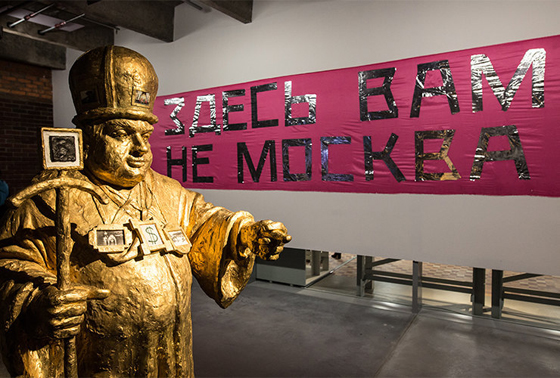
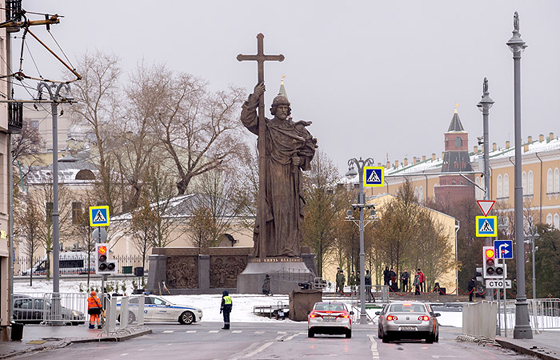
At what point is the struggle for the rights of an employee in a corporate team is proclaimed less important than the confrontation of conservative ideologies that occupy the air in the media ? At the moment, when you are offered to choose between the monument to Prince Vladimir and the permitted rava at a gentleman's power station . Now the art is controlled by monopolies, collecting all creative workers under one roof. The values that seemed to many contemporary art workers key five years ago were caught against the backdrop of colorful obscurantism of recent years. The confrontation between corporate pressure seems to be a funny game: after all, a terrible idol grows in the center of Moscow and threatens a bronze cross from above. They tell us: forget about the employees who are opposed to the employer - now the employer and employees at the same time in the fight against the state. And the state, perhaps, is only necessary. Doesn’t such a corporate ethics support Putinism?
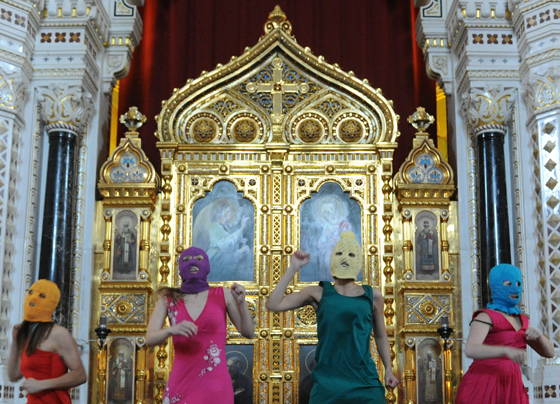
In the 1990s, corporators polemicized with liberals, and not with conservatives, and were much less interested in good and morality. No one would make saints from Avdey Ter-Ogagan, Anatoly Osmolovsky or Alexander Brener with their ambiguous and incomprehensible antics. But it was the new saints who tried to introduce Peter Pavlensky and Pussy R Iot . After all, they are happy for the benefit, for the cause of liberal progress - against conservatives in power, otherwise thinking progress and have the “good -good” axis exactly the opposite: some ROC have a carrier of dark obscurantism, others have a spiritual light ... Penetors of the third term of Putin Binarno polarized a society on the principle of “liberal against conservative” - just like the same state propaganda; And, like the State Propaganda, they appealed to morality.
 © Mitya Aleshkovsky / TASS
“The best that could happen to her with a trigulova that could happen to her,” said one art critic. “After all, the same thing happens to her as museums around the world,” she explained. “Everything is fine here,” they talked about the GES-2 at her opening, “there is nothing to complain about.” And we did not want to believe in morality, good and good - but we wanted to believe in a miracle. They wanted disagreements and made a card so as to provoke disputes. There were a bourgeois and punk on the map, the Tretyakov Gallery and the VAC Foundation, the DC in the city of Kiesel and the University of Chicago, the Grekov studio and the cabinets of psychoanalysts. We violated the norms of journalistic morality, were tantrums and were artists - the last in this world, of course. Contemporary art becomes the norm - is it necessary to save it after that? Everyone wants to be modern artists. And we, it seems, is no longer.
On this, the magazine "Disagreements" begins its last number dedicated to eternal values, and its editors are forgiven with you.
Download the entire issue of the magazine "Disagreements" (No. 13) "Eternal Values": PDF , MOBI , EPUB