
Translated material
Art for spite records
On March 24, the Konstantin Somov, the first retrospective of the works of Konstantin Somov, who entered the XXI century, has the most expensive Russian artist in the St. Petersburg KGallery.
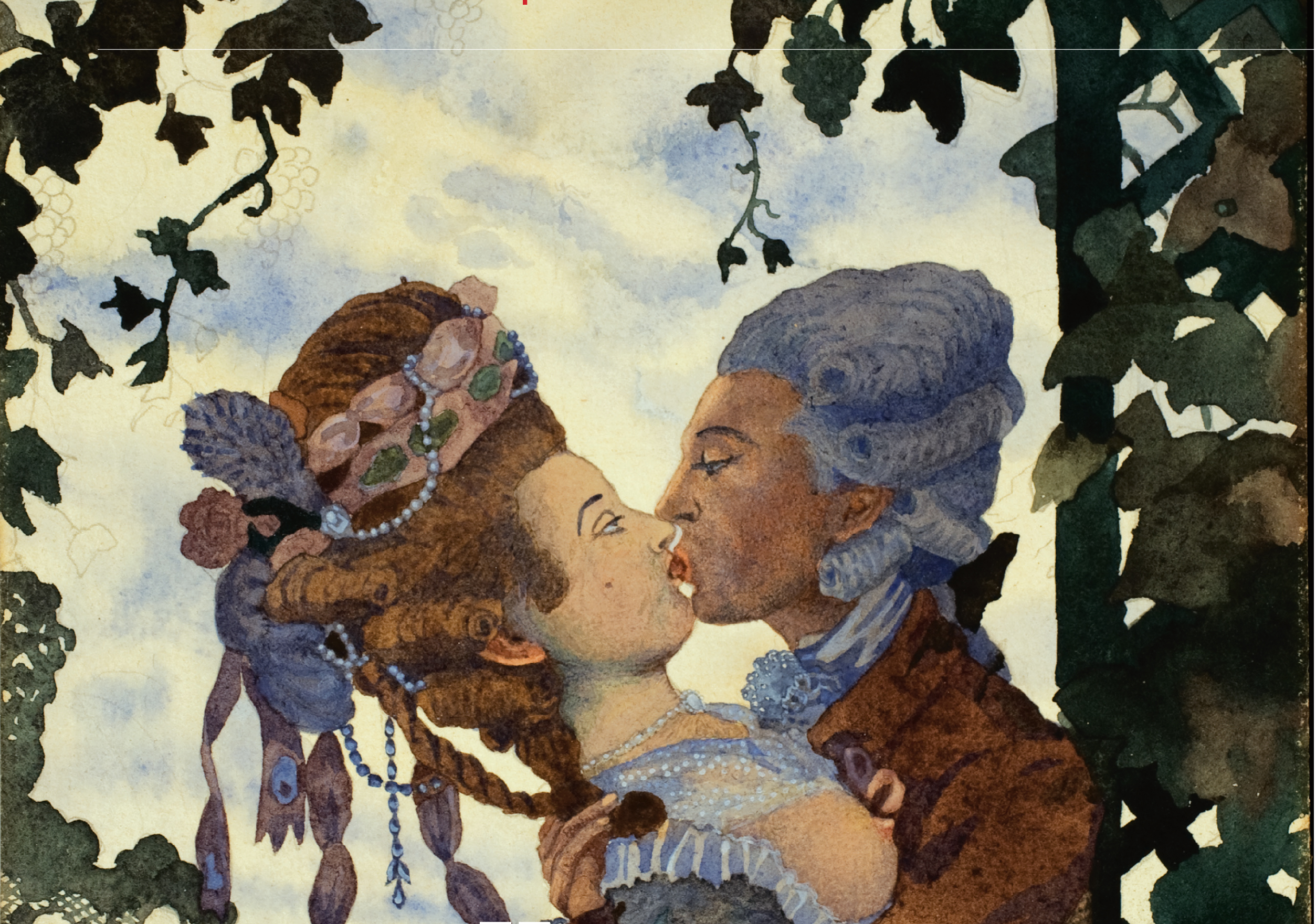
The current exhibition is a large event immediately for three interconnected reasons. Firstly, this is the first large retrospective of Somov in a very long time: the latest exhibitions of his works took place in the early 1970s and were timed to the artist’s centennial. Secondly, this is the first exhibition of the artist in his newly acquired status of the record holder of auction lots. Thirdly, it does not take place in the State Art Museum, but in a small private gallery. And each of these aspects is worthy of particular attention.
Craft and pastes
Against the backdrop of other Russian artists of his era, Konstantin Somov stands apart. Among the self -taught and nuggets - Vrubel, Repin, Malevich - he is a diligent student. Among the aesthetes and decorators - Benois, Bakst is a professional painter. The son of the keeper of the Hermitage Collection of Andrei Somov, he studied all his life in one way or another. First - in the gymnasium of May on the Vasilyevsky Island, one of the best educational institutions of his time, where he met the future figures of the "world of art" Alexander Benois, Walter Nuveli, Dmitry Philosopher - Petersburg Pickwitsians, Clever, Sninzes and Dandy, forming the Silver Age's agenda. Then - at the Academy of Arts, in the workshop of Repin. After ten years of studying in St. Petersburg, Somov continued it in Paris, at the Kolarossi private art school, from where, for example, Amadeo Modigliani and Alfons Mukha came out. In all the memoirs of the Silver Age - primarily Alexander Benois - Somov is mentioned as an always dissatisfied author, who was constantly improved and mastered new techniques and technology. Even being a very middle -aged artist, in the exile, where he was in 1923, he continued to change and look.
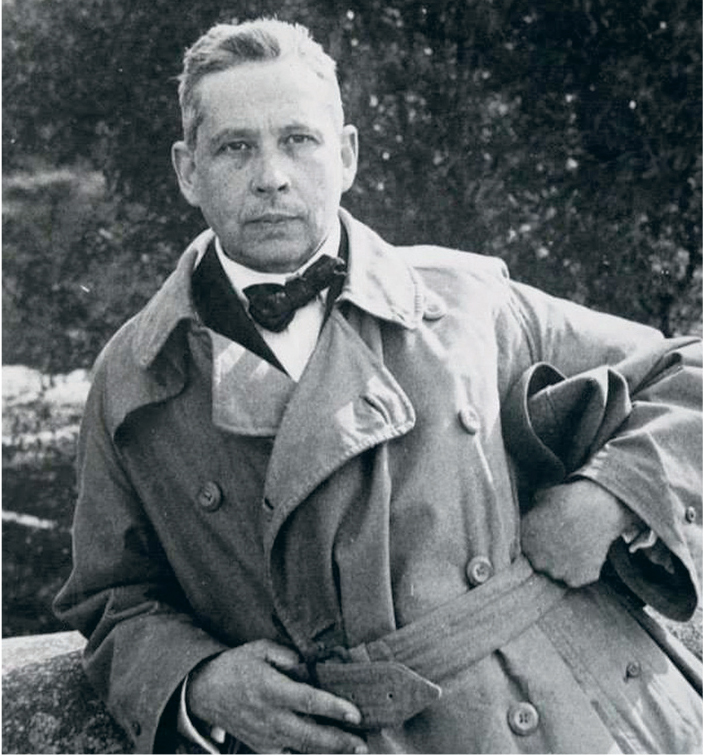
Somov’s most devoted spectators are residents of the stagnant Soviet Union, the inhabitants of the Leningrad Communists
The evolution of the perception of his work is curious. Contemporaries often looked at Somov. The chief stands of movement, the well -known art critic Vladimir Stasov wrote: “Wherever you look, you only meet one and meet K. Somov: French cut -down gardens and bosquets of the late XVIII century, nasty dolls in huge fijs and wigs, with ugly, pointed down with his legs, with disgustingly chimary postures and movements, with damp Persons, with prescribed eyes, ears, noses and fingers and with smiles of cadaries. ” But Somov did not receive a separate “portrait” of Somov in his “profiles”, but he mentioned many times as a bad example: “Somov, who made a promise to become a brilliant retrospectivist, rapidly rising in the works of 1890-1900 almost to the fragoner level, did not withstand the height of his thirty years and began to slowly crawl: after the decant By the 1910s, he was already only a skilled artisan and uneasy pastysher. " Even the ally in the “world of art” Benoit in the “Russian School of Painting” seemed to apologize for him: “... sometimes Somov was unwittingly, as a child, involuntarily and even against his will, and this is even in such works, where everything nearby indicates a huge skill, the full perfection of technology, perfection, not known to all Russian painting of the second half of the XIX century.” The scenes of the Galanca Age, Harlequins, maids of honor, jesters, fireworks, on which all the work of Somov was built, contemporaries seemed only subtle and very conditional stylization, the game “In the old days”, which was quickly tired of the audience and critics and began to seem self -reproach.
Lost paradise
But the descendants saw something more in these scenes. Somov’s most devoted spectators are residents of the stagnant Soviet Union, the inhabitants of the Leningrad communal. Longing for the Golden Age in his pictures was perfectly consonant with their phantom pain, their feeling of lost paradise. The cold detachment of painting, which contemporaries complained about, turned into an embodiment of escapism. Along with the memory of melancholy walks in Pavlovsk, the interiors of communal apartments, photographs of Karl Bull Somovsky “ridiculed kiss” and “Winter. Rink ”were evidence that the Golden Age really existed. According to the reproductions of these works, “their own” were recognized on the wall - those who chose life out of time, who lived without noticing Soviet realities. For whom it was more important not the agenda of today, but the connection with the day yesterday. In Leningrad, it was always easy to feel her.
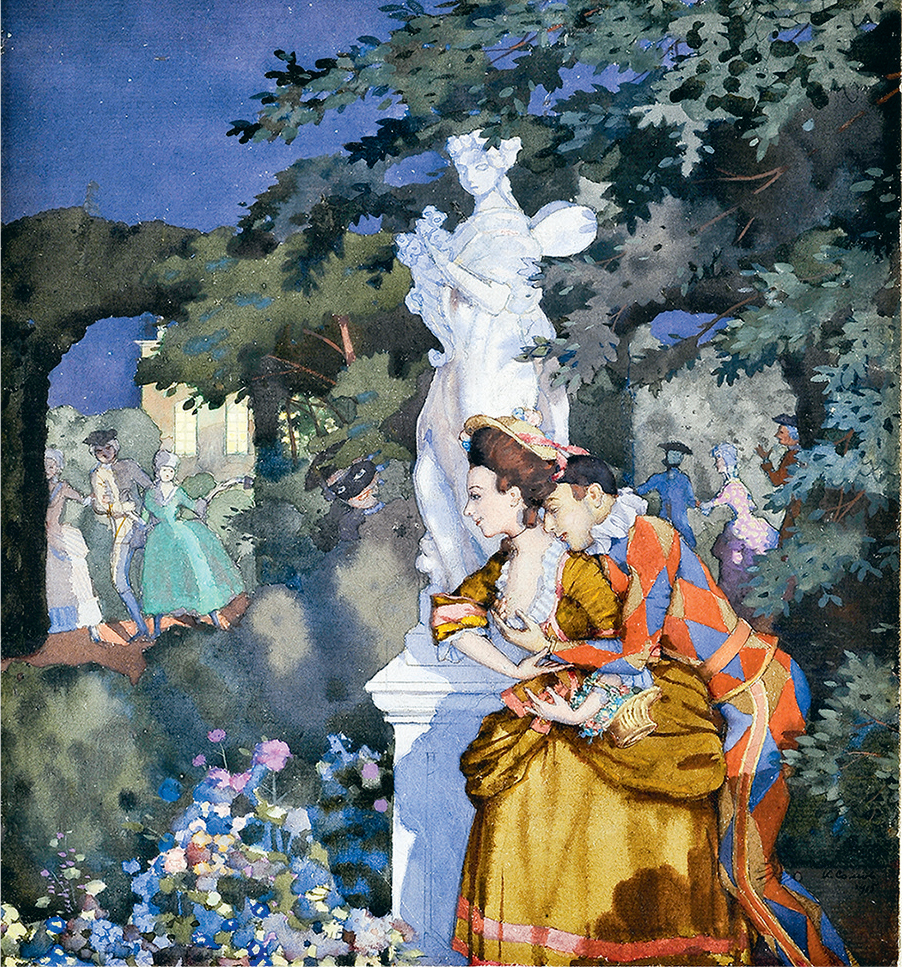
In perestroika times, interest in the artists of the “world of art” (as well as in all the pre -revolutionary) increased even more - in Peterhof the Benoit museum appeared, began to reprint old books issued and written by Neva Pickwitsians, and reprint their poster and posters. Not only Somov’s picturesque work appeared, but also his graphics, illustrations. They remembered his experiments with porcelain figures. Somov was far from only the singer of the lost paradise, but also a great artist. Largely thanks to his biographer and researcher Galina Elshevskaya, who wrote the fundamental (despite the name) “A short book about Konstantin Somov”, he returned to art history discourse from purely nostalgic and cultural. They again started talking about him as a skillful painter who took a strictly defined and original position: a passive, abstract observer. The artist again became an artist, not an intricate, a dandy, a hero of time.
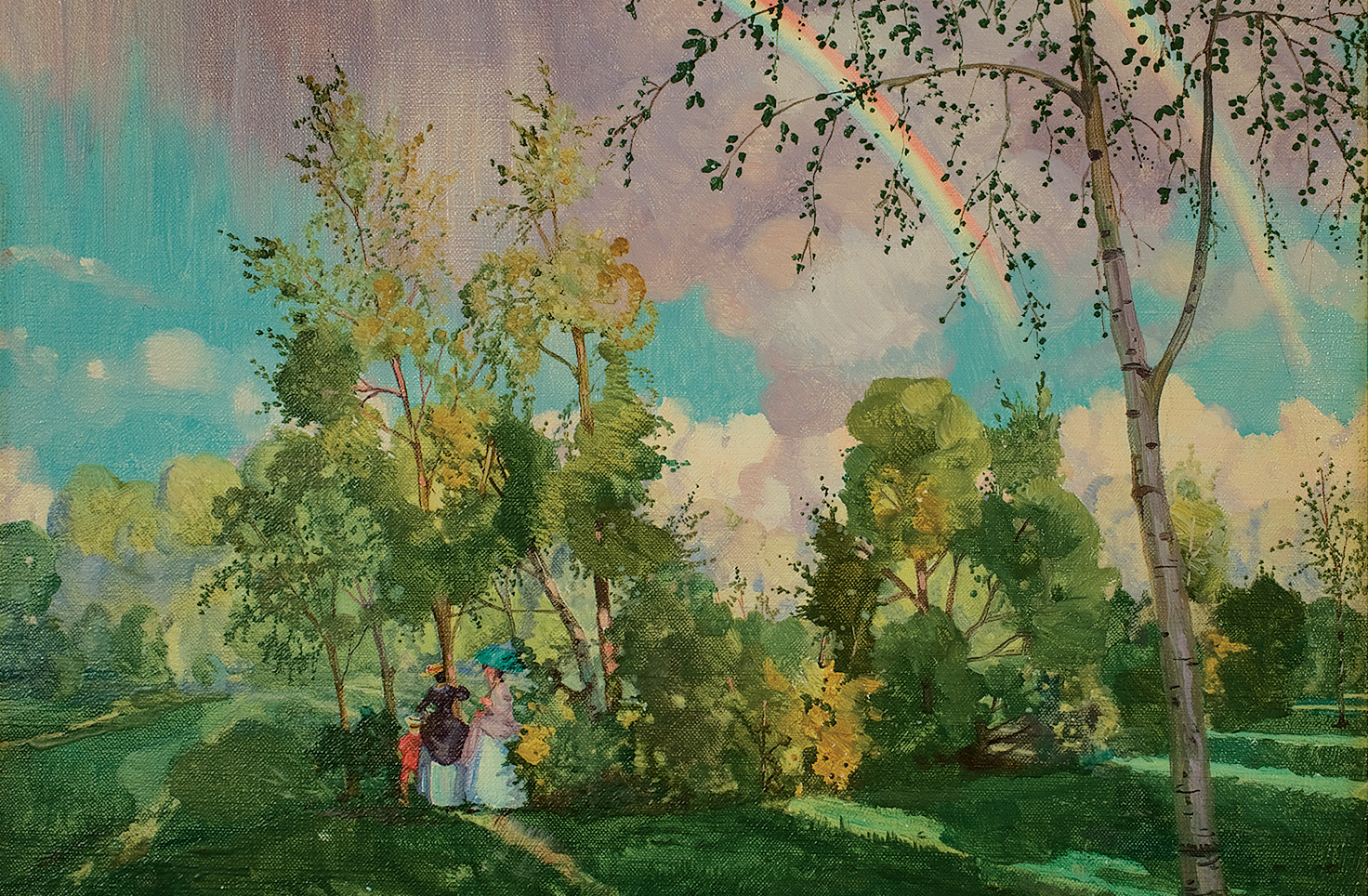
The zero years completed the portrait of Somov. Records at auctions changed his status of the beloved author of aesthetic prudent, whom he did not afford. At first, in 2006, the Somovskaya Russian Pastoral was sold at a maximum price of £ 2.5 million for domestic painting. A year later, his Rainbow left at an even larger price - £ 3.7 million.
In search of treasures
Both works are a textbook Somov, it is the one that is meant by his brand. “Pastoral” is a frivolous picture: in heavenly heaps, a reference guy feels a dormant young lady in the light of a popular setting sun. “Rainbow” is a nostalgic canvas: in birch trees, with his back to the viewer, looking into the flood meadows, there is a company of two women and a child, and a wet watercolor rainbow hangs above them. Freediness and melancholy nostalgia are recognizable components of Somovsky poetics. The only question is what is consisting of. The fact that for the “myriscus” was “longing for world culture”, for their grandchildren, turned into a light sadness in pre -revolutionary life, and for our contemporaries it became the subject of luxury.
Somov’s auction success is largely due to the fate of his work. Potential competitors of the Rainbow and Pastorali - the works of Vrubel or Serov - are overlapping and have long been museumified. Malevich is presented at Christie's only graphics. Somova is few in museum collections. Only four picturesque canvases-in the exposition of the Russian Museum, ten works are stored in the Tretyakov Gallery, several characteristic things are exhibited at the Isaac Brodsky Museum-quarter in St. Petersburg. The bulk - primarily graphics and watercolors - settled in private collections. And not only abroad is one of the miracles of the “Somovsky Leningrad phenomenon”: the grandchildren of the artist Anna Mikhailova, who keeps the impressive part of his heritage, still lives on the St. Petersburg outskirts.
To collect a more or less representative exposition of the work of Vrubel or Serov, it is enough to agree among themselves several large state museums. The situation is different with Somov: you need to shake private collections in search of treasures
Therefore, it is not surprising that it is in the private gallery, and not in the State Museum, that the most impressive retrospective of Somov is taking place. To collect a more or less representative exposition of the work of Vrubel or Serov, it is enough to agree among themselves several large state museums. With Somov, the situation is different: in search of treasures, you need to grind private collections. The Big Museum does not often go into such adventures, although it happens (say, the Russian museum thus collected the magnificent exhibition “Petrov-Vodkin’s Circle” and now it will reap its fruits for a long time). A small gallery with its strategic flexibility and financial independence is easier to go in search of treasures. In addition, togallery has long established itself as an excellent alternative to large museums. She is one of the few cramped not with modern authors, but with the Russian avant -garde and the silver age. Sudeikin, Malevich, Kustodiev, Petrov-Vodkin were already shown here. The direction of searches is more or less familiar.
Catch the wave
It is even more important that any museum is a rather inert structure: its exhibition policy is in no way connected, say, with an auction agenda. A major meeting is content with the honorary function of the price controller: as the director of the Hermitage Mikhail Piotrovsky emphasizes in his interview - which was once exhibited in the Hermitage, then it instantly takes off in price. The museum does not follow changeable demand, while the gallery can quickly respond to loud events of trading. Somov in KGallery opens immediately after another noticeable exhibition: in February, the “concert” of Pavel Chelychev was shown here, the Hit of the 2016 Christie's autumn trading. The great work of an almost unknown in Russia artist was sold at a price five times higher than the starting one: £ 1.5 million. Gallery instantly set the Khit picture and prepares a large retrospective of Chelishchev next year.
Private museums in Russia gain weight and become an important part of the cultural landscape - this trend has long been seen. In Moscow, the Institute of Russian Realistic Arts and the Museum of Russian Impressionism are actively operating. The main “blockbuster” of the season does not open in the Hermitage and not in the Tretyakov Gallery, but in the Faberge’s private museum - Dali was brought there in April (and last year there were endless queues for Frida Kalo). Kgallery and private museums caught the trend in time: the interest of the general public in painting of the 20th century. And their ease of rise, private status and financial independence allow you to gain recognition by saddle a wave. Now the gallerists have caught a new towers: Malevich and Kandinsky, Serov and Vrubel will not surprise anyone anymore. They are studied and museumified, familiar by heart. You can’t say this about Chelishchev and Somov: they have yet to be opened again, and this is their main advantage, not museum, but quite practical.
Photo: press service of the KGallery Arts Gallery