
Translated material
The trouble is unconsciousness
One of the largest technogenic disasters in the USSR - the Kurenev tragedy - carried away the lives of one and a half thousand people. Thus ended the attempt to “wash away” the place where tens of thousands of Kyiv Jews were shot - Babi Yar
On November 6, 1943, the troops of the 1st Ukrainian Front entered Kyiv left by the Germans. The city lay in ruins. Before the war, the population of Kyiv was approaching a million, and at the end of 1943, only 180 thousand people amounted to. During the years of occupation, 200 thousand people were killed in Kyiv, more than half of them were killed in the infamous Babi Yar.
Forget Babi Yar
Most of this tract in the north-west of Kyiv was occupied by a ravine with steep steep slopes, which for two years of German occupation, from 1941 to 1943, served as a place of mass executions. First of all, almost the entire Jewish population of the city was destroyed here - on September 29-30, 1941, ten days after German troops entered Kyiv.
Babi Yar became a symbol of the suffering of civilians during the war. However, after the victory, the city authorities did not strive to perpetuate the memory of the dead. Since 1944, each on September 29, people came to the place of tragedy. Kyiv officials perceived this as unauthorized rallies, especially after the anti -Semitic campaign unfolding in 1948. Although the calls to erect a monument to the victims of Babyeu Yar sounded, and the Council of People's Commissars and the Central Committee of the Communist Party of Ukraine in March 1945 even adopted the corresponding resolution, the memorial policy of the post -war years ordered the monuments to heroes, not victims.
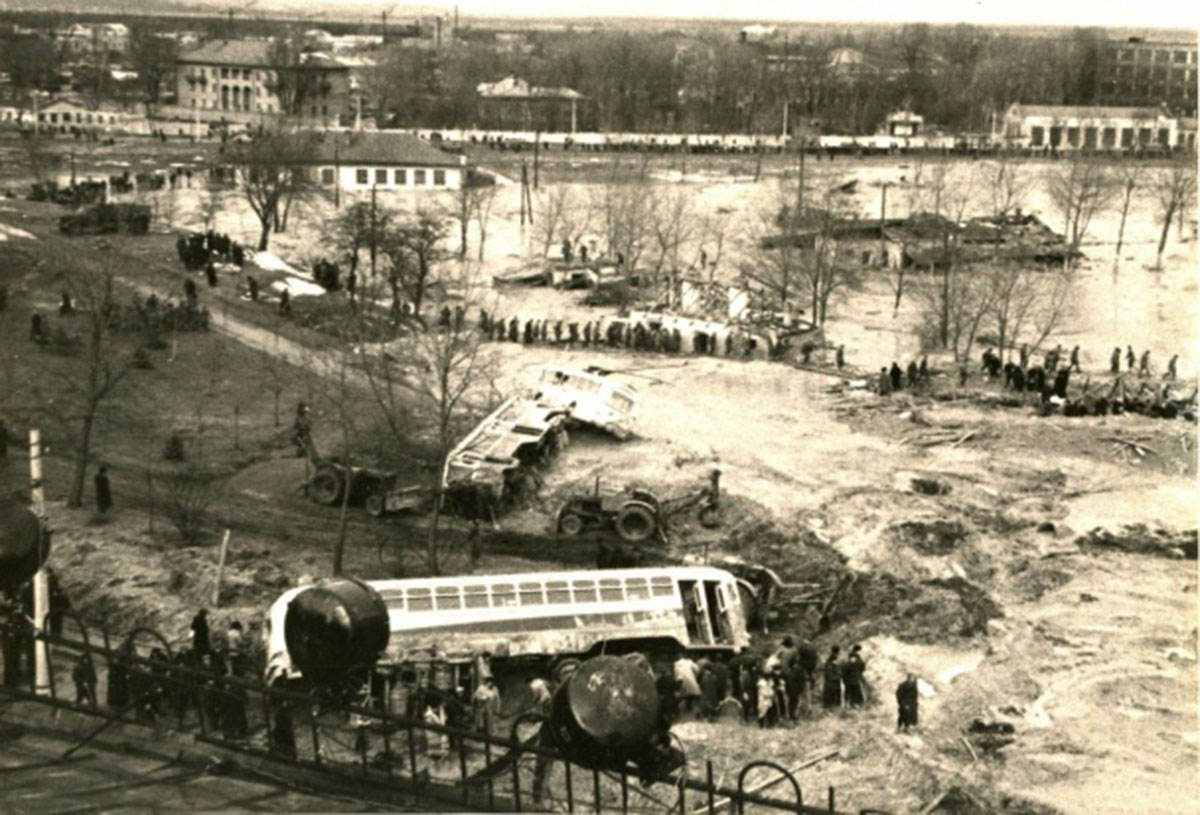
At 8 hours 30 minutes, a powerful stream of mud in the size of a five -story building at a speed of about 70–80 km/h reached Frunze Street
To remove uncomfortable issues, it was decided to equal Babi Yar with the Earth, and here the local authorities deftly replaced the criteria for morality criteria. After the war in Kyiv, it was urgent to restore housing. The production of building materials was carried out at an accelerated pace - from 1945 to 1950, the annual performance of the Petrovsky brick factories operating for recovery increased 15 times. Accordingly, the level of industrial waste has also increased. The place of landfill of the pulp from brick factories - a mixture of clay, sand and water - was prescribed a tragically memorable ravine.
On March 28, 1950, by decision No. 582, the Kyiv city executive committee authorized the “cloud” of Babyeu Yar.
The ravine in Babi Yar stretched from north to south. On the south side, he branched into three terraces sections, which were called spurs in official and technical documents. In 1951, through two pipes 1.15 km long, pulp from brick factories began to enter spurs No. 1 and No. 2, and in 1955 - in spur No. 3.
There were serious miscalculations in the project. Firstly, the work took place at an altitude of 40-60 meters above the level of a large residential area-Kurenevka. Secondly, under the dam of spur No. 3, a high-pressure gas pipeline ran. In addition, the Babier Yar flooding project suggested that the pulp would enter the ravine only in spring and summer, in the dry season. But pulp pipelines functioned all year round, and factories worked in three shifts instead of one. The real amount of waste dropped into the ravine exceeded the planned by six times. As a result, for 10 years - from 1951 to 1961 - 4 million cubic meters of pulp were poured into Babi Yar. Two battleships could fit this giant artificial lake.
It is not surprising that the existing drainage system was not able to cope with such a cluster of water. In 1957, the head of the Special Inspectorate of the Podolsky district of Kyiv, Maxim Glushchenko, wrote in the "hydromechanization" on the emergency condition of the washed plots and on regular floods in the vicinity of Babier Yar. Long before the accident, the inhabitants of Kurenevka beat the alarm. However, the appeals were ignored, the ache on the spurs continued - until March 13, 1961.
Black Day
Spurs were divided by earthen dams. In the morning of March 13, Pulpa formed a hole in the dam of spur No. 3 and began to drain down. Having destroyed the earthen dams of spurs No. 1 and No. 2, at 8 hours 30 minutes a powerful stream of dirt size with a five -story building at a speed of about 70–80 km/h reached Frunze Street. A trolleybus and tram lines ran along the street, which connected industrial enterprises and outskirts in the north and north-west of Kyiv with the city center, also passed the route of the suburban bus. A wave of pulp covered five tram wagons, a trolleybus and a suburban bus. Almost all the passengers died - there was an hour of peak, and only units located at the door managed to get out of a beetle driven by a bit of transport. The mudflower stream brought down the contact network of the trolleybus, which fell on the suburban bus - it exploded, and almost all who were inside were burned alive.
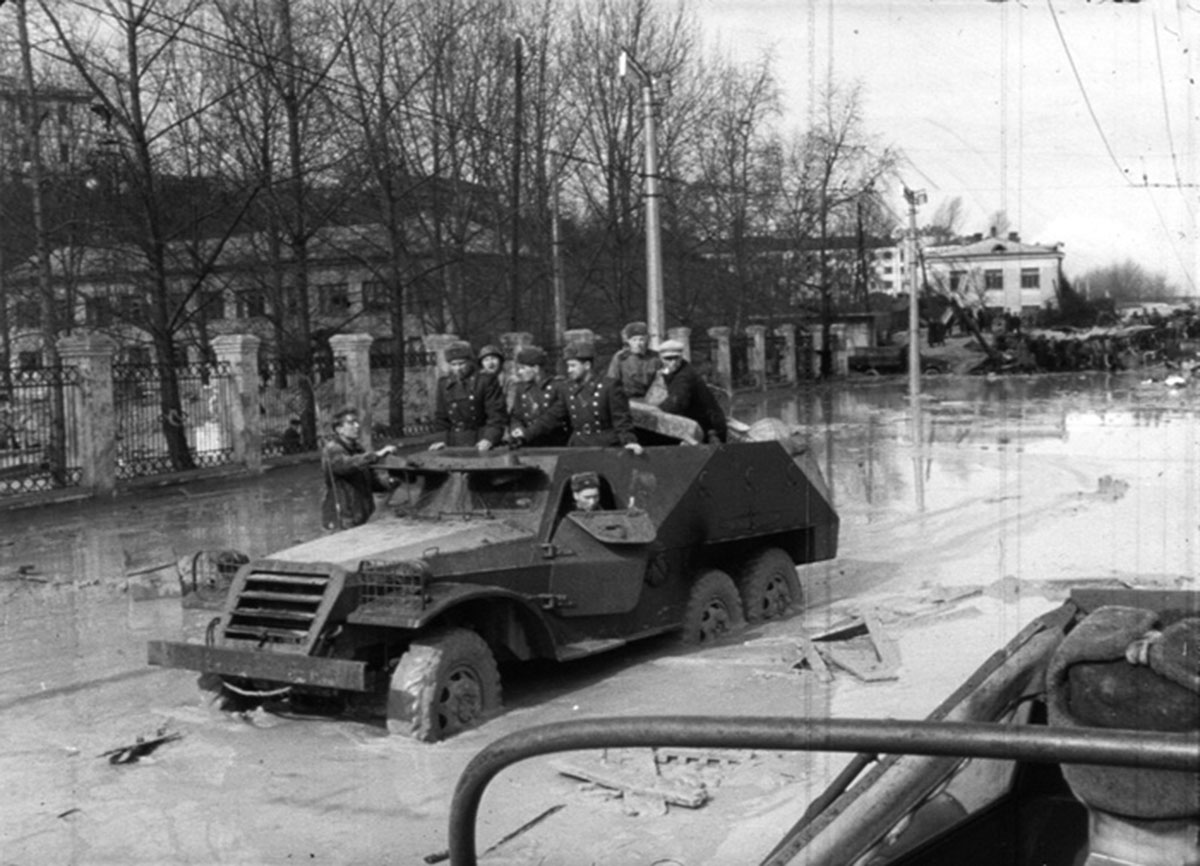
Then, in the path of the mud wave, there was a tram depot named after Frunze (now Podolskoye). The flood demolished the four -story building building and completely destroyed the tram park. Employees did not receive the command to turn off the electricity in time, many of them died from electric shock.
The flood lasted an hour and a half, during which time the pulp flooded the southern part of Kurenevka and came close to the railway station of the same name (now it is called
Zenith). This territory in a length and width of approximately half a kilometer was densely built up by one -story houses with gardens and gardens. A wave of pulp completely absorbed the huts, demolished the Kopylovskoye cemetery. The Spartak stadium was so flooded that its six -meter fence was barely visible. Those who managed to swim out of their huts recall that they were waiting for a disaster on the roofs of houses; Patients of hospital No. 15 were also saved on the roof - the first floor was flooded in it, but the building survived. They were evacuated from the distress zone on helicopters.
The situation was aggravated by the fact that, having spilled, Pulpa instantly began to harden. People were simply walled up in a three -meter layer of frozen clay.

Work on the elimination of the consequences of the accident began on the same day, military, students, employees were mobilized. Volunteers who lived near the place of tragedy helped. They cleaned the road from dirt and searched for those who did not have time to get out. At first, rescuers walked with shovels and probes, pierced clay in those places where it was still liquid, but when the clay was finally frozen, excavators went into business. One of the liquidators, the military Valery Tkachenko recalled that sometimes there were still living people with a bucket: "It was unbearable to stand nearby." The extracted bodies were taken to the club on the territory of the Pavlovsk psychiatric hospital and folded in rows.
"For the statute of limitations"
The authorities were in no hurry to announce what had happened. On March 13, on the radio, they reported a breakthrough of the pipes in Kurenevka, and the most readable “evening Kyiv” completely walked around the catastrophe in silence. Only on March 21, a small obituary appeared in Vecherka: “Kiev Party and the Executive Committee express condolences to relatives and relatives of those who died as a result of an accident in the area of the Kurenevka housing estate.” What exactly happened in reality, how many people died and suffered? - These questions remained unanswered.
1,500 people were killed; 68 residential and 13 administrative buildings were destroyed; 298 apartments and 163 private houses, in which 353 families lived - 1228 people, became unusable.
It is worth noting that the exact number of victims is still unknown due to the poverty of sources. Although a criminal case was instituted on the fact of the tragedy, its materials, as well as two volumes with eyewitnesses and photographs from the scene of the events, were destroyed by the KGB - “for the statute of limitations”. A little light to questions of historians shed daily inquiries of the Government Commission to eliminate the consequences of the accident under the prosecutor of the Ukrainian SSR, which were drawn up from March 13 to 25 by the chairman of the commission Ivan Kazan and are now stored in the Central State Archive of Public Organizations of Ukraine. The certificate of March 25 indicates the figure of the dead - 132 people. Later, the authorities called the “final” number - 145 people. However, the report of March 13 reports that as a result of the accident, 68 residential and 13 administrative buildings were destroyed. 298 apartments and 163 private houses in which 353 families lived - 1228 people were unsuitable for living. Obviously, those who lived in the accident zone, as well as passengers of a suburban bus, trolley, five trams, tram depot employees together make up a larger number. According to the calculations of the Kyiv historian Alexander Anisimov, who had examined the Kurenev tragedy for many years, then at least 1,500 people were killed.
The authorities silented the scale of the tragedy and did everything possible so that the information about the disaster would not leak outside the city. From March 13 to March 16, intercity communications did not work in Kyiv, letters were perlustrated and seized by state security officers. Here are fragments of letters intercepted by KGB employees:
“We do not report anything on the occasion of the Podolsk accident, and how many people died, and how many losses were inflicted on the state. But when something similar happens abroad, we instantly reports throughout the press. ” The BBC transmitted about this disaster on the radio that about 20 thousand people died and left without shelter in Kyiv, and Kyiv said that only 54 people died. Both are terribly lying: 2-3 thousand died. ” “They decided to build a rotten massif on Babi Yar, instead of building a monument to the dead Jews there.” “Lavra* on March 11 was closed and everyone was raised, and on March 13, a disaster happened on Kurenevka, thousands of people died. <...> The anger of God. "
Memory and monuments
The case of the Kurenev tragedy from August 2 to 24, 1961 in Kyiv was examined by the court. Six people received different deadlines - the chief, chief engineer and chief of construction department No. 610, chief engineer of the Ukrgidrospetsstroy trust and two designers. Responsibility was escaped by Alexei Davydov, the head of the Kyiv City Executive Committee, who signed a decision No. 582 on March 28, 1950, which was the first step to the disaster. Probably, Davydova was saved by a close, since the war, friendship with Khrushchev, in 1947, Davydov received the post of chairman of the city executive committee of Kyiv thanks to Khrushchev (then - the secretary of the Central Committee of the Communist Party of Ukraine).
Alexey Davydov died two and a half years after the tragedy - on unverified information, committed suicide. Until 2016, one of the boulevards of Kyiv was called his name.
The tragedy did not affect the policy of the city authorities. Over the next decade, the ravine in Babi Yara was equal to the ground, falling asleep with a re -pulp from the scene of the accident and strengthening the concrete dam. The terrain was radically redeveloped-on the site of the former ravine, the park was defeated and several large residential arrays were built, and in the territories of the Jewish and old part of the military cemeteries located in the southeastern part of Babier Yar, they built a sports complex and a television center with a television tank.
The monument to the victims during the occupation in Babi Yar was opened only on July 2, 1976, on the eve of the 35th anniversary of mass executions, 15 years after the Kurenevsky tragedy. Babi Yar did not become a single memorial center: 29 scattered monuments located on its territory are not connected by the general concept.
The monument to the victims of the Kurenev tragedy was erected only in 2006.
* Kiev-Pechersk Lavra. In 1961, during the anti -religious campaign, the monastery was closed.
Photo: wikipedia.org