
Translated material
500 years of hordes
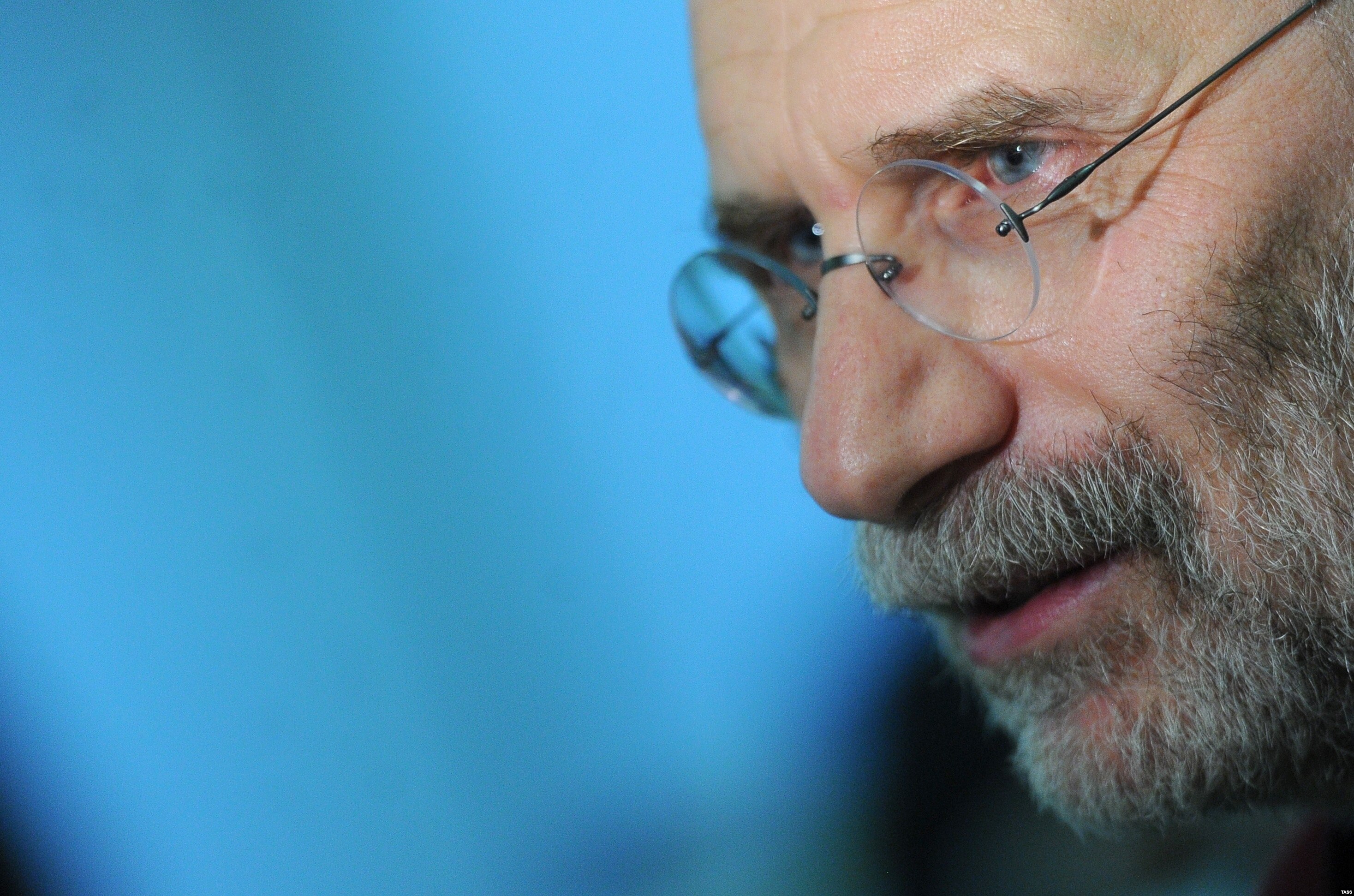
The writer Grigory Chkhartishvili, known under the pseudonym Boris Akunin, published a new novel "Happy Russia", whose inhabitants, despite the name, are unhappy.
The action takes place in 1937, and, as the author himself describes the content of the novel, “the main character is an investigator working in the secret political department of the NKVD, who is engaged in repression”: “he has to investigate the case of the Happy Russia underground circle, where intellectuals, picent vests are collected and reports to each other about how wonderful and prosperous Russia in the future. This The retro-futuristic novel, that is, from the past, from 1937, we look into the future, in the XXI, XXII, XXIII century. "
“Happy Russia” is the third of the novels of the Family Album: the series begins on the eve of the February Revolution of 1917 - in “Aristonomy” - continues in the twentieth novel about love “Another Way” and, finally, comes in 1937.
The hero of "Aristonomy" is a young man Anton Klobukov, who grew up in the circle of the intelligentsia, who, however, will soon have to disappear, plunges into a revolution and civil war. Twenty years later, in a “happy life”, the main character at first became the secondary figure of Philip Plaikhin - a serial traitor, a security officer, a party functionary and an employee of the NKVD. Nevertheless, the fate of the Russian intelligentsia and its ideas about what development path should choose, still constitute the main subject of thought of Chkartishvili.
In the first novel of the Family Album, the writer - in extensive philosophical digressions - discusses the connection between the civilization of society and the qualities of an individual human person - and introduces the term “Aristonoma”: a person striving for development, which has self -esteem, liability, endurance and courage, relating to others with respect and empathy. In the third novel, Chkhartishvili turns to “which, in fact, can and should be done with our country so that it is happy.”
In "Happy Russia", Chkhartishvili with the mouth of his hero quite harshly describes the state of Russian statehood: 500 years, from the reign of Ivan the Third (the Great), Russia is being built according to the likeness of the Horde. In an interview with Radio, the writer lists the main characteristics of this world order, and the reader himself can evaluate their relevance for modern Russia:
Sacralization of the sovereign, the Great Khan, the Secretary General, the President
-When my character-historian, with whom I am completely solid, says that the Russian state retains the Horde structure, he stipulates that at some stages of history this structure was effective and correct. This structure involves several components that are constants of Russian statehood: a tough vertical of power, which at one time created by Genghis Khan, when the whole country is controlled by one principle: the head, the head of the tumen is the ten thousandth, the head of the hundred, the head of the dozen. No other sources of power are supposed. Absolute centralization, all decisions are made only in the center, the province does not mean anything, does not participate in decisions. It is necessary - the sacralization of the sovereign, the great khan, the general secretary, the president, no matter how he was called, because the vertical does not work without this. The very important role of the special services, which Genghis Khan called the "cshik", and then the guardsmen, the third compartment, gendarmes, the NKVD, as you like, began to be called. This is the only way to control the entire long staircase of power for the vertical. And a few more signs that were constant revived in Russia, no matter how the country was called and no matter how the regimes are replaced. And in the historian’s report it is written that until this structure is redone, in Russia, any attempt to liberalize and democratization will lead to the restoration of the same structure, otherwise nothing will work in a rigidly centralized country. ( In the same part of "Happy Russia" it is discussed how to dismantle the previous system and build a new one. Decisive decentralization and development of provinces, limited functions of the central government, and an experimental electoral system are proposed. - R.S. )
Democracy completed the task and buried herself in the ceiling
- In the novel, you mention a rather specific electoral system, which involves a certain educational qualification. The more experienced and the greater knowledge a person has, the more votes he has. That is, it implies the additional weight of the intelligentsia.
- This is not me suggested - this is my character offers, but I, listening to him, try on and think what I agree with, which I do not agree with what is true, what is wrong. I want my readers to think and talk about this. This is not a political program, especially since I am not a politician. In general, that my characters say about future Russia, it is as it happens on a birthday, New Year or a wedding-my list of gifts: the future Russia, which I would like to see someday. If we talk about the election system, I am watching the crisis that is experiencing democracy in Western countries, where an interesting and important process occurs with flashes: Brexit suddenly occurred in the UK, Trump suddenly won in America, and strange populist parties suddenly begin to raise his head in Western Europe. All these, in my opinion, are signs of a general crisis of democracy. She completed or almost completed a certain initial task and buried herself in the ceiling. Apparently, a serious transformation that has yet to be survived will take place now. From the point of view of my character, democracy, just as the medieval state, the absolute monarchy, is a certain stage in the development of human society, behind which a more advanced, flexible mechanism should come. It is usually called meritocracy - people who have more merits and advantages have more electoral weight in society. Everyone understands that in democracy there is significant injustice. The voice of some 18-year-old person who knows little about life, weighs exactly as much as the voice of the Nobel laureate. Just because of this, demagogy, populism arises: the mass of voters easily confuse their heads. In the report (in "Happy Russia". - approx. ) It is written that suffrage should be deserved by a person. After reaching the age of 18, a person receives the right, just as he passes to a driver’s license, to pass an exam for the voter. In order to become a voter, a person must have an elementary idea of the history, laws, and the rules of the hostel. In the end, he must just raise his ass, go somewhere and make an effort to get this right. Those who do not need it, God with them, let them not vote. Moreover, my character is an open question for me, I don’t know whether he is right or not, he says that suffrage should also be of different levels, because the exam can be passed differently. If you passed the exam by the three, then choose only deputies of the municipal level. If you passed the exam well, choose who you want. In general, the path that a person passes for life, his work, merits to society, should be somehow assessed, including in the electoral sense. That is, a person not only lives, but increases his electoral capital. In the beginning, for example, has one vote, and if it has achieved something, has three or three and a half voices. In any case, it is interesting for me to think about it.
The suffrage will be required
- It is interesting that Evgeny Chichvarkin said about the same in an interview for half a year ago, suggested introducing an exam on the right to be a citizen, on the right to get an electoral voice. The objection here is this: the essence of democracy may not be more correctly arranged, but in order to arrange life more fairly. And it seemed to me that you yourself are putting on a counterargument yourself in an incomplete futuristic novel included in your last book: there is a certain happy Russia in approximately the way you described, where people are more experienced, more knowledgeable, have great rights to determine the future country. And this does not lead to anything good again, again the formation of a certain vertical occurs. It turns out that the vertical is recreated in a different way. And, objecting to this system, we can say that the only way is to distribute one person through one electoral voice. What people are such a country.
- There is no justice in this. There is no justice that some Zabuldyg, whose voice can be bought for a bottle of vodka, votes in the same way as Albert Einstein. The suffrage, I think, will be required. Even in order to drive a car where you can crush someone in the worst case, you need to take a rather serious exam. And here you have access to decision -making, on which the fate of the country depends. How can you give him just an unprepared person who most often does not need this, and we must persuade him to go and vote. What is justice? As for the utopia about the wonderful future of Russia, which is part of my novel, there is no vertical, there is a completely different type of problem, more serious, which threatens any democratic society where everything is too well arranged. Utopia is a stage of development. And at each new stage, new difficulties arise, more and more complex. At the lower steps of development, it is that a person does not die from hunger so that his mammoth does not trample. In the XXI century, we set ourselves some more complex tasks. In the XXV century, these will be very difficult tasks. Humanity will solve them and move on or will not be able to solve them and die. So it will be at each stage of evolution.
There are people more smart and less smart - this is a fact
- That is, it was not an internal objection to the thesis of meritocracy? And then it seemed to me that in the plot something is sewn, reminiscent of “it is difficult to be a god” of the Strugatsky: humanity is faced with the fact that some higher forces offer him a more correct choice. Your hero, the wind practically repeats the key formula "It is difficult to be a god": God, please leave us alone and give us your own way. This is a denial of the enlightened correct choice.
-No, this is a denial that someone is an adult and solve problems for you. We must solve our problems ourselves. If we cannot do this and die, then this is our fate, but we do not need to lead us by the pen.
- If this is transparent to the level below: meritocracy just suggests that there are more smart people who actually take the hand.
- This is not supposed, so in fact is in life. There are people more smart and less smart - this is a fact.
- But at a higher level, you say: no, do not, we ourselves will learn.
- Because external power appears here. People are more smart and less intelligent, but this does not mean that a more intelligent person is more valuable than a less intelligent person. Because a less intelligent person can be more valuable in some other area, he can be more cordial, kinder, he may be able to do what a smart person does not know how. Everyone should do what he has a tendency and talent in life in life. This is the key to an effective society and a happy life.
His word has more weight
- Your famous hero Fandorin pronounces the same words: first you need to earn the right to be a voter. But your heroes - educated, strong - perceive life as their own choice. And they, it seems, are not ready to take someone by the hand and lead somewhere. Moreover, I'm not sure that Fandorin or your Anton Klobukov are ready to take on, say, ten votes in the elections, and not one.
- Don't know. True, I don't know. I think this is normal when the merits of a person are assessed by society. If he performs his work well, performs exploits, gives birth to many children or pays very high taxes that help society function, then he receives a reward from society: they treat him with great respect, his word has more weight. This is normal, a person in life should have some incentives. Moreover, this does not depend on the profession, this can be achieved in almost any field of life, if you do your job well, participate in some social benefits, in volunteer movement, help someone, give blood-everything should go into a plus for a person. Human life is valuable. What a person earns throughout life - respect, reputation - should be evaluated by society.
They often invent things, suck them out of the finger
- Let's take a step to the side. It is known that you usually work a lot with the texture of the era that you describe. In "Happy Russia" negative heroes, people from the NKVD, pronounce the mechanics of negative selection. One of them, Schwants, states that there are no enemies, they are invented as a means of struggle for power. Do you rely on something when you write that these people were aware of the absence of an enemy, were such malicious cynical manipulators?
- There were different people, I read many documents, memoirs. Among them, of course, there were a large number of people absolutely cynical, such as this Schwantz, and there were convinced people. By 1937, when the action takes place, there were no real "enemies" inside the country, they were all exported for a long time, destroyed. The punitive system worked on the whole coil, they had to report something-the 20th anniversary of the Great October on the nose, the corresponding resolution had just been released, and they demand from above. Schwants uses two terms that I came across somewhere, one of them is called "stucco molding", and the second-"lipnyak". Lipnyak is a pure linden, when there is nothing, it is created from scratch. And "stucco molding"-when there is some nonsense, grandmothers at the entrance were said, and a whole story is being sculpted. The punitive bodies act in about the same way in any structure based on special services. The same thing happens in modern Russia, because an incredible number of all kinds of competing and duplicate structures-the FSB, the Investigative Committee, the General Prosecutor's Office, someone else, holding huge states, receive a lot of money, they all need to do something. They often just invent things and suck them out of the finger. This is repeated from century to century. The same was in the royal guard, the same was in the third branch.
Terror should be unpredictable so that no one feels safe
- But I’m almost sure that people who invent things are convinced that they actually act correctly, there are enemies and - in the logic of the hero of the film “The meeting place cannot be changed” - we must pull up the matter in order to expose the enemy. They sincerely believe that there is a "fifth column" and it is necessary to fight it. Yes, there are no specific cases, so they need to be invented. But so that they think that this is not even enemies - I have doubts.
- Those who are in a deeper, probably believe that the enemies really are, and there are a “fifth column”, and those who are more difficult to make a career. The investigator in the novel says things that really spoke in the 30s, and which, apparently, formed the basis of the Stalinist large terror. A large war was brewing, the country had to be turned into a military camp, it was necessary to drive the peasants so that they would go to factories and create military industry, it was necessary to be afraid that they would be discipline, so that no one would be picked, and this could only be maintained with fear, which Schwanz speaks with direct text: yes, there are no enemies, and all should be afraid. And terror should be precisely unpredictable and irrational so that no one feels safe, no matter how clean the Bolsheviks and Soviet power. This is a very important component.
In the caustic environment of 1937, such a person will survive at all costs
- Of the three novels of the series in "Happy Russia" the main character is twice a traitor, a person who begins to serve in a guard continues with the Bolsheviks, becomes an employee of the NKVD. He is very low human qualities, especially considering how you talk about the qualities of the human soul in the first novel. It turns out a meat grinder in which people who have a soul to one degree or another disappear so that Philip Plahin survives. Can we talk about happy Russia after that?
- It is possible and necessary. I specifically chose for a conversation about happy Russia 1937, maybe the worst period in Russian history, the most difficult, cruel, humiliating. Because from this pit conversation about what Russia could be and, God will give, will sound somehow more convex. In addition, my character Philip is not a villain in fact, he is what is called a small person - not to be confused with a small person in great Russian literature. A small person is one who lives with a petty interest, looks under his feet, is enough what lies badly, but his behavior depends entirely on social conditions. Представьте себе этого самого Филиппа родившимся и живущим в какой-нибудь современной Швейцарии – он там мухи не обидит, будет законопослушным, в крайнем случае, будет слегка химичить по части налогов, когда это не создает слишком большие риски. Но в едкой среде условного 1937 года такой человек будет выживать любой ценой. Какой-нибудь благополучный гражданин, который сегодня в Германии защищает окружающую среду, окажись он в Германии 1937 года, мог бы запросто оказаться охранником в Освенциме, потому что такая вокруг среда. И вообще речь в романе о том, что надо создавать человеку такие условия существования, при которых он вел бы себя лучше, а не хуже. 1937 год – это время, когда люди типа несчастного Бляхина вели себя таким образом и совершали такие вещи. В этом главная трагедия эпохи. Это его начальник Шванц будет сволочью в любые времена, он хищник, его ничем не исправишь.
Это не означает, что надо отказываться от попыток переустройства плохо работающей страны
– Если посмотреть на все три романа в целом, можно прийти к очень жесткому выводу. "Аристономия" начинается с того, что в канун Февральской революции сидят интеллигенты, люди, которые по вашей шкале должны получить право на много голосов на выборах, и предлагают разные пути развития России. Все это приводит к мясорубке, и не избавиться от ощущения, что их вина в этом велика, и они сами уходят в этой мясорубке один за другим. Не является ли это самым веским возражением против меритократии? Когда вы говорите, что нужно создавать для таких, как Бляхин, хорошую среду, – кто будет ее создавать? Может быть, единственный способ предотвратить это – чтобы все Бляхины были равноправны, потому что он действительно человек, который избегает любой чрезмерности, и это барьер на пути социальных экспериментов. Иначе отдали все в руки умных людей, и вот к чему все это привело – так логически получается?
– Если что-то не получилось один раз сто лет назад, совершенно не факт, что это не получится в следующий раз, когда из этого извлекут уроки, исправят ошибки. Во-вторых, эти мои интеллигенты, которые в январе 1917 года накануне Февральской революции спорят между собой, – из них только один занимает государственный пост и имеет какую-то власть, остальные находятся в оппозиции, никакой власти не имеют вовсе. Когда же это сословие попыталось управлять страной в феврале 1917 года, они оказались не хороши, не компетентны. Но это не означает, что надо в принципе отказываться от попыток переустройства плохо работающей страны. Просто значит, что в следующий раз надо сделать умнее и лучше. Собственно, поэтому мы сейчас должны говорить о том, какой мы хотим видеть нашу страну, это я и пытаюсь сделать при помощи этого романа. Давайте мы сначала обсудим и договоримся, что мы хотим строить. Потом начнем думать, как, в какие сроки это строить. Меня печалит в нынешней российской оппозиции, что они говорят, как правило, на тему "кто виноват", а не "что делать". Кто виноват – о'кей, мы согласились. Но расскажите, а что вы собираетесь делать, какую собираетесь строить страну, как мы все в этой стране будем жить. Мне очень этого не хватает. Поэтому мне как писателю, совершенно свободному в полете фантазии, которому не нужно избираться, завоевывать популярность, захотелось написать роман в очень редком по нынешним временам жанре утопии. Все пишут обычно антиутопии – это писать гораздо интереснее.
Жуки изъедят всю древесину, и дерево может рухнуть
– Вы сейчас заговорили об оппозиции, но интересно говорить о власти. Получается, применяя ваш инструментарий, мы должны надеяться, что в современной российской власти Шванцы друг друга съедят и появятся Бляхины, которые захотят спокойно жить, – на них и надо возлагать надежду?
– Совсем так не получается. Бляхины никогда ничего не решают, они только приспосабливаются. Когда Шванцы друг друга съедят, ничего хорошего не получится, потому что эти жуки изъедят всю древесину, и все дерево может рухнуть. На Бляхиных точно надежды нет. Я думаю, России рано или поздно придется решать основную свою проблему, проблему правильного, принципиального устройства. До тех пор, пока это не будет сделано, мы все время будем возрождать одну и ту же систему. Какой-нибудь демократ Ельцин приходит к власти, через некоторое время начинает превращаться в самодержавного самодура, который сейчас нам кажется таким лучезарным только по сравнению с Владимиром Путиным. Потом приходит Владимир Путин, который начинал как член демократического муниципалитета, ученик Собчака, высказывал какие-то вполне демократические взгляды. Потом оказывается, что в этой системе он должен становиться авторитарным правителем, потому что иначе она работать не будет. Так она хоть плохо работает, а иначе, с его точки зрения, она вообще развалится. Здесь дело, на мой взгляд, не в личностях, а в структуре, в системе. Россия должна быть устроена принципиально по-другому. Нам всем про это надо сейчас думать.
Они на Ельцина смотрели снизу вверх – это неправильно
– В 90-е годы, на которые сейчас в России реакция, довольно умные люди находились во власти, люди, к которым испытываешь уважение. Гайдар по всем показателям принадлежал к меритократии. Но результаты неутешительны.
– Я к гайдаровскому правительству в целом отношусь хорошо, считаю, что они многое сделали, поставили под страной какие-то рельсы. Я не говорю про многочисленные издержки и ошибки, которые тоже были допущены, потому что про них говорят все эти годы. Но у них был один существенный прокол. Я внимательно читаю мемуары и воспоминания всей этой команды, и я видел, что гайдаровское правительство вело себя по отношению к Ельцину как самураи. Они позволяли ему делать все, что он хочет. Я отлично помню, как Егор Тимурович все время шел на какие-то уступки, испытывал пиетет перед этим народным трибуном и героем. Он отдавал министров из своего правительства, если надо было. Они на Ельцина смотрели снизу вверх – это неправильно. Пока у нас страна будет управляться по вождистскому принципу, ничего хорошего не будет. Должны править идеи, принципы, убеждения, а не принцип личной преданности и обожания какого-то одного вождя. Они несколько раз имели возможность занять принципиальную позицию и сказать: Борис Николаевич, или так, или мы все уходим в отставку. Ни разу этого сделано не было.
Представить себе Фандорина, руководящего страной, я не могу
– Опять напрашивается возражение: это люди имели больше голосов для принятия решений. Даже при идеальном устройстве, когда у кого-то больше прав, пусть это умные и хорошие люди, они могут совершить ошибку – и это приведет к печальным последствиям. Принцип "один голос – один человек", какой бы он ни был, может быть сдерживающим элементом, чтобы не возникало новых вертикалей. Еще одна вещь, о которой я хотел поговорить – о личном выборе. У вас есть два героя, которых хочется сопоставить: Фандорин и Клобуков. Фандорин – мечта интеллигента, добро с кулаками. И вот он проходит путь к власти, может принимать решения на пользу людям – и отстраняется, когда его ставят перед выбором, – а власть неизбежно ставит перед сложным выбором. Вы говорите о правительстве Гайдара, они все время повторяли: мы останемся и принесем больше пользы. А ваш Фандорин как раз говорит: я не могу пойти на столкновение со своими принципами. То есть вперед выходят какие-то другие качества человеческой натуры. И Антон Клобуков – он к власти не причастен, но он выбирает просто служить своему народу и пытаться разделить его участь. Человек должен выбирать для себя – и может быть, большую пользу он принесет, если будет исходить не из государственной пользы, а из личных убеждений?
– Антон Клобуков – типичный интеллигент, типичный мямлик, который все время находится в процессе внутренних исканий. Он хороший профессионал, честный, добрый человек, но он обычный человек, таких людей знаю в жизни много. Эраст Фандорин – герой-одиночка, романтический герой. Он живет по совершенно определенным внутренним правилам, по которым, если у тебя хватает сил так жить, ты не ошибешься. Он конфуцианец. Конфуцианец – человек, который прислушивается только к своему внутреннему голосу, внутреннему камертону, только это имеет для него значение. Внутренний голос говорит ему: это достойный поступок – я его сделаю, это недостойный поступок – я его не сделаю. При этом все, что находится вокруг, имеет второстепенное значение. Человек сам себе судья, сам себе, выражаясь по-конфуциански, благородный муж, а не какая-нибудь редиска, который руководствуется шкурным интересом. Фандорин – благородный муж и служит государю, пока – это один из принципов конфуцианства – служение государю не вступает в противоречие с принципами благородного мужа. Представить себе Фандорина, руководящего страной, я не могу. Герои, романтические одиночки не могут управлять государством, для этого требуется слишком большая гуттаперчевость, слишком большое количество компромиссов. Во всяком случае в тех государствах, которые существуют на нынешнем этапе эволюции человечества.
Он обычный человек, не герой
– Разве все то, что вы сказали, не относится к мямле Антону Клобукову?
– Антон Клобуков не умеет защитить ни себя, ни тех, кого любит. Это один из серьезных дефектов отечественной интеллигенции, дефектов мне несимпатичных. У интеллигенции, этого исторически сложившегося сословья, есть привлекательные черты и есть очень неприятные черты. Вот эти все неприятные черты в полной мере свойственны Клобукову.
– Бывают времена, когда умеешь ты защищать себя или не умеешь – по большому счету, не составляет никакой разницы.
– Разница есть всегда. У людей бывает разная степень силы и слабости. У меня один из персонажей демонстрирует силу в совершенно невозможных условиях, показывает, что и в этих условиях можно давать сдачу.
– Вопрос же не в том, можно ли давать сдачу. Герой, о котором вы говорите, не боится смерти и готов уйти. Но это одиночка. Антон Клобуков, отец семейства, выживает, но с чудовищными потерями.
– Он обычный человек, он не герой. В тяжелые и страшные времена трудно – это 1937 год.
Мне кажется, будет, по крайней мере, еще один роман
– Вы начинаете "Семейный альбом" с "Аристономии", с умных, интеллигентных людей, а заканчиваете "Счастливой Россией", где главный герой – довольно низменное существо. Кто главный герой во всей серии?
– Все, все герои главные. Просто у каждого времени – свой цвет и свои герои. "Аристономия" – роман про Гражданскую войну, время крупных людей, крупных поступков. "Другой путь" – роман про любовь, потому что это короткий период относительной нормальности, какой-то частной жизни, где можно говорить о любви, и там есть персонаж, олицетворяющий любовь. 30-е годы – страшное время, когда главным персонажем становится таракан, который забирается в щель и выживает. История нашей страны за последние сто лет очень многоцветна, у каждого времени, у каждого десятилетия свой цвет, свой характер. Я пытаюсь рассказать эту историю на примере одной семьи, потому что все эти люди связаны или потом будут связаны семейными связями, это все фотографии из одного семейного альбома. Мне кажется, будет, по крайней мере, еще один роман. Я уже начинаю про него думать, уже понимаю проблемы, которые будут меня занимать. Потому что главное здесь не сюжетная линия, а проблемы, в которых я копаюсь. В первом романе это были совершенно базовые вопросы: зачем жить на свете, в чем смысл жизни, как надо жить? Во втором романе – что такое любовь, с чем ее едят, как быть с ее шипами. Третья часть – про то, что, собственно говоря, можно и нужно делать с нашей страной, чтобы она была счастливой. Это вещи, которые меня занимают, про которые я думаю. Я совершенно не думаю о том, чтобы написать популярную книгу, я из большого спорта ушел. Я занимаюсь тем, в чем мне надо разобраться.