
Translated material
WSJ: Moscow helped the President of Bulgaria during the pre -scapling campaign
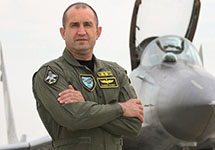
During the 2016 election campaign, the Kremlin advised the team of the current president of Bulgaria. This is written by The Wall Street Journal with reference to the five former and current Sofia officials. The Bulgarian Socialist Party received from Russia a 30-page "Secret Strategic Document" with recommendations for the victory of its candidate. As a result, Rumen Radev, according to the results of the vote, became the head of state.
The Bulgarian Security Service intercepted a package of recommendations on 30 pages. It contained recommendations for politicians from the Socialist Party: in particular, it was proposed to use inaccurate facts in the news and to disseminate distorted data from polls. According to officials, the instructions were delivered to Sofia by Lieutenant General of the SVR Leonid Reshetnikov.
Reshetnikov himself in a conversation with WSJ admitted that he really met with the head of the Socialist Party, but he did not transmit any documents. There is no information about whether Radev knew about the existence of this document,. The Bulgarian Socialist Party and the Russian Foreign Ministry to comment on the fact of the transfer of a special dossier.
In December 2016, the US Treasury Department, among others , included Reshetnikov’s sanctions list as a member of the Super butt Council of Tempbank. The credit institution itself was in the "black list" for the provision of support to the Syrian dictator Bashar Assad.
Last week, the former President of Bulgaria Rosen Plengeliev said that Russia was interfering in the internal affairs of his country. According to the politician, Russia and personally Vladimir Putin are trying to destabilize and split the European Union by all means.
The problem of Russia's intervention, Plevneliev, raised, commenting on the words of the current president of the country Ruman Radev about Turkey's attempts to influence the intra -Bolgarian processes. He said that, as the president, he repeatedly received reports that Bulgarian politicians entered into agreements and worked in close cooperation with Russian non -governmental organizations, as well as legal firms funded from Russia.
The Air Force General Radev, who replaced Plevneliev at the post, called for the abolition of EU sanctions against Russia during the election campaign.