
Translated material
Ready to prohibit
Five bills were included in the State Duma capable of striking in the already kutsy civil freedoms in the country. Moreover, not only ordinary Russians, but also deputies themselves will feel it. What to expect and what to fear - the New Times found out
The State Duma of the last convocation was nicknamed the "frantic printer." The current convocation seems to intend to accept the baton. And let the speaker Vyacheslav Volodin create expert advice at factions that are designed to weed out completely delusional initiatives, and even publicly complains that other of them, without any chance of becoming a law, arrange such a commotion, “then it was difficult to explain whether the idea was actually adopting this law, or (it) was not at all in general ...” So what?
In addition, new bills in the mind of the seventh convocation are only very insignificant to the fruits of deputy fantasy. “For the creative initiative of deputies in the State Duma, there are less and less places, now it is almost impossible,” explains Vadim Soloviev in a conversation with NT. “The role assigned to the deputies is stamping of initiatives from the Presidential and Government administration.” The higher the probability that even the most ambiguous bills will become laws.
Deputies will have to agree in advance their meetings with voters “in order to comply with public order, ensure the safety of participants in public events and other citizens”
After all, on March 22, deputies in the third, final, reading the law allowing persons who fell under the sanctions of the United States and the EU did not pay taxes in Russia (the law with the light hand of ex-deputy Dmitry Gudkov called the Timchenko Law), if they are tax residents of other countries and have already reported on taxes there (more about this-compensation only for the Drusseum?). The sanctions lists include, among others, businessmen from the closest environment of President Putin - the Rotenberg brothers, Gennady Timchenko, Evgeny Prigozhin ... According to NT, the appearance of the bill was a complete surprise to the government, despite the fact that the issues related to taxation are the scope of its responsibility.
For the initiative, the nominal author of which was the head of the Duma budget committee from United Russia Andrei Makarov, only his party associates voted. Even the LDPR, which usually supports EP in important issues for her, opposed. The leader of the liberal democrats Vladimir Zhirinovsky calculated: for the budget, the Timchenko law will result in a loss of 2-3% of the income.
Thus, neither a protest from even a systemic opposition, nor public resonance prevents the State Duma of scandalous bills. NT selected those that are able to significantly complicate the lives of the Russians. Moreover, the chances of their adoption are relatively high.
The meeting is a rally
Back in February, the State Duma deputy from the Moscow United Russia Irina Belykh introduced a bill actually equating the meetings of deputies with voters to rallies. If the law is accepted, the deputies will have to in advance (though not in 15 days, as in the case of a conventional mass action, but for seven) to coordinate their meetings - according to the whites, "in order to comply with public order, ensure the safety of participants in public events and other citizens."
It turns out that so far the deputies could arrange a spontaneous action on a topical occasion, and if the idea of the whites is accepted, this will become impossible. In addition, everyone knows: where the coordination procedure is required, a refusal is possible.
By the way, such laws have already been adopted at the local level in Moscow and St. Petersburg-after all, in both capitals, where the authorities often refuse to hold protest events, they are held in meetings with deputies, such as the very first rally in St. Petersburg against the transfer of the Isaac's Cathedral of the Russian Orthodox Church. The security forces could not disperse such meetings by law, and the authorities clearly did not suit the authorities. As a result, city deputies were fussing. The Moscow City Communist Party tried to appeal the metropolitan law in the Moscow City Court, but was refused.
In the State Duma, the Belykh project is still preparing for the first reading. At first, he earned the most favorable grades from the United Russia, but then something went wrong. Senators turned to the deputies with a request to finalize the initiative. However, the Council of Certificates concern only “legal roughnesses”. The NT source in the State Duma claims: some points in the amendments of the whites can be somewhat softened, but "the general idea will remain."
The end of self -government
In the second reading, the State Duma is preparing to adopt a law that simplifies the abolition of cities and villages and their merger in the district. Residents in this case lose the opportunity to choose their rural and urban deputies, as well as heads of local administrations. All power will be concentrated in the districts - and their chapters will be appointed.
Governor Andrei Vorobyov is already conducting similar reforms in the Moscow region: instead of the abolished individual settlements, urban districts are created, even if their main territory is formed by forests and fields. The enlargement caused the opposition of local residents-protests were held in cities and villages, and municipal deputies blocked the associations in the Taldom and Sergiev Posad regions (see NT No. 41–42 of December 19, 2016 ).
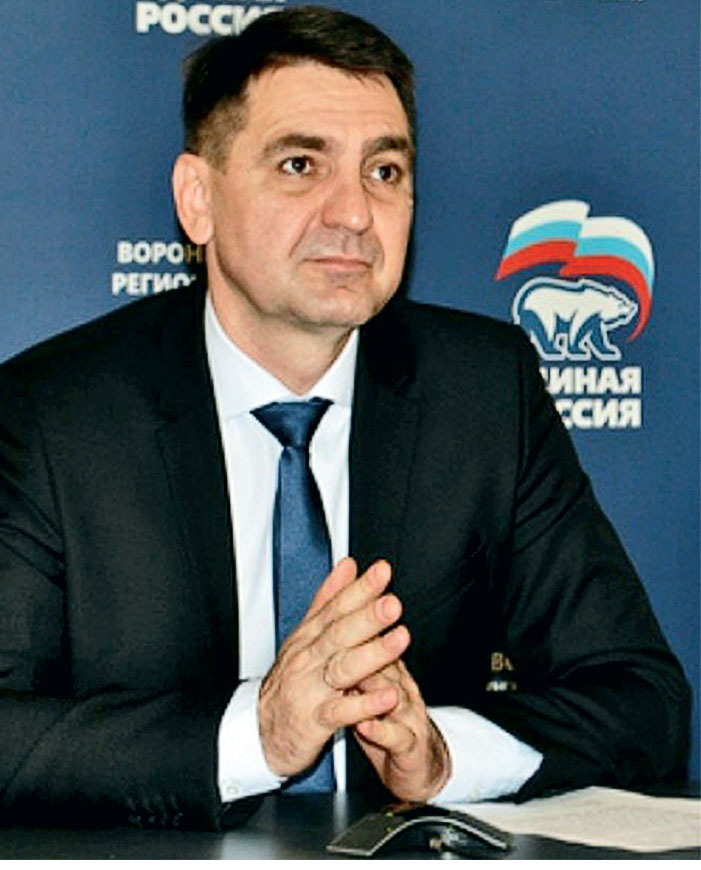
Mikhail Terentyev, a unanimous unanimous, decided to simplify the creation of such associations throughout the country: in his bill it is stipulated that the urban district can draw up several settlements, and areas with independent settlements in the event of their unification are eliminated. And the Voronezh colleague Terentyeva deputy Andrei Markov came up with the rural district - this, in turn, will allow to conduct territorial enlargement where there are no cities at all.
Suicide and spring
Irina Yarovaya, the author of many prohibitive initiatives in the last convocation, does not lose activity in the new composition of the Duma. In 2016, the theme of the so -called “death groups” on social networks, which supposedly bring adolescents in them, was actively discussed. The administrator of one of these groups, known under the pseudonym, Philip Lis, was even arrested. In the last few weeks of the Death Group - again in the information agenda. As a result, the very fact of which has not been clearly proven, the deputy Yarovaya responded to the bill with very high chances of adoption.
In the accompanying note to the document, its authors - and besides deputy Yarova, are, for example, deputy Kobzon - refer to WHO data: more than 800 thousand people in the world end in suicide, and the number of suicide attempts is much larger, and among young people aged 15–29 years, Suicide became one of the most common causes of death. At the same time, Yarovaya with colleagues draws attention to the emergence of new types of “declension to commit suicide or promoting suicide”, which “were not previously predicted by science, were not timely appreciated by criminologists and accepted a wide scale, being outside the criminal law assessment”.
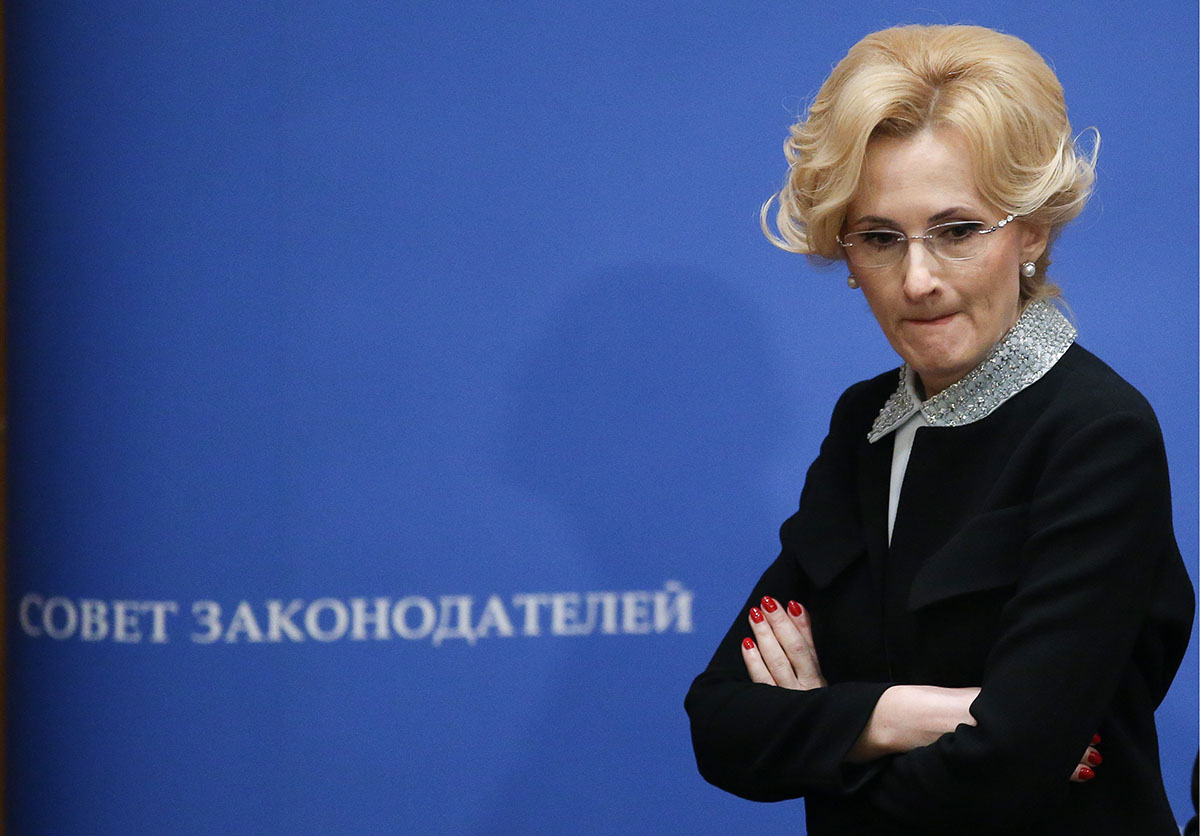
As a response in the bill, it is proposed to supplement the Criminal Code of the Russian Federation with a new article - “The declension to commit suicide and the promotion of suicide”. The deputies also want to attribute to “the dissemination of information about the methods of committing suicide, as well as calls for suicide.” “In particular, we are talking about liability for the administrators of the so -called“ death groups ”and the organizers of any informal communities, whose activities are associated with the motivation, primarily children, to commit suicide,” Irina Yarovaya said for the incomprehensible.
There are innovations in the bill: he introduces a preventive liability for a not yet committed crime, “when there is still no specific victim of the crime, but there are all signs of a person’s declination to commit suicide. For example, sites with an appropriate suicidal theme or a “game” have been created, which involves involving a child in a suicidal model of behavior, ”for this the authors of the bill propose to punish with deprivation of freedom up to six years.
The initiative of Irina Yarova has already earned the approval of single -party people and members of other factions.
Sometimes they return
In a new convocation, the initiatives of the past, “frantic” composition may voye in a bizarre way. This happened with the idea of a deputy from the LDPR Dmitry Nosov, who lost last year's elections. In 2015, Nosov proposed limiting the police officers abroad. The ideas of Zhirinovites were rarely popular and usually fell under cloth, but this year the government remembered about the Nosov project and approved it, giving the initiative a positive feedback. The Ministry of the Interior only expressed a wish to clarify the positions of its employees, on which the ban will be distributed, and the list of countries where they will be forbidden to leave. After approval from above, the idea of Dmitry Nosov is also now considered promising. In any case, among the deputies of the uniforms.
Date insult
The St. Petersburg United Russia Vitaly Milonov, who went to the State Duma from the St. Petersburg parliament, began to behave much quieter. If earlier, according to the news heading, “the deputy suggested banning ...” it was possible to guess the author with a probability of 70%, now it is almost no heard about the initiatives of Milonov. However, in January, he introduced a bill in which it is proposed to establish a punishment for "... belittling the significance of events that are of special historical importance for the formation and development of Russian statehood, commemorative dates, achievements of science and technology in the Russian Federation, as well as insulting persons who have special merits to the Russian Federation."
“Fulfilling of Russophobic myths can provoke distrust and aggressiveness in relation to Russians abroad, create barriers to business development and so on”
“Many phenomena that once seemed unshakable are currently undergoing skepticism and revision. At the same time, these negative actions can cause quite clear consequences: inflating of Russophobic myths can provoke distrust and aggressiveness in relation to Russians abroad, create barriers to business development and so on. In addition, given the powerful information pressure on the part of some unfriendly states, it is especially important not to allow these actions within our country, ”Vitaly Milonov explains his initiative in the language available to him.
In case of adoption of the bill, an insulting commemorative dates will be “a fine of 10 thousand to 30 thousand rubles, or mandatory work for a period of one hundred hours”. For officials and legal entities, even more severe punishment is provided - up to half a million fines.
So far, Milonov’s initiative has not received any assessment and expects consideration. But judging by the bill Dmitry Nosov, who was taken out of cloth in two years, Milonovsky also has some chances of being accepted.
Photo: Sergey Savostyanov/TASS, Vasyev/TASS