
Translated material
How to teach a car
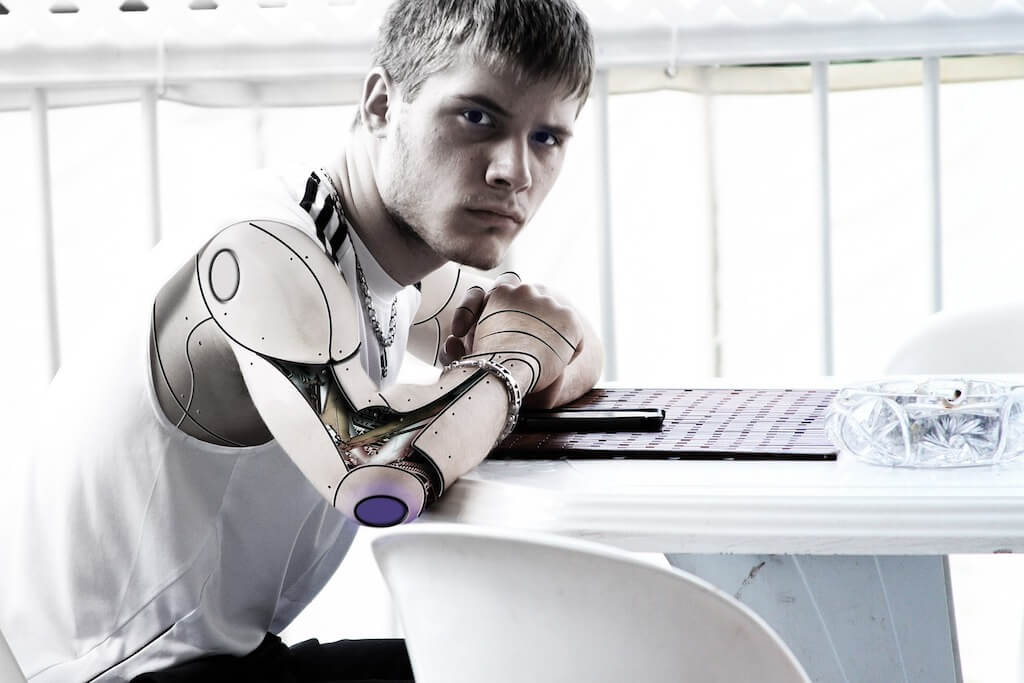
Machine learning is a method of programming, the purpose of which is to teach a computer to find connections and patterns in the ocean of information so that it can later do it on his own. This technotrend and the subsection of the science of creating artificial intelligence are the triumph of the last few years and the cause of the big noise in the world of technology.
We personally know the Siri voice assistants and Cortan . Recently, Amazon Echo and Google Home , controlled by the voice, entered the market. The first prototypes of cars with unmanned management appeared - peculiar flagships of machine learning. Last year, the Alphago of Deep Mind , specializing in research in the field of artificial intelligence and belonging to Google, defeated the world champion in the strategic desktop game, considered one of the most difficult. Another “smart computer” Deepstack is more and more confidently beats professionals in poker .
The consequences of machine learning are and less “loud” transformations in the noosphere: smarter electronic translators, effective filtering of spam in the mail, more reliable antivirus programs, automatically signed photos and videos, the ability of online services to personify recommended services and goods, transformation of scanned documents into electronic, transforming texts in the printing of errors in printing, recognition by a computer and recognition by a computer and recognition of persons Filtering of fraudulent transactions.
Highly specialized projects come even less in the field of view of the layman: in the field of genetic engineering, in the defense industry, trade, financial forecasting . Zebra Medical Vision uses machine learning to increase the effectiveness of early diagnosis in radiology . Descartes Labs quite successfully predicts productivity , analyzing the satellite pictures of the fields. The startup Connecterra raised $ 1.8 million for the further development of the project to monitor the health of cows in real time. He combines the technology of subcutaneous sensors and machine learning.
What is machine learning
Sideways Dictionary Jigsaw , belonging to Google , calls machine training in coffee grounds that works. This half -joking definition quite accurately conveys the essence. Machine learning algorithms allow computers to detect tendencies and communication in the thick of scattered data, create rules from them and make forecasts on their basis and interpret new information.
Machine training is relied on on fairly standard statistical and mathematical methods, which in their theoretical form exist for more than a dozen years . Its reborn as a practical tool was facilitated by several important conditions: reducing the cost of storing information and computer calculations, increasing the speed of calculations and the emergence of large data - huge bullets of information.
With the “move” of humanity to the network, the data conglomeration became regular: hundreds of millions of people every second they generate billions of transactions, photographs, texts, videos that form continuously expanding huge registers. With the advent of big data, it was possible to abandon the step -by -step briefing of machines in programming, which was previously necessary to perform the simplest tasks.
In machine learning, traditional inflexible computer models are replaced by algorithms that can evolve based on processed information. Therefore, big data is so important for machine learning: the more clearly the computer “understands” the rules, the more information it processes. Accordingly, low quality and limited data make them useless and lead to too high error in the analysis.
At the same time, it turned out that if you entrust the analysis of large volumes of data to the machine, it can see in them that the brain is beyond its strength: hidden patterns, for the isolation of which computational power, speed and memory are needed, largely exceeding human capabilities. The trained computer already demonstrates promising results in the field of preventive medicine, finding signs of serious diseases in the early stages . Work is also underway in the field of medical forecasting in order to teach the computer to predict health risks, for example, a tendency to suicide, taking into account the medical history of the patient and other factors .
Machine training methods
When it comes to machine learning, these general methods are often mentioned: training with the teacher , training without a teacher and training with reinforcement of m. The first of them is one of the most common techniques and the most worker .
The system is fed by a training set of data - “training sample”, in which the information is divided into pairs: input data and output data. The task of the computer is to understand the logic connecting the couples, create an algorithm and use it to combine new data into pairs. The system is constantly being improved, the analyzed data becomes its “experience”, it takes into account mistakes and seeks to minimize their assumption in the future. This is how training takes place.
Teaching without a teacher - training without hints. The training sample consists only of input data. The task of the system is to identify possible dependencies and connections between specified incentives. Since the data is not paired, the system does not have a “cheat sheet” with the correct answers. It should draw conclusions about the presence of connections on its own. Among the expected results is the division of information into clusters or the detection of anomalies. With each new process, the system will learn to group data more accurately.
Another method is reinforcement training. It implies the interaction of the system with the environment that gives a response, positive or negative. This allows the computer to gradually find optimal ways to stabilize the response.
Neural networks are considered the most complex and advanced today method of machine learning. As a concept , they were described back in the 1930s , but only recently computers gained the necessary power to work productively with similar complex mathematical structures. They are based on the principle of multi-layer processing of information in nodes-neurons and emulate the functioning of the brain .
After thousands of hours of calculations and operations repeated millions of times, the system is ready for any of the methods is ready for the unknown. Its trained algorithms are capable of forecasting, classifying, clustering fundamentally new data. In the process of processing, the model will continue to study and improve. The learning process is going on as long as the base is replenished.
Who needs it?
Machine training is rapidly beyond the limits of deeply scientific circles. The excitement around it led to the commercialization of both software and equipment, as well as access to great data. Many structures operating in areas are interested in potential benefits in which the possibility of forecasting and the depth of analysis means an increase in profits: banks, investment funds, and trade agents .
Machine learning methods allow you to better understand the client, facilitate the search for goods, increase the conversion, and evaluate the risks associated with certain investments. According to a survey conducted by Mit Review Custom and Google Cloud , 60 percent of respondents representing the most diverse companies, industry and country said that they had already introduced machine learning elements. Among the main motives, the survey participants called the desire to extract new knowledge from their data, acquire a competitive advantage, accelerate the analysis of information and the release of new generation products.
Also on the topic: how to predict the amount of donations and the success of campaigns with the help of machine learning
So far, however, these technologies, originally oriented towards doctors of sciences, cannot be called publicly available and friendly. To select suitable algorithms, training in machines, observation of them and interpretation of their work, serious experts are still needed - database analysts and machine learning specialists. They, in turn, should be on “you” with mathematical models and programming languages . But machine learning is gradually spilled into the masses, largely thanks to the "good will" of techno-monsters.
Two years ago, Facebook, whose algorithms are widely relying on machine training, opened the code of the software he used . Last year, the Google Tensorflow machine learning library was opened, which allows developers to understand how to understand how machine learning models work, and embed them in their products. Over the year, almost 500 people connected to its support.
TensorFlow fruits have many familiar services in the list of users: Dropbox, Ebay, Airbnb, Twitter, Uber . Among the most exciting projects, a project to preserve sea cows using photographs of the water surface and diagnosing Parkinson's disease according to x -rays are mentioned.
In April 2016, Openai , supported by Elon Mask, made the Universe machine training platform , in December of the same year, Google also received the Deepmind Lab platform.
Amazon Web
These platforms significantly reduced the importance of understanding the algorithms on which machine training is “worth” for their successful application to their databases. Thanks to open tools and commercial cloud solutions, the use of machine learning has become more accessible. For example, developers who have the opportunity to embed interesting functions in their projects: voice recognition technology , optimization of content loading and many others, without delving into the subtleties of mathematical structures that feed the ability of systems to study.
Experts predict that very soon any user bypassing the piles of code and algebraic calculations will be able to use machine learning mechanisms, and recommend that you are patience. Until this moment has arrived, the layman can observe the next achievements through an avalanche of entertainment applications and services or create works of art in the style of informationism. This is the name of a new direction in art, which was laid by Deep Dream , the next brainchild of DeepMind , imitating the canvases of famous artists using neural networks.