
Translated material
The election of St. Petersburg approved a referendum on the Isaacievsky Council. What will happen next?
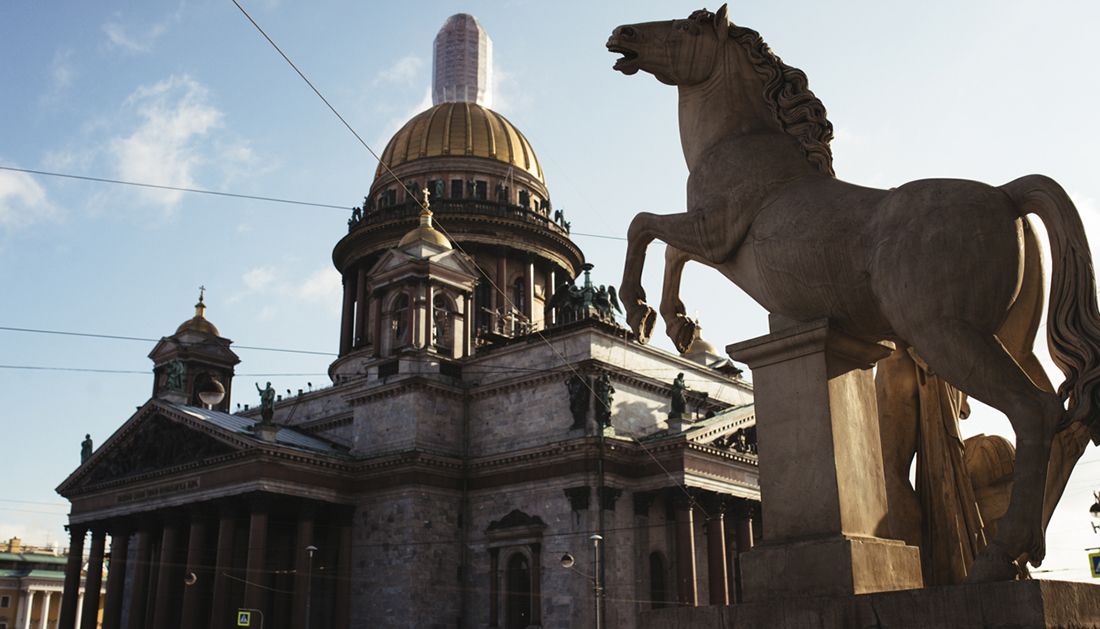
The city election commission of St. Petersburg approved a referendum on the status of St. Isaac's Cathedral. It is assumed that at the vote, residents of the city will be able to resolve the issue of transferring the cathedral and two more architectural monuments of the Russian Orthodox Church. However, the approval of the election commission does not mean that the referendum will take place - the decision of the commission should be supported by the Legislative Assembly of St. Petersburg, the majority in which the deputies of United Russia control.
The decision of the St. Petersburg election commission was made after a series of rallies. Since December 2016, when the Governor of St. Petersburg announced plans to transfer the cathedral of the Russian Orthodox Church, several large protests were held in the city. The last of them - the “march in defense of the city” - took place on March 18 and collected , according to various estimates, from three to ten thousand people. As Boris Vishnevsky, a deputy of the Legislative Assembly of St. Petersburg and a participant in the initiative group acting for holding a referendum, the election committee approved the application unanimously. However, it was accepted only the second time: the first horiz being rejected on March 14 , announcing that it did not meet formal requirements (as the Fontanka wrote, the reason for the refusal was that not all sheets were stitched).
The referendum will be devoted to the status of three monuments of architecture of St. Petersburg. Along with the Isaac's Cathedral, we are talking about the possible transfer of the Russian Orthodox Church of the Peter and Paul Cathedral and the cathedral saved on the blood. Now they are all state museums. It is assumed that the issue of a referendum will be formulated as follows: “Do you agree that the buildings related to the monuments of the history and culture of federal significance and are owned by St. Petersburg should be fixed on the right of operational management for state museums, when ensuring the possibility of holding religious rites and ceremonies?”
The referendum must approve the Legislative Assembly of St. Petersburg. According to Boris Vishnevsky, the deputies must evaluate within 20 days whether the legislation meets issues that are planned to be taken to the vote. Before voting in the Legislative Assembly, participants in the initiative group will be able to speak to the deputies and try to protect their position, but Vishnevsky admits that the chances of a positive outcome of voting are small: 36 out of 50 seats in the city parliament are controlled by United Russia; Her deputies have already stated that they would not allow the referendum.
If the legislative assembly votes against, supporters of the referendum will go to court. If the court considers the refusal illegal, the initiative group will receive the right to start collecting signatures in support of the referendum. In the event of a positive decision of the Legislative Assembly, the Gorizables will be able to set the referendum date only after it receives and check the authenticity of 70 thousand voting supporters (according to Fontanka - 75 thousand, the number should be 2% of the total number of voters in the region).
Referendums in Russia are extremely rare - this is due to the legislation , which extremely complicates the conduct of popular vote at a level above the local. In St. Petersburg, the last referendum happened in 1991-it took place simultaneously with the mayor’s elections and was dedicated to the return of the St. Petersburg Leningrad.
Konstantin Benyumov, Sasha Sulim