
Translated material
Red Selo. How is the Center for the Temporary Contents of Foreign Citizens
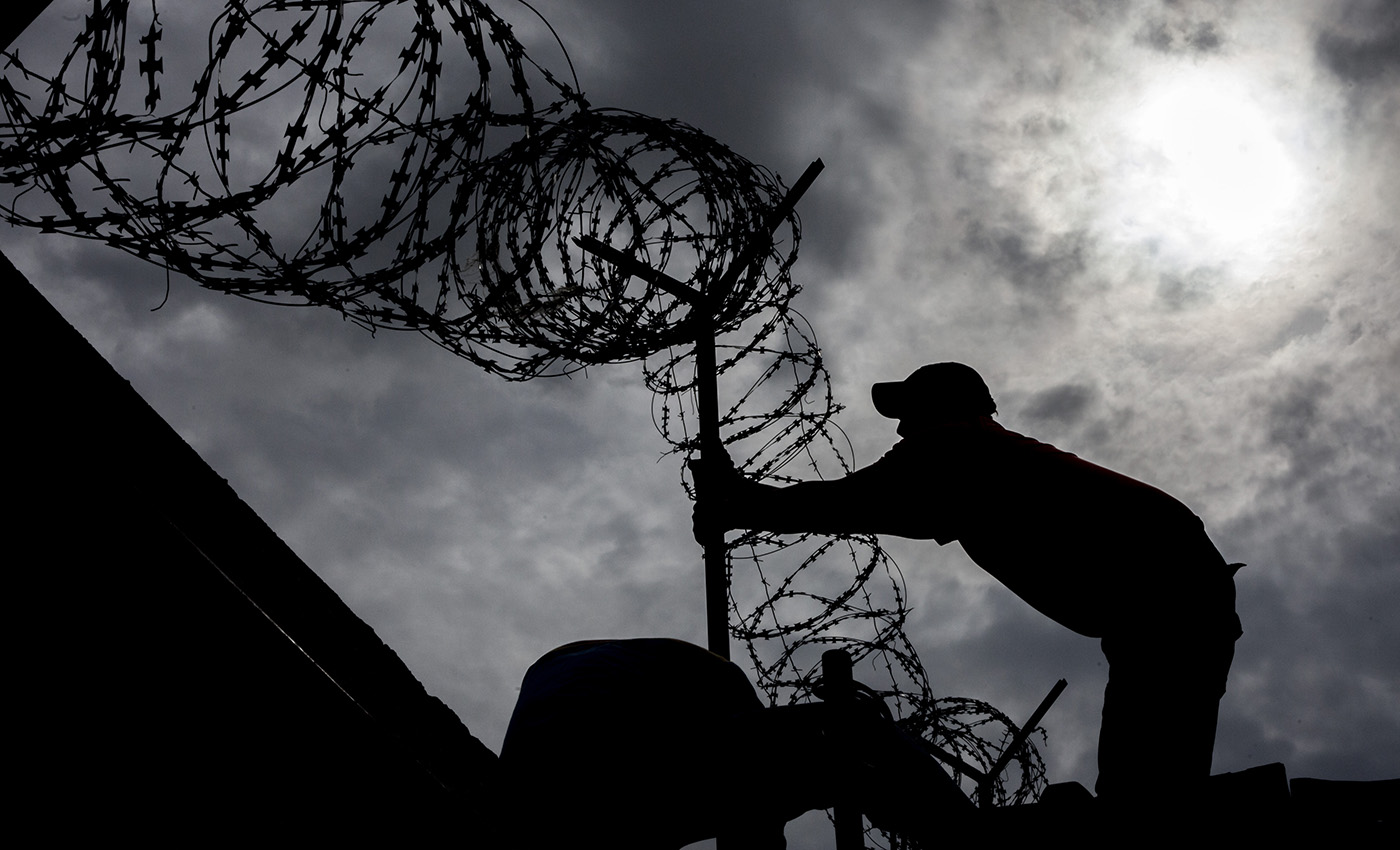
Workers are mounted a fence at the Center for Temporary Contents of Foreign Citizens in St. Petersburg. Photo: Alexey Danichev / RIA "Novosti"
The St. Petersburg Center for Temporary Contents of Foreign Citizens, which opened in 2010, became one of the first specialized institutions where illegal migrants from Russia expects. From the beginning of his work, foreigners are regularly run away from there. The center obeys the Ministry of Internal Affairs, but is not inferior to the FSIN institutions with its closedness. Mediazone talks about the everyday life of this and similar institutions - many months of deprivation of liberty, lack of medical care and removal of children from parents.
The Temporary detention center of foreign citizens in St. Petersburg was opened at the end of 2009. Since January 2010, he began to accept illegal migrants. At the opening, the Governor of the city Valentina Matvienko emphasized that this is “not a five -star hotel”, but a place where foreigners will expect deportation or expulsion.
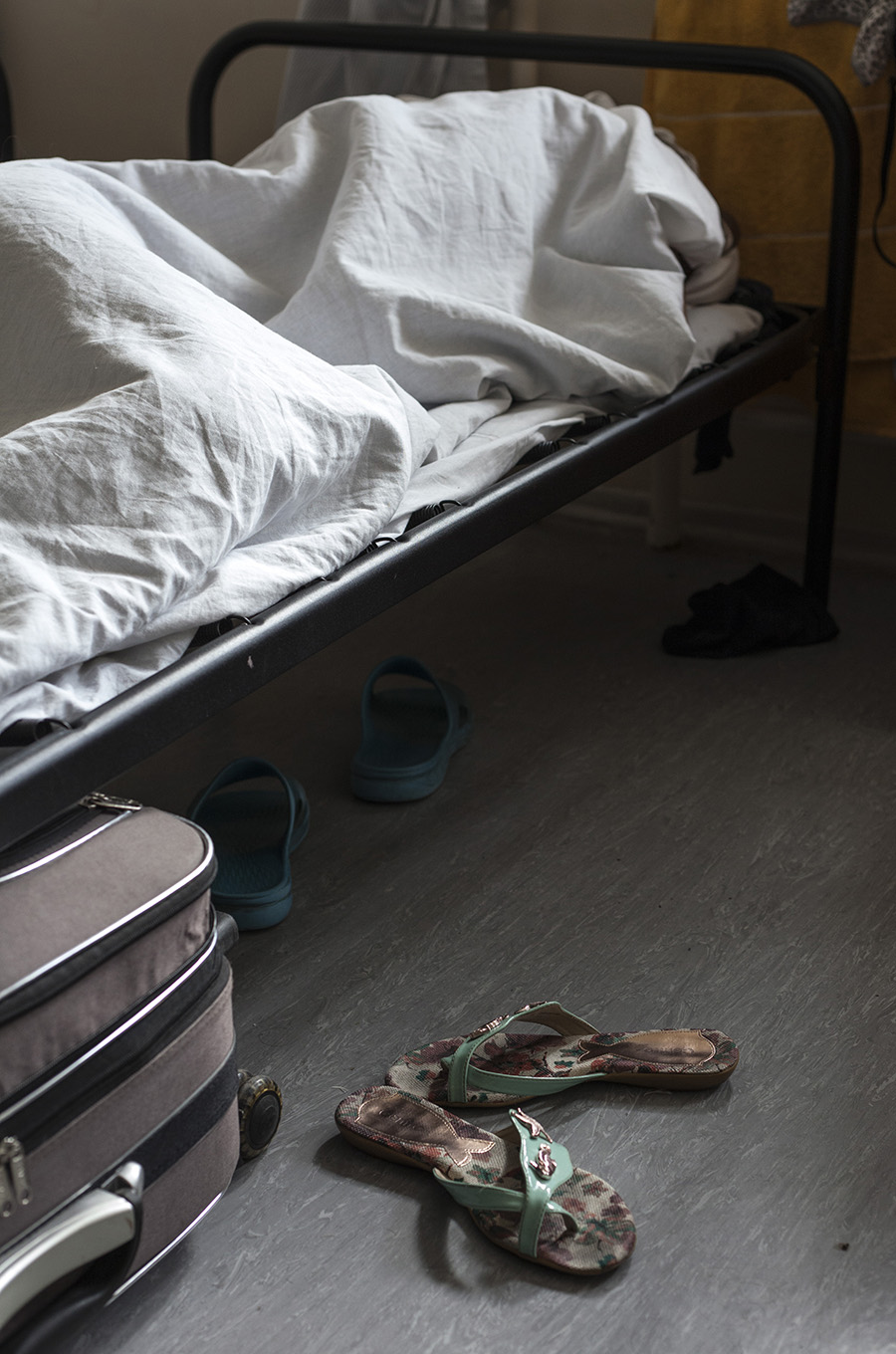
In the eight -story building, on the outskirts of the Red Selo, before that there was a hostel. On the fourth floor there are now cameras for violators, convicted, and sometimes seriously ill; On the fifth or seventh floors, men live, and on the eighth-women. According to observers, the conditions on the floors are like in a hostel, but with one reservation: the doors are locked to the floor.
When opening the center, it was claimed that families would be provided with separate rooms. However, observers who have visited foreigners say that employees of the Center often refuse to settle children and parents together.
Initially, the institution led the Ministry of Internal Affairs, but after the transfer of the centers to the FMS in 2014, the management was replaced here. Only two and a half years later, in April 2016, in connection with the liquidation of the migration service, the centers returned to the department of the Ministry of Internal Affairs.
Grates, sheets, shoots
Since the beginning of the work of the St. Petersburg Center, shoots about shoots have been regularly received. In 2011, for two months, foreigners fled from the institution three times . On August 31, two citizens of Uzbekistan and Estonian, squeezing the window of the window on the seventh floor, went down along the sheets and disappeared. On September 4, three more foreigners fled; On September 20, again, three migrants went down from the window of the fourth floor along the bound sheets. In April 2012, 11 foreigners fled from the Red village - citizens of Tajikistan and Uzbekistan. After that, the head of the center Vitaly Ulev was fired.
The shoots continued in the next years. In 2014, the institution arbitrarily left eight migrants-citizens of Azerbaijan, Uzbekistan, Tajikistan and Moldova. On May 9, 2016, three more foreigners disappeared .
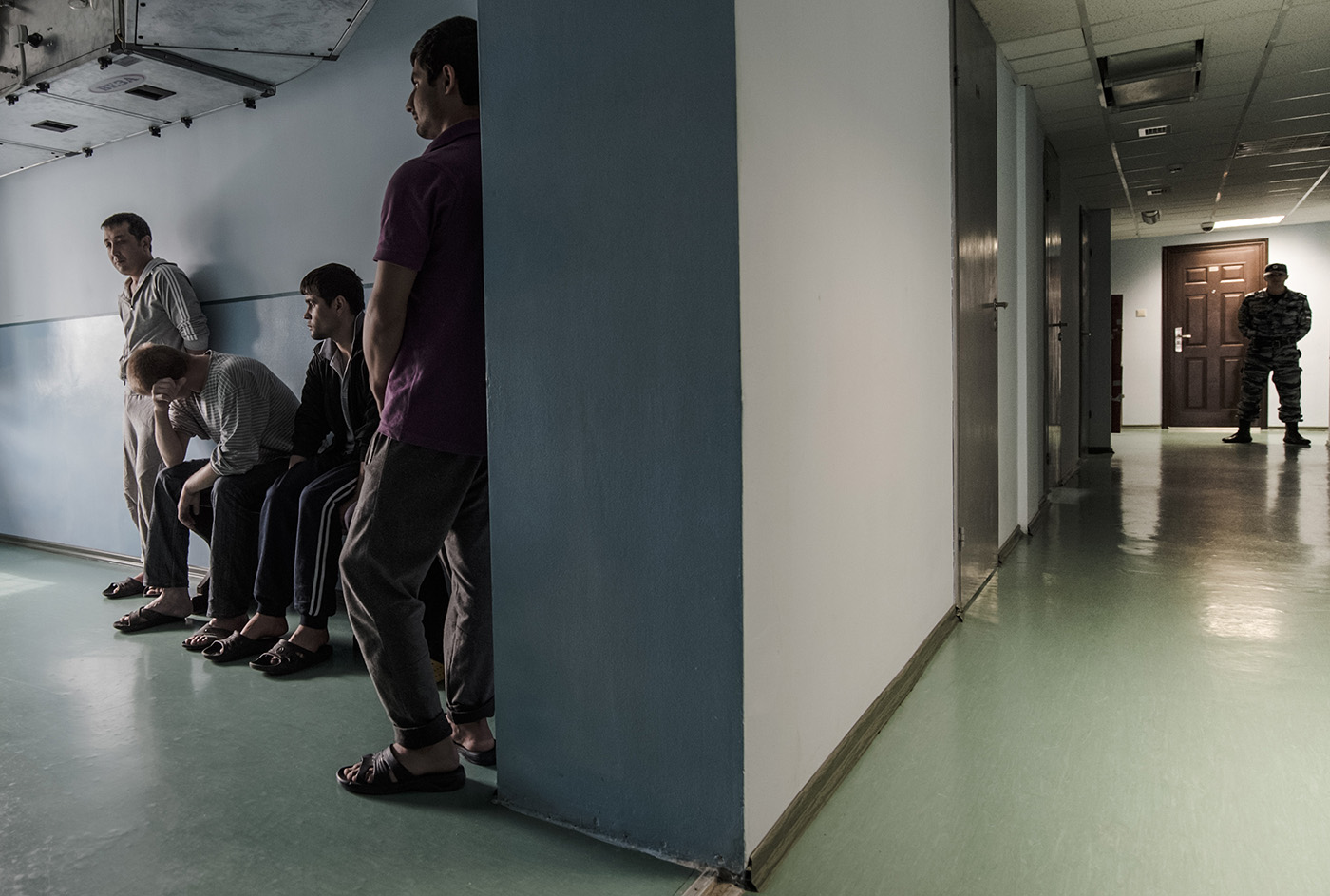
In August 2013, the security forces of St. Petersburg, following colleagues from Moscow, conducted mass detention of migrants. In the designed for 176 people, there were 308 foreigners; RIA Novosti wrote that due to lack of places of 20 migrants spent the night on buses.
In 2015, the amendments made to the Law on the PMC allowed public observers to visit centers for foreigners. From this moment on, the press began to appear more information about the conditions of the content of migrants. However, the first few months, members of the St. Petersburg commission were denied access to the FMS institutions. At the end of 2016, the new composition of the PMC also had problems with the admission; Once again, a visit was allowed only after discussion with the administration of the center.
Without documents, drugs and amenities
Human rights activists identify several key problems of the St. Petersburg Center for Foreigners. One of them is an unreasonably long expectation of deportation or expulsion. For the longest expulsion, people are usually waited for by stateless persons.
This status is often acquired by people with Soviet passports, who came to Russia from the former Union republics and did not change documents after the collapse of the USSR. Another category is residents of the East of Ukraine who have lost their passports.
“If a person without a passport and a residence permit in Lugansk, then this is a path situation, because his passport cannot be restored. The center sends an official request to Kyiv, and Kyiv replies that we do not have control over this territory, ”says Yana Teplitskaya, a member of the St. Petersburg PMC. When Ukraine nevertheless agrees to accept its citizens from the regions controlled by the separatists, the deported is waiting for an audit in the SBU.
The maximum term of maintenance in centers for stateless persons is two years. In practice, they are released earlier - after the expiration of the period that the court allows the bailiffs to decorate all the papers for deportation, and when another country refuses to accept the apatrid. However, a foreigner who entered the city can again be detained and delivered to the center. Lawyer Olga Zeitlina explains that in Russian laws, the legalization mechanism is not prescribed for such people.
In October 2016, Vephvia Sortia died in the St. Petersburg Center. They tried to expel him to Georgia, but the country did not recognize him as its citizen. For the first time, the man was detained in October 2014; In February 2015, the court released him, but ordered him to leave Russia on his own. At the end of 2015, Sordia was again sent to the center. By August 2016, chronic diseases worsened. He was hospitalized, but not left in the hospital and recommended "observation and treatment at the place of residence." Sordia was returned to the center, from where he was released only on October 8; On the same day, he died in the hospital.
Another serious problem of institutions for foreigners is the inaccessibility of medical care. “Sortia died due to unconditioning medical care. There is only a paramedic, there are no qualified specialists and there are no funds for sending to medical facilities besides emergency assistance. It is very, rare to the hospital when you die, ”says lawyer Olga Zeitlina, who provides legal assistance to migrants.
Member of the PMC Yana Teplitskaya calls the situation with medicine in the center for expelled and deported catastrophic. Migrants can count on the help of a doctor only in the most emergency cases, she says. So, according to Teplitskaya, the ambulance in St. Petersburg refused to hospitalize a girl with a tumor, since at that time the neoplasm did not yet threaten her life. The foreigner could not undergo the necessary examination.
Only a paramedic works in the institution. The official response of the Center’s Administration said that the state of a doctor is declared, but it is impossible to find a specialist who will agree to the installed salary. The institution recognize problems with the content of patients with tuberculosis and HIV-infected people, which in the center simply cannot provide full treatment.
Another problem of expelled migrants is the removal of children, despite the law guaranteed by law, the right of parents to live with them together. Minors in St. Petersburg are sent either to the Cymbalin hospital (usually children under three years old), or to the transit shelter.
“Children are also seized on the way, they do not fit in Suvsig. Children begin to be taken away in the police department. For various occasions, ”says the former member of the ONC Leonid Agafonov. In the center for foreigners, this is explained by the lack of conditions for the maintenance of children. The human rights activist recalls the story of a five -month Umarali Nazarov, who was selected from his mother by police. The child was sent to the Tsimbalin hospital, where he died the next day. His mother was soon expelled from the country.
“This is a whole problem that children are separately sent from mothers mainly. Children are seized before the court, and they do not fall into a court decision. That is, money in the budget is not laid down on them, and they are expelled separately, ”explains Agafonov. For example, two children of the citizens of Uzbekistan were sent to their homeland on an airplane with the accompanying person only two months after the deportation of their mother, says a social activist. At the arrival of children, the children were first sent to the orphanage to Tashkent, he adds. Foreigners are not ready to complain to the ECHR of such actions.
Observers from the new composition of the PMC of the Center said that they were trying to coordinate the time of deportation with a shelter or hospital and send a mother and child with one flight.
Human rights activists heard many complaints about the living conditions in the center. Now lawyer Olga Zeitlina is a complaint to the ECHR against the maintenance of her client in the cell. There he has been there for more than a year. According to the lawyer, there are no legal grounds for the isolation of foreigners, but this is a common practice: “They are placed there not on any grounds. Just so the administration decided. As a rule, they are placed either by those who were judged, either if undesirable, or those who behave poorly, or cannot expel, or deportation for a long time. ”
The illegal immigrants told the PMC members about short walks for 15 minutes, poor food and a lack of hygiene products. They have to buy many household items themselves. Christina Cheban recalls that she herself paid plumbing for the repair of the washing machine in the center, and the administration broke in the women's floor could not put in order three weeks.
In addition, the former member of the PMC Agafonov draws attention to the fact that, unlike the FSIN institutions in the center for the maintenance of foreigners, food norms for pregnant women are not established.
On each floor of the center there is a "senior". “He himself puts things in order, the elder has a telephone, a separate room in which he lives. All transfers go through him, they throw money on his phone. He is a respected person, because he has a phone at any time of the day, and he can give a call, ”Agafonov explains. The observer notes that in the center there were cases of the beating of foreigners by the administration, but the complaints did not give any results. Yana Teplitskaya did not hear about cases of violence in the institution.
Speaking about the transfer of the Center to the Ministry of Internal Affairs from the FMS, Agafonov notes that the middle -level employees and deputy heads retained their places. According to the social activist, the problems of centers after the next reform remained the same.
“They worked as they work. The worldview of people will not change due to the fact that they changed the sign, ”the former member of the PMC summarizes.