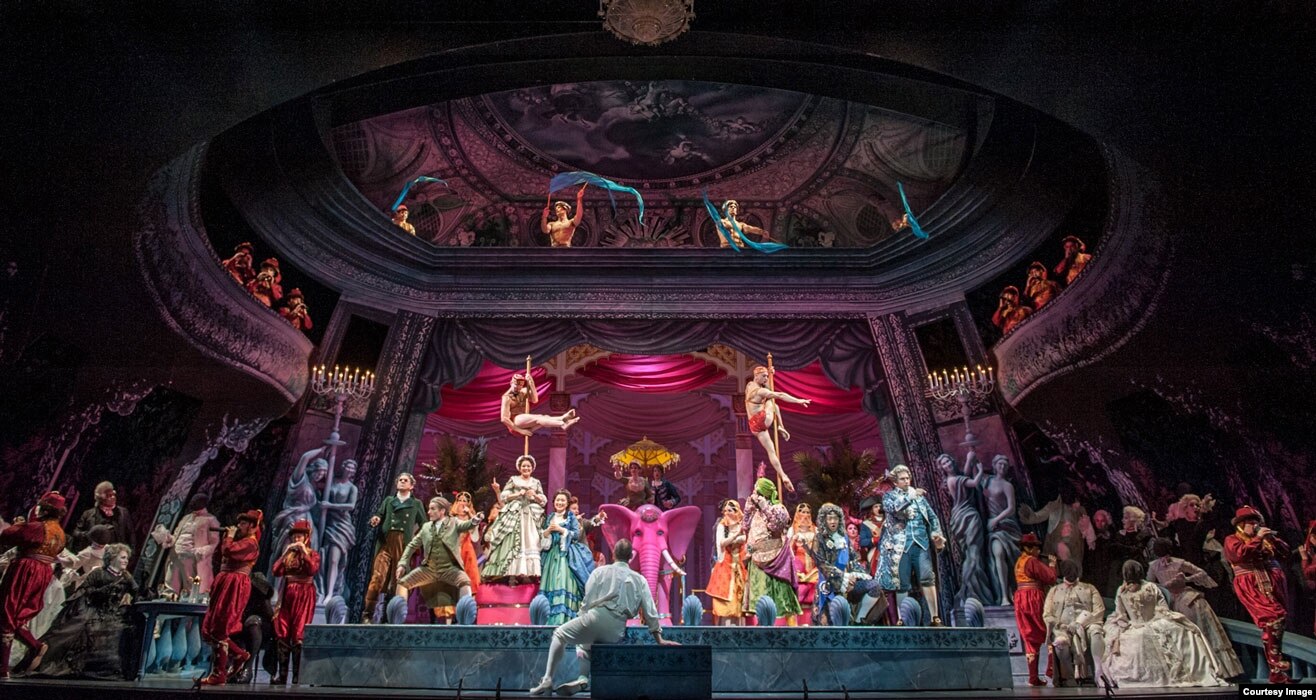
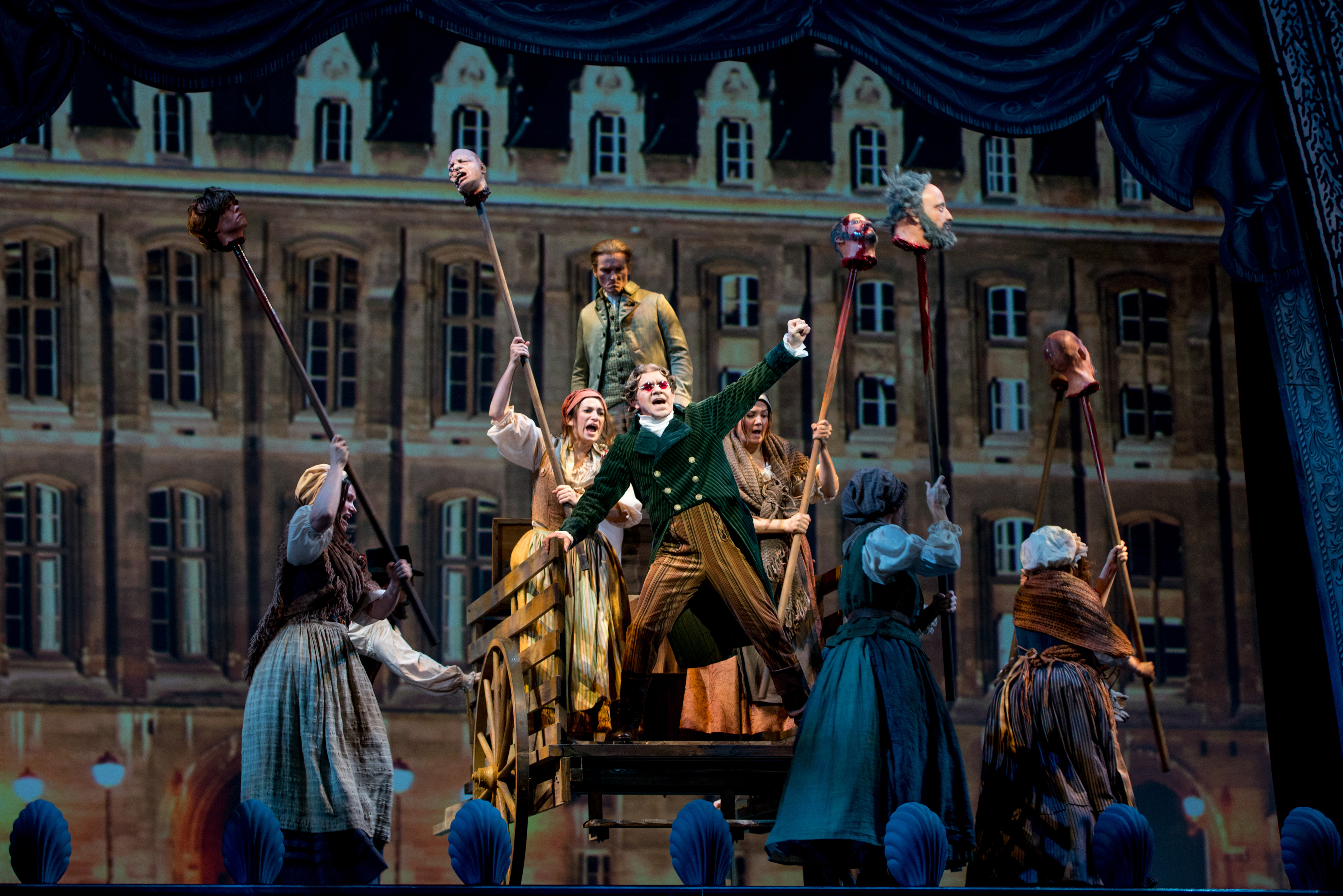
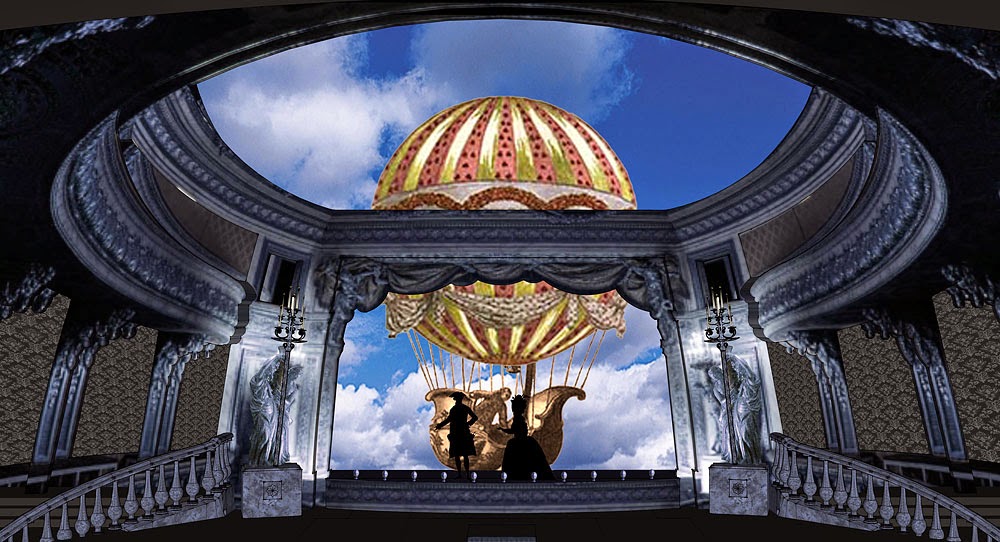
Scene from the performance of the Los Angeles Opera "Ghosts Versailles"
This year, the Award of the American Academy of Sound Recording Grammy in the nominations "Best Opera Recording" and "Best Sound -District" received the album of Pentatone Music "Ghosts Versailles." This is a live record of the performance of the Los Angeles opera, staged last season.
The French Revolution, Maria Antoinette, Gilliotin has long become the belonging of pop culture. John Corillano operates on the libretto of William Hoffman, operates this recognition, but goes deep into a high tragedy with postmodern irony. This work is exquisite, bizarre, multilayer, which required great cultural erudition and imagination from its authors. It is not surprising that they worked on it for seven years, violating the contractual term determined by the E.D. Metropolitan New York Theater. The premiere was supposed to take place in 1983-in the year of the centenary of the theater, and took place only in December 1991. The performance in Los Angeles is the second full-fledged production of Ghosts. Here is her trailer.
Figaro. Since we moved to Paris and since Mr. Almaviv ... involuntarily, you have to call him by last name, since he strictly forbade to call his excellency ...Suzanne (with annoyance). Charming! And the countess leaves without livery lacquers. We are now just like simple mortals!
(Translation by Nikolai Lyubimov)
Such a conversation is conducted by the beloved heroes of Bomarsha in the third play of his dramatic trilogy - "The criminal mother, or the second tartuf." Why does the Count of Almaviv forbid the servants to call himself the excellency even in his house, and the countess leaves without lackeys on commas? Because the action of this "moralizing drama", as its genre determined, occurs at the end of 1790 in revolutionary Paris.
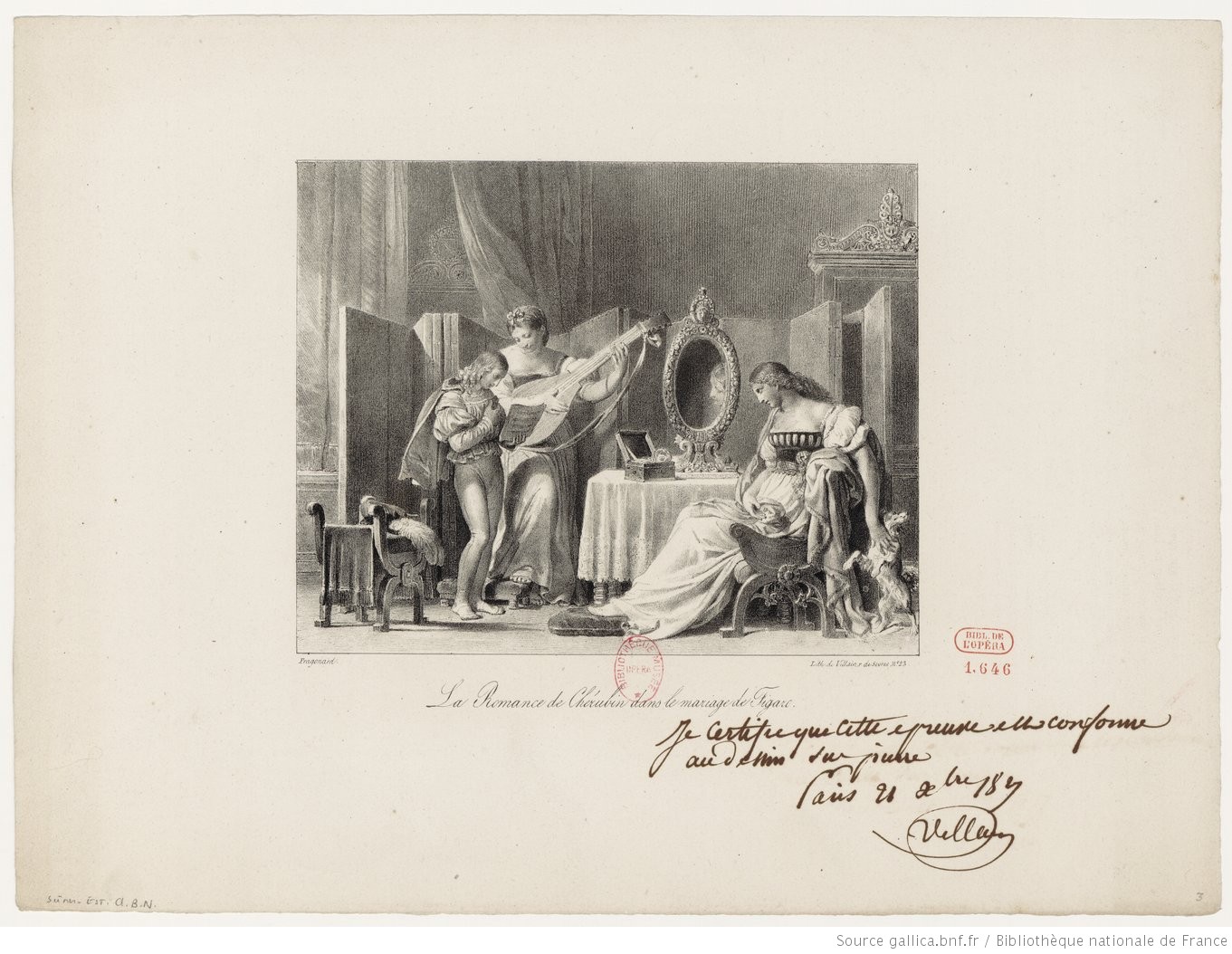
Romance Krubino. Illustration of Jean-Oonor Fragonar.
It was written at the same time, in 1789–1790. Bomarsha was at that time in a strange and dangerous position. He had a lot of strength in order to get out of the watchmakers in the nobles, he now refused on the name that all of Europe knew. “I proved on Sunday that the estate called Bomarsha does not belong to me anymore,” he wrote to his wife and exclaimed with a bitter irony: “What will happen to us, dear? So we lost all our titles. We have only surnames, without coats of arms and livery! About the righteous sky! What a disorder!”
He, about the comedy of which Napoleon said that this is a "revolution in action", he, who convinced the king to assist the American revolution, lives in a luxuriously furnished mansion opposite the Bastille and fears the rebellious ink. He works on the play in the most gloomy mood.
Perhaps I was too hesitated with the end of this painful thing, tearing my soul, it had to be written in the prime. For a long time she haunted me. My two Spanish comedies were conceived only as an entry to her. Then, old, I began to hesitate: I was afraid that I would not have enough strength. Perhaps then I had them, indeed, no longer had them! One way or another, having started for this thing, I pursued a direct and noble goal; At that time, I possessed a man’s cold reason and a woman with a flame heart, -this is how Jean-Jacques Russo did. By the way, I noticed that this is a combination, this spiritual hermaphroditism is not as rarely found as it is customary to think.
So he says in the preface to the "criminal mother." As long as the play was not staged, he read it in the salons. Inviting one of these readings to Countess D'Albani, he wrote to her:
Decide for yourself who you want to invite to read my play, which will take place on Tuesday, but do not call people with a coarse heart or an outrown soul, which are on such subtle experiences. These people are only capable of discussing the revolution. Let sensitive women and men come, for which the heart is not a chimera, and we will cry to the elaborate together. I promise you, Madame Countess, the most sweet experiences.
So, only people can talk about the revolution "with a coarse heart or an outrown soul." The Count of Almaviva lives in Paris, "where everything is turned upside down." He teaches the servants “to reckon with the prejudices of the country in which you want to live” and holds a bust of Washington in his office, and his son Cavalier Leon reads in a “one venerable assembly” - it must be assumed that in the Jacobin club - his essay “On abuse of monastic vows and about the right to renounce them”. Graph. Soon it will not be possible to distinguish a nobleman from a scientist!Leon (timid). But, father, it will be easier to distinguish the ignoramus from a person of the enlightened and a person free from a slave.Graph. Speech of an enthusiastic youth! I see, I see what path you have chosen.
In addition to the count, the countess, Leon and the servants in the house lives the pupil of Almaviv Florestin and the secretary of the count Irish Bezhars - the same “second tartuf”, about which Figaro is expressed as follows:
He deprives some kind of dark business here. In success, he, apparently, is sure ... all the local fools who triumph, who have not yet reached anything, are in brazenly.
"The local fools" - after all, these are revolutionaries. The dark business that is deprived of Bezhears is his marriage with Flotina, and with him the right to inherit the property of the count. Unlike family members, he knows that Florestin is the native illegitimate daughter of Almaviva. For Flotnina and Leon, in love with each other, this news sounds like a thunder among a clear sky: they cannot marry! But this is only half the truth: if Florestin is the daughter of the count, but not Rosina, then Leon is the son of Rosina, but not the count. The countess gave birth to him from her Page Karubino, who had long died on the battlefield. The exposed scores of Bezhars is expelled from the house. In the end, the villain promises to convey where it should be about the bust of Washington and about the fact that the count moved to France in order to make a revolution in Spain from there. This is the scene in the production of a small theater. Bezhears - Victor Pavlov, Figaro - Vasily Bochkarev, Almaviva - Boris Klyuyev. The production of Boris Morozov. 1994.
This play is directly related to the opera of John Corillano. It is written in a complex modern language that resembles the language of Stravinsky and Ionesko, filled with cultural allusions and quotes. Its action takes place in three dimensions. One of these dimensions is the world of ghosts living in Versailles in our time. The opera begins with the romance of Karubino - not sweet -sounding Voi Che Sapete from the opera of Mozart, but clumsily from the play, which the young lover Page sings on the Malbrook Malbrook on the campaign. In the translation of Nikolai Lyubimov, this sounds like this: my horse flies in the wild (and my heart clenched in pain), I am going in the clean field, lowering the reins ...Having lowered the reins and bowing my head, in my soul and darling and pity (and my heart sank) ... He is singing a ghost of the court lady. The ghost of the king plays cards with the ghost of the Marquis. “The queen is exhausted from despair,” says Louis Marquis. “Hopeless, frightened, clings to the past.” “A commoner is dragging behind her,” the king said. "But will he succeed?" - the Marquis rhetorically asks. "It doesn't bother me!" - the king answers nervously. Ghosts maids are gossiping: Bomarchais is in love with the queen, and she does not find a place for herself. They are waiting for the beginning of the performance and miss in advance: "Maybe at least Bomarchais will entertain us."
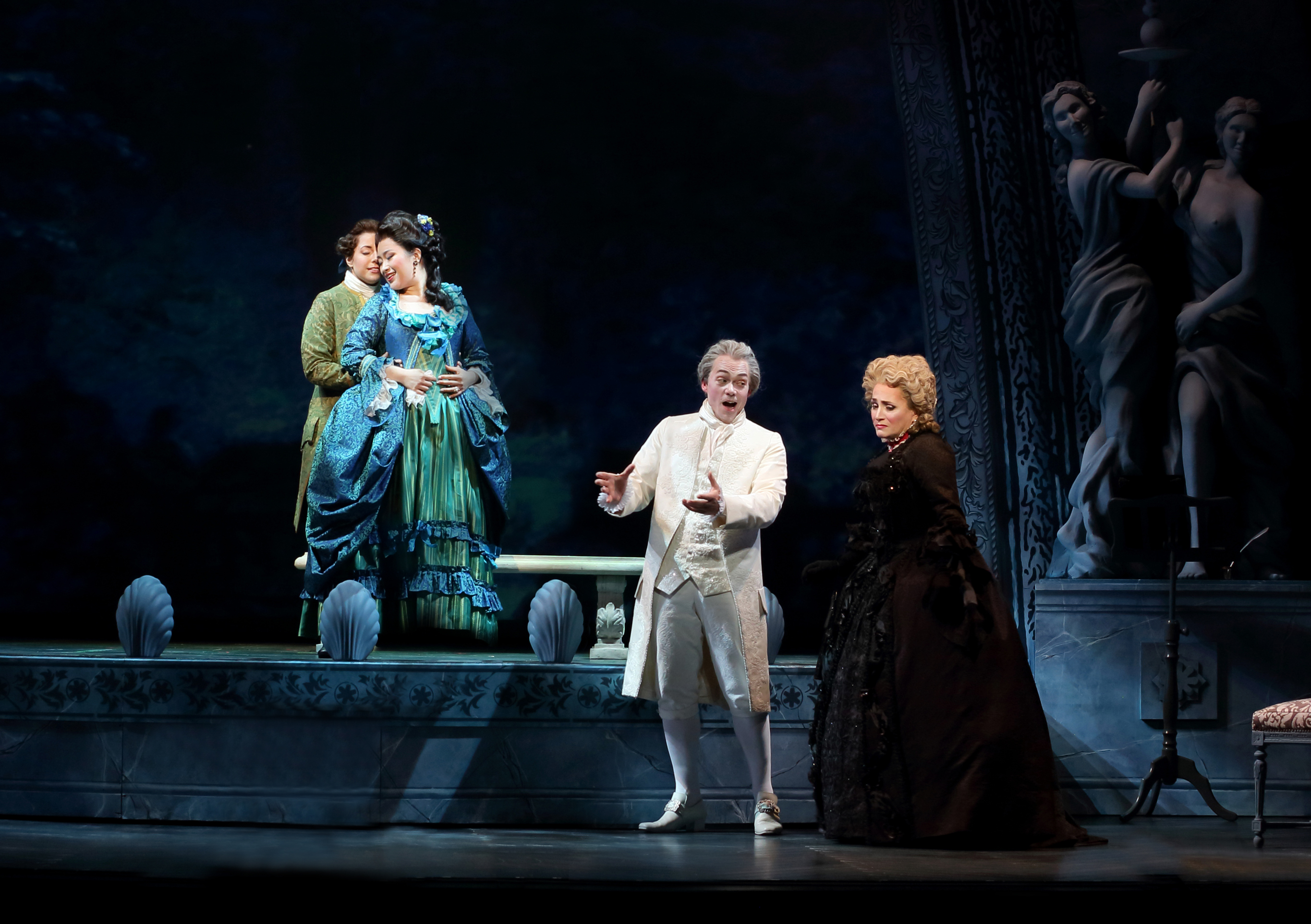
The ghost of the queen appears accompanied by a ghost bomarche. “The Almighty Queen of Beauty,” says Bomarchais, “is the lord of my obedient heart! Making you smile - my duty, to make you laugh is the goal of my art.” “Where can I go from you, Bomarchais?” The queen answers tiredly. “Why are you pursuing me with your love? Leave me alone, Bomarchais. As the flowers fade, and feelings leave the soul.” Bomarchais-Christopher Maltman, Maria-Antoinette-Patricia Rott.
Scene from the performance of the Los Angeles Opera "Ghosts Versailles"
The queen sings the aria in which she recalls the most terrible moments of her life: they are always with me: the smell of blood for steel, the crying of children, the dancing crowd, severed heads on peaks ... Oh God, let me forget! Here is an excerpt from the play "Metropolitan", in which the party of Maria-Antoinette sang Teresa Stratas.
Bomarschah’s ghost puts in Versailles for the ghosts of the king, the queen and court opera, according to his play “The Crime Mother”. This "opera in the opera" is the second measurement of the plot. In the future, something strange begins to happen: the characters of Bomarsha refuse to obey their author. This is Pirandello. Another fragment of the play "Metropolitan". In this Aria, Figaro is heard the obvious echoes of Rossini, and perhaps Puccini. Gio Kiliko sings. I was a diplomat and acrobat, clergy and satirist, student and insurgent, spy and calvinist. Surgeon, economist, watchmaker, pharmacist and animal doctor ...
And another brilliant Aria - Bezhars. He sings that the genuine king of animals is not a lion or an eagle, but a worm, because the worm is immortal. In the play "Metropolitan" this party sang Graham Clark. You will cut it into parts, but you will never destroy it: there was one - there were two. Each part will come to life and crawl away anywhere - both to the beggar and to the king in the chambers ...
And here the same aria is sung by Brandon Ryan-the performer of the Bezhans party in the Los Angeles performance.
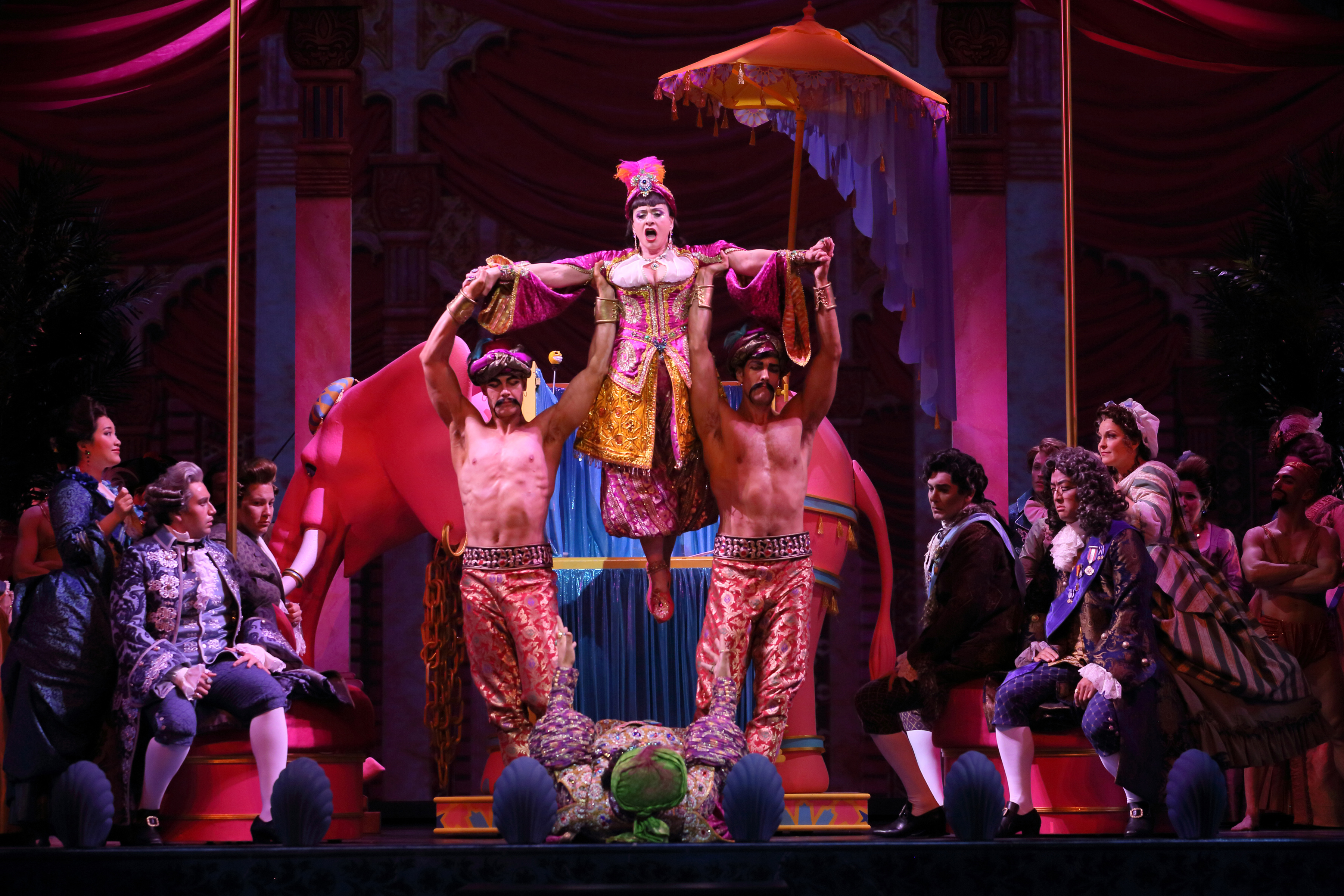
The third dimension of the plot is the real world in which the queen is still alive, but languishes in prison waiting for the trial, and Bomarsha wants to save her and flee to America with her. In this, his heroes help him - the worlds intersect. The conspirators must help out the money to save the Maria Antoinette from the sale of the very unique necklace, the case of a scam with which once became a global sensation and brought a revolution closer. Almaviva must sell the necklace to the English ambassador at a reception at the Turkish embassy. The ambassador of brilliant ports entertains guests with exotic singing and dancing. In Los Angeles, the party of the Turkish singer Samira sang the star of Broadway Patti Lupu.
Scene from the performance of the Los Angeles Opera "Ghosts Versailles"
There, at the Turkish embassy, is the head of the Bezhears revolutionary patrol to arrest the conspirators. But Figaro, dressed in a Turkish dancer, distracts attention to himself, taking advantage of the general confusion, abducts the necklace and hides with him.
Bomarsha convenes the audience to the second act of his opera. On the stage of Almaviv and Suzanne. “Bomarsha,” the queen asks, “do you say that you are able to bring me back to life?” “I can change the story,” Bomarsha replies. “My words have power ...” [Several replicas that are in the libretto are missed here. In particular, the queen says that it is dangerous to change the story, and the king reassures her: “This is just an opera.”] Bomarche (queen): “I want to make you happy.” Queen: "I want to live again. Are you able to do it, Bomarchais?" Bomarsha: "Yes! We will live in Philadelphia!" (In this place, the audience is not on stage, but the modern American - laughs: Philadelphia was at that time a wretched hole, especially compared to Versailles.) The king: "If only this can be called life." The court lady: "Every day I thank God for being dead!" Queen: "You do not understand. None of you have ever lived for real. I loved life! I want to live again!" King: "It is immoderate in life, immoderate in death." Queen: "I believe you." Bomarsha: "Finally."
We will pause and ask: what really were the relationship between Maria Antoinette and Bomarsha? He was entered into the palace, had at least one audience with Louis, but I did not find any evidence in the sources that he had met with the queen. However, she was a hot fan of his comedies. The queen was delighted with the "marriage of Figaro" and dreamed of playing Rozin.
Once, Bomarsha, in correspondence with one of his passions, allowed himself a rather risky joke: someone told me yesterday: "In order to achieve success in business, sir, you need to introduce women into them." “The opposite can be done with the same success,” I said in response to him.“We will succeed in the same way if we introduce something into women!” Of course, in the case of the queen, there was only the first. Madame Campan, the main tunight of Maria Antoinette, who also performed the duties of the royal revere, writes that the king, who was tired of rumors about the brilliance and wit of "marriage", finally wished to personally hear her. Madame Campan read the play only to two listeners-Louis and Maria Antoinette. The king often interrupted reading comments about the author’s bad taste. He especially did not like the monologue of Figaro at the beginning of the fifth act. In the famous performance of the satire theater there is no, and no wonder. I found it in another production, 2014 - the Moscow Theater named after Pushkin. Figaro - Sergey Lazarev.
Figaro alone, in the most gloomy mood, paces in the dark.
What, however, I have an extraordinary fate! It is not known whose son, stolen by robbers, brought up in their concepts, I suddenly felt disgust to them and decided to go honestly, and they pushed me everywhere! I studied chemistry, pharmaceuticals, surgery, and, despite the protection of the nobleman, I could hardly get a veterinarian's place.
In the end, I was tired of tormenting sick animals, and I became interested in the opposite activity: I turned my head to the theater. It would be better if I hung a stone on my neck.
I concocted a comedy from harem life. I believed that, being a playwright of Spanish, I could not attack Mohammed without a twinge of conscience. At that very moment, a certain messenger ... The devil knows whose one ... brings a complaint that in my verses I insult the brilliant port, Persia, part of India, all of Egypt, as well as the kingdom: Barku, Tripoli, Tunisia, Algeria and Morocco. And now my comedy was shot for the sake of Mohammedan Lords, not one of whom, I am sure, can read and who, beating us to half death, usually say: "Here you are, Christian dogs!" It is impossible to humiliate the mind, so they revenge by the fact that they drive him. I lost heart, the denouement was close: I was like a vile face of the bailiff with an unchanged pen behind my ear. Trembling, I collect all my determination.
There began disputes about the origin of wealth, and since in order to talk about the subject, it is not necessary to be its owner at all, I, without a penny in my pocket, began to write about the value of money and what income they bring. Soon after, sitting in a wagon, I saw how the lifting bridge of the prison castle fell behind me, and then, at the entrance to this castle, I was left hope and freedom.
(Get up.)
How I would like one of these temporary workers to be in my hands, who so easily sign the most merciless sentences-he found himself when a formidable opal will decay in him! I would tell him ... that the nonsense that penetrate the print is gaining strength only where their distribution is difficult, that where there is no freedom of criticism, there no praise can be pleasant and that only small people are afraid of small statues. (Sits again.)
When they were tired of feeding an unknown overwhelm, I was released on all four sides, and since I want to not only in prison, but also in the wild, I again sharpened the feather and let's ask everyone and everyone that excites the minds at the present moment. They answered me that while I was on state bread, the free sale of any products was introduced in Madrid, up to the products of the printed ones, and that I just have no right to touch my articles of the authorities, religion, politics, morality, officials, horderly corporate theater, as well as other theaters, as well as all persons who have the rest of the rest,about everything else. I can write completely freely under the supervision of two or three censors ...
According to Madame Campan, it was precisely about this monologue that Louis said his famous verdict: "This is disgusting. It will never be delivered. It is necessary to destroy the Bastille before, and only then give permission to produce. This person must be mocking everything that must be respected in the state." - "So, it will not be executed?" The queen asked. “Of course, no,” the king answered. “Be trustworthy.” Nevertheless, the "marriage" was played before the Bastille was destroyed, and the queen played a leading role in the abolition of the royal ban. True, she never played Rozin. But there is another strange parallel between the Bomarsha comedy and the plot that occurred in reality. I mean the story with an unfortunate necklace. I will not repeat the details: at one time I read all the available sources, re -told it and came, I dare to think, to non -trivial conclusions ("Diamond Bleph", part 1 , part 2 ). The heroine of this case Jeanne de Laudit in conspiracy with Count Cagliostro fooled Cardinal Rogan: posing as Maria-Antoinette's maids of honor, she convinced him that the queen was favorably treated with the ardent feelings of the cardinal and as a sign of this favor as a sign of the jewelers to redeem the diamond necklace, ordered by the late Louis XV for her own. The favorite of Madame Dubarri. It was about a huge sum, and the cardinal wished to receive at least some confirmation of Jeanne's words. Then Jeanne came up with a secret date of the cardinal with the queen in the garden of the Versailles Palace. The role of Maria Antoinette was played by a young lady named Marie-Nikol Light, indeed, somewhat similar to the queen. The date of the Bezlunna night lasted a minute or a little more - the "lovers" were frightened by the accomplices of Jeanne.
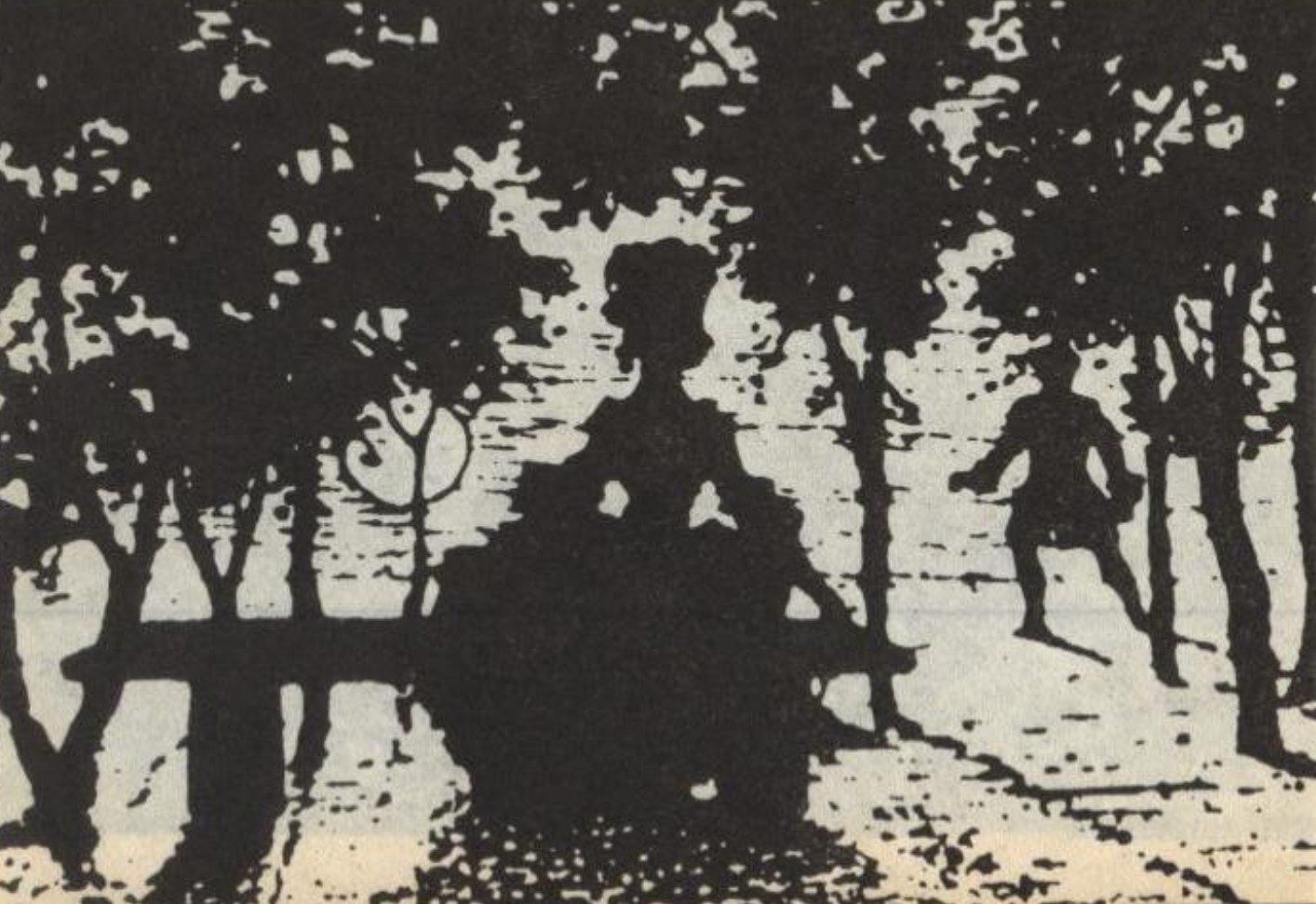
Konstantin Somov. "The Book of the Marquise." 1918
But this is a scene in a night park from Figaro's Marriage, a mystification with changing clothes, invented by Figaro, to teach a lesson to a loving count!
The premiere of "Marriage" at the Comedy Frances Theater took place in April 1784, and the "Date" in Versailles Park in August. It is known that a few days before the “date” of Jeanne and Nicole visited the play. By this time, of course, the entire scam was carefully thought out. But the play was not necessary to see on the stage to know its content: it was read in all the salons of Paris in manuscript copies. And if we assume that the queen herself conceived and carried out the intrigue (there is such a theory), it turns out that she nevertheless played a role in the production - if not Rosins, then the director. So two dimensions crossed - the real and generated by the fantasy of the bomarche.
Soon there was a denouement shown in this passage from Marseille L'Erbier's film "The Queen Necklace" (1946). The king invited the cardinal to explain. "Cousin, what is this necklace that you, as they say, bought on behalf of the queen?" He asked. Rogan was in a terrible situation. The queen was right there. He could not tell the king about their date, real or imaginary. “Sire,” he answered, “I was deceived, but I did not deceive anyone myself.” He was arrested, barely left the monarch’s office. Cardinal Rogan-Maurice Escand, Maria-Antoinette-Marion Dorian, Louis XVI-Jean Ebe.
Let us return to the opera of Corillano - Hoffman. Her heroes still have many conflicts. The ghostly world and the world of the bomarche drama will face the world of ruthless reality. Bezhears will become the leader of an angry crowd, who appeared in Versailles to deal with the queen.
Scene from the performance of the Los Angeles Opera "Ghosts Versailles"
The conspiracy eventually succeeds: the bomarchais opens the door of the dungeon, but the queen refuses to run: "No, bomarche. Everything is as it should be." In the end, she admits that her pride kept them at a distance from each other, but his warmth melted the ice into her heart. "I love you ..."
The queen is taken to the scaffold. In this last fragment, one can hear a guillotine knife with a deaf -bearing knock, a jubilant crowd sings Marseilles. Meanwhile, Almaviv with the family, Figaro and Susannaya runs in the balloon of the Mongolfiers in London. And Bomarsha and Maria Antoinette are connected in heaven.
"Ghosts Versailles" is a great opera. She is worthy to stand on a par with the operas of Mozart and Rossini for Bomarsha stories.
Scene from the performance of the Los Angeles Opera "Ghosts Versailles" When nothing is heard March 28, 2017
Justifying the title of the world capital of the avant-garde, all types of art in New York fight their borders, trying to go abroad to their feelings.
So, our compatriot and American composer Lera Auerbach at the presentation of her opera based on the play of Meterlink “Blind” made the audience blindfold so that the vision did not interfere with the hearing. Morgan library curators hope to create a gallery of smells , resurrecting the aromas of the past. In the same series of desperate experiments - a camera of silence in the Guggenheim Museum.
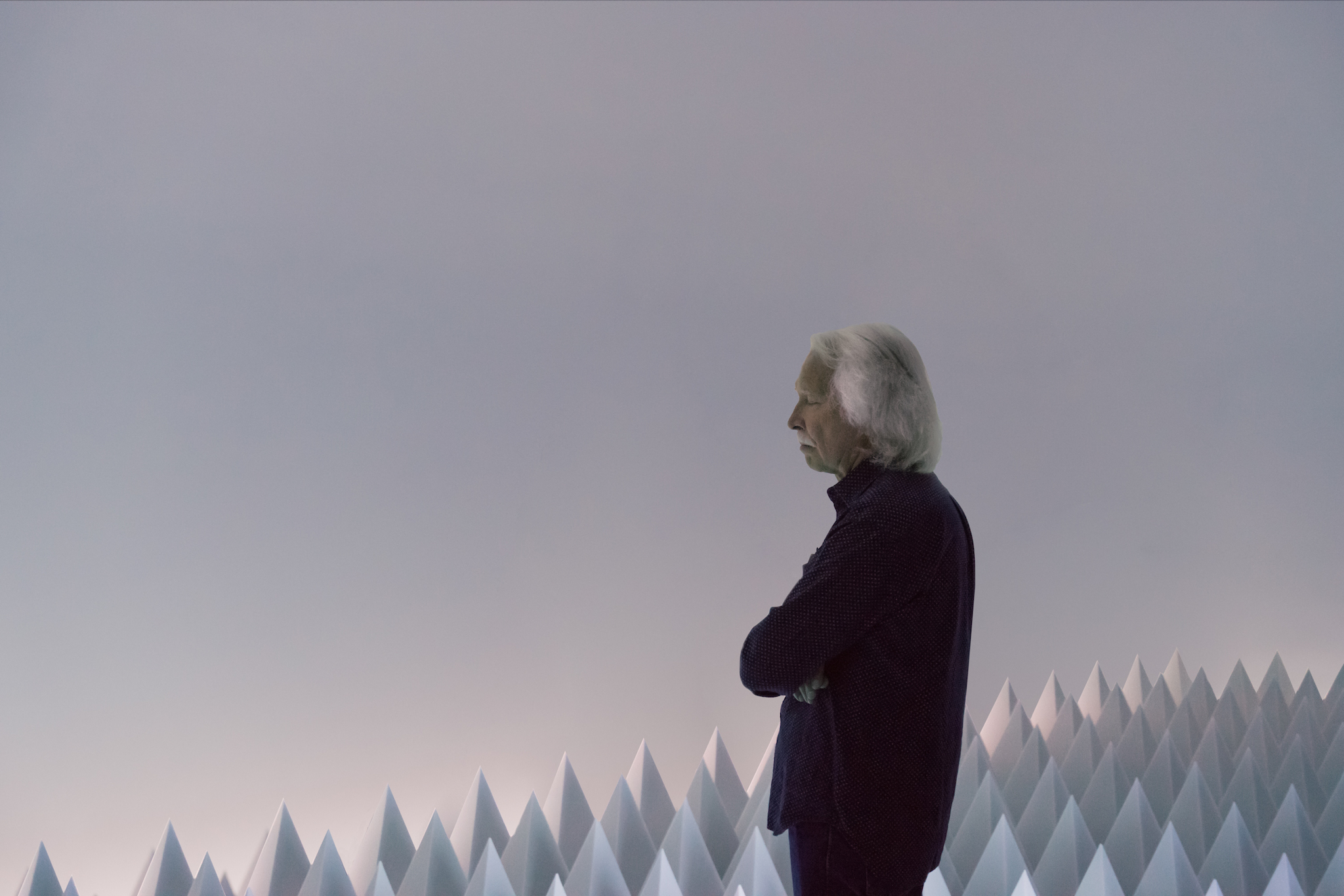
The author of the arc Willer (b. 1939) was preparing for this project for several decades. The famous master and idol of the avant -garde, the founder of the School of Light and Space, he does not work with a new plot or material, but directly with consciousness. Changing our usual ideas about reality and its parameters is Willer's task. But often his titanic projects turned out to be too expensive and complex to materialize in the arena of contemporary art.
This time, the leaders of Guggenheim decided to cost and built a “Machine of Silence”. In essence, this is a room in the room. Suspended in the void, it is as isolated from any sounds. If the usual city noise Manhatten expresses a figure of 70 decibels, the quietest whisper is 30, then there are only 10 decibels in the exhibition room. This means that practically nothing we hear in it exactly. According to Willer’s calculations, a person unusual for such silence cannot withstand it for a long time. After 40 minutes, the psyche begins to take. Therefore, visitors are allowed for about ten, five minutes. There is nothing more in the room, and there should not be. Having left alone with silence, we are doomed to listen to it. So the scene for meditation on silence is arranged. Everyone has their own, I have one.
Dug Willer
Silence is not from this world. She was always. Silence is more sound. So much more that the sound cannot be dealt with-silence will survive it in matrind.
Silence deliberately denies what she created the larynx. This is the postgraduate of speeches, its deaf -mute relatives
Silence is much more. She knows how to tighten into herself, for the vector of silence is directed inward. This funnel leads nowhere, for the other - narrow - with the end it connects with the cosmos, with the abyss, with the void, with the fact that it has neither the name nor - the main thing is measures. The sound is quieter or louder, but neither take away or add the silence. Here is the secret of silence, its depth and thoroughness. Silence is not commensurate with anything, not like anything. She devours a measure, destroys a comparative degree, eliminates scale.
Silence is a condition for the existence of our alternative consciousness, these are coordinates in which something independent of ordinary life unfolds.
Silence is a scene on which the shadows of our I act. Silent, but not dumb, they know how to speak only when we are silent.
Silence, however, is not silence, but its offspring. It either emphasizes or crosses out, or silence what has been said. Silence deliberately denies what she created the larynx. This is the finishing of speech, its deaf -mute relatives. Silence is a pause between two words: the last and first. And even if the second word remains unspeakable, silence will give us hope to hear it.