
Translated material
Miracle Sniper
Sources in the Russian Guard, denying the execution of the detainees during an attack on the military unit in Chechnya, promoted compromising facts about the dead troops
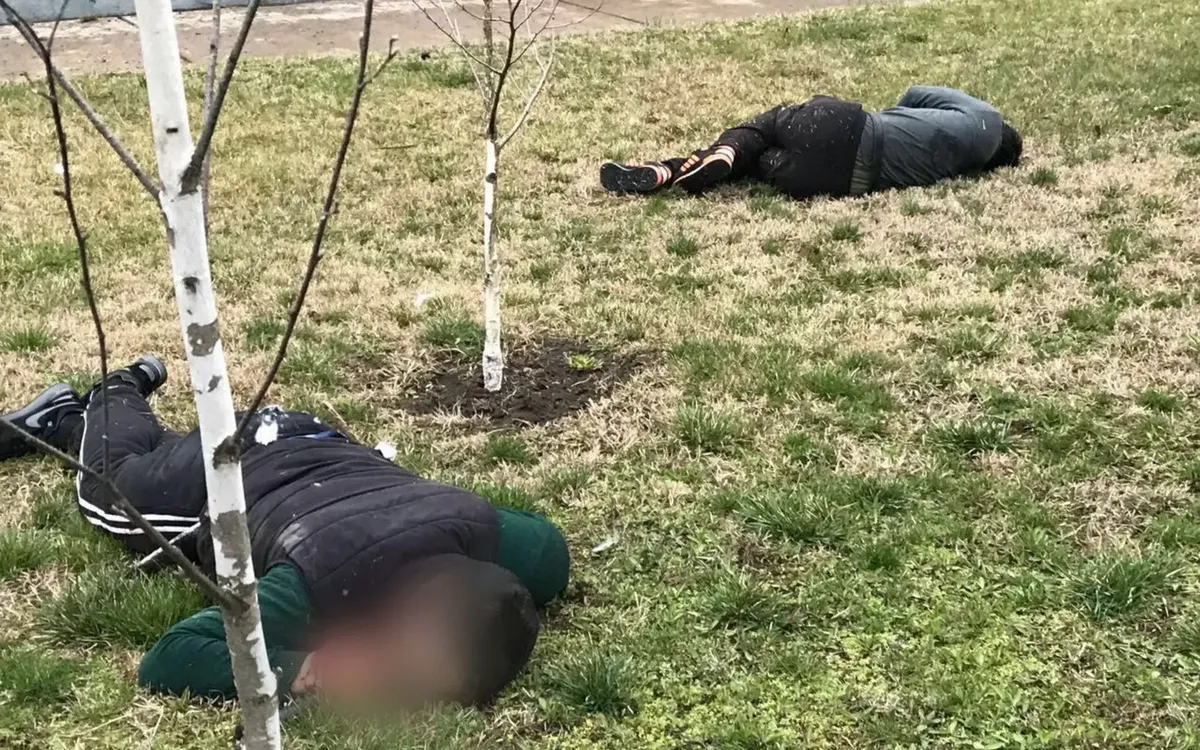
Attention. The material used photo images showing scenes strictly 18+
On the night of March 23 to 24, in the village of Naurskaya Chechen Republic, where the Russian Guard battalion (military unit 3761) is deployed, an emergency occurred. According to the official version, there was an attack by the inhabitants of the village on the military unit, during which six attackers and six troops were killed. Three guards were injured.
The official version, widespread on the same day in the press service of the Russian Guard and the Investigative Committee of Russia, looked like this: “On March 24, 2017, at about 02 hours 10 minutes, members of illegal armed formation, having knives and firearms, attacked a military unit located in the Stanitsa of the Naursky district of the Chechen Republic.” “As a result of decisive actions of personnel, the penetration of the gangster group inside the town <military 3761> did not occur."
Thus, the official version insisted that:
The attackers had firearms;
The attackers could not penetrate the territory of the military unit.
On March 24, the New Gazeta published a note “Chinese execution” in the village of Naurskaya, ”in which she questioned the official version.
Firstly, according to the data obtained from our sources that participated in the inspection of the scene of the incident, attacked at military unit 3761 six residents of the village of Naurskaya did not have firearms. This information was also confirmed by the summary of the Russian Guard.
Secondly, the photographs of all six killed Chechens had at the disposal of Novaya Gazeta, which clearly shows that they are all shot in the head and other wounds on corpses. The absence of other wounds questioned the fact of a clashes. The same doubts caused a characteristic mark on the wrist of at least one murdered (in the photograph of another murdered, a similar mark is traced, however, the quality of the picture does not allow to examine it in detail). These traces could indicate the use of handcuffs.
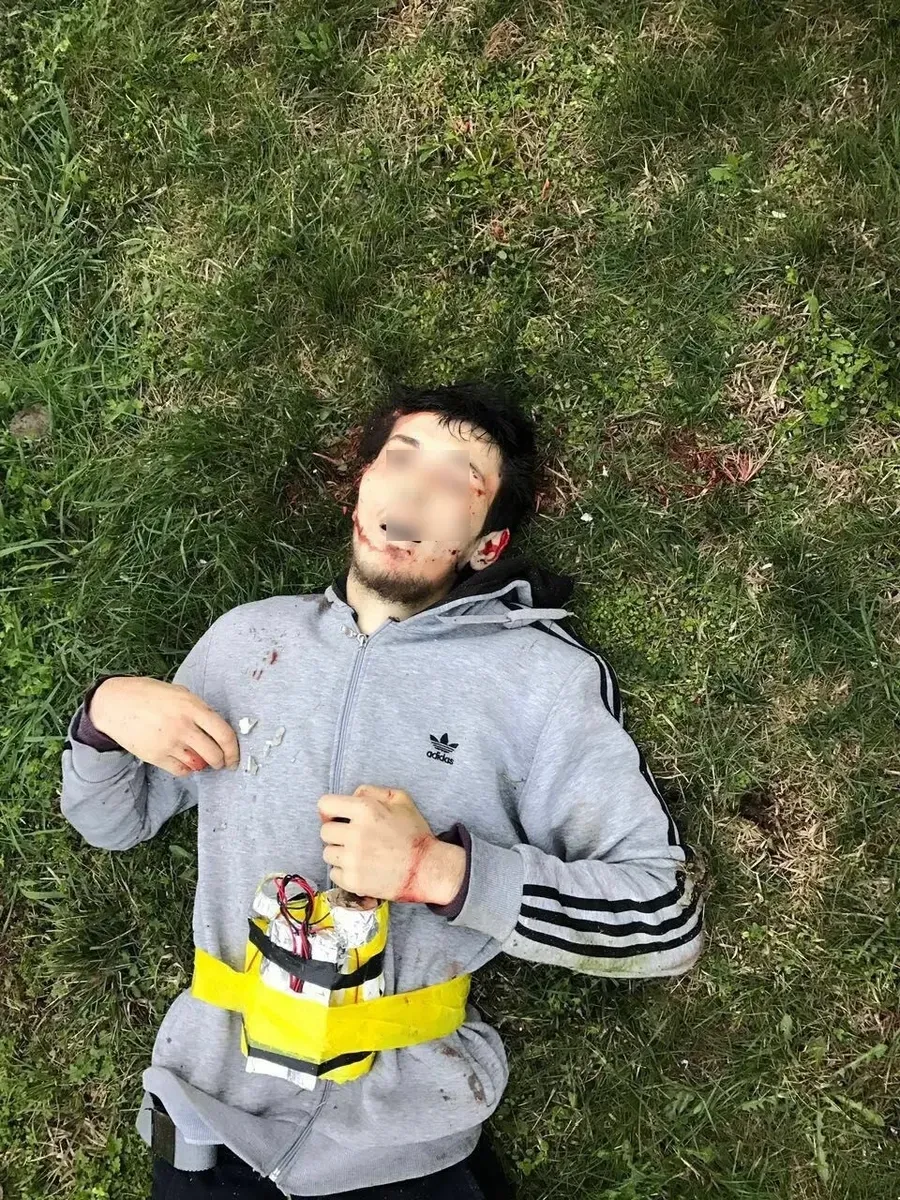
The New Gazeta, having consulted forensic experts and forensic experts, put forward its version of the events in Naur: the dead “militants”, judging by the photographically fixed facts, were detained alive and shot.
However, in our publication, we left the question open: how, in this case, nine military personnel of military unit 3761 were killed and wounded?
On March 29, new details of attacks on the military personnel of the Russian Guard were published on the website of RBC. The note contains evidence of unnamed sources from the Russian Guard and the “Chechen power structures”. It is quite obvious that the interlocutors of RBC are trying to refute the version of Novaya Gazeta about the Chechens who were detained and shot. However, trying to protest the unpleasant facts given in our publication, RBC sources simultaneously refute the official version. Moreover! The unnamed source of RBC in the Russian Guard told the publication information directly testifying to the signs of a crime in the actions of the military personnel themselves/h 3761.
In the publication of RBC, the interlocutors of the journalist from the Russian Guard and the “Chechen power structures” nominated a completely new version of the attack on military unit 3761.
According to this version, the local residents did not really have a firearm at the Russian Guard battalion: “The militants climbed over the fencing of a unit, quietly in the fog sank into the checkpoint and went through the open door, because during duty the door did not close ... The attackers stabbed two sleeping attendants, took their machine guns and rubber batons. Entering the territory of the unit, the militants stumbled upon the patrol ... Six militants were killed during the ensuing shootout with the patrol ... some killed "took off the sniper, the Dagestan" ... "
Either a cross, or pants
We do not question the professional competence of the journalist of RBC and his ability to accurately record the information of his sources, however, the competence of the sources themselves causes great doubt in this case.
In particular, the following statement of the source from the Russian Guard is doubtful: “By six o’clock in the evening, all military personnel, according to the leading documents, are handing over weapons to the storage room, the keys to which are at the duty military unit ... In the event of an attack on the unit, the duty officers should report this to the unit commander. The commander, in turn, must take the keys to the weapons room from the duty officer and give the fighters weapons. But on the night of the attack, no alarms from the duty officers were received at the checkpoint: during the attack they slept ... "
The New Gazeta found out how the guard service in the battalion should really be organized, "according to the leading documents."
The battalion is usually from three to four mouths. Sometimes - more (as in this case, since in military unit 3761 there is still, judging by the staffing, a company of signalmen). Each company has its own weapons room. Plus a separate weapons room for the headquarters of the military unit. The keys to the weapons room are at the duty outfit of each company. In the case of combat anxiety, it is this principle of organizing a service that allows you to arm the personnel in a matter of seconds. In military unit 3761, there can be no one weapon room for the entire part, the keys of which would be only at the duty unit, and weapons would be given the fighters on the command of the unit commander. Just because in this case, by alarm, bringing the personnel of the battalion (several hundred military personnel) to combat readiness would be physically impossible.
Second. There are several posts in the military unit, the protection of which is carried out around the clock by armed military. This is the post of a military banner, a post for the protection of the weapons warehouse, a post for the protection of the fuel and lubricants warehouse, a post for the protection of the warehouse of allowance, and a post on the checkpoint.
The guard enters the outfit in the following composition: three sentries for each post, as well as the head of the guard, assistant to the head of the guard and one or two divorces. (That is, at least 18 armed people). While two -thirds from this composition carry a guard, a third of the sentries resting, having previously passed weapons to the guard of the guard to the guard or his assistant.
But judging by the source of RBC from the Russian Guard, there is a feeling that only five people stood in the guard of 3761 on March 24 in the guard: “There were two on -residents on the checkpoint, three in the patrol.” “Two on -duty were sleeping ... At the same time, on Friday night, three military personnel were to be on duty at the checkpoint, but one of them“ got asked ”... The commander approves the daily routine in accordance with the law. But if necessary, the working day can be extended ... ".
From this quote, it becomes clear that the interlocutor of RBC from the Russian Guard is a civilian who has no idea about military service. So, there cannot be a “working day” for a guard who entered the outfit. And even more so, the "working day" cannot be extended: they will take a day in the guard for a day. None of the three sentries who stood out in the outfit can “take a good stand out”, and even more so get the “good” from the commander. The absence of the third time at the checkpoint, which the source of RBC from the Russian Guard speaks with such ease, is qualified as “unauthorized abandonment of the part” and is a crime. If the lack of sentry really authorized the commander of the military unit, then he also committed a crime.
Several times in the article, this source of RBC actually states the criminal attitude of the military personnel of the Russian Guard to carry out the service, claiming that two sentries who guarded the checkpoint slept at the time of the attack on the part. The source of RBC in the “Chechen law enforcement agencies” also reports that military unit 3761, in the order of things, unauthorized leaving the unit for money (1 thousand rubles), and that it was this fact that allowed the attackers unhindered to penetrate the territory of the military town.
Thus, the sources of RBC testified, in fact, criminal negligence, which entailed grave consequences. And the publication itself in RBC is a message about a crime and requires an audit of a military investigative department in relation to the command and military personnel of military unit 3761.
It is important that people who provided RBC journalist all this information, trying to at least somehow answer the questions indicated by the “new newspaper”, questioned the official position of the Russian Guard about what happened. In particular, on March 29, the press service of the North Caucasus District of the Russian Guard said: the conducted official verification of the circumstances of the incident <attack> showed that the military "acted in this situation courageously and selflessly, in accordance with official duties and military charters."
It turns out inconsistency.
Or, nevertheless, a mess, corruption, a “self-propelled forces” and sleeping sentries in a military unit 3761 are a common occurrence, and then it somehow explains the circumstances of the attacks in which the attackers were able to penetrate the unit, seize weapons and kill and injure 9 guards. Or the military personnel of the Russian Guard did not violate the charter, did not leave part for the bribes and did not sleep at the post.
But then how could what happened?
Numerous sources of Novaya Gazeta (in the GSU of the North Caucasus Federal District, in the FSB for the Chechen Republic, in the Ministry of Internal Affairs of the Czech Republic, etc.) confirm information about the violations of service in military unit 3761, published in RBC. These violations are systemic in nature, the military unit itself belongs to the so -called “commercial” (where you can arrange a formal passage of service without real presence in the part). One of the sources of “New”, well familiar with the order of military unit 3761, reports: “80% of the military in this part are residents of Dagestan. The rest are Russians, Ossetians, Kumyki. We are not talking about a full -fledged service. The circumstances of the attack and the subsequent murder of the attackers are not clear. It is this period of time that is now covered with a secret. Neither the investigation, nor the “office” (the FSB according to the Czech Republic - E. M. ), nor the police really know anything. The military gives evidence, but they have a lot of confusion. The weapons were taken from some soldiers, and then other soldiers were killed from it - this is fraught for many, so everyone wags there. The confusion in the testimony is also associated with the fact that the facts of the mess, theft, unauthorized leave of the part, bribes for accepting the service, bribes for the opportunity to live at home, pretending to serve, and so on ... However, confirmation of your version (the detention of those who were attacked by the living and their subsequent execution - E. M. ), can also come up. So far, at least not. No one detained the attackers. According to their relatives, they all left at home three hours before the attack. At the moment, it looks like the usual madness of young idiots cooked in their own juice. Together they went to the gym, earlier two or three worked on the territory of the unit, however, not for long ... "
Questions to answers
The main emphasis of the publication of RBC is on a critical analysis of the version of Novaya Gazeta. Here are the arguments against our version, given in the article of RBC.
The source of RBC in the Russian Guard explains why all six attackers were killed the same, with a shot in the head: "some killed" took off the sniper, the Dagestan. "
But if the sniper killed only “some”, then who killed the rest?
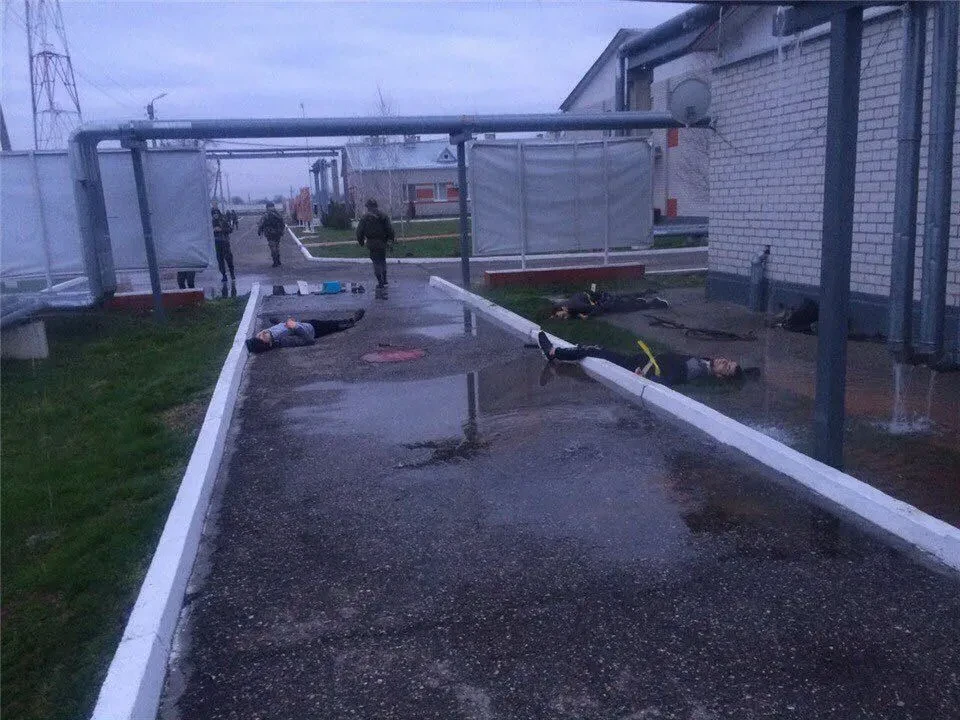
Besides. If there was a sniper, then he fired in very difficult conditions. On the night of March 23 to 24, it was in the Naursky district that there was a strong fog: “ Under the cover of fog ”, according to the source of RBC in the Russian Guard, the attackers quietly penetrated the territory of the military unit. Data on weather conditions is confirmed by weathering for these dates. How likely is the such fast and filigree work of the Dagestan sniper in these conditions? Moreover, according to the official version, the sniper had to fire in a clash, which in itself complicates the exact shooting. Indeed, according to the RBC source in the Russian Guard, the sniper was able to hit exactly all the attackers, although they were in different places, at a considerable distance from each other. Three - inside the military unit, three - outside it, at the entrance to the checkpoint. This could only be if there were at least two snipers. Otherwise, it would be logical to assume that there was a movement of corpses, which can be qualified as an attempt to hide the real circumstances of the murder of Chechens from the investigation.
But this is not even the main thing. On the bodies of the dead there are no other injuries and traces of clashes, except for wounds in the head. It is this fact that is the key to the conclusion that the attackers (if they are actually) were taken alive and shot.
On the website of RBC, a fragment of video recording from surveillance cameras installed in the military unit 3761 is published, on which, perhaps, the penetration of the attackers into the military unit is recorded.
The video frames presented on the website of RBC could indeed clarify the real circumstances of the emergency that happened on the night of March 23 to 24 in military unit 3761. But only if the whole record was presented, and not its tiny piece by which it is impossible to draw any conclusions. But by the absence of the entire entry in public space, it is possible. It was from this angle that the battle between the attackers and military personnel could well be recorded, unless, of course, it took place. According to Novaya Gazeta, a large number of video surveillance cameras were installed in military unit 3761, and the records from them are probably already at the disposal of the investigation. Whether we will ever see what exactly is recorded on them is a big question.
RBC also published a comment by the famous forensic medicine Yuri Pigolkin, head of the Department of Forensic Medicine of the First Moscow State Medical University named after I.M. Sechenov - in the fact of the bruising of one of the attackers.
According to RBC sources, this trace was formed from the rope of the rubber baton, which the attackers captured along with firearms from the sleeping duty officers at the checkpoint.
Yuri Ivanovich Pigolkin believes that “damage <on the brushes> is uncharacteristic of the action of handcuffs, because the trace has uneven edges. If there were handcuffs, the strip would be flat. By the nature of the trace <in the photo> ... resembles a sand clock. On the lower and faithful parts of the brush there are abrasions. Perhaps his "murdered" was dragged by the hand. " However, the version is completely excluded ... handcuffs cannot, Pigolkin said. According to him, such a damage could be handcuffed if the <speser "tried to pull off his bracelet ..."