
Translated material
Deposits in the pit
The crisis of the banking insurance system is expanding
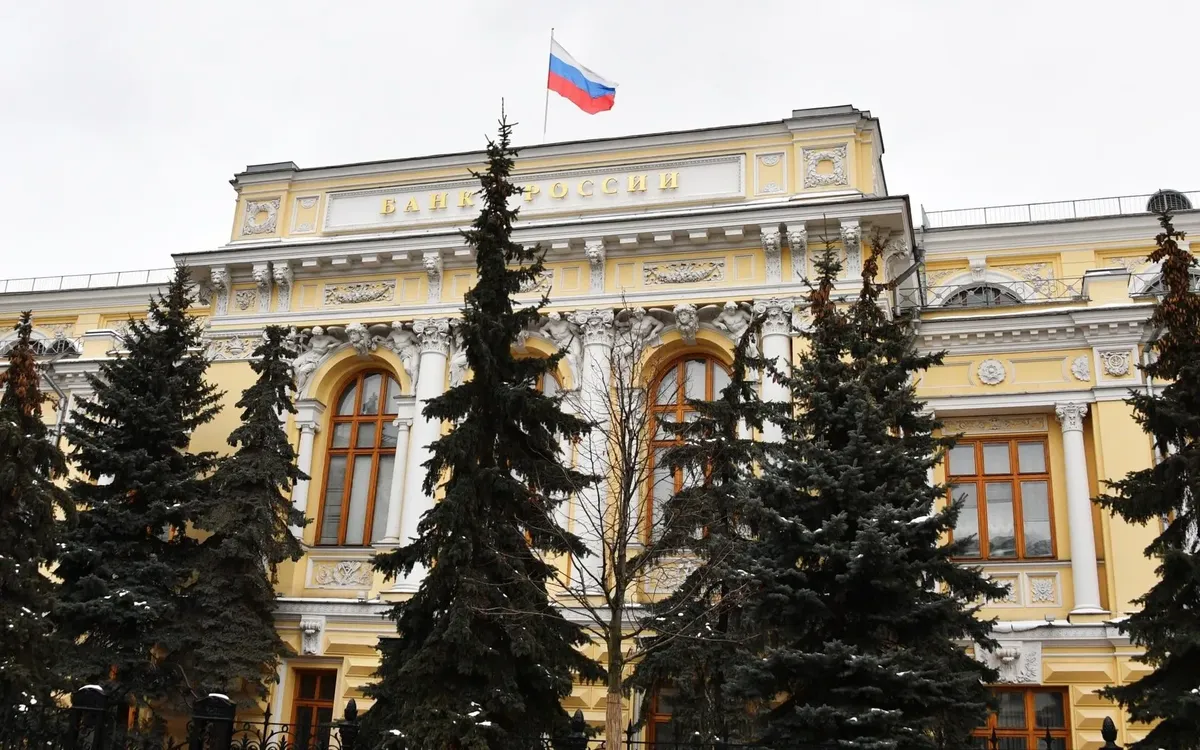
The Deposit Insurance Agency (DIA) will transfer to the Central Bank the Mosfilmovsky business center on the Sparrow Mountains. High -class office premises with an area of 15 thousand square meters and worth 6 billion rubles will go to pay off part of the DIA debt. This case reflects the complex position in which the Russian deposit insurance system was found. The reason for the difficulties was the Central Bank’s policy on the active recall of banking licenses, carried out by the regulator since 2013.
Problems with the Balance of the DIA showed two years later: the State Corporation Fund, previously self -sufficient, became scarce in 2015. The costs of payments to depositors of banks who have lost licenses exceeded the receipt of existing banks from insurance premiums (the base rate is 0.12% of the deposits collected). Since then, the Central Bank from time to time "prints" money to finance the activities of the DIA on a return basis. Today, the Limit of the Credit Line of the DIA from the Central Bank is 820 billion rubles, the volume of the agency at the end of 2016 is 549 billion rubles.
The Law on Deposit Insurance provides for the possibility of financing the fund directly from the federal budget, but there have not yet been such precedents. “Perhaps this is due to the size of the deficit: the allocation of large amounts requires amendments to the law on the budget, and this is a long procedure. The easiest way to agree on a long -term loan from the Central Bank, ”says Mikhail Khromov, senior researcher at the RANEPA. In addition, the state simply does not have free money, the emission in this case looks like the only option.
For almost 4 years, we have been living in a situation where 2-3 small or medium -sized banks lose their license every week, and once a quarter one large bank falls, says Khromov. The load on the DIA has grown significantly: over the past year, the agency paid depositors 570 billion rubles, 5 times more than in 2013. Over the 13 years of the existence of the insurance system, payment amounted to 1.35 trillion rubles, almost 90% of them fell on the period since the beginning of 2013.
The situation is aggravated by the fact that the cleansing of the banking sector is superimposed on the general crisis of the financial system. As a result, not only obvious candidates for the review of the license, but also conscientious players who experience temporary difficulties are ruined.
“It was necessary to clean the market in such a way as not to violate the base for competition. But today, among other things, we see exclusively market bankruptcies that are caused by an unequal competitive environment: large state -owned banks have protection and resources, and all the rest are only restrictions, ”says Vasily Solodkov, director of the Banking Institute of the Higher Superior.
The market expected that cleaning the banking sector would end in 2017, but at the beginning of the year there were rearrangements in the leadership of the Central Bank supervisory unit, after which the tone of the regulator also changed, says Alexander Danilov, senior director of Fitch. Now it is more likely that the process will last another 2-3 years at the previous pace - about 100 revoked licenses per year. The head of the Central Bank Elvira Nabiullina recently stated that the path of the "healing of the system" has been passed only by half. The scale of the reviews is not yet critical, Mikhail Khromov believes: all banks that have lost licenses since 2013 accounted for only 3% of the total assets of the industry.
Experts believe that while maintaining a tough policy of the Central Bank to pay with its creditor earlier than after 10–20 years, the DIA will not be able to - the speed of recall of licenses will significantly ahead of the rate of accumulation of money in the fund. The overall debt of the agency can soon pass for 1 trillion rubles.
The default of the DIA does not threaten, but the deposit insurance system will be able to return to the normal functioning of the functioning only after stabilizing the number of banks in the market - according to current forecasts, around 2020.
Against the background of these problems, the office for 6 billion rubles looks like a pleasant bonus for the Central Bank, given that the regulator is more than hypothetical than real ones (after all, issuing money receives as loans). “Technically, the office can be credited to repay the debt, but it is hardly due to the desire of the Central Bank to“ squeeze ”something from the DIA: the cost of these premises is a drop in the sea of total debt,” says Danilov.
But real estate transfer may reflect the narrowing of the DIA functionality: the agency can soon lose its function to reorganize problematic banks. The Central Bank has been lobbying for the transfer of sanitation mechanisms under its control. The regulator plans to create a consolidation fund of the banking sector and the management company, which will be reorganized directly, without involving the DIA.
Previously, problem banks were given cheap money that was located on the stock market (for example, invested in OFZ); Then, the debt was paid from the received interest. Today, this mechanism ceases to work due to a decrease in the “interest margin”-the terms of accumulation of the desired amount increase significantly, says Alexey Terekhov. Therefore, instead of long -term loans, the Central Bank wants to make direct contributions to the capital of banks. However, according to Fitch estimates, many banks are easier not to sanitize, and to eliminate immediately - this would save 500 billion rubles on this.