
Translated material
Long ears of the regime
Scandal: Türkiye monitors compatriots in Europe with the help of imams
Another tension arose in German-Turkish relations. This time, the reason was the suspicion of the German side in large -scale spying activities of Turkey in the Germans. The General Prosecutor's Office of Germany began an official investigation. The basis was the lists that the head of Turkish intelligence personally handed over to his German colleague - the President of the Federal Intelligence Service (BND).
In the materials for more than 300 people living in Germany, complete installation data with addresses, home and mobile phones, personal photos were indicated. All of them, according to Turkish intelligence, are either supporters of the preacher of Gulen, declared in Turkey by enemy No. 1, or cooperate with his movement. The document also listed over 200 organizations (commercial firms, publishers, funds, schools, and even kindergartens), which operate in Germany under the leadership and interests of the Gulenists.
Turkish intelligence, transferring lists, did not hide the fact that she hoped for cooperation with the German authorities in the struggle against the "enemies of the President of Erdogan." The desired purpose of interaction would be a complete ban on all Gulenian organizations and sending activists to Turkey at the request of Ankara.
The fact of the transfer of this ambiguous document took place in February at the Munich Security Conference. The BND leadership, without giving it public, informed the federal government and regional authorities about the materials received.
Further steps of German intelligence were carried out in the direction, the opposite expectations of the Turks.
The mentioned in the list confidentially warned of an undesirable visit to Turkey and the danger of contacts with official Turkish representatives. Probably, this would be limited to this. But, “warming up” the electorate to the upcoming referendum on constitutional reform, the Erdogan regime relied on national patriotism and its inherent rhetoric. Calculations of terrorism, clamping of democracy and double standards were rained against European politicians.
The President of Turkey personally set the tone, comparing the ban on the pre -election performances of Turkish politicians in Holland and Germany with the practice of fascism. The German Chancellor Angel Merkel was especially worth it ...
In one of the television interviews, Erdogan, turning to the head of the German government on “You,” said: “Merkel, you use Nazi methods against my brothers living in Germany, against my ministers and deputies who came on a visit.” The task of the Chancellor, he said, is not to support terrorist organizations, but to expel terrorists from the country.
Prior to this, Berlin tried not to attach special importance to the insulting verbal demarches of Turkish politicians, attributing them to the specifics of the election struggle. But Erdogan’s last statement hit the Germans for the living. Merkel demanded without any “but also if” to stop using Nazi comparisons in relation to Germany. Otherwise, the German government reserved the right to draw conclusions and accept the appropriate countermeasures.
When polling stations for voting on a constitutional referendum for ethnic Turks opened in Germany, information appeared in the press about the list of intelligence of Turkey. The prosecutor's office began an investigation of espionage. The Turkish migrants living in the country clearly demonstrated the scale of total surveillance organized by Turkish special services for compatriots.
The main question was: where does Turkey get such detailed information?
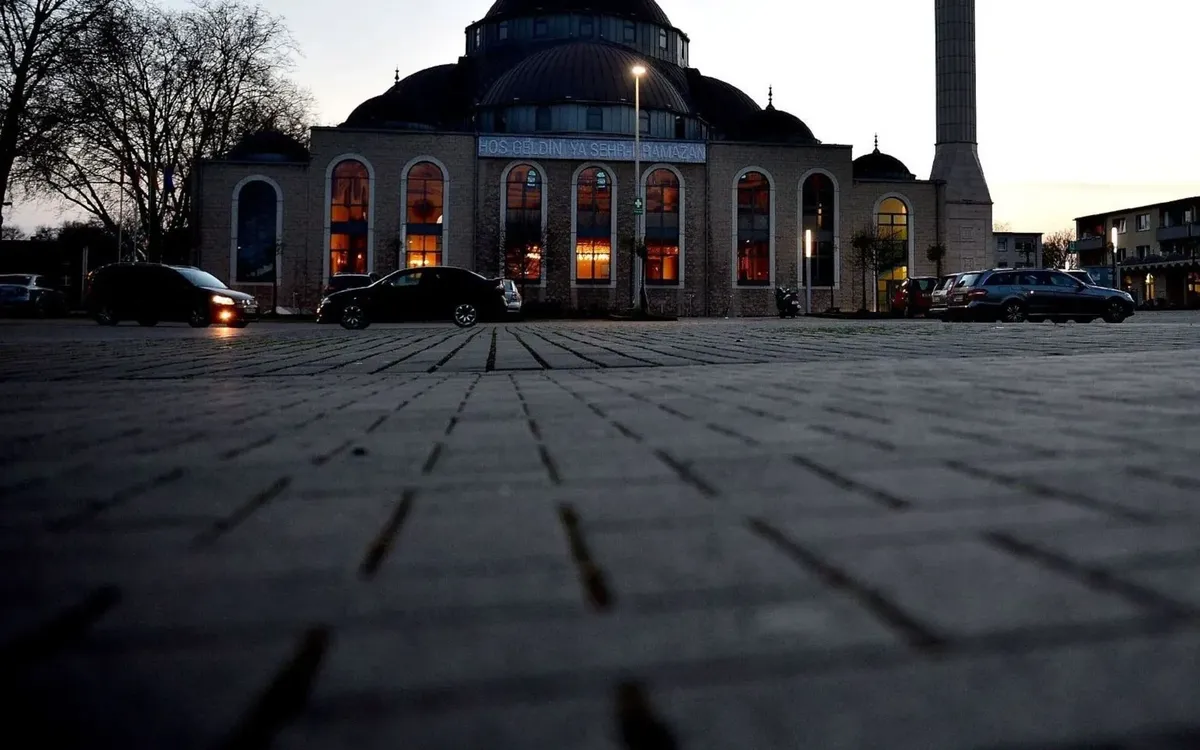
Last winter in Germany, a scandal has already been brewing around some Turkish imams, whose activity, gently to say, was not quite combined with the duties of religious preachers. On the instructions of the leadership of the Union of Communities of the German Muslim Turks (Ditib), they gathered a dossier to dissenters, mainly, of course, Gulen's supporters, and passed them to the curator who worked in the rank of religious issues in the Turkish consulate in Cologne.
Then the police conducted searches in the Ditib office and a number of mosques. The diplomat and 4 imams were forced to leave Germany. Further they did not inflate the scandal.
But now German politicians and the public ask another question: is the only black list of Turkish intelligence, and only 300 people got into it?
An example of the Austrian citizen Casima is preoccupied, Turk by nationality, shows that not only active oppositionists, but also critics of Erdogan policies can be in the field of view of Turkish special services. And their number is measured by thousands.
Kazim flew to Turkey on an urgent call due to mother's illness. He was detained without explanation at the Istanbul airport. He spent three days in Kutuzka, where there were 6 more people. Then, having put him on the plane to Vienna, Casimu announced that he was closed to his historical homeland, since he was suspected of relations with the Islamic state (the organization prohibited in Russia - ed.).
The gastronon from Stiria has been living in the Alpine Republic for more than 30 years, does not consider itself religious, does not visit the mosque, in his youth he generally adjoined the left movement. Kazim is convinced that he suffered because of his critical statements at President Erdogan on social networks.
The case of Kazima is far from the only one. However, as the employees of the EU diplomatic missions in Turkey assure, the actual number of victims in a similar way cannot be established. Only those who turn to them for help, or who, like Kazim, make their history are taken into account. Most, avoiding publicity and possible troubles for themselves and relatives, prefers to quietly return to Europe.
The Turkish intelligence services after the failure of the military in the summer of 2016, said Peter Pilz, representative of the Austrian Party of the Zylechi, was deployed in European countries, primarily in Germany and Austria, a real hunt for fellow citizens who criticize the current actions of the Turkish authorities. At the same time, they secretly rely on the assistance of numerous religious communities and the Union of European Turkish Democrats, which is actually a subsidiary of the Erdogan Party of Justice and Development.