
Translated material
The sum of the difference
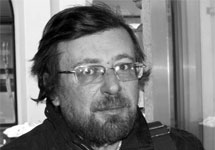
The necrologist has its own stamps, and if the famous old man dies, it is customary to write: the era has gone. But here is another case, and almost no one pronounces this stencil phrase in the stream of responses to the death of Yevgeny Yevtushenko. Words of love, words of gratitude, contemptuous words, envious words, gossip, hints, guesses - everything is said as in life, but also with some effort, as if recalling.
It is too obvious that the era has gone long ago.
This is already such antiquity that they make a movie about them, sixties: a rather good film "Thaw", a rather bad film "The mysterious passion", and also about Vysotsky, but here you can’t choose the epithet. These times were so immersed in the past that for a short while they even formed a fashion trend, in the style of retro. At the same time, the Khrushchev thaw was so superimposed on the day that has become a symbol of modern frontality. Of course, in the permitted framework, as then, and if Yevtushenko and Voznesensky swore the name of Lenin, publishing different seditions, then Ernst serving Putin quietly rebels, pulling the rebel bohemia of the 60s on the television screens. And then the era suddenly clung, and the children of the XX Congress find kinship with the children of perestroika. Talented and mediocre, courageous and timid, sold and unsuccessful.
The uniqueness of Yevgeny Yevtushenko was that he combined almost all the qualities of the people of his generation. And virtues and vices. He knew how to write absolutely wonderful verses - and completely failed. He committed heroic acts - and repented for them in the face of his comrades. He helped many worthy people - and, as it were softer, he collaborated with bad people, and when it became known, worthy people cursed him, and in a wonderful story about Yevtushenko, Brodsky and collective farms invented by Dovlatov, the unique fate of the most famous, glorified, hated Soviet poet was reflected.
Evgeny Alexandrovich put on a striking experiment. Living in a non -free country, he dreamed at the same time about worldwide glory, a visiting passport and a good reputation. Sometimes it even seemed that he achieved what he wanted. For the author of Babyeu Yar and the Heirs of Stalin personified the freedom almost unimaginable in the country whose citizen was, he managed to publish these verses. And in the lists there were and “tanks are walking along Prague”, but the writer of a clear anti -Soviet tunnel touched the light, and gathered full halls in his homeland, and decorated the Union of Writers of the USSR with his name and presence.
Nevertheless, I had to pay for everything - and for the published, and for Kramola, and for the tour, and Yevtushenko was ready to pay. It seems that he was captured by the excitement of the game, which he led in a grand scale, knowing exactly with whom he was fighting and for what. The game had their own, long -conscious and placed priorities in places.
Glory on the highest step of the pedestal, albeit ambiguous, and the reputation, as a rule, suffered. At the same time, Evgeny Alexandrovich himself suffered, sharply rejecting accusations and reproaches, entering into disputes, taking posthumous scores, as with the same Brodsky. Since it was still a game, partly children's - in rattles and travels, in politics and scouts, so to speak, and above all he was a poet. And he knew that poetry would not forgive, and she did not forgive, and many of his poems, especially late, would be better to revenge more.
However, in the genre of the necrologist his customs, and the desire to speak the good, pay tribute, thank for the perfect, to regret - not out of the worst. The era of Yevgeny Yevtushenko has long left, and he remained, and this became a full -fledged tragedy. And the louder the past glory was, the unbearable life on the outskirts. In old age, in semi -emigration, in half -storm, in diseases.
You can probably dismiss the idea that the poet in Russia is more than the poet. It is destined to be born only to those in whom the proud spirit of citizenship roams , but there is no doubt that we had, there are and will be poems with an increased degree of civilian temperament. The former ruler of the Duma, the former stands, the former deputy, Evgeny Alexandrovich, probably more acutely than many aging poets, felt the fading of the spirit, and the fate of the powerless observer of what was happening in Russia and Russia was difficult for him. And the cinema in which he was played and slandered, as he claimed, did not add joy. Of course, the directors-specialist-producers can be understood: they made a film about gray antiquity. However, Yevtushenko can understand: he was alive.
Now it is gone, and the story that begins after death promises us a lot of discoveries. In the archives, when they will allow them. In letters and memories. In verses, read-re-read, but already forgotten, with the exception of some you live, which you love and remember. Inseparable from the fate of the generation and your own fate. In the poetry of Yevgeny Yevtushenko.
And also - in Russian poetry of the twentieth century, in the Stanions of the Century, collected by him, in a wonderful book that he invented and published. Saving from oblivion of the line of their friends and enemies, acquaintances and unfamiliar, publishing poetry of poets of the first row and the second, fifth and tenth, managed to express at least something worthy of printing. This work certainly will be counted, and during the farewell to Evgeny Alexandrovich you remember in the first place, and no other feelings are mixed with gratitude.