
Translated material
Tarkovsky. Imprinted life
On April 4, Andrei Tarkovsky would have turned 85 years old. The Mosfilm film studio posted his films in free access on YouTube. What you need to know about the director who came up with modern cinema, and with what eyes to watch his films now?
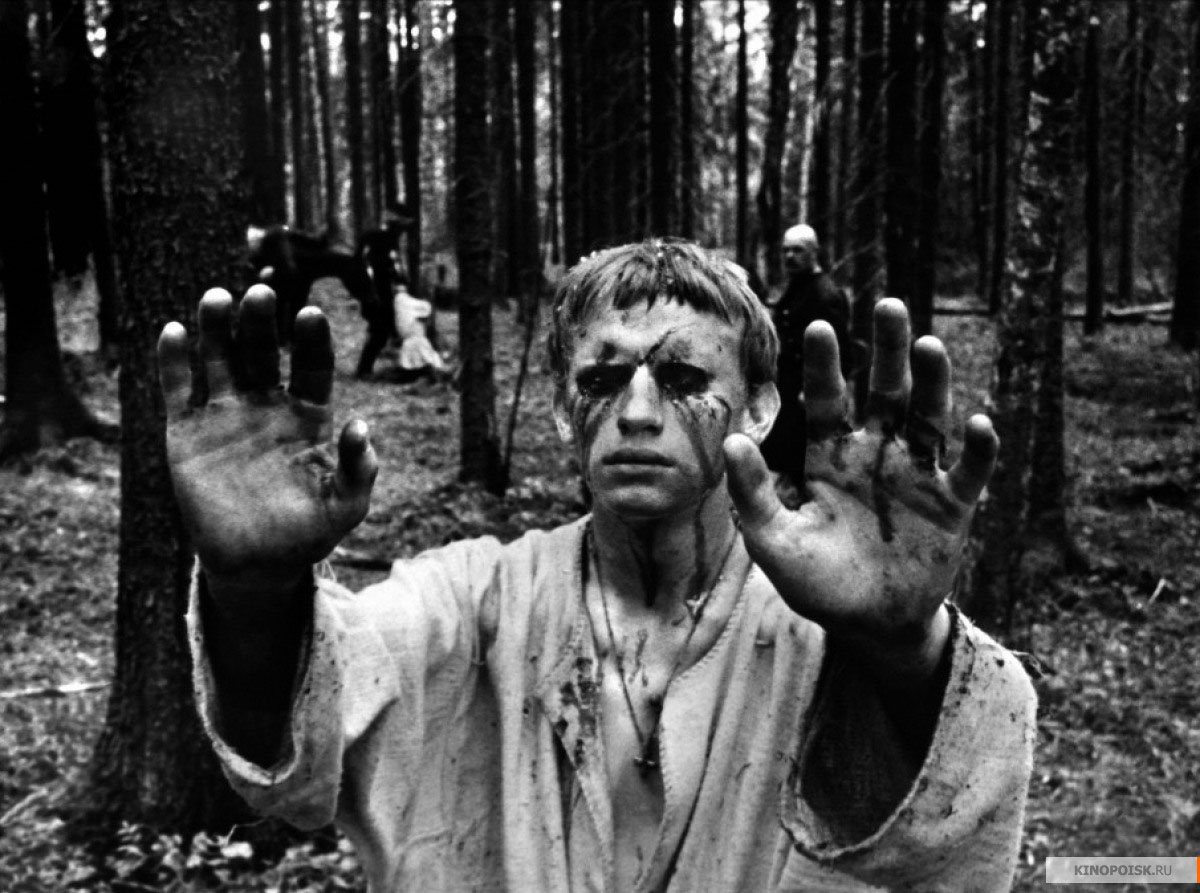
Too much has been written about Tarkovsky - and at the same time nothing. They write about his marriages and novels, friends and enemies, problems with Goskino and personal crises. About allusions and metaphors, about picturesque rhymes. But the only serious study - the “seven and a half” of Maya Turovskaya - has not been reprinted since 1991. The book of Tarkovsky himself “The Severe Time” - the very emergency textbook in all world films - has never been published in Russian and exists only in digital form ...
Two Tarkovsky
Tarkovsky was very quickly cast in bronze, presented the evening broadcast of the Channel "Culture". Passed under the average genius format. Something between Mozart, Pushkin, Bunin and Rachmaninov. He suffered, created, could not work really, so he emigrated, died from longing for his homeland. In addition, there was a tradition of perceiving Tarkovsky’s films as crosswords that need to be solved. As if every frame needs comment and interpretation.
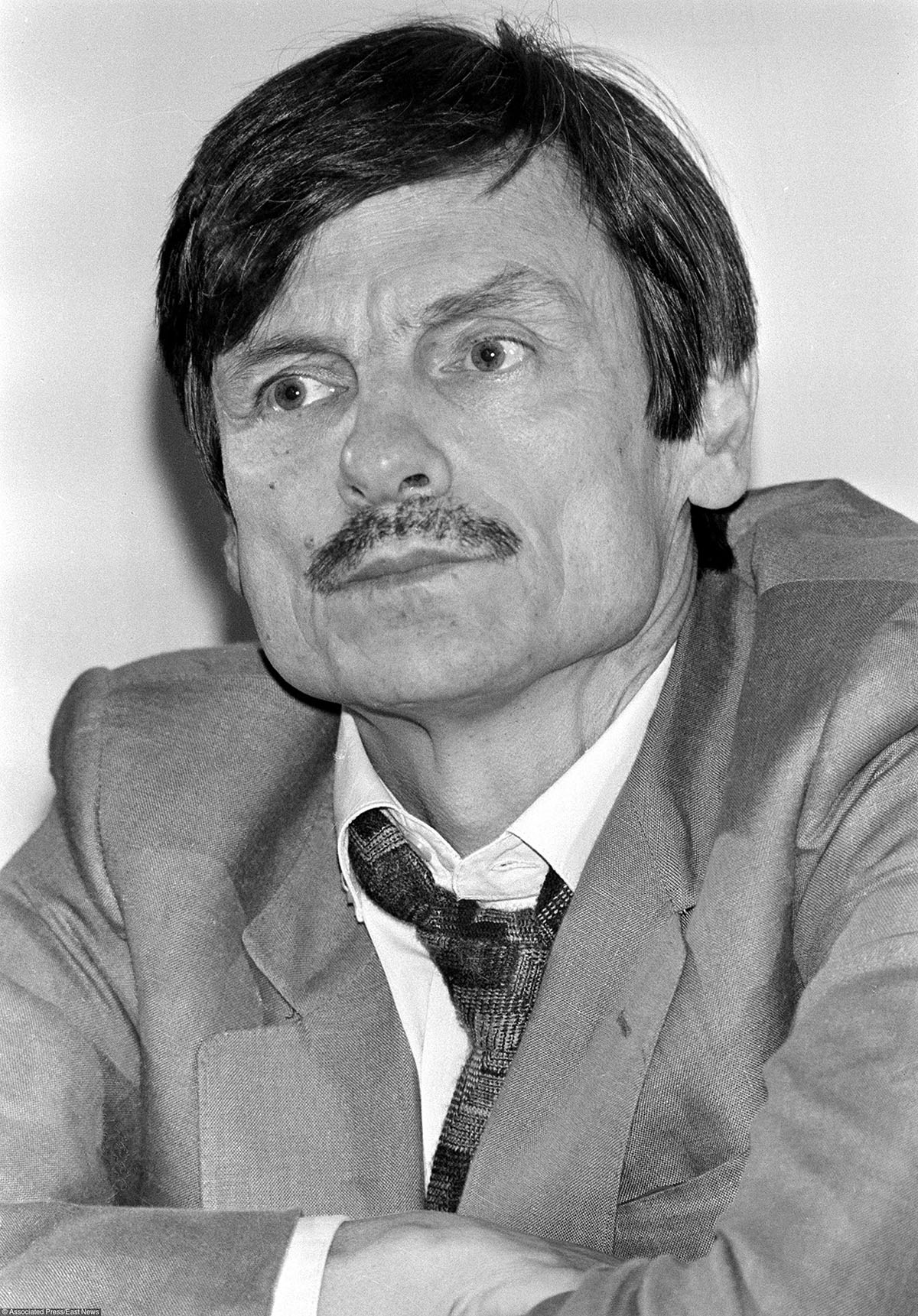
Although the director lived in exile for only a few years, he managed to acquire duality mandatory for cosmopolitan. There are Nabokov Russian (“Mashenka”) and English (“under the sign of illegitimate”), the Brodsky domestic spill (“If it fell into the empire to be born ...”) and the world (“Inexhaustible embankment”), our Kandinsky (“Gray Obval”) and European, Bauhausovsky. Tarkovsky is also domestic - boring, outdated, interesting to a very narrow audience - and world. They live in parallel lives. Skidalist books of the format “published at the expense of the author” are written about one. Trier devotes to another “Antichrist”, and video artists are inspired by his “Solaris” and “Mirror” (last year's Manifesta Modern Art, in Zurich was a memorial to the directed personnel of his best tapes). Two Tarkovsky should meet sooner or later.
The same thing that happened at the beginning of the 20th century with Gogol is already happening with Tarkovsky. The “greatest of the realists” will turn the “greatest of the realists” into a modernist and the dreamer.
It is generally accepted that the young generation reads little. If this is true, then in the case of cinema and visual art it is not bad: the cult of literature does not allow perceiving iconic signs. It is he who is to blame for the eternal "What did the author want to say?" The generation of Instagram and the toggle switch does not convert the world into letters. For him, the pictures are clear and expressive on their own. They do not need comments and interpretations - sleep from the Mirror, zones from Stalker. They are ready to perceive the visual text on their own, without signatures. The meeting of the Tarkovsky-philosopher and Tarkovsky-visitor is not far off-now students of the Rodchenko school are inspired by his ribbons and even remove Ommads to the director.
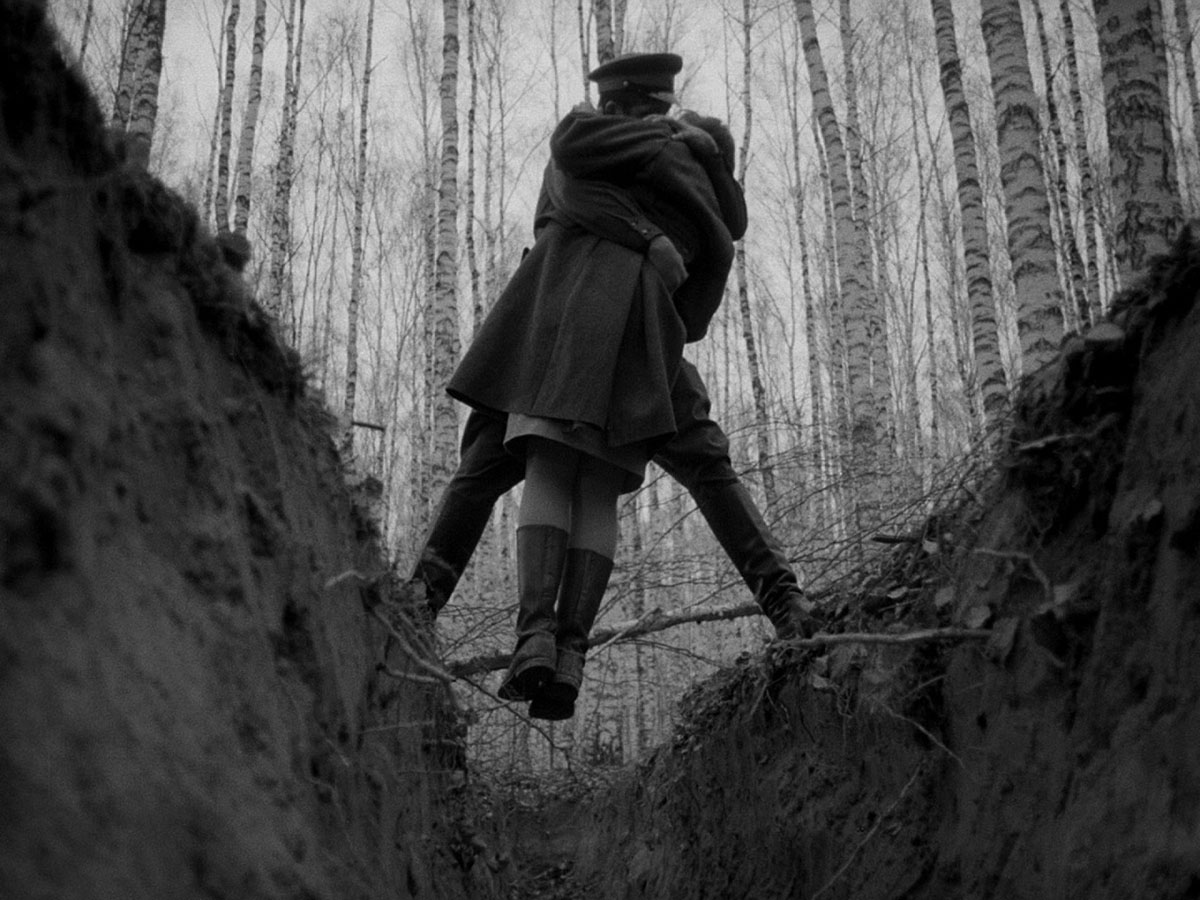
Even those technical changes that occurred in the cinema in the new century return Tarkovsky to use - make it the most modern of the classics. Its proprietary techniques - smooth movement of the camera, thin work with color, a recognizable buying composition - are more relevant than ever, and the ideology of the "captured time" is very modern. Tarkovsky writes in the article of the same name that the ideal film is a human life shot from beginning to end. Be sure: fall into his hands the brand new camera Canon Mark-3, he would not fail to realize this metaphor literally. The figure is not an expensive film, it allows you to shoot at least 85 years in a row.
"Ivanovo childhood"
The film, which Tarkovsky actually did not shoot, but re-re-has. The script based on the story of Vladimir Bogomolov “Ivan” first fell into the hands of director Eduard Abalov. But what happened did not suit Goskino. The film was given to the debutant. From the original story, Tarkovsky left only the plot: a few days from the life of the child in the war. The plot develops completely differently than that of Bogomolov, the trajectories: the film is dramatic in the contrast between the dreams of Ivan and the terrible reality of the war.
On the one hand, Tarkovsky follows the path of senior colleagues, neorealists. He chooses for the main role of the light and organic teenager Nikolai Burlyaev. The movie operator Vadim Yusov, who worked with Tarkovsky over four paintings, continues the line of “live camera”, is going on the road by Sergey Urusevsky (which during the filming of the film “Cranes fly” and first used circular operator rails). On the other hand, this is a kind of summary of the artistic method of Tarkovsky, its principle of working with the material is to leave only dotrarin, plug from the original source, and to build a film on a visual solution, its approach to nature is extremely expressive and loose, such that the smell and texture are felt through the screen.
"Andrey Rublev"
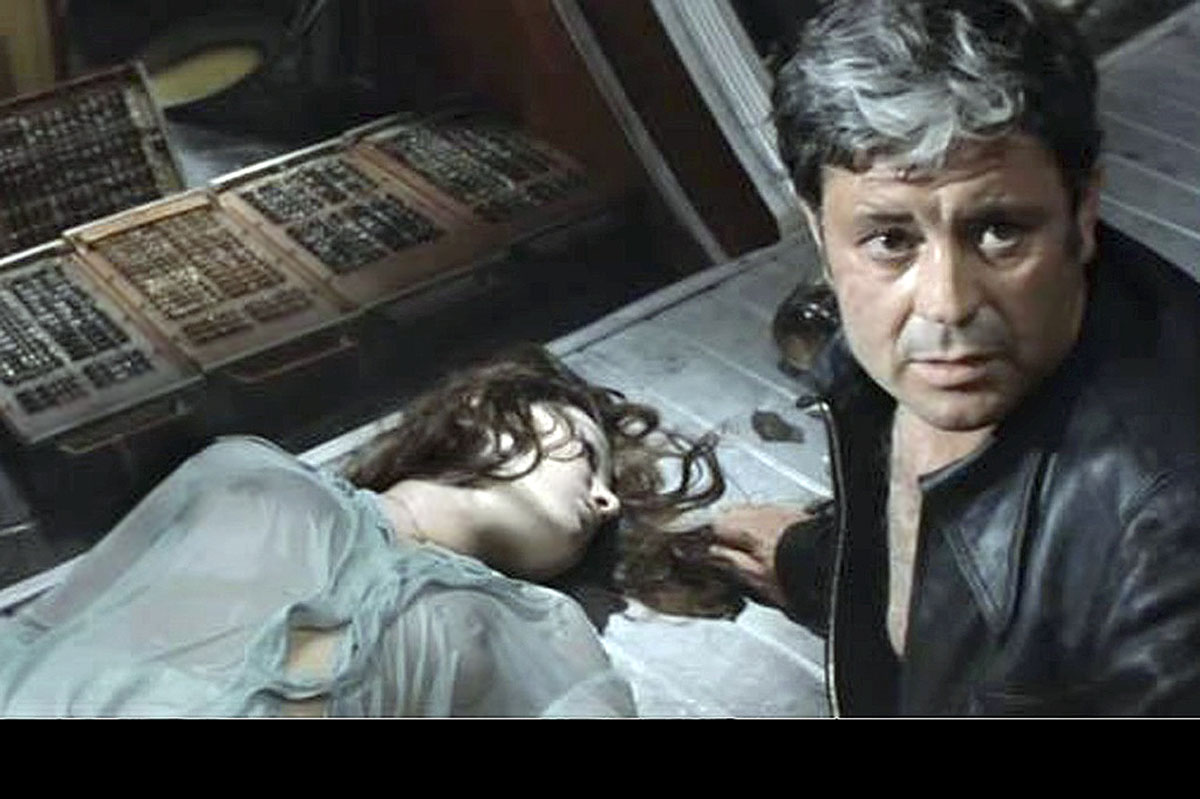
It is “Rublev”, and not “childhood” has all the generic signs of the debut. There is a youthful charm, and a daring dispute with senior colleagues. First of all with Sergey Eisenstein. Copying the corporate division into the heads of the creator of Nevsky and Grozny, Tarkovsky fundamentally does not agree with him in the main thing. At Eisenstein, Ancient Rus' was Elsinor, the space of cruel intrigues and conspiracies: the Knights fought on the ice, the boyars glided in shadows under the arches of the chambers. For Tarkovsky, it is a space of pure creativity, an analogue of Tuscany of the Renaissance. They don’t drink, they fight and cry, but fly, write, dance and pour the bells. But the main thing is that the theatricality of Eisenstein Tarkovsky opposed a living and tangible space. This XV century has a taste and smell: they swear as in the neighboring courtyard (“We don’t drink,” says the monk - Ivan Lapikov. “And the women are not **** (we’re getting off),” retorts the buffoon - Rolan Bykov), they are also embarrassed, also afraid, swimming, tormented, tormented.
American space is a dry, synthetic, lifeless space, hostile and terrible for humans. Tarkovsky was able to make him at the same time futuristic and cozy
"Solaris"
The transition of Tarkovsky from the harsh black and white gamut in color finally decorates his style. Style is generally a keyword for "Solaris": it is in it that all the most important in the tape is cast in it. If Rublev was a polemic with Eisenstein, then Stanley Kubrick with the “Cosmic Odyssey” acts as an opponent. American space is a dry, synthetic, lifeless space, hostile and terrible for humans. Tarkovsky was able to make it at the same time futuristic and comfortable. He removes the city of the future in Tokyo - because the texture and heat of each concrete slab are needed. The spaceship is inhabited by dusty books, busts to make it alive and inhabited. This is by no means a war with the genre-it is strange to imagine that Tarkovsky would seriously take up the confrontation with the “planet of storms” and other naive sai-fay, that is, a science fiction cinema. And not a fight with “mass cinema”: the director was by no means a snob and, say, “Terminator” appreciated very highly. Tarkovsky contrasted the image of the Cosmos as a forest inhabited by the spirits of the forest. He is about the same as Rus' in Rublev. Living matter. Kubrikov’s tradition - space as insensibility - gave rich shoots. Tarkovsky’s path turned out to be almost unique. Therefore, the beautiful cosmos in the new cinema is in bulk, and the living, inhabited-once or twice and expected.
"Mirror"
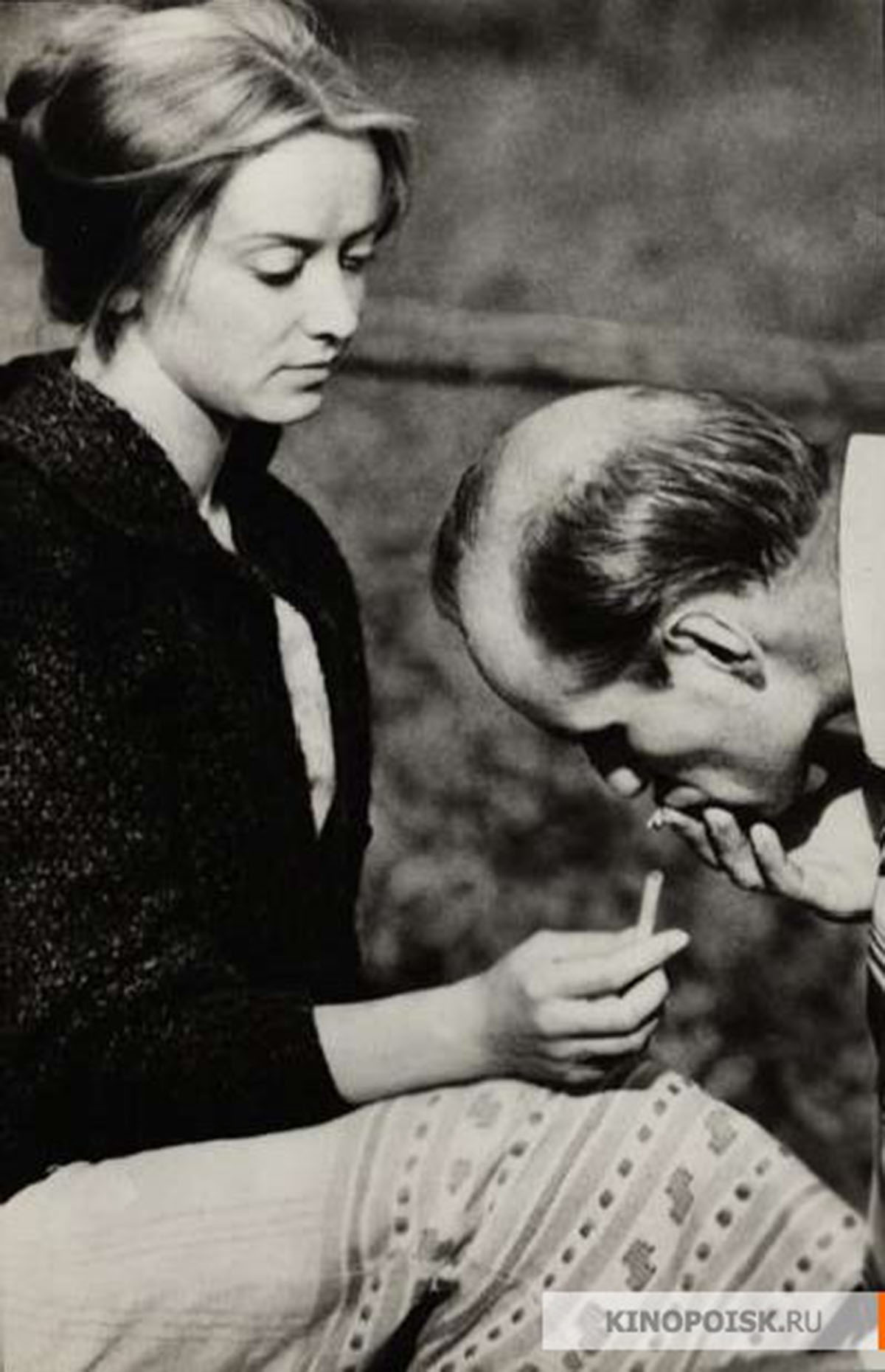
By the degree of radicalism, no film with the "mirror" can be compared. This is an extreme, almost shameful level of trust in the viewer and directorial frankness. Of course, the idea of a film-remembrance grows from a rich literary tradition: Nabokov, Proust, all those who used the text as an instrument of causing the spirits of the past. Only the “mirror” is composed of other material than the “other shores” or “in the direction of Svan”. These are not details that take the world of memories. The camera here gives the flesh of ephemeral matter - memories, dreams, fears. The ambitious task was not to carry out without the great movie operator George Rerberg. He found an amazing palette: a dark green tone with a splash of sunlight alternates with faded personnel. In another color scheme, it is now impossible to imagine neither memories, nor the space of memory and reflection. As we look at any slushy spring through the eyes of Levitan, and we look at Paris through the prism of impressionist optics, so our memory has forever gained its art form. Everyone who saw the “mirror” stains his memories and dreams in the colors of a burning barn, flooded in the evening light of the hut and gloomy forest.
"Stalker"
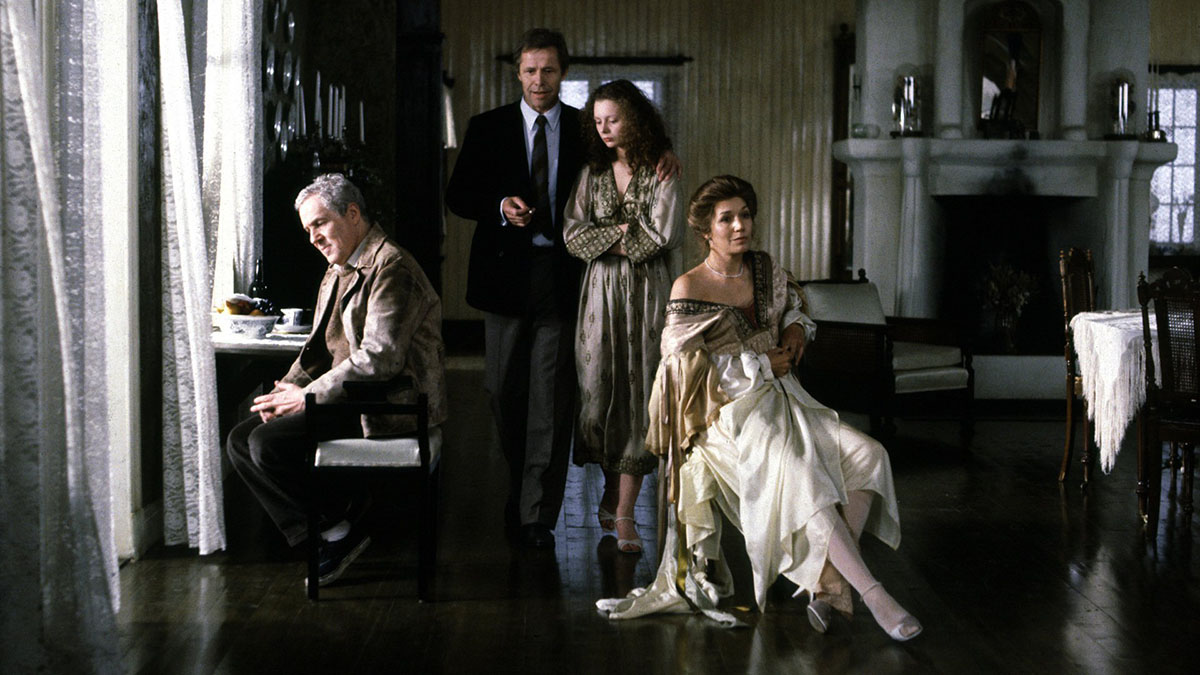
Three times crossed by three operators - George Rerberg, Leonid Kalashnikov and Alexander Knyazhinsky, “Stalker” came out the most severe and toned from all Tarkovsky’s films. This is a living monument to artistic perfectionism. Tarkovsky works by the method of constant elimination of excess: fantastic, adventure plot. Tones and shades. Installation and paints. Accents and rhetoric. From the "picnic on the sidelines" of the Strugatsky there is only a plot: people are looking for happiness. From the game of Alexander Kaidanovsky - only mean movements. From the operator solution - the smooth movement of the camera in the zone. From the palette - dull half -flowers. The set of artistic means, which was first used in "childhood", was brought to real skill here. But the main thing is that such spartanism proves a simple truth: the perfection of the form is quite feasible. Let it cost very expensive. Relations with colleagues (a quarrel with Rerberg, who left the filming, may be the main tragedy of Soviet cinema). Own health. Creative and vitality.
Usually the “sacrifice” is interpreted as a creative will. But this is rather the beginning of the new Tarkovsky - the one quoted by clipmakers (for example, REM group in their hit Losing My Religion)
"Nostalgia"
With the last two taps of Tarkovsky, the situation is the most difficult. The straightforward names themselves dictate a strictly defined interpretation. It is written "Nostalgia" - it means about longing for the homeland. In fact, everything is strictly the opposite. The plot in the Turgenev spirit about Russian abroad in Nostalgia is realized in the format of longing for world culture, a search for itself among Tuscan landscapes. The solution of the film is also cosmopolitan. Never before and never after the domestic (Oleg Yankovsky) and foreign (Erland Juzefson) the actors were not so equal, they did not speak the same language in every sense. If there is a tape about the fact that Russia is an integral part of European culture, then this is “nostalgia”.
"Sacrifice"
Again the problem of straightforwardness. Usually the tape is interpreted as a creative will. But this is the beginning of the new Tarkovsky. The one who is quoted by the clipmakers (and began to quote almost immediately - for example, the REM group in their hit Losing My Religion), whose films are twisted in fashionable galleries. Tarkovsky here seemed to merge with a European landscape. He created a portrait of the universal space - the lost island - and the universal hero - a man living on the verge of the end of the world. He equalized a movie with fine art, united the gallery with the cinema, forced Erland Juzefson to arrange performances in front of the camera, as Marina Abramovich would envy. He completed everything that he stubbornly did for twenty years of his creative activity. He set a bold point - with a frame of a blazing house. And disappeared.
Photo: Kinopoisk.ru, AP Historical Hard Drive 2003/Fotolink/East News