
Translated material
Heidegger's banality
Why are ultra -right ideas so attractive? Today, in connection with the publication in several countries, including in Russia, parts of the Black Notebooks - in the essence of the diaries of the great German philosopher Martin Heidegger, debugged with renewed vigor about his connection with Nazism. In March of this year, the 90th anniversary of the release of Heidegger - “Genesis and Time” was also fulfilled. This story is both a lesson, and an explanation of why far -right doctrines like many and in the 21st century
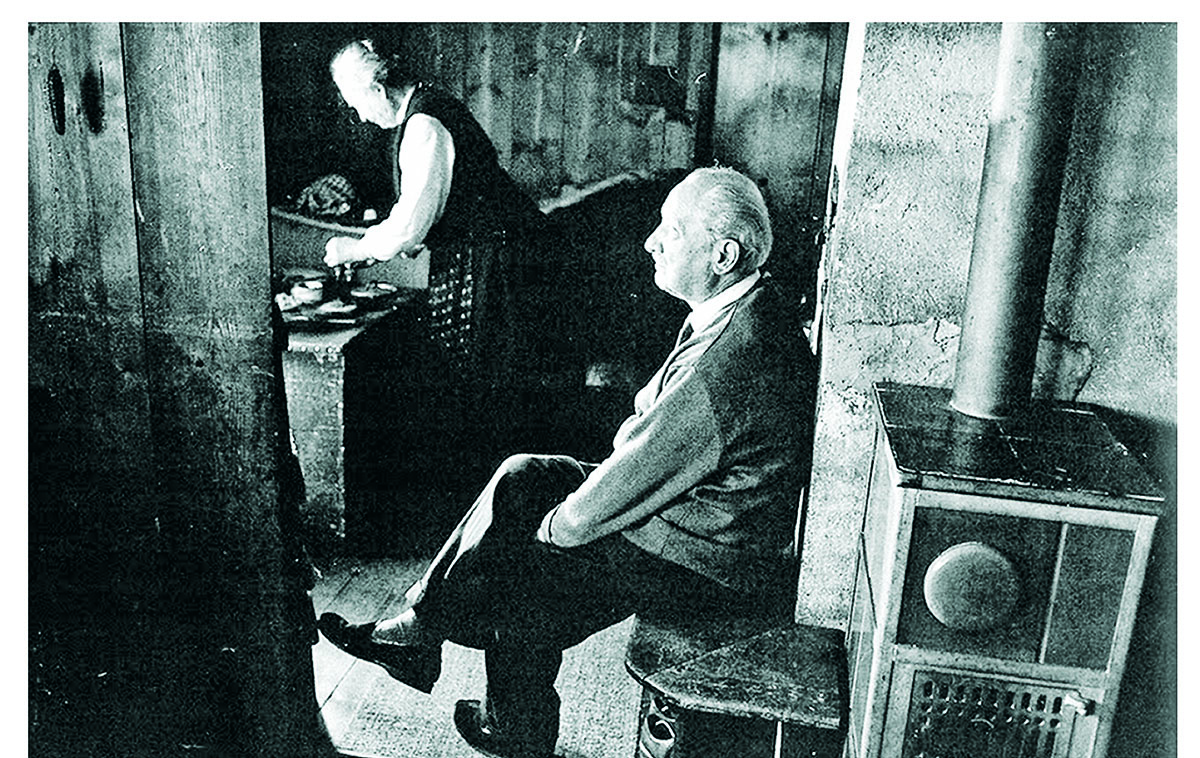
The great recluse with a distrustful, unpleasant look and gesture, as if defending the owner of a mustache, in a hat, like a Bulgakov master, locked in his shelter Die Hutte in the Shvartsvald Todnauberg - a house without amenities, but with a living spring that murmured nearby and a country -looping road, pierced like a miner, like a miner. being. He selected for him heavy combinations of words, the meaning of which is meaningful in the original and is interpreted differently translated into other languages.
The key concept of Dasein is in French and English translations “existence” (with disputes about how Heidegger bequeathed to write-Dasein or Da-Sein), and in the classical translation into Russian Vladimir Bibikhin, “Presence”-in later interpretations, are still “existence”. “In his room, the peasant, according to all the rules of art in a countless set, prepares a roofing ahead for the roof of his house-and my work is in essence,” Heidegger writes in 1933, just when he becomes the rector of the University of Freiburg. Nazi rector.
"Dear Martin"
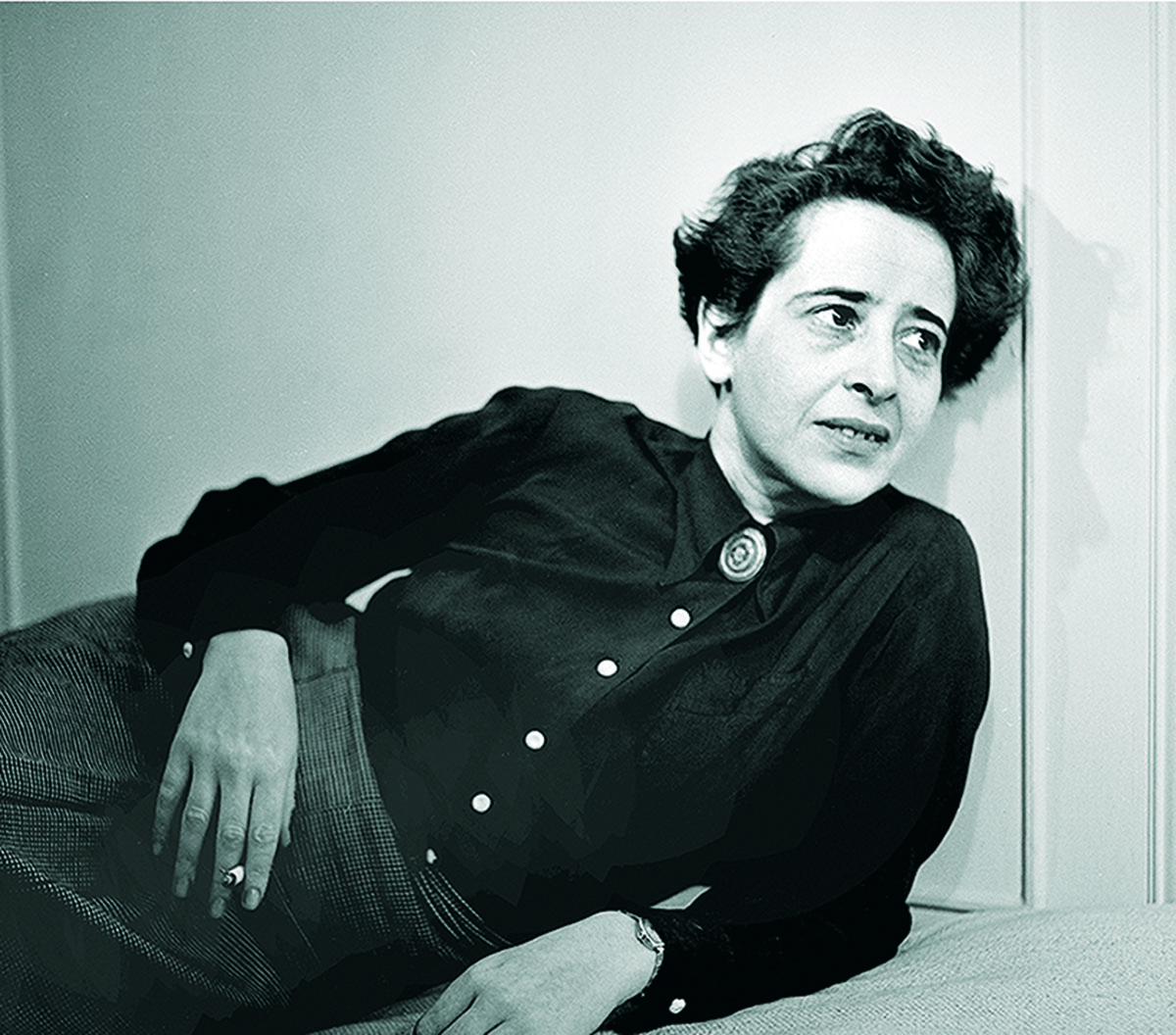
In the transcript of the discussion of Heidegger's works at the Institute of Philosophy of the USSR Academy of Sciences in 1989, there is not a word about his connection with Nazism. It was outside the discussion - they talked about the actual philosophy and problems of translation. In the late 1980s, the books of Viktor Farias and Pierre Burdier had just been published, dedicated to what they would then call the Heidegger’s business-the relationship of the philosopher with Nazism. In those years, his love and business correspondence with Hannna Arendt was not yet published, whose “origins of totalitarianism” and “banality of evil”, perhaps, partially explained the phenomenon of the philosopher, leaning against national socialism, but did not cancel her love for the teacher, “dear Martin”. And nothing was known about the content of his “black notebooks”, which are published and translated very gradually-they discovered the painful struggle of the philosopher for their correct (“spiritual”) national socialism, with the same dasein adapted to him. Although his rector's speeches of the same period-“to be fed and educated by knowledge of the leaders and guardians of the fate of the German people”-rather go according to the category of National Socialism, which he himself irritably called the “vulgar”.
“Culture does not matter. You better look at his stunning hands! " - said Heidegger about Hitler
Now the National Socialist Discourse is found here and there in his philosophical works. The French translator and writer of German descent Georges-Artyur Goldshmidt discovers him even in “Being and Time”, which, delicately, is not easy to do. However, he goes even further, claiming that Heidegger himself is Nazi.
Simple layman
Having left the rector’s post and moving away from the “vulgar” National Socialism, Heidegger plunged into recluse even more. Having betrayed colleagues-Jews, putting up with the Nazi activism of his wife Elfrida and, in principle, what happened in Europe after 1933, he was always so separate, mixed with a mass of “banal”, who later, after the defeat of Nazism, the occupation authorities arranged “excursions” on the camps of death, did not prevent them from sleeping Crematic furnaces? But in Die Hütte, into the house of the philosopher, the smell of burned human meat did not penetrate.
“Genesis and Time” is dedicated to the teacher-Edmund Husserl, who in April 1933 was deprived of the status of an honorary professor of the University of Freiburg as a Jew. Husserl's favorite student herself was self-helped, despite the fact that on May 1 of that year, Heidegger became a member of the National Socialist German Workers' Party (NSDAP), and at the end of the month he took office in Freiburg. The teacher Heidegger was owed a place at the University of Marburg, where a new teacher had many students, subsequently world -class thinkers, most of whom were Jews: Max Horkheimer, Karl Levit, Herbert Marcuse, Leo Strauss, Hannah Arendt. Heidegger was in a hurry to finish “Genesis and Time” because the appearance of the book could contribute to the Husserl plan - he intended to give his student the department at the University of Freiburg (which happened in the next 1928).
Heidegger's friend was Karl Yaspers, married to a Jewish. With him, when it needed it, the relationship was torn. (“Culture does not matter. You better look at his stunning hands!” Said Heidegger Jaspers about Hitler). However, in the last letter of Hannah Arendt, dated in the winter of 1932–1933, he called rumors about his anti -Semitism slander - "and even more so this cannot affect your attitude." As one of the characters of Irina Grekova’s novel “Fresh tradition” said: “And mind you, every pogar has his own beloved Jew.”
Coercion to loyalty
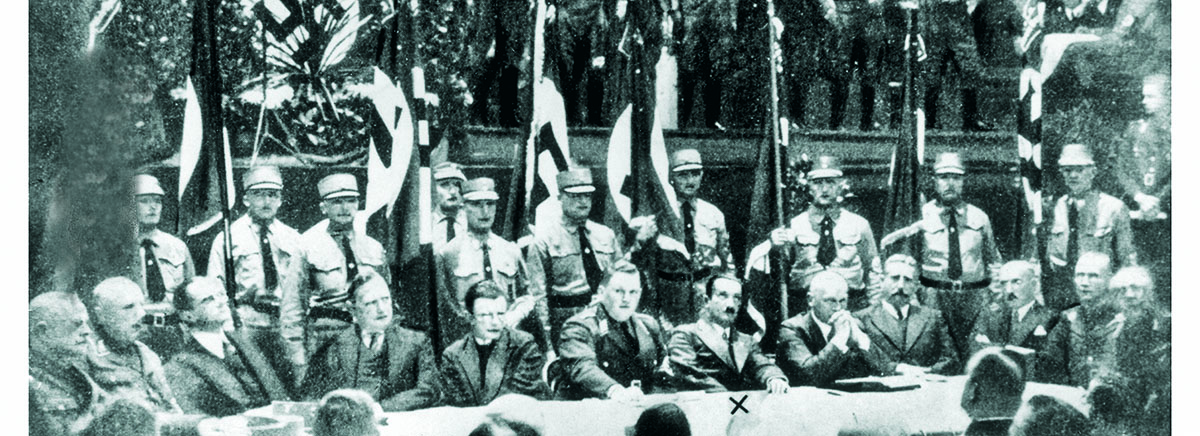
Gleichschaltung - this difficult to translate the term is the key in explaining the nature of totalitarianism and to an even greater extent - the nature of submission to it. This is when the whole mass of the people should express loyalty to the regime. In the case of Germany - total nationification of behavior, institutions and preferably thoughts. We will try this term on the Stalin and even the post -Talinsky USSR, and he will be fit: each person should have been Soviet, even if he was not in the party; If I thought in an anti-Soviet one, I was forced to at least pretend to be Soviet. And where to go from the submarine?
Putin’s Russia cannot be described by the term Gleichschaltung, but at least it has cooed the coercion of loyalty to its elites and their service, power and intellectual: many are already forbidden to communicate with foreigners, and representatives of entire professions - for example, police and FSB officers - go abroad (the ban where is informal and where it is formal). It is otherwise than a partial Gleichschaltung, which means that you can’t call partial totalitarianism.
Was Heidegger a victim of Gleichschaltung? On the one hand, like any German citizen - yes: everyone ran - and I ran. It was necessary to join the party to continue his career or to be left alone, they gave the opportunity to work normally - and I entered. This is a simple explanation of the reasons for supporting any authoritarian or totalitarian regime of the main mass of the people, including its best representatives. In this sense, the Heidegger case is one of the historical precedents explaining the current conformism of the intellectual elite in Russia. But, on the other hand, Heidegger despised Gleichschaltung. In the fall of 1932, in “black notebooks”, he puts him on a par with the “traditional routine”, which means he evaluates as something far from the genuine “spiritual national socialism”, which should help to avoid “threatening omarjuations of movement”.
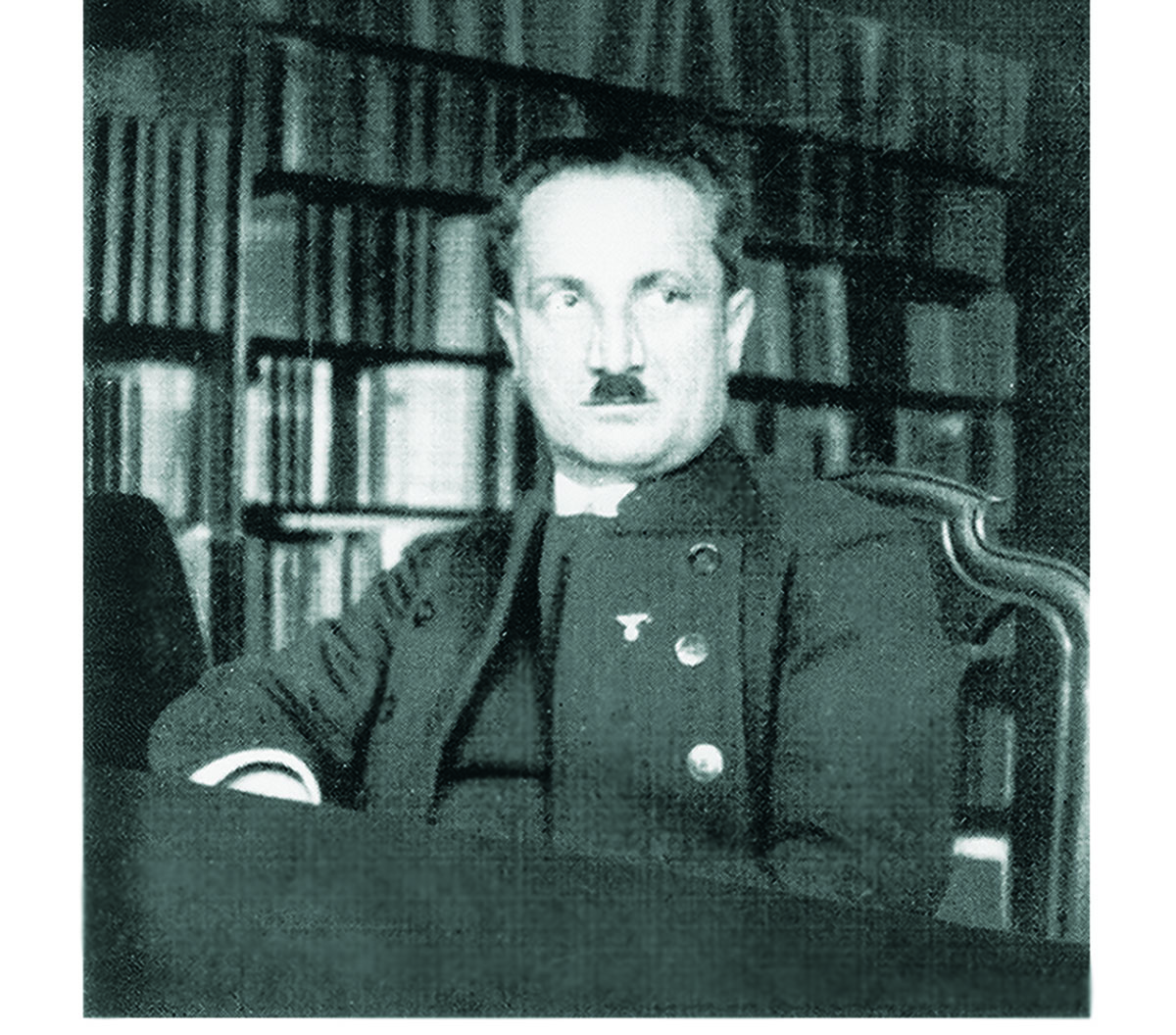
Heidegger's speeches of 1933–1934-“Self-affirmation of the German University”, “University in New Reich”, “National Socialist School of Knowledge” and others-could be considered the usual expressing of loyalty using the then-dominant political language. But the problem is that in these speeches, Heidegger enriches the Nazi language, and, as follows from the "black notebooks" of the same time, does it more or less sincerely, with zeal and intellectual effort.
Weren't the careers of Soviet Marxist philosophers,, however, very older than Heidegger, with a similar political regime? And is it not so ready to behave, fit into the political mainstream, part of the current Russian humanitarian professors?
Heidegger, of course, is not Adolf Eichmann, who was responsible for the final solution of the Jewish question, whose banglist and bureaucracy of whose behavior was insisted by Hannah Arendt. But he is also banal. Because it is adaptive. These are all the same questions about the average person who lived in the totalitarian times, which was asked by Arendt: “Why did he even agree to become a screw? What happened to his conscience? <...> And why did not Nazis find the Nazis in post -war Germany? Why could everything turn upside down a second time, simply as a result of the defeat? "
Roots and soil
If Heidegger lived in 1960-1970 in the USSR, in politics he would have joined the informal “Russian Party”, in prose (and poetry - he wrote poetry) - to the “villagers”, to the circle of “our contemporary” and “young guard”. If we simplify his position - he was a “soil”, only by the European, politically - the precursor of the current “new right”, fighters for the post -order.
Its genuine historical Europe was limited to the idyllic corners of Schwartzvald, the ice air of the mountains, the smell of fir trees, an echo from the blows of the axle ax. Surprisingly subtle Heidegger miniatures describe, for example, the magic of bell ringing. And in this, of course, nothing national-socialist-his German romanticism was a reaction to the arrival of bourgeois civilization, the era of "tearing from the roots." Nazism, as power, only gave a political dimension not so much philosophy as the attitude of Heidegger. Of course, he did not refuse after the war, except that the “spiritual national socialism” dissolved. In the speech of the “detachment” uttered in his hometown of Messskirh in 1955, Heidegger will say: “Under the threat is rooted (which again can be translated as“ settling ”,“ standing on the basis ”) of a modern person.” So he fought all his life with forces, tearing a person from his roots and soil.
“Why were there no Nazis in post -war Germany? Why could everything turn upside down a second time, simply as a result of the defeat? "
After the release of part of the “black notebooks”, the influential French intellectual publication Le Magazine Litteraire in the February issue of 2017 asked their authors the question: “What to do with Heidegger?” And what to do with Karl Schmitt, leading the law for the National Socialist times? And how to relate to the fact that quotes from the ideologist of Russian fascism and at the same time researcher Hegel Ivan Ilyin at one time penetrated abundantly in the speech of the President of Russia?
It probably makes sense to leave Heidegger philosophy. At the same time, to study on his example, from which Sora can grow (or maybe under certain circumstances and not grow) the extreme right ideology. Along the way, to recall that the intermittent story of his love for Hannah Arendt (anti-Semite for the Jewish) stands somewhere between Tristan and Isolde and Abelire and Eloise.
Photo: decasAalclub.blogspot.com, freed stein/picture-alliance/dpa/ap/east News, akg-images/east News