
Translated material
Unexpected entertainment
Architect and artist Eugene Ass that he reads for a buzz and what books occupy him from the point of view of the history of the development and culture of cities
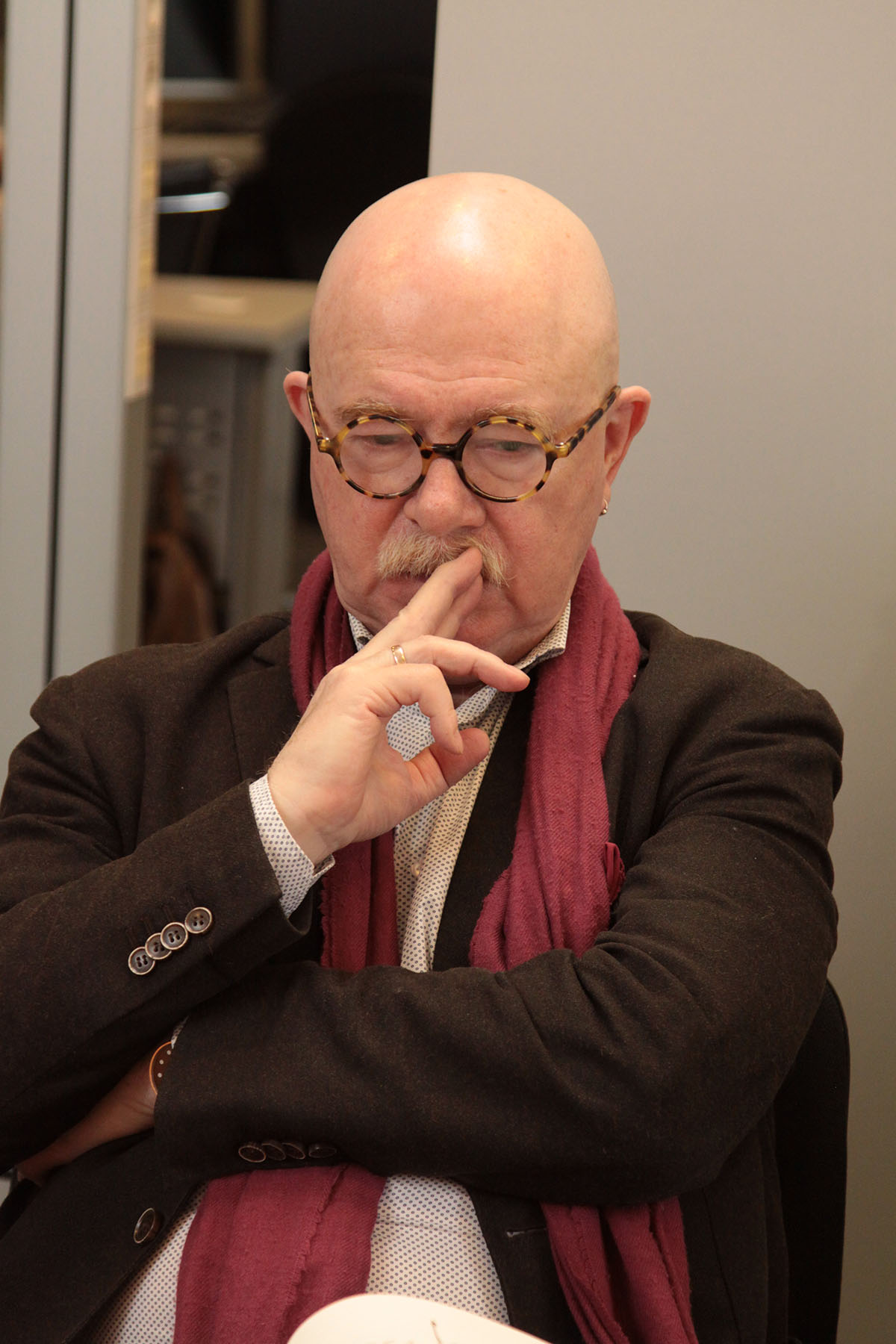
I usually read early in the morning, from 6 to 7 hours, I do it slowly and carefully. A stack of books lies next to the bed, and I choose from the mood: I can read 4-5 books at the same time. I have a complex relationship with fiction, so basically these are books, one way or another related to my specialty. I have a good literary scum: I can say after three pages whether I will be interested in a book or not - because of a bad language, poor translation or uninteresting plot, a stupid scientific concept.
- For a buzz, I have been re -reading the novel by German Melville for almost a year for Moby Dick, or White Kit, which first read 55 years ago. About a year ago, he fell into my hands again, and I was intrigued by one phrase: it became interesting how it sounds in English. Then I first took up the original text. Now I read “Moby Dika” in Russian in paper form, and nearby is a tablet with English text. There is also an opening site dedicated to the analysis of this work, which I carefully study. An amazing book of a complex, multilayer structure with a very large number of straight or encrypted meanings: I was so drawn so that I could not tear myself away, I looked at all the adaptations. The translation of Inna Bernstein is good, but he has a different intonation than the original: in English this is a very epic work, it is more symphonic, and this is directly related to the nature of the language, everything sounds more straight and more monumental than in Russian. It is interesting to analyze the intentions and capabilities of the translator, to think about how I would act with this phrase. Here is such an unexpected entertainment.
- Now, with great pleasure, I read Richard Sennet “Flesh and Stone. The body and the city in Western civilization ”, which in Russian was released only last year, although it was written back in 1994. I once leafed through it in the original, but did not master it, but I read it in Russian with pleasure, it is well translated. “Flesh and stone” is an amazingly interesting study of the history of urban culture, the relationship between the architecture and layout of the city and the history of rituals. It covers a very large historical layer, from ancient Athens to New York of our time. The book has many incredibly subtle observations regarding the existence and development of culture within urban fabric and answers to questions why the cities developed this way and not otherwise.
- With interest and sadness, I read the study “New York School and the Culture of Her Time” by my good friend, American art critic Dori Ashton. Dory was a key specialist in American art of the 1950s and further, was familiar with all participants in the New York school. This is a book about how the artistic culture of New York was formed, from where Jackson Pollock, Mark Rothko and other outstanding artists who had a strong influence on the entire subsequent artistic life in the world appeared. Since Dory was a direct participant in events, she very deeply talked about it. It is important to read this book, looking at the pictures: inside the Russian edition, bad black and white reproductions are presented, but all this can be found in albums or the Internet. Unfortunately, shortly before the release of this book in Russian, Dori Ashton died. She loved Russia very much and always waited for the Russian publication.
Recorded Anastasia Torop
Photo: Alexey Antonenko