
Translated material
Eight months of freedom
100 years ago, the Provisional Government officially canceled the Pale of Settlement and other discriminatory restrictions for Jews
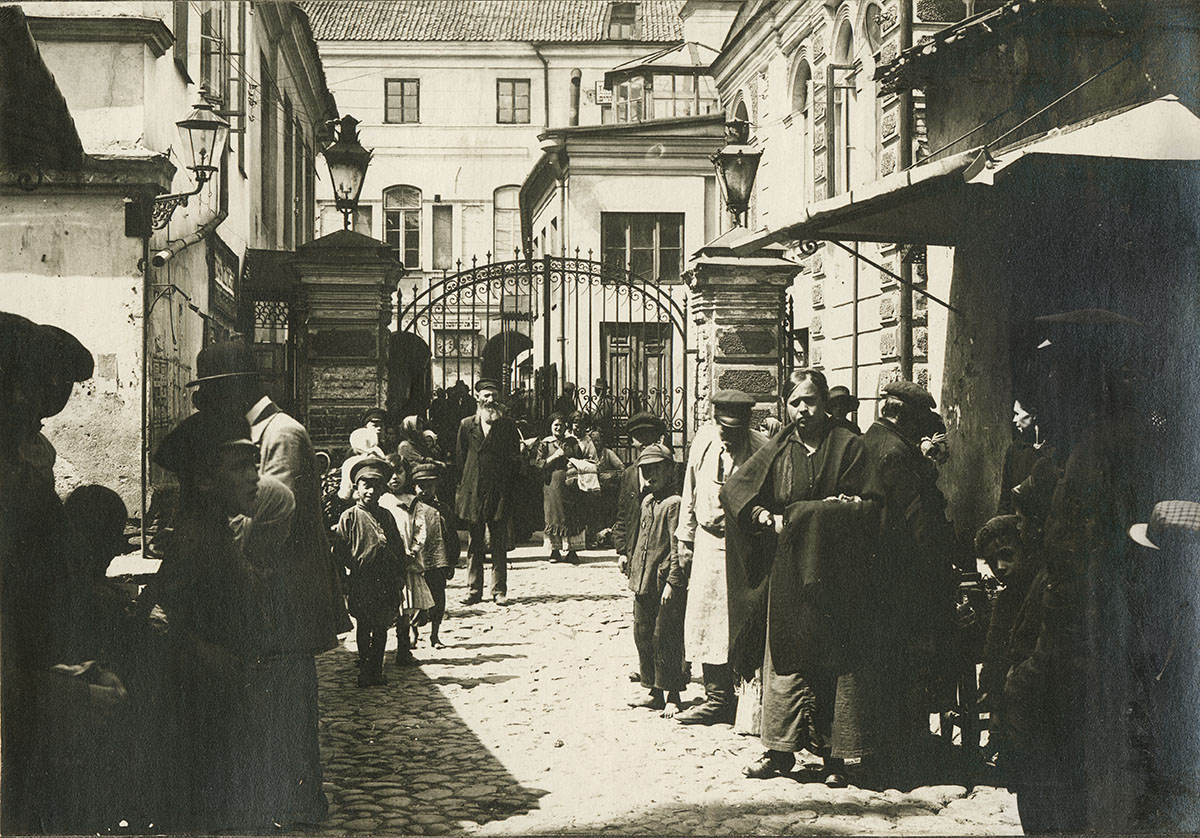
A few days after the February Revolution, a telegram from a police officer from the Poltava province entered the office of the capital's mayor: “Is it possible for a merchant of the Third Guild Tsiperovich to come to Petrograd for a week?” The newly appointed assistant to the mayor ordered to answer as follows: “To such and such. The merchant of the Third Guild Tsiperovich can arrive in Petrograd when he pleases. The stay is unlimited. In general, Ciperovich now has the right to free movement and stay within the Russian Empire. ”
The historian Semen Dubnov, who lived at that time in Petrograd, recorded in his diary: “A significant day, published ... an act of Jewish emancipation in Russia. The dream of a lifetime, the goal of suffering and struggle came true ... "*
Equal citizens
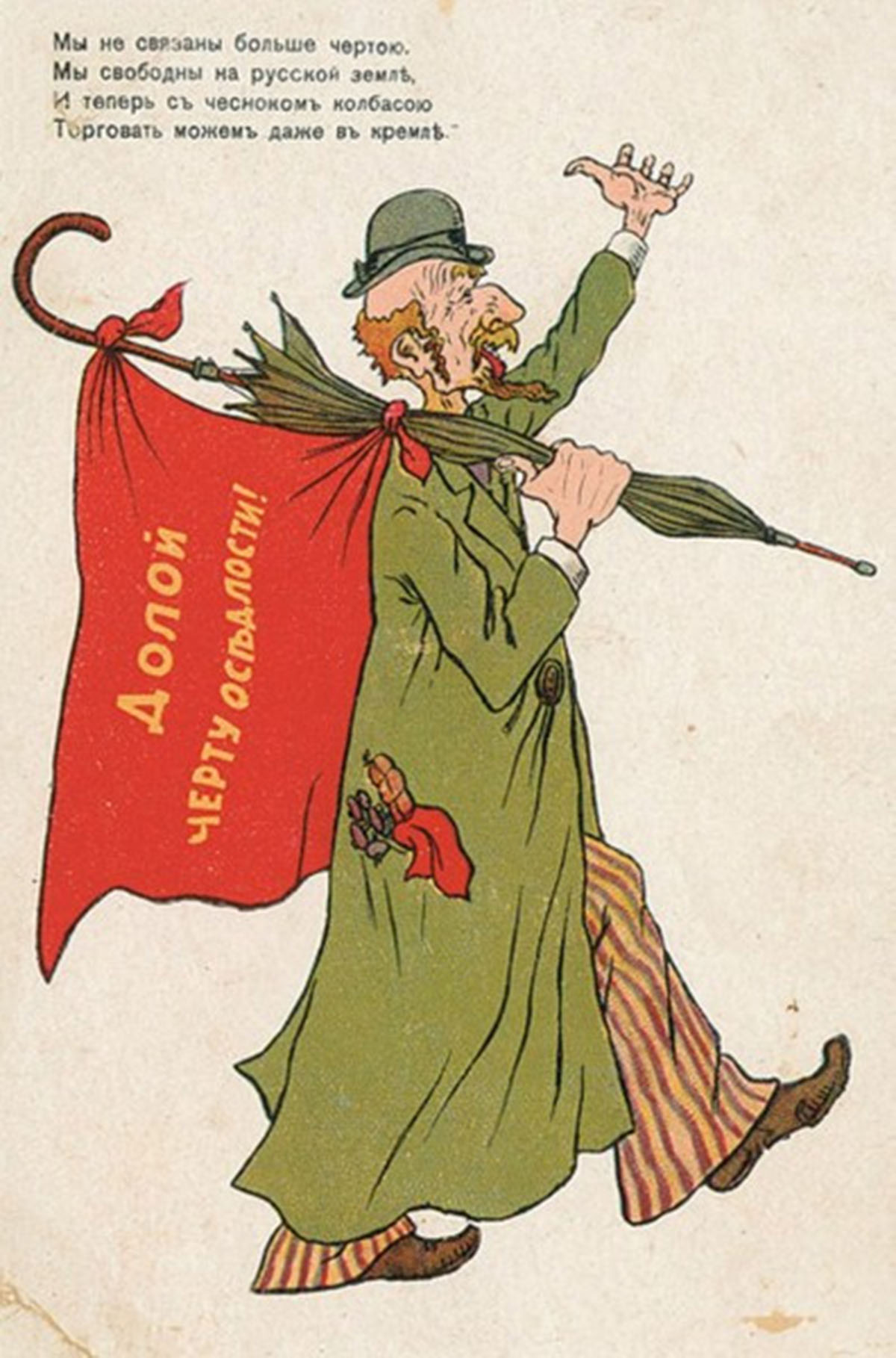
On March 20 (April 2), 1917, the Provisional Government, “based on the belief that in a free country, all citizens should be equal before the law”, adopted a resolution “On the abolition of religious and national restrictions”. From that moment on, all discriminatory anti -Jewish laws of the former Russian Empire ceased to exist. Jews received equal civil, political and national rights with the rest of the population.
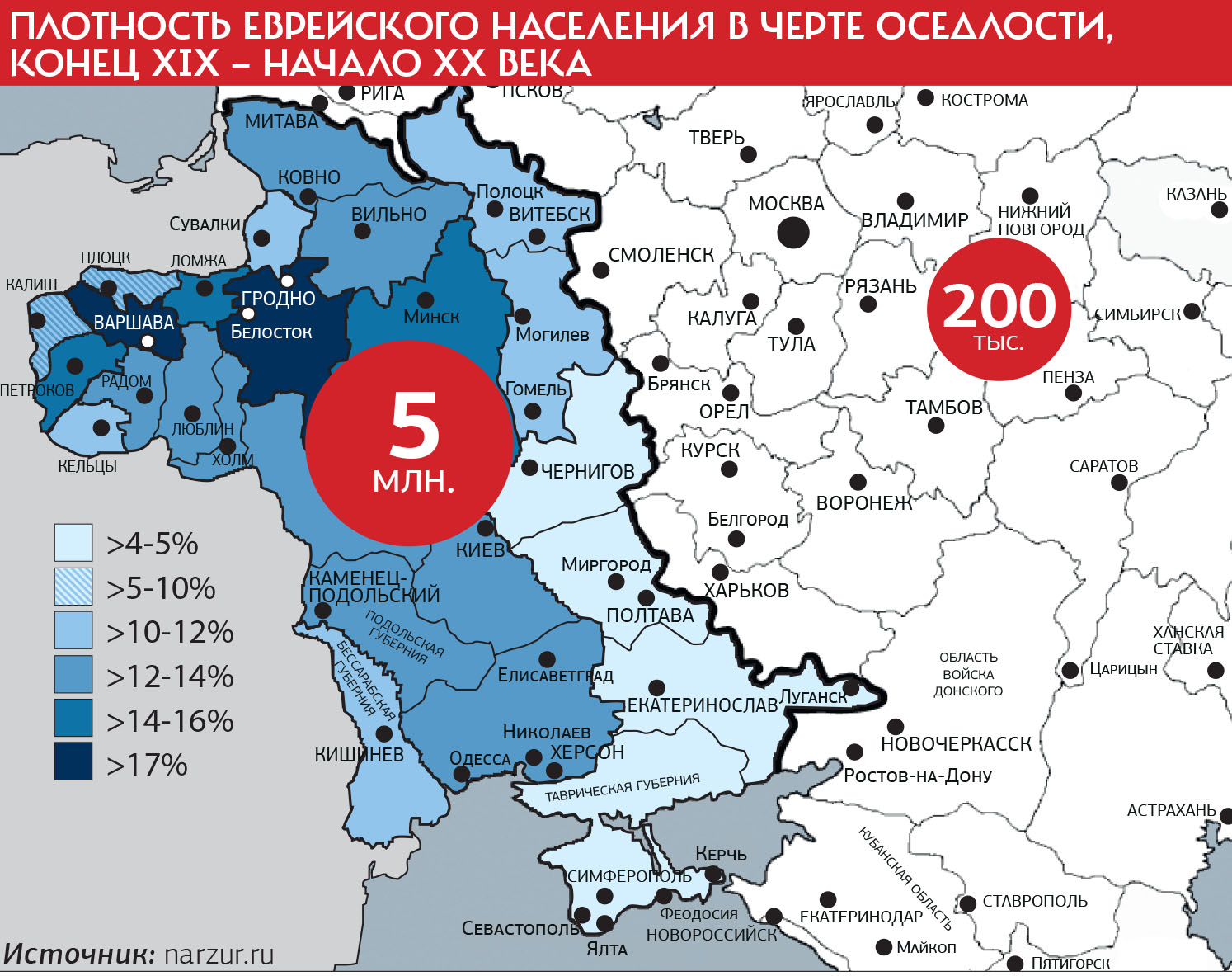
A symbol of Jewish lawlessness was eliminated - a feature of constant sedentary, established during the reign of Empress Catherine II, shortly after the division of the Commonwealth at the end of the 18th century. It was on the Polish lands, which became Russian possessions, as well as in the deserted and waterless southern steppes, called by Novorossia, which were conquered from the Turks, was allowed to live Jews.
“Tsiperovich can arrive in Petrograd when he pleases. The stay is unlimited. In general, Tsiperovich now has the right to free movement and stay within the Russian Empire "
The decision prepared by the Minister of Justice Alexander Kerensky was signed by all the ministers of the Provisional Government. The historian Josef Nedava wrote: “The government newspaper, which placed this law, gave in the application a list of previously operating laws and decisions against Jews. This list, filled with small print, was so impressive without specifying the details that the person not without the imagination involuntarily wondered, but how, in fact, how did these people survived, pursued by law for only one name? ”**
In addition to the fact that the Jews were allowed to live only in the western provinces of Russia, they did not have the right to settle in villages in this line, to live closer to the borders of the empire, in the region of the Donskoy army, in the resort areas of the Black Sea and Baltic coasts. There was a percentage norm for Jews who arrive and students in secondary and higher educational institutions. There were numerous restrictions on trading activities. Jews were not accepted for public service, they could not work on the railway, occupy officer positions in the army and in the navy. Non-commissioned officers had only a few; Even the baptized Jews in the third generation were deprived of the right to enter the Junker schools. The mass deportations of Jews were periodically arranged, the most significant occurred in Moscow and the Moscow province in 1891-1892 (20 thousand people), as well as in St. Petersburg; Hundreds of thousands were evicted during the First World War. Listing prohibitions can be continued.
Hopes and fears
After the February Revolution, political prisoners began to return from prisons and links. Illegal parties left the underground. Stormy public and cultural activity began. They started talking about the future of Russia, which was seen by the Federation of equal peoples, each of which will be provided with wide autonomy.
The press, primarily Jewish, noted all the steps of national emancipation. Jews entered the Provisional Government: Cadet Semyon Lurie became a comrade (deputy) of the Minister of Trade and Industry, Menshevik Solomon Schwartz - a comrade of the Minister of Labor, Alexander Galpern - managing affairs of the Council of Ministers. 2600 Jewish boys entered the Junker schools and schools of warrant officers who were previously closed to them. By the summer of 1917, about 300 Jews were promoted to officers in Odessa and Kyiv. New schools and kindergartens have appeared with training in Yiddish (the language of European Jews - Ashkenazi) and Hebrew (Pentateuch language - Torah), professional and amateur theaters and studios.
In the first weeks and months after the revolution, it seemed that Russian Jews began new life with full -fledged citizens of an updated country. I wanted to believe that state anti -Semitism remained in the past, the anti -Semitism of the street was also noticeably diminished. The Jewish Life newspaper explained to the readers: “The reserves of anti -Semitic instincts accumulated over the years ... have not disappeared without a trace from the face of the earth, but only lay down under the rear ... Now they are tightly strangled and powerless to break out.” But the fears remained, sober people did not exclude the possibilities of tragic events. “The greatness of the revolution and impotence in the fight against hunger, all political freedoms and lack of bread - what does this contrast to dark masses work?” - the historian Semen Dubnov wondered.
Parties and politicians
After the February Revolution, the Russian parties who were previously in an illegal situation entered the public arena. Among them are Jewish: from the left social-democratic “Bund” to the orthodox religious “akhdus” (“unity”).
Jews also included in the Russian parties: Maxim Vinaver was one of the leaders of the Constitutional Democratic Party, Julius Martov, Fedor Dan, Pavel Axelrod were among the leaders of the Party of Mensheviks; The Central Committee of the Party of Socialist Revolutionaries included Mark Natanson, Osip Minor. There were not so many Jews among the Bolsheviks as is commonly believed. The census of members of the Bolshevik party in 1922 showed that only 958 members of the RSDLP (b) who entered it until 1917 were Jews. 1175 people became the Bolsheviks in 1917. Among the heads of the party were several people of Jewish origin, who considered themselves “internationalists”: Grigory Zinoviev, Lev Kamenev, Yakov Sverdlov. On May 4, 1917, Lev Trotsky returned to Petrograd in a roundabout way from America, who soon joined the Bolshevik party and became one of its leaders who played an important, if not decisive role in the Bolshevik revolution.
Among the Jewish parties, the Zionists launched the greatest activity who set the goal of "the return of the Jewish people to the desired historical homeland - Palestine." At the congress of Zionists in Petrograd, one of the leaders and veterans of the movement, Jehiel members, welcomed the Provisional Government and the Council of Workers' Deputies, who acted together, having adopted the “Law on Equality” in order to wash off the “shameful stain from Russia, which has gravitated over it for centuries,” the shame of Jewish lawlessness, ”and emphasized the importance for the whole of Russia of the upcoming Constituent Assembly.
Nevertheless, a significant part of Russian Jewry remained outside of any parties and even political addictions. They wanted only one thing - safe, free from discrimination, calm life, observance of traditions. “We are dragging stones for other people's buildings, and we completely forget about ourselves,” wrote in one of the Jewish newspapers “robbed Jewish tailor from Ovruch”.
In June 1917, the hero of the Russian-Japanese war, the creator of Jewish communes and self-defense units in Palestine Joseph Trumpeldor arrived in Russia. He reported from Petrograd, what was waiting for permission from the Provisional Government to create a Jewish regiment in Russia, which will go to the Caucasus or to the front to Persia, and from there to Palestine. “Both the banners of the Russian revolution, the Reds, and the banners of the Jewish Renaissance, the blue and white,” he wrote, “will flutter over our heads”*. When the News of Jewish pogroms began to reach from different ends of Russia, Trumpeldor formed self -defense units from Jewish students, capable of protecting the population from pogroms under new regime.
“The reserves of anti -Semitic instincts accumulated for years have not disappeared without a trace from the face of the earth, but only lay down under the offspring ... Now they are tightly strangled and powerless to break out”
Jewish parties and public figures were preparing to convene their own Constituent Assembly - the Extraordinary All -Russian Jewish Congress, designed to resolve issues about the basics of national work. But it was not possible to conduct it.
"The soul sang" Marseilles "
The vast majority of the Jewish public and all Jewish political parties did not support the Bolshevik coup. "Bund" made a decisive condemnation of the violent seizure of power.
“Who can forget what great enthusiasm,” wrote a contemporary, “what a deep spiritual upsurge, what joy and glee awakened the Russian revolution? The very soul sang Marseelus. The essence of the February revolution was freedom, and the essence of the October - dictatorship ... ”**
Eight months of freedom, between March and October 1917, despite a very difficult time, for Russian Jewry, has become a time of heyday in many areas of life - primarily political, public and cultural. This brief period was fulfilled with great expectations and hopes, many of which were not given to be realized ... After the signing of the Molotov-Ribbentrop Pact in 1939, state anti-Semitism in the “World War II in the World state” was not long in coming. In the postwar years, the struggle against "cosmopolitanism" began; In connection with the “Doctors' Affairs” (January - March 1953), anti -Semitism inspired by the authorities reached its climax; A new, much more significant, mass deportation of the Jewish population to the east of the country was prepared. The policy of state anti -Semitism and in all subsequent years of the existence of the Soviet regime did not disappear.
* Dubnov S. Book of Life. Memories
And thoughts. SPb, 1998.
** Nedava Y. Eternal Commissioner.
M. - Jerusalem, 1989.
* Cit. by: History of Jews in Russia. M., 2007. See also: Frenkin M. Russian Army and Revolution. 1917–1918. München, 1978.
** Anonymous report // Joseph Rosen Archive. Yivo Archives.
Photo: AGK IMAGES/EAST News, ISRAGEO.com