
Translated material
North Korea conducted another test of a ballistic missile
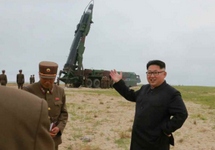
North Korea conducted another test of a ballistic missile. This was reported by the Pacific Command of the US Armed Forces (USPACOM).
"Uspacom discovered and tracked what we evaluated as the launch of the DPRK of the rocket on April 4 at 11:42 by Hawaii (00:42 Moscow time). The launch of a single missile was carried out from the ground -based object near the SNPO. The rocket was monitored until it landed in the Japanese Sea at 11:51 (00:51), - The message says.
It is noted that the USPACOM is in "close cooperation" with South Korean and Japanese allies in order to ensure security.
The next test of the North Korean strategic weapon took place the day before the visit to the United States, the chairman of China Xi Jinping.
The US Permanent Representative to the UN Nickei Haley called the DPRK a "threat to the whole world" and called on Beijing to impose sanctions against Pyongyang, the American television channel FOX News said . “It all depends on China. They can exert enough pressure on the CDNR and force them to retreat. Now is the time to prove it,” Haley said.
US Secretary of State Rex Tillerson said that Washington no longer has comments on this. "North Korea launched another medium -range ballistic missile. The United States spoke enough about North Korea. There are no more comments," the Secretary of State said.
Japan in connection with the launch of the rocket held an emergency meeting of the National Security Council. Prime Minister Sinzo Abe called North Korean trials a serious provocation and violation of the relevant resolutions of the UN Security Council. He did not rule out the likelihood of new provocative actions by Pyongyan and called for seriously thinking about it. At the same time, the prime minister said that "all measures are being taken to protect the lives and property of citizens of the country in close interaction with the United States and South Korea."
On Tuesday, even before the launch of the rocket, Haley reported that the UN Security Council on the initiative of the United States plans to hold a meeting on the DPRK at the level of foreign ministers on April 28. According to the diplomat, at a meeting of the Security Council on the issues of non -proliferation of nuclear weapons on April 28, the main attention will be paid to the Nuclear Activities of the DPRK.
The DPRK actively develops its nuclear missile program. On March 6, from the Tonchan-Ni Tontuccan training ground on the western coast of the country. At the same time, four ballistic missiles were launched at once . Three of them flew about a thousand kilometers and fell in the exclusive economic zone of Japan. However, many launches are unsuccessful. On March 22, the Vonsan launched from the Vonsan training ground in the eastern part of the DPRK rocket exploded a few seconds after the start .
On March 21, it became known that Washington is preparing a new package of sanctions against North Korea in connection with the developments of nuclear weapons and delivery products that continue in this country. In particular, the ability to cut off the country from the global financial system is considered. It is planned that a number of organizations and banks located in China and provide external trading of the DPRK may fall under restrictions.
In addition, the measures to contain the DPRK include the activation of the military presence in the region, strengthening the protection of South Korea and Japan. At the same time, Washington abandoned the idea of a preventive blow to North Korea, considering it too risky.
In November 2016, the UN Security Council unanimously adopted a resolution on new sanctions against the DPRK in connection with the country's nuclear and missile programs. The document expressed “serious concern” by the fact that Pyongyang continues to violate the resolutions of the Security Council, “repeatedly implementing or trying to launch ballistic missiles”. It was emphasized that such activity contributes to the development of nuclear charge delivery systems and exacerbation of tension in the region and beyond. The Secretary General of the UN Pan Hi Moon noted that these sanctions are “toughest” for all the time.