
Translated material
Games of reason. Why a small brain is good

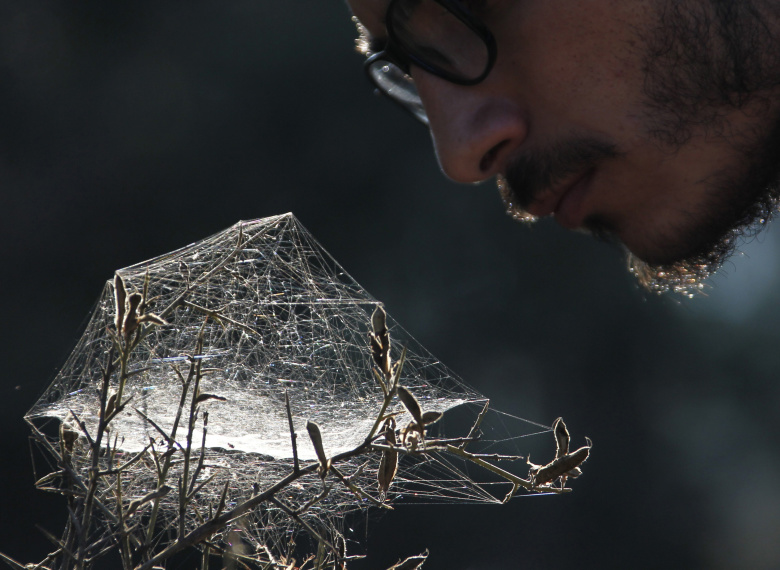
Scout is studying the web in Jezzin, Lebanon. Photo: Ali Hashisho / Reuters
Nature is incredibly diverse, on Earth there are animals in size from 0.1 mm (thrombidiform tick) to 33 meters (blue whale) - this is a difference of 330 thousand times. Even inside the same detachment, the spread in size can be huge: for example, the smallest spider has a length of only a third of a millimeter, and the largest does not fit on a dining plate and can hunt for toads and small mammals. Nevertheless, a huge tarantula does not exceed his little relative in basic skills and abilities. Moreover, although the brain in spiders and other insects is minimal compared to the mass of their body, the behavior of these creatures can be as difficult as in “more smart” animals with larger brains. As it happened and how the spider’s brain is able to help us in creating modern computers, explains Scientific American.
The idea that the larger the brain, the smarter its master is long outdated, but no one will argue with the fact that in the case of people a large brain is a good tool for solving the tasks facing us. However, many scientists are wondering: is the size a necessary condition? Do you need a larger brain to get food, hunt, construct something or show complex public behavior?
Subscribe to read the whole
Make a subscription Redefine.media to read Republic
Subscribe [you can pay for a Russian or foreign card. The subscription is extended automatically. You can unsubscribe at any time.]
Where are the money subscribers going