
Translated material
Gazprom lost a monopoly
Latvia opens the gas market for new suppliers
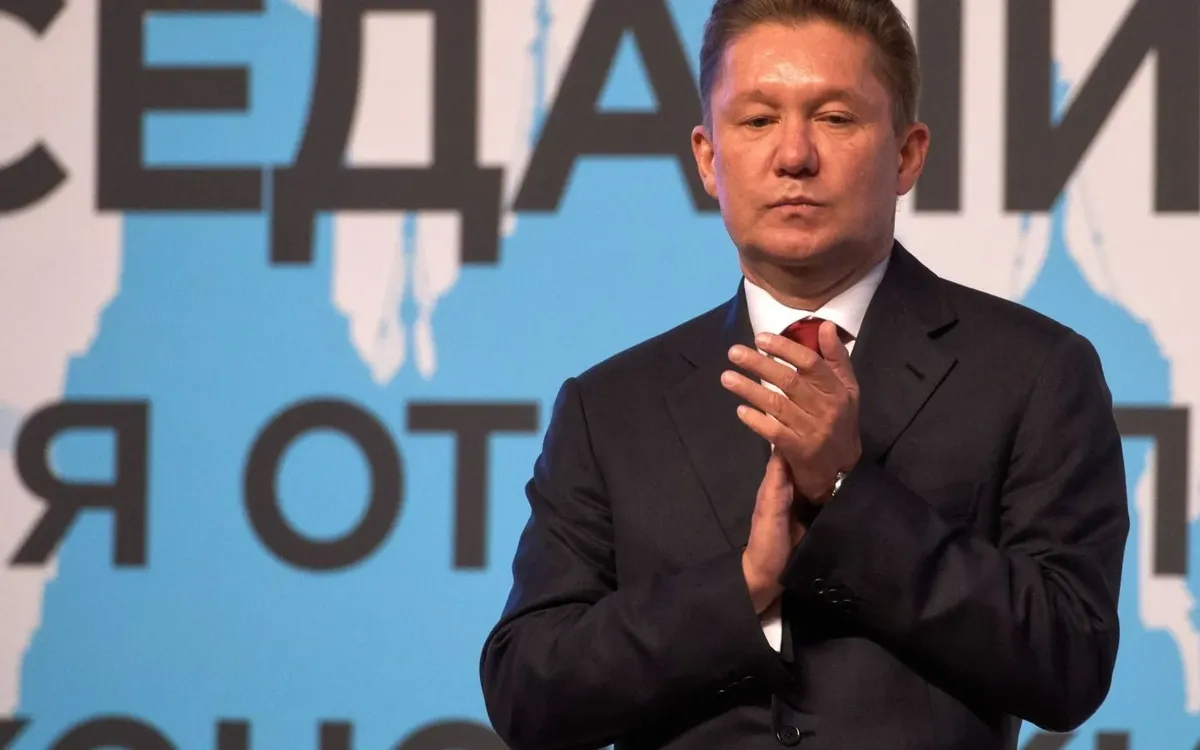
On April 3, the gas market opened in Latvia. For this last year, everyone was actively preparing. And the Ministry of Economics, and the Latvijas Gaze monopolist, and new companies, which now, by law, can also trade gas in the Latvian market. As well as households that are trying to calculate that this discovery will give: gas prices and electricity will decrease or, conversely, will fly up? “Gazprom” may also expect changes: the Latvian market for the Russian giant, although not the most voluminous, but stable - it was still possible to set prices, without looking back at anyone. Actually, to break the monopoly of one supplier and was the main task of liberalizing the gas market of Latvia.
New Free Market Rules
The Ministry of Economics says that it began to prepare for the opening of Latvia for a long time - with joining the European Union in 2004. In 2009, the EU approved the so -called “third energy package” - a set of directives and regulations, which also prescribes: storage, transportation, distribution and trade in gas in the territory of one country cannot be concentrated in the hands of one company.
The situation in Latvia until the winter of 2016 was contradicted to the Third Energy Pacete: Latvijas Gaze was in charge of the entire gas market, in which 34% of the shares belong to the Russian Gazprom. In January 2016, in accordance with the decision of the Cabinet of Ministers, a new company was registered - Conexus Baltic Grid, which received the transfer of infrastructure and gas storage. True, the Gazprom (the same 34%) is again listed in the property structure of Connexus, but until the end of the year he, along with Latvija Itra and the German Uniper, must leave the company.
By March 29, 15 companies expressed a desire to trade in the Latvian market - among them there are also Lithuanian and Estonian.
There are few own resources
The Baltic region as a whole and Latvia in particular are not rich in hydrocarbon resources: their only large reserves are a shale pool in Estonia. Until recently, Lithuania, Latvia and Estonia were forced to fully cover their needs in natural gas at the expense of Russia. The situation is gradually changing with the opening of the liquefied gas terminal in Lithuania - in the port city of Klaipeda. Through it, Lithuania in 2014 accepted the first supplies of liquefied gas from the Norwegian company Statoil - already in 2015, Norwegian gas covered 18% of the country's needs. Latvia began to supply Norwegian gas to Estonia: in the same 2015, 15% of the total gas was imported from Lithuania, and 85% from Russia.
Now Clipeda is, in fact, the only real alternative to Gazprom for Latvia. At the same time, liquefied gas has its own specifics. “At least three components are required to supply liquefied gas,” the former Minister of Economy of Latvia Vyacheslav Dombrovskis explained to Novaya Gazeta. - Gas needs to be lured - this is the most expensive. Next, the gas must be transported - you need ships. And then the gas must be transferred to a gaseous state - here we need a terminal. These are three factors of a rise in the cost of the final product. ”
Too expensive - the main argument of opponents of the transition to Norwegian gas through Klaipeda. This is especially insisted by Aigaggs Calvitis, the head of Latvijas Gaze. However, he was generally much more satisfied with the situation in which Latvijas Gaze remained a natural monopolist.
In the Ministry of Economics, an argument about the high cost of liquefied gas is called an exaggerated myth. “Of course, gas thinning costs money,” says Olga Bogdanova, director of one of the departments of the ministry. - This will happen in Klaipeda - there is the closest installation to us. Liquefied gas is the same gas, only at low temperature. Liquefaction, transportation, thinning are just additional actions. But technology is developing and becoming cheaper. ”
The largest (40% volume) Buyer of Gas in Latvia is Latvenergo, which produces electricity from gas. In December, Member of the Board of Latvenergo, Maris Kunitkis, recalled that the company has several times asked Latvijas Gaze several times access to networks to receive deliveries from Lithuania, but received a refusal. “Most of the last year, delivery from the terminal even taking into account the cost of transportation was more profitable than the proposal of the current merchant,” he said.
Reduced game
If it turns out that receiving gas from the Lithuanian terminal is cheaper even taking into account technological difficulties, then this may force Gazprom to make concessions. This, in particular, hopes in the Ministry of Economics.
“If we compare at what prices gas is available in Latvia and Central Europe, we will see a significant difference not in favor of Latvian consumers,” explains Olga Bogdanova. - Let's see the indicators of the third quarter of 2016: the price for legal entities in Central Europe is 13 euros for MW*, we have about 16. In theory, the seller looks at his costs and adds a normal profit rate - this is how the price is formed. In international trade, if customers have a limited choice, then the client cannot say: I want - I buy from this supplier, I don’t want to - I don’t buy it. So we have nowhere to go: we buy gas at the price that is. Theoretically, the cost of transportation to us is lower than in Europe, because we are geographically closer, but we pay more. You can also understand the supplier: why sell cheaper if you can sell more? "
Olga Bogdanova believes that Gazprom has great potential to reduce prices, therefore, having been in competition conditions, he may well go for it.
In the position of the ministry, Juris Savitskis, the head of the gas company Itera Latvija, disagree: he indicates that the price for most countries of Central and Eastern Europe is not formed as for the Baltic states. “Gazprom and I have a long -term contract in which the price is attached to the price of oil,” he explained to Novaya Gazeta. - Therefore, in the summer months, when the price of gas in Europe falls, we pay more expensive, this is true. But in the winter months, when we consume the bulk of the gas, we pay less for it. The second point: the price is tied to volumes, it is impossible to compare the volumes that Gazprom supplies to Europe and to the Baltic states. ”
A single market - more opportunities
The issue of market volume is not the strongest side of Latvia, as well as the neighboring Lithuania with Estonia. The market of each country individually is too small to attract a serious supplier - especially from afar.
“We went to America, discussed this issue with colleagues: now, if the buyer concludes an agreement with the Americans, they can bring gas, but the price will be a plus minus, like Gazprom, due to transport costs,” said Olga Bogdanova. “But again, this is a matter of volume.” Nobody will be taken from America from America, because these are unreasonable expenses. ”
A completely different thing is if you combine efforts and create a single market: it is this leadership of Lithuania, Latvia, Estonia and Finland that I intend to do by 2020. Firstly, this means withdrawing customs barriers-now even deliveries from Lithuania to Estonia are more expensive due to a large number of duties: at the entrance to Lithuania, exit from Lithuania, entrance to Latvia, exit from Latvia, entrance to Estonia. Secondly, this will help to become more attractive to large suppliers. Thirdly, it is planned to create a hub-a trading platform.
“In the electric power industry market, we are a member of the Nord Pool exchange, and statistics show that the accession of Latvia to the exchange and the development of infrastructure resulted in a reduction in prices for Latvian consumers from 2013 to today by 30%. This is a tremendous difference, ”says Olga Bogdanova. - The principle of free competition is in effect in the hubs. There are different suppliers, and you can always compare prices. ”
Olga Bogdanova provides a study by the European Commission, according to which three points of supply should be for normal competition in the wholesale market. There are already two points, if we talk about the common Baltic market, there are already gas pipelines through which Russian gas comes, and the terminal in Klaipeda. The third is in the process of construction, it will become a gas pipeline between Lithuania and Poland (GIPL), connecting the Baltic states with Central Europe. A gas pipeline connecting the Baltic systems through Estonia with Finland is also built - BalticConector.
“As soon as the connection is built to the Polish pig, its combined capacities will be more than enough to completely switch to this gas instead of Russian,” says Vyacheslav Dombrovskis. -The rest depends on whether someone is ready to offer liquefied gas at more favorable prices than Gazprom. We will buy, where cheaper. ”